


























Views
Downloads

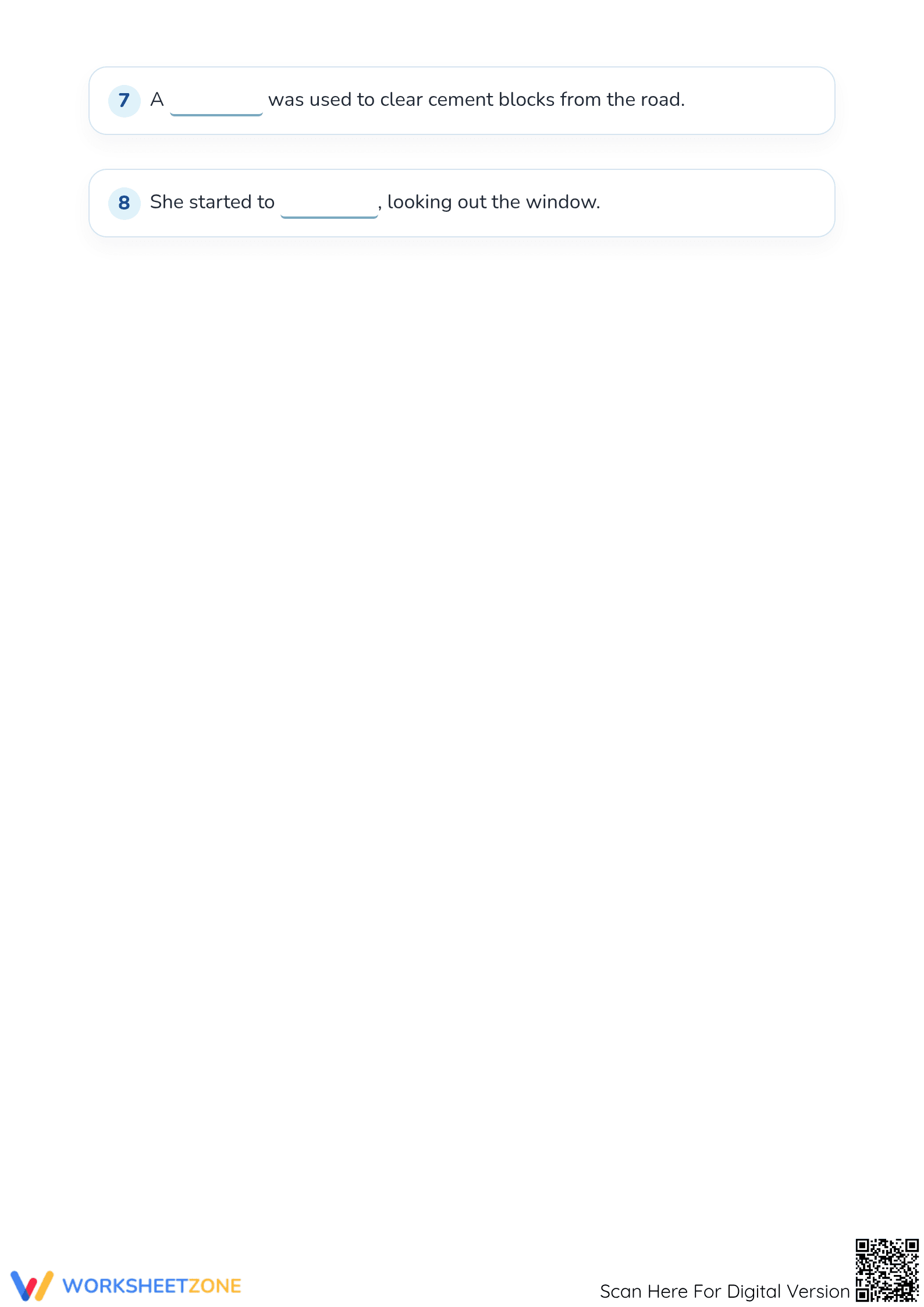

Printable Compound Words Worksheet | Grade 4 Vocabulary
Paste this activity's link or code into your existing LMS (Google Classroom, Canvas, Teams, Schoology, Moodle, etc.).
Students can open and work on the activity right away, with no student login required.
You'll still be able to track student progress and results from your teacher account.
This Grade 4 vocabulary worksheet focuses on compound words, helping students recognize how two distinct words combine to form a single unit with a new meaning. By analyzing 8 sentences, learners identify compound words in authentic contexts, building the linguistic foundations necessary for advanced reading comprehension and expressive writing in upper elementary grades.
At a Glance
- Grade: 4 · Subject: ELA
- Standard:
CCSS.ELA-LITERACY.L.4.6— Use accurately grade-appropriate general academic and domain-specific words and phrases- Skill Focus: Compound word recognition and context clues
- Format: 2 pages · 8 problems · Answer key included · PDF
- Best For: Vocabulary centers and independent practice
- Time: 15–20 minutes
What's Inside
This two-page resource contains eight targeted practice sentences. Each item presents a complete thought where students must locate and circle one or more compound words. The layout is clean and student-friendly, featuring a "Word Lab" header. An answer key is included to facilitate rapid grading or student self-correction, ensuring immediate feedback on word-part recognition.
Skill Progression
- Guided Practice: The initial sentences feature high-frequency compound words to build confidence and establish the basic identification pattern through clear linguistic structures.
- Supported Practice: Mid-section items introduce words where root meanings may shift, requiring students to use surrounding context clues for confirmation of the compound unit.
- Independent Practice: The final tasks challenge students to find multiple compound words within a single sentence, solidifying their ability to dissect complex lexical units autonomously.
This resource utilizes a gradual-release model to ensure students move from identification to analysis effectively.
Standards Alignment
This worksheet is primary aligned to `CCSS.ELA-LITERACY.L.4.6`, which requires students to acquire and use accurately grade-appropriate general academic and domain-specific words. It also supports `CCSS.ELA-LITERACY.L.2.4.D` by reinforcing the foundational skill of using knowledge of individual word meanings to determine the meaning of compound words. Both standard codes can be copied directly into lesson plans, IEP goals, or district curriculum mapping tools.
How to Use It
Integrate this worksheet during your vocabulary block immediately after a direct instruction lesson on word morphology. For a formative assessment moment, observe if students can identify the two "root" words within the compound word without teacher prompting. This 15-minute activity serves as an excellent Exit Ticket to gauge student readiness for more complex multi-syllabic word analysis later in the unit.
Who It's For
This resource is designed for Grade 4 students but is highly effective for Grade 3 students ready for a challenge or Grade 5 learners requiring intervention. It pairs naturally with an anchor chart displaying common compound word examples. Differentiation is easily achieved by having students write the two root words for each circled item on the back of the page.
According to the RAND AIRS 2024 report on literacy development, structured vocabulary practice focusing on word parts—specifically compound words—is a critical factor in improving decoding speeds and overall reading fluency for elementary learners. This worksheet addresses the common challenge where students see multi-syllabic words as impenetrable blocks rather than manageable components. By mastering CCSS.ELA-LITERACY.L.4.6, students learn to leverage their existing knowledge of simple root words to access the meanings of complex terms, a skill that correlates directly with higher scores in standardized reading assessments. The inclusion of 8 context-rich sentences ensures that students aren't just memorizing lists but are applying their knowledge of compound words to real-world language patterns. This methodical approach to lexical acquisition provides the cognitive scaffolding necessary for students to transition from learning to read to reading to learn, bridging the gap between basic phonics and advanced linguistic analysis.


