


























Views
Downloads

Compound Words Worksheet | Grade 2-4 Printable
Paste this activity's link or code into your existing LMS (Google Classroom, Canvas, Teams, Schoology, Moodle, etc.).
Students can open and work on the activity right away, with no student login required.
You'll still be able to track student progress and results from your teacher account.
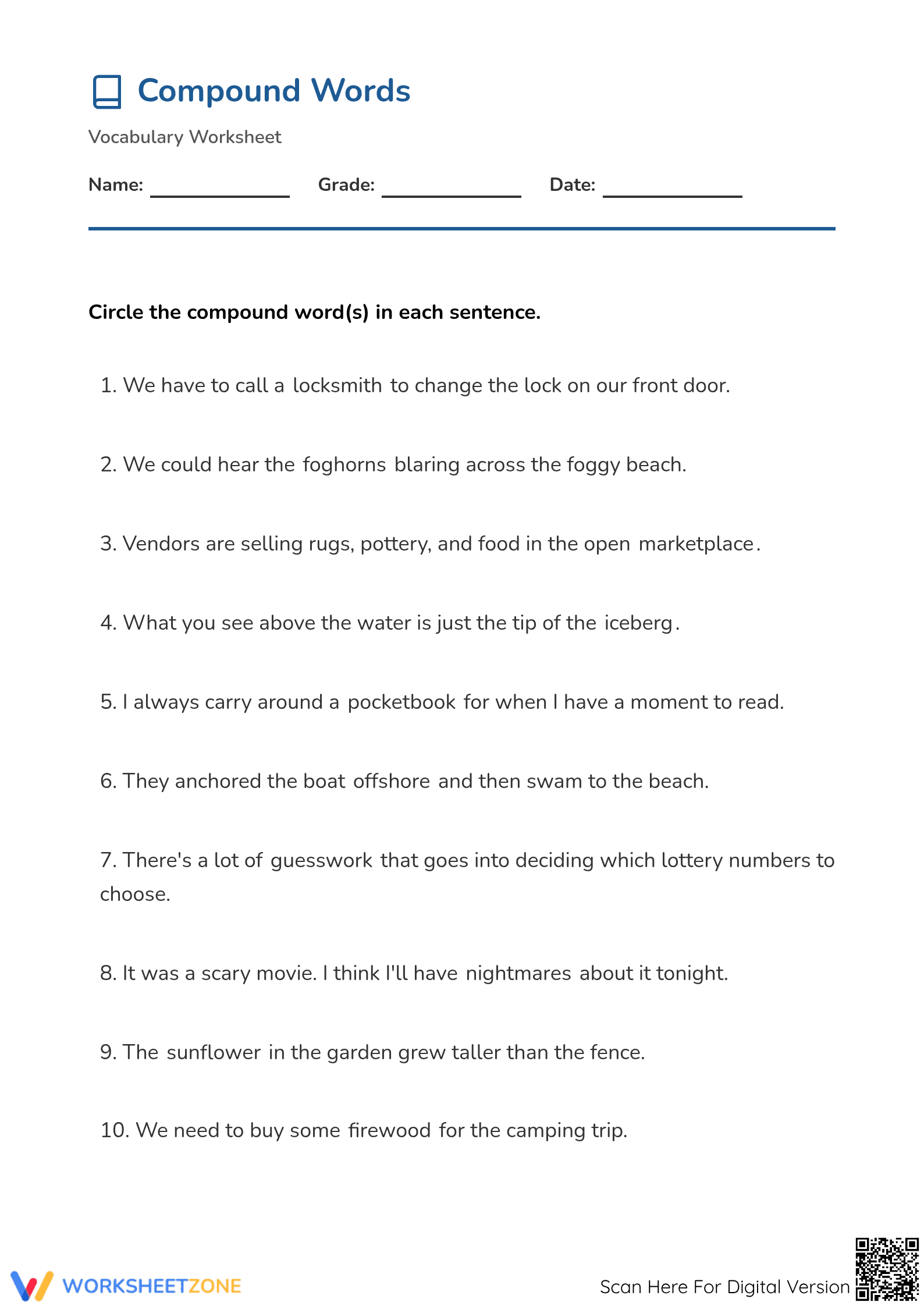
Strengthen vocabulary and word recognition with this focused compound words worksheet. Students practice identifying how two distinct words join to form a single new meaning by circling compound words within 12 unique sentences. This exercise builds the foundational decoding skills necessary for reading complex texts and expanding lexical variety in student writing.
At a Glance
- Grade: 2 · Subject: ELA
- Standard:
CCSS.ELA-LITERACY.L.2.4.D— Use knowledge of individual words to predict the meaning of compound words- Skill Focus: Identifying compound words in context
- Format: 2 pages · 12 problems · Answer key included · PDF
- Best For: Independent practice or morning work
- Time: 15–20 minutes
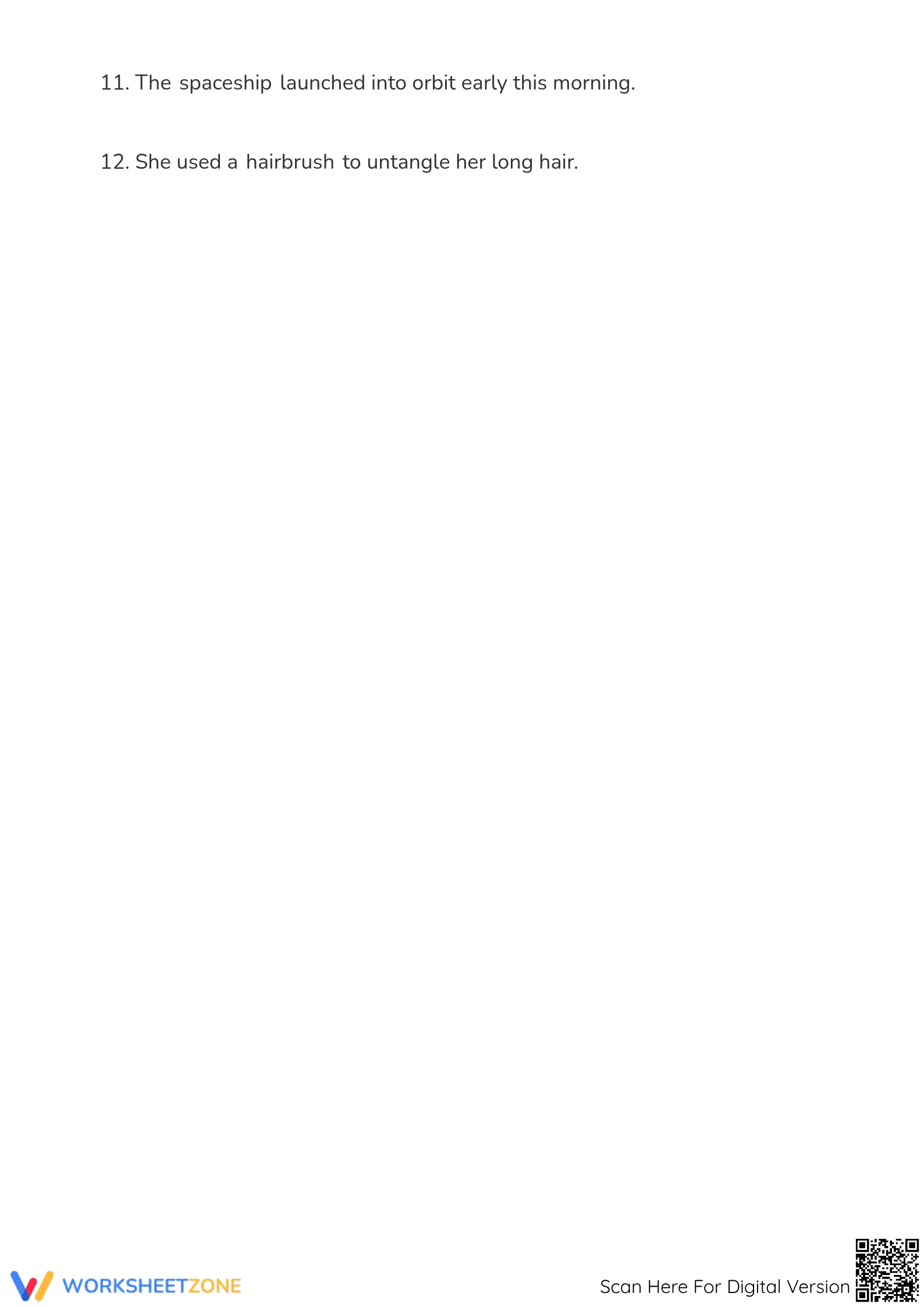
This resource contains two pages of high-quality vocabulary practice. The first page features 10 sentences with varying levels of complexity, while the second page provides 2 additional sentences to ensure student mastery. The layout is clean and distraction-free, featuring a clear header for student names and dates. A comprehensive answer key is provided to allow for quick grading or student self-correction during literacy centers.
The zero-prep workflow is designed for busy educators. First, print the two-page PDF for your class, which takes less than 30 seconds. Second, distribute the sheets during your ELA block; the instructions are self-explanatory, requiring no lengthy teacher introduction. Finally, review the answers using the included key in under 2 minutes. This efficient structure makes the worksheet an ideal choice for emergency sub plans or transition periods between lessons.
This worksheet aligns directly with `CCSS.ELA-LITERACY.L.2.4.D`. This standard requires students to use their knowledge of the meaning of individual words to predict the meaning of compound words. By seeing words like "locksmith," "firewood," and "nightmares" used in complete sentences, students gain context clues that reinforce their understanding of word morphology. This standard code can be copied directly into lesson plans, IEP goals, or district curriculum mapping tools.
Use this worksheet as a formative assessment after a direct instruction lesson on word parts. It works exceptionally well as a "check for understanding" to see if students can distinguish between simple words and compound words when they appear together in a sentence. For a more collaborative approach, have students work in pairs to identify the two "root" words within each circled compound word. Completion typically takes between 15 and 20 minutes depending on reading level.
This resource is primarily designed for students in Grades 2 through 4, though it serves as excellent remediation for older students or English Language Learners (ELL) who are building their English vocabulary. It pairs naturally with a compound word anchor chart or a matching game where students combine word cards. The sentences are crafted to be accessible while still providing enough challenge to keep students engaged with the text.
According to the RAND AIRS 2024 report on literacy development, explicit instruction in morphology, including the identification of compound words, significantly improves reading comprehension and spelling accuracy in elementary learners. This worksheet addresses the CCSS.ELA-LITERACY.L.2.4.D standard by providing 12 specific opportunities for students to recognize how individual lexical units combine to create new semantic meanings. Research by Fisher & Frey (2014) emphasizes that contextualized word study is more effective than isolated memorization for long-term retention. By embedding compound words within sentences, this resource ensures students see the practical application of vocabulary rules. The inclusion of a clear answer key supports immediate feedback, a critical component of the gradual release of responsibility model. This structured approach helps bridge the gap between simple word recognition and the complex decoding required for upper-elementary reading success.


