


























Views
Downloads

Compound Words Printable Worksheet | Grade 2 ELA
Paste this activity's link or code into your existing LMS (Google Classroom, Canvas, Teams, Schoology, Moodle, etc.).
Students can open and work on the activity right away, with no student login required.
You'll still be able to track student progress and results from your teacher account.
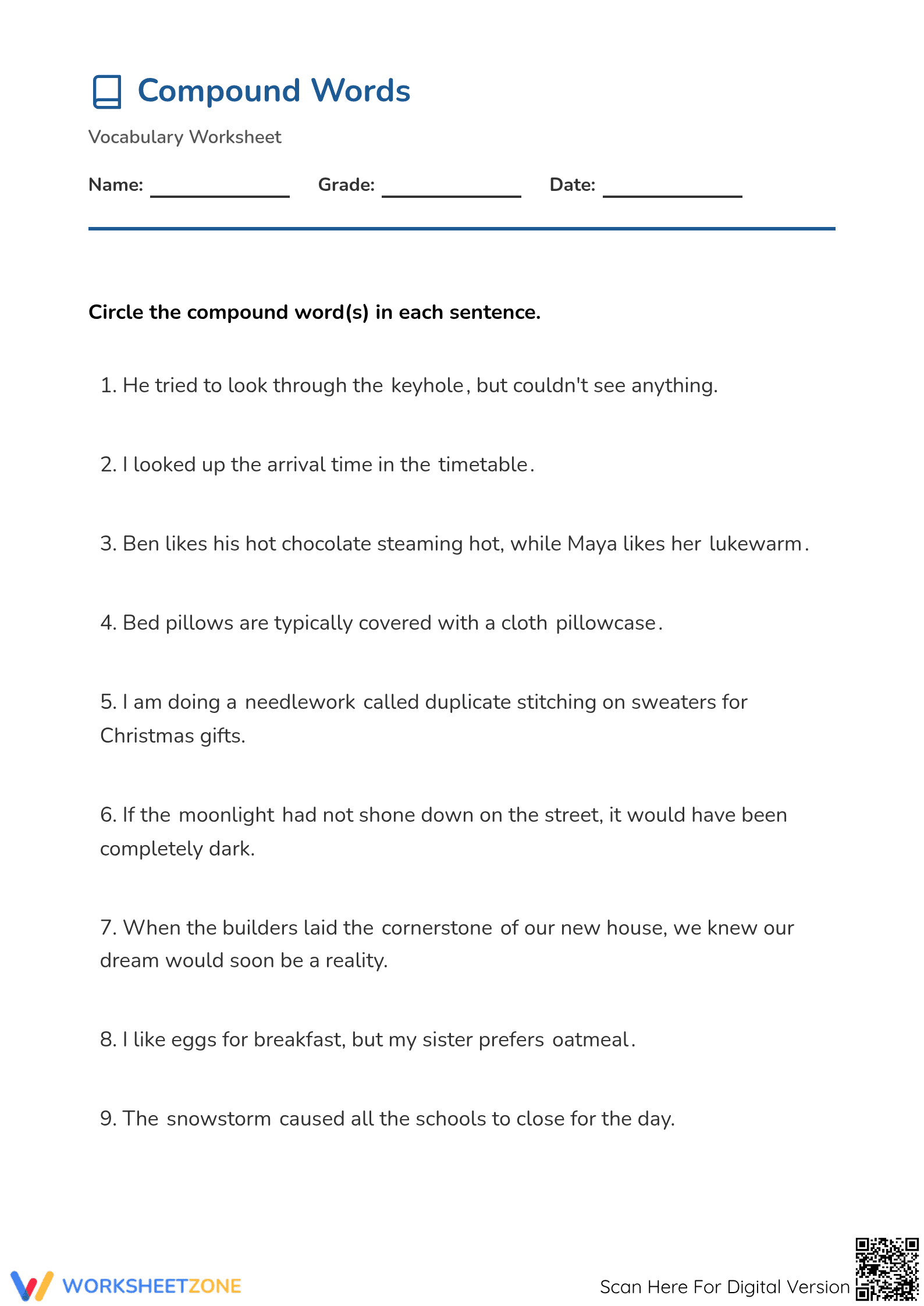
This printable compound words worksheet helps early elementary students identify combined words within complete sentences. By reading context clues and recognizing root words, students build essential vocabulary and reading comprehension skills. This resource provides straightforward, focused practice to reinforce lexical understanding in the classroom.
At a Glance
- Grade: 2 · Subject: ELA
- Standard:
CCSS.ELA-LITERACY.L.2.4.D— Predict the meaning of compound words- Skill Focus: Identifying compound words
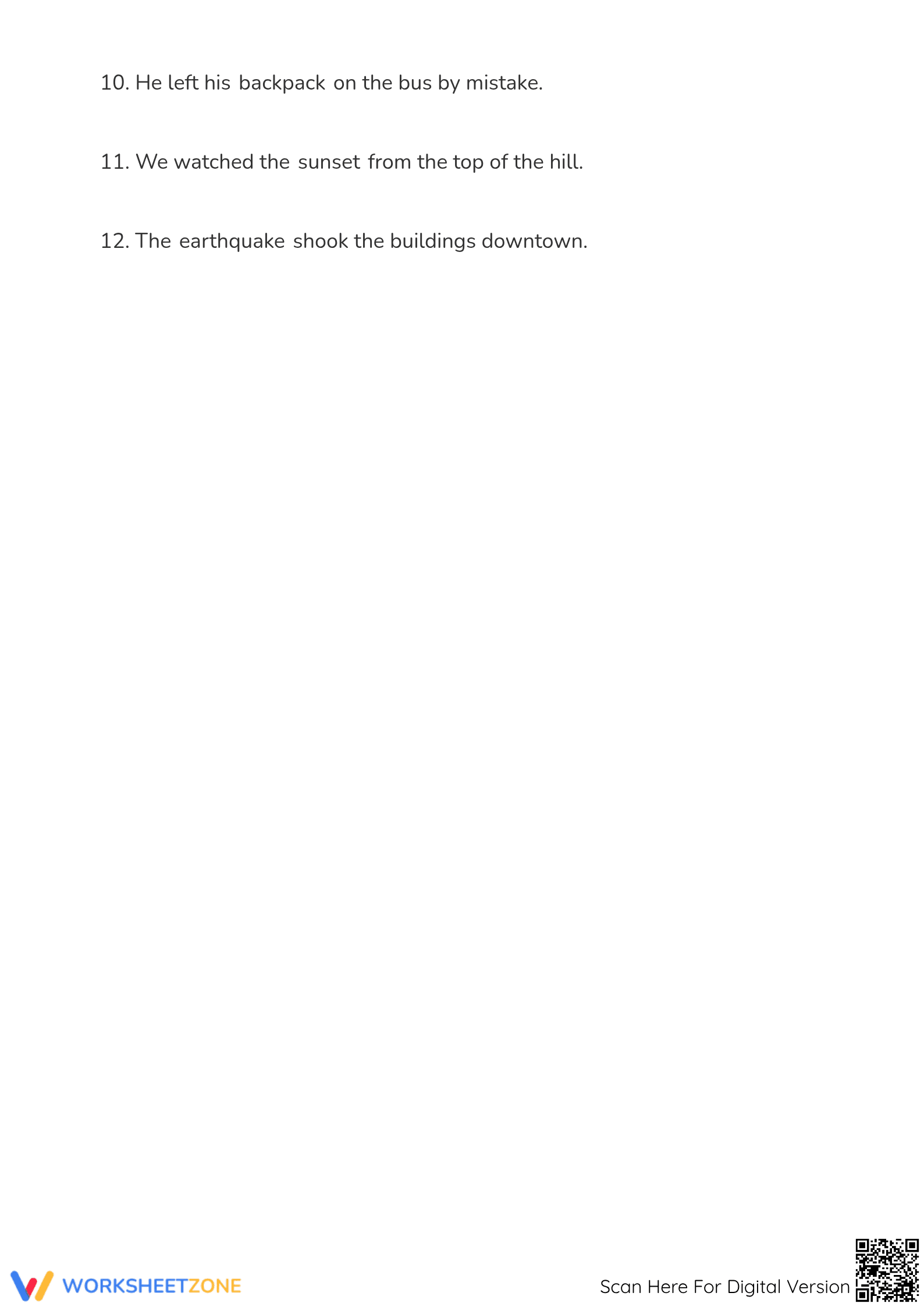
- Format: 2 pages · 12 problems · Answer key included · PDF
- Best For: Independent practice and review
- Time: 10–15 minutes
Inside this resource, educators will find a two-page worksheet featuring twelve distinct sentences. Each sentence requires students to locate and circle the compound word or words. The layout is clean and distraction-free, ensuring students can focus entirely on the text. A complete answer key is provided, allowing for quick grading or peer review without any additional teacher preparation.
Skill Progression
- Guided practice: Teachers can complete the first two sentences together with the class, modeling how to spot two smaller words joined together.
- Supported practice: Students can work in pairs for the next few sentences, discussing their choices and verifying the root words.
- Independent practice: The remaining sentences allow students to demonstrate their individual mastery of identifying compound words in context.
This structure perfectly supports a gradual-release, I Do, We Do, You Do instructional model.
Standards Alignment
This worksheet aligns with CCSS.ELA-LITERACY.L.2.4.D, which requires students to use knowledge of the meaning of individual words to predict the meaning of compound words. By isolating these words in sentences, students take the first step toward analyzing their meanings. Both standard codes can be copied directly into lesson plans, IEP goals, or district curriculum mapping tools.
How to Use It
This worksheet is highly versatile and fits easily into various instructional moments. It serves as an excellent independent activity after direct instruction on compound words. Alternatively, teachers can use it as a morning work assignment to activate prior knowledge before a reading block. As a formative assessment tip, observe whether students are circling individual multi-syllable words instead of true compound words; this indicates a need to review root word combinations. Expected completion time is 10 to 15 minutes.
Who It's For
This resource is primarily designed for second-grade students, though it is also appropriate for first graders needing a challenge or third graders requiring review. To differentiate for students who need extra support, teachers can provide a word bank of common root words. This worksheet pairs naturally with an anchor chart displaying common compound words and their visual components.
Developing a strong vocabulary is a critical component of early literacy and reading success. According to a RAND AIRS 2024 report, explicit instruction in word structures significantly improves reading comprehension outcomes in elementary students across diverse demographics. This worksheet directly supports that research by requiring students to identify compound words within context. Aligned to CCSS.ELA-LITERACY.L.2.4.D, the activity ensures students practice how to predict the meaning of compound words by recognizing their individual parts. By isolating these terms in complete sentences, learners build the morphological awareness necessary for fluent reading. Regular practice with these lexical structures helps students decode unfamiliar text more efficiently. This resource provides the targeted repetition required to solidify these foundational language skills, making it a highly valuable addition to any evidence-based literacy program.


