


























Views
Downloads

Grade 1 Compound Words — Printable No-Prep Worksheet
Paste this activity's link or code into your existing LMS (Google Classroom, Canvas, Teams, Schoology, Moodle, etc.).
Students can open and work on the activity right away, with no student login required.
You'll still be able to track student progress and results from your teacher account.
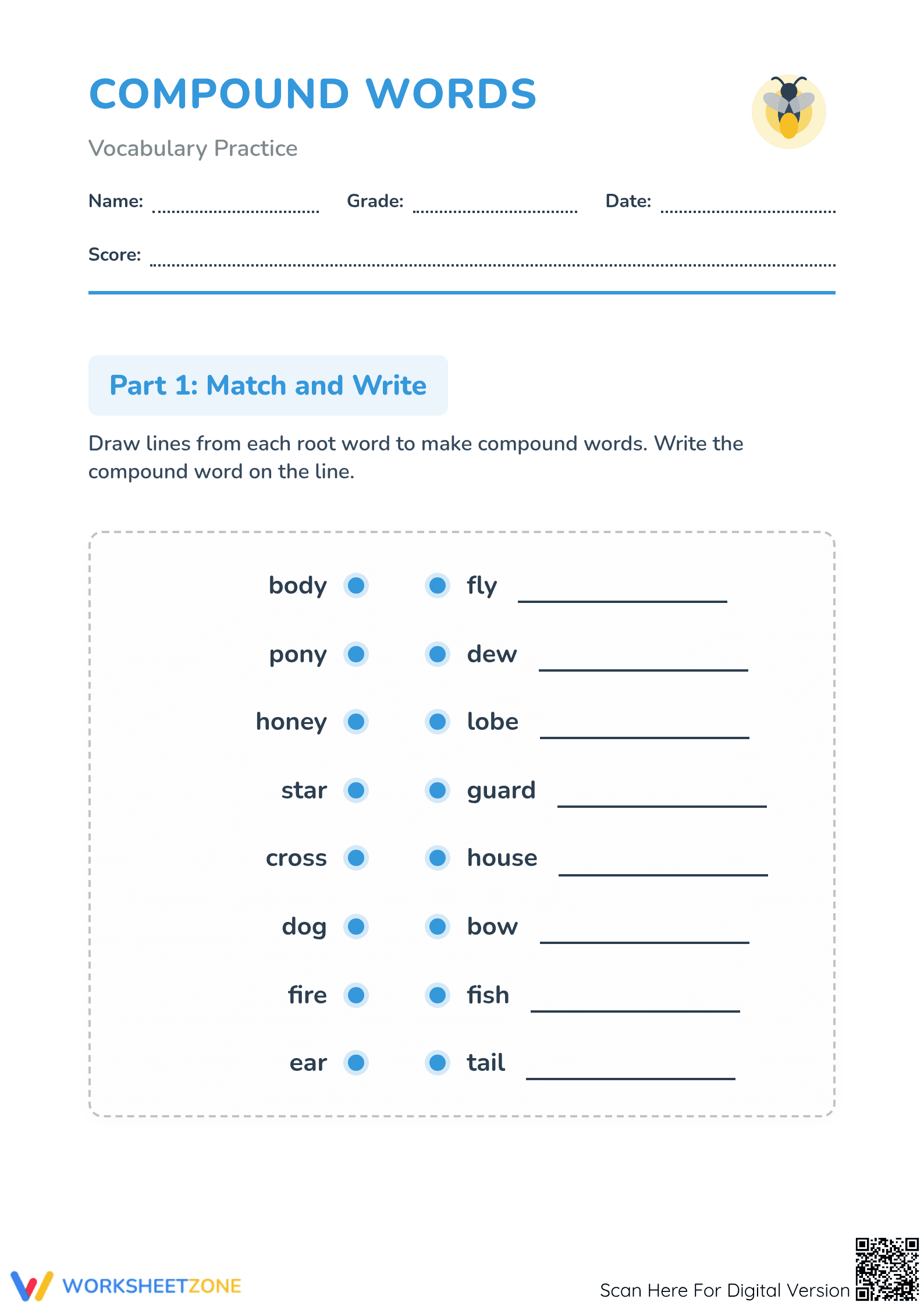
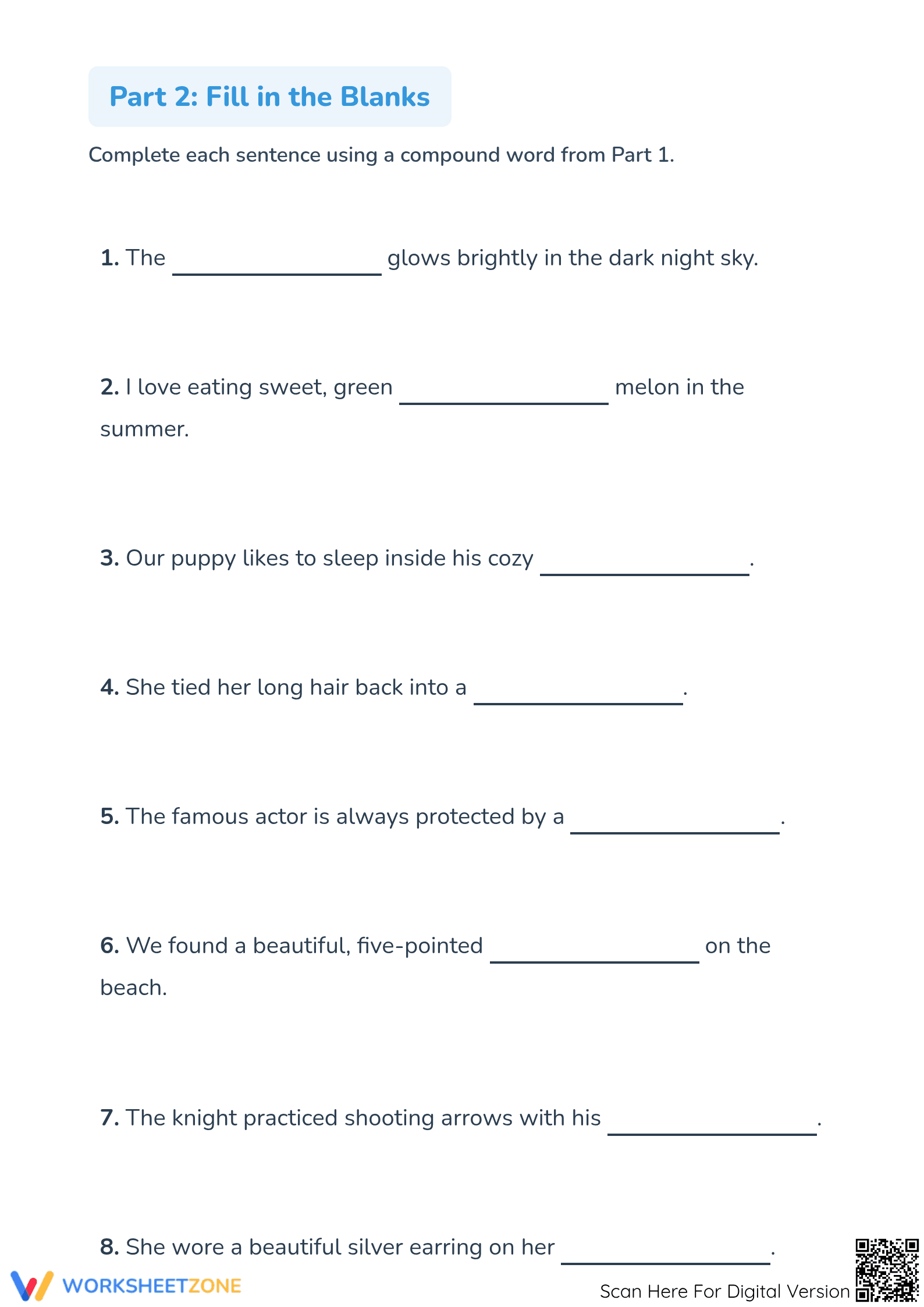
This printable Grade 1 vocabulary worksheet helps students build and apply compound words in context. By matching root words and completing sentences, young learners develop essential decoding skills and expand their everyday vocabulary. The clear, two-part structure ensures students understand how smaller words combine to create new meanings.
At a Glance
- Grade: 1 · Subject: ELA
- Standard:
CCSS.ELA-LITERACY.L.1.4— Determine the meaning of words using vocabulary strategies.- Skill Focus: Compound Words
- Format: 2 pages · 16 problems · Answer key included · PDF
- Best For: Independent practice and vocabulary building
- Time: 15–20 minutes
This resource features two distinct pages of vocabulary practice. Part 1 challenges students to draw lines connecting eight pairs of root words, then write the newly formed compound word on the provided line. Part 2 requires students to apply their new knowledge by selecting the correct compound word from the first page to complete eight fill-in-the-blank sentences. A complete answer key is provided for quick grading.
Designed for a zero-prep workflow, this resource is ideal for any lesson plan:
- Print (1 min): Print the two-page PDF and answer key. No cutting required.
- Distribute (1 min): Hand out during literacy blocks. Instructions are simple enough for independent work.
- Review (3 mins): Use the answer key to check work or project for whole-class review.
With under two minutes of prep, this is perfect for sub plans.
This worksheet is aligned to CCSS.ELA-LITERACY.L.1.4: Determine or clarify the meaning of unknown and multiple-meaning words and phrases based on grade 1 reading and content. By combining familiar root words to form new vocabulary, students actively practice word analysis. Both standard codes can be copied directly into lesson plans, IEP goals, or district curriculum mapping tools.
Use this worksheet during independent literacy centers after direct instruction on compound words. It also serves as excellent morning work. As a formative assessment observation tip, watch how students tackle Part 2; if they struggle to choose the correct word, they may need support understanding the new compound word's definition. Expected completion time is 15 to 20 minutes.
This worksheet is primarily designed for first-grade students developing their foundational reading and vocabulary skills. It is also appropriate for second graders needing a quick review or English Language Learners (ELLs) practicing common English vocabulary. For differentiation, teachers can read the sentences in Part 2 aloud for students who need reading support. Pair this activity with a visual anchor chart showing common compound words broken into pictures.
Effective vocabulary instruction requires students to actively manipulate word parts to understand exactly how meaning is constructed in the English language. According to Fisher & Frey (2014), providing structured opportunities for students to interact with morphological elements significantly improves both reading comprehension and long-term word retention. This worksheet directly supports that research by requiring students to physically match root words and immediately apply the newly formed vocabulary in sentence contexts. Aligned with CCSS.ELA-LITERACY.L.1.4, the activity helps students determine the meaning of words using vocabulary strategies. By breaking down and building up compound words, young learners develop the essential decoding skills necessary for fluent reading. This targeted practice ensures students move beyond rote memorization, fostering a deeper understanding of language structure that will benefit them across all academic subjects and future grade levels.


