


























Views
Downloads

Printable Compound Word Cut and Paste Worksheet | Grades 1-3
Paste this activity's link or code into your existing LMS (Google Classroom, Canvas, Teams, Schoology, Moodle, etc.).
Students can open and work on the activity right away, with no student login required.
You'll still be able to track student progress and results from your teacher account.
This engaging ice cream-themed compound word worksheet helps students in grades 1 through 3 master combining lexical units. By manipulating word scoops to build cones, learners internalize how distinct meanings merge into new concepts. It is a complete, printable solution for building early literacy and vocabulary skills in any elementary classroom setting.
At a Glance
- Grade: 2 · Subject: Word Classes - Lexical
- Standard:
CCSS.ELA-LITERACY.L.2.4.D— Use knowledge of individual word meanings to predict the meaning of compound words- Skill Focus: Compound Word Construction
- Format: 4 pages · 6 tasks · Answer key included · PDF
- Best For: Literacy centers and independent vocabulary practice
- Time: 15–20 minutes
What's Inside
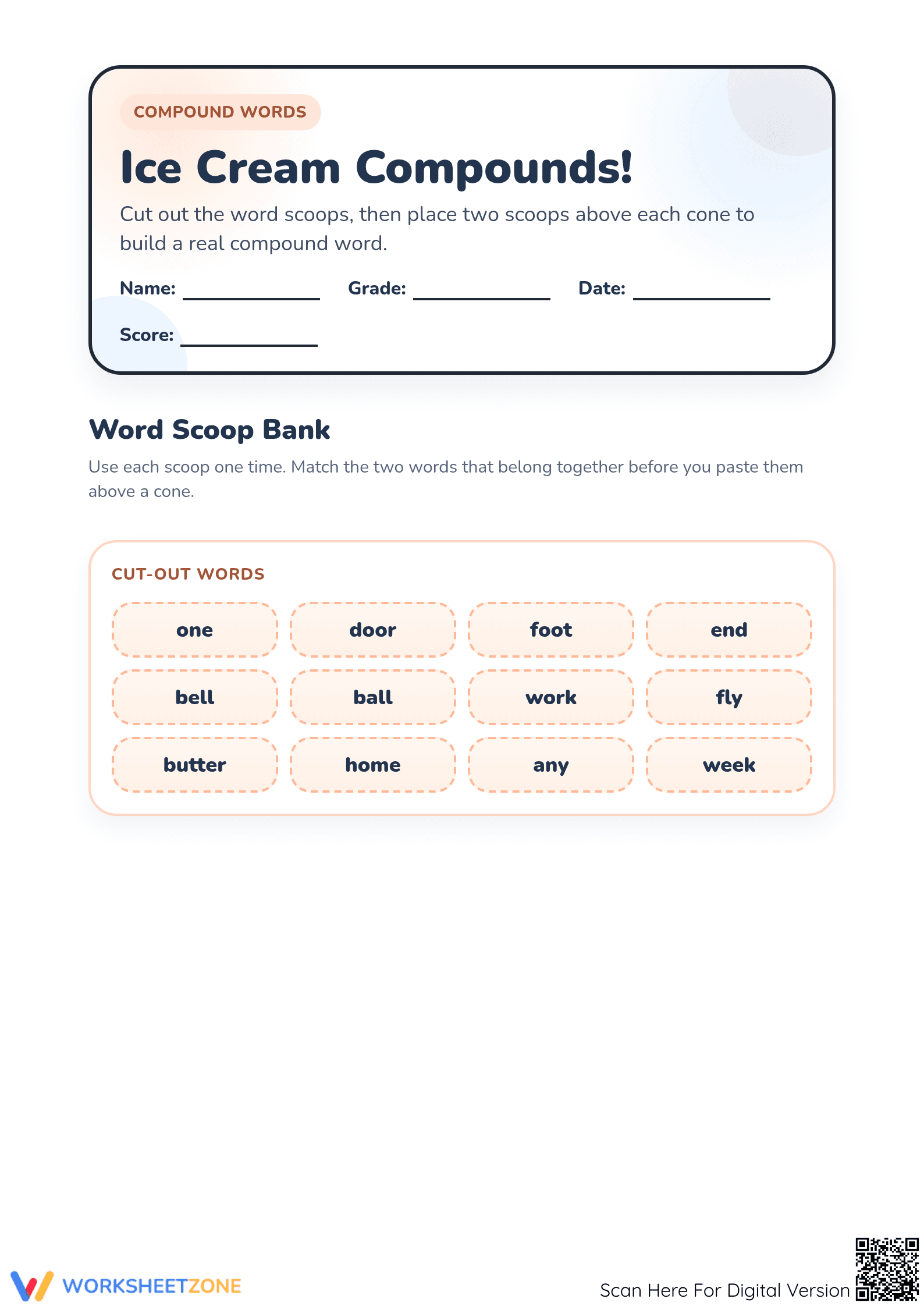
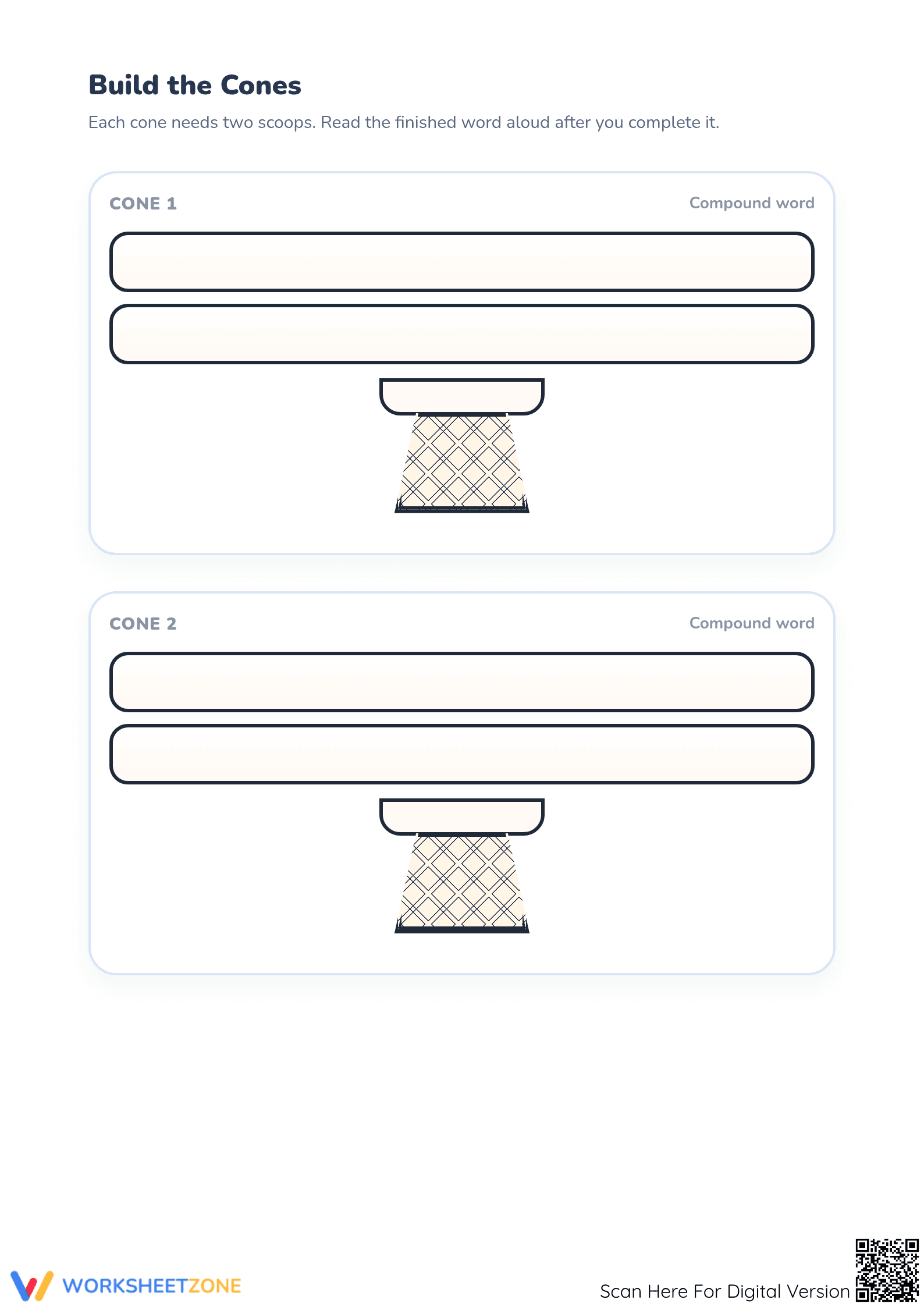
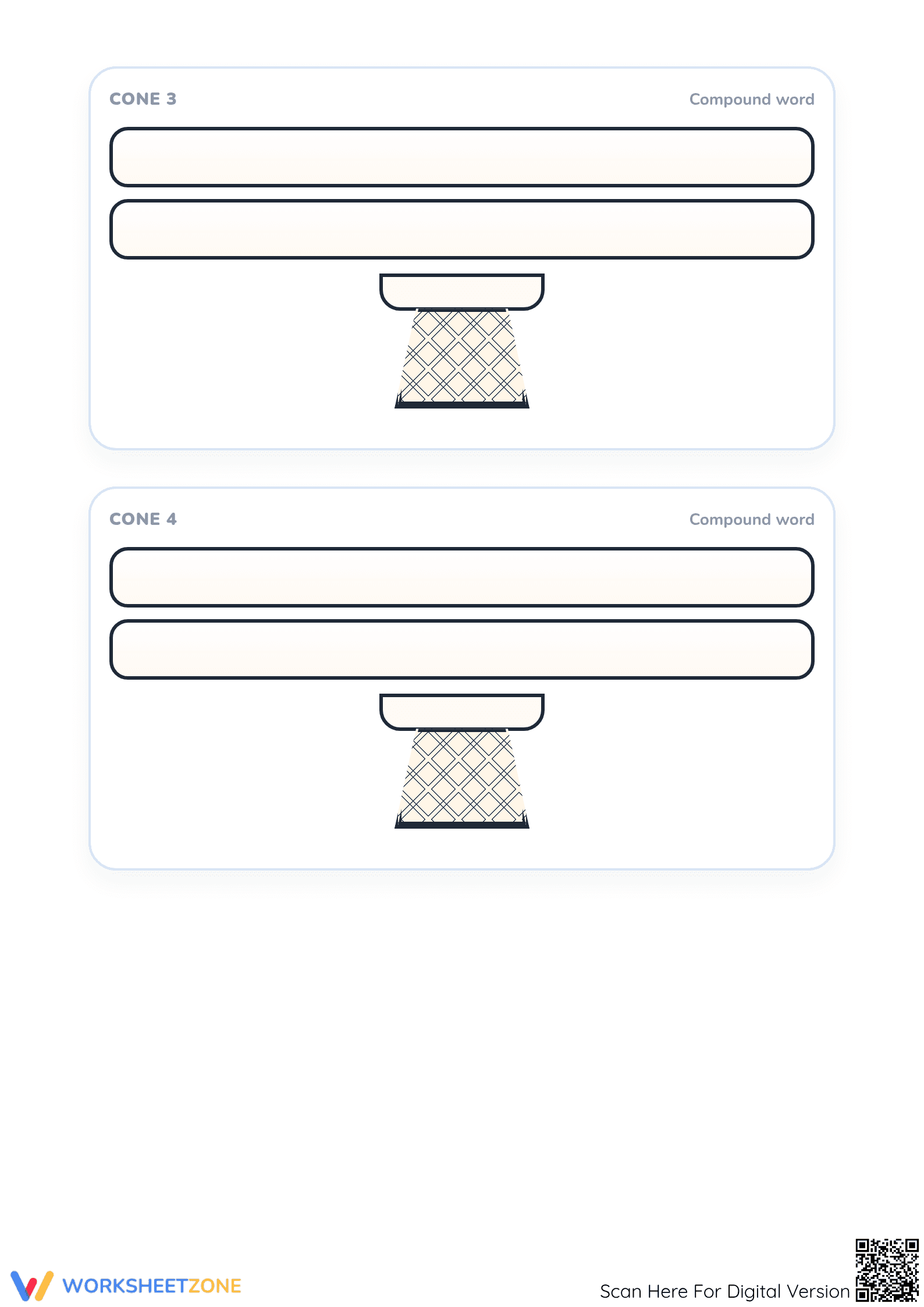
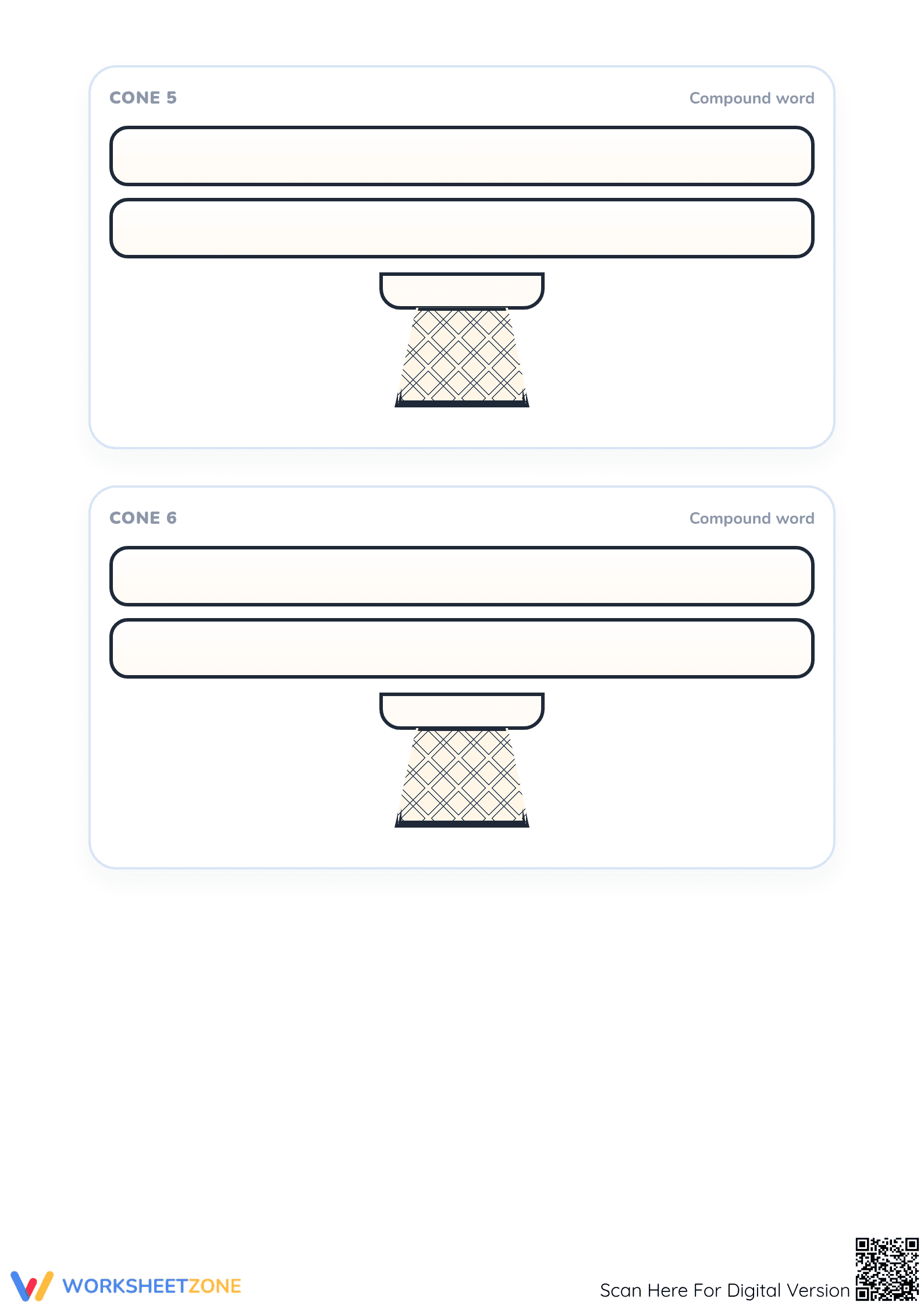
This four-page PDF includes a comprehensive word bank with 12 distinct "word scoops" and three subsequent pages for building the cones. The tactile cut-and-paste mechanic ensures kinesthetic learners remain engaged throughout the task. A full answer key is included to facilitate quick grading or student self-correction during independent center work.
Skill Progression
- Guided Exploration: Students identify 12 base words within the scoop bank, reviewing individual meanings before cutting the scoops.
- Supported Practice: Learners match pairs like "butter" and "fly" using logical semantic associations and the ice cream cone visual prompts.
- Independent Application: Students paste the words onto cone templates and read the final results aloud to verify accuracy.
This gradual-release approach ensures students move confidently from recognition to independent construction.
Standards Alignment
Primary alignment: `CCSS.ELA-LITERACY.L.2.4.D` - Use knowledge of the meaning of individual words to predict the meaning of a compound word. This activity also supports Grade 1 and Grade 3 vocabulary expansion standards. Both standard codes can be copied directly into lesson plans, IEP goals, or district curriculum mapping tools.
How to Use It
Use this as a summative assessment after a direct instruction lesson on compound words. It also functions perfectly as morning work or a literacy center rotation. Formative tip: observe if students pair scoops based on semantic logic or trial-and-error. Total completion takes approximately 15 to 20 minutes.
Who It's For
This resource is for elementary students in grades 1-3, including ELLs who benefit from visual associations. It pairs naturally with word wall displays or anchor charts. For differentiation, pre-cut scoops for students with motor challenges or ask advanced learners to write original sentences using the new compound words.
According to a ScienceDirect TpT Analysis (2024), tactile learning materials like cut-and-paste activities significantly improve retention of morphological structures in early readers. This worksheet specifically targets CCSS.ELA-LITERACY.L.2.4.D by requiring students to synthesize two lexical units into a single compound word. By physically moving the "scoops," students engage the motor cortex, which research suggests strengthens the neural pathways associated with vocabulary acquisition and word recognition. Fisher & Frey (2014) emphasize that such scaffolds are essential for the gradual release of responsibility, moving students from basic word identification to the predictive reasoning required for complex reading tasks. This printable resource provides a structured environment for this transition, ensuring students can accurately build and define compound words. It serves as a high-quality instructional tool that aligns with current NAEP literacy frameworks for primary education, making it an essential addition to any Grade 1, 2, or 3 classroom curriculum.


