


























Views
Downloads

Compound Words Worksheet: Essential Grade 2-4 Practice
Paste this activity's link or code into your existing LMS (Google Classroom, Canvas, Teams, Schoology, Moodle, etc.).
Students can open and work on the activity right away, with no student login required.
You'll still be able to track student progress and results from your teacher account.
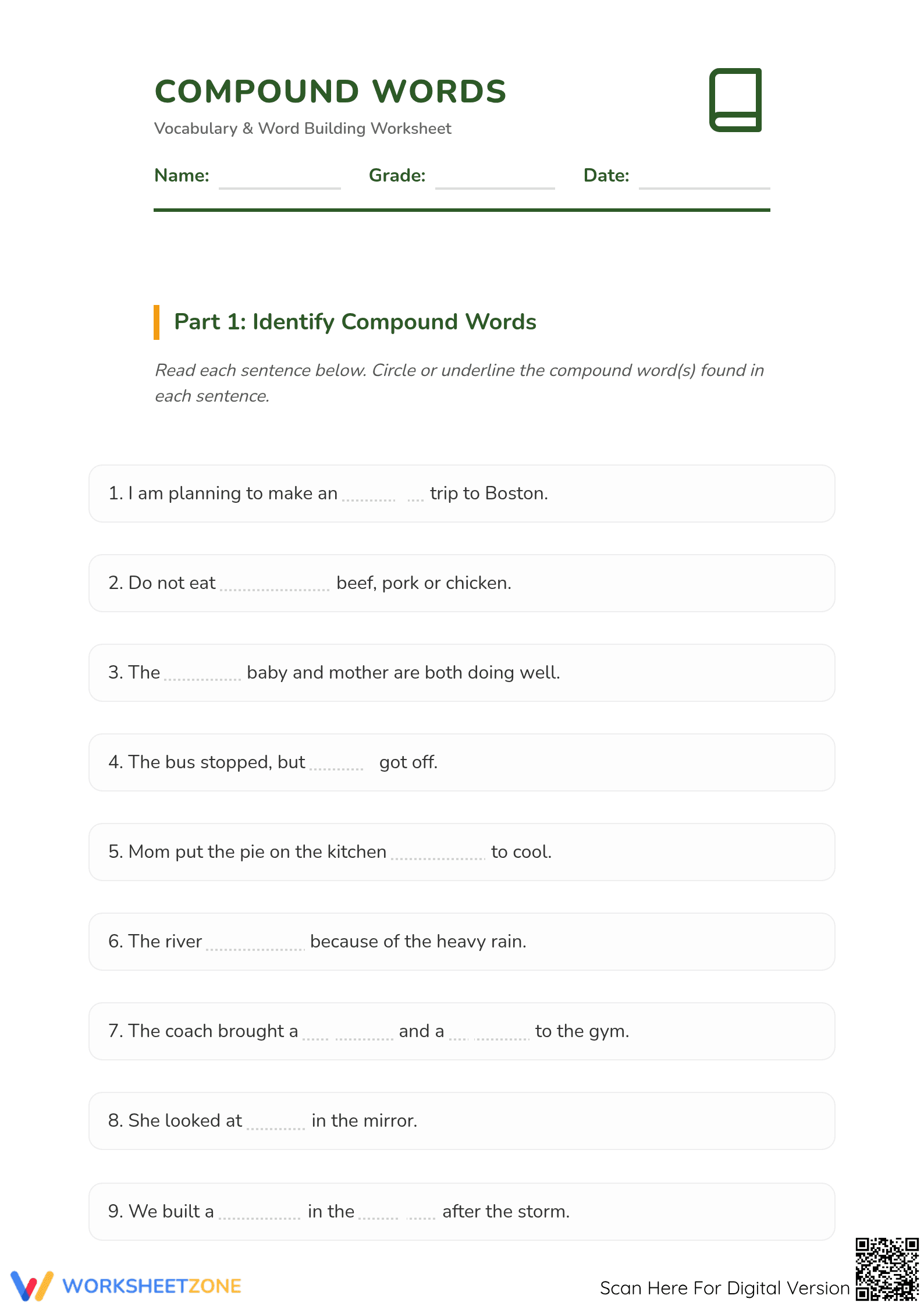
This Grade 2-4 compound words worksheet helps students master the mechanics of lexical word building. By identifying, breaking down, and creating new terms, learners develop a concrete understanding of how root words combine to form unique meanings. It provides a structured path toward vocabulary expansion and linguistic fluency.
At a Glance
- Grade: 2-4 · Subject: ELA
- Standard:
CCSS.ELA-LITERACY.L.2.4.D— Use individual word meanings to predict the meaning of compound words- Skill Focus: Compound Word Construction
- Format: 3 pages · 22 problems · Answer key included · PDF
- Best For: Independent practice or sub plans
- Time: 20–30 minutes
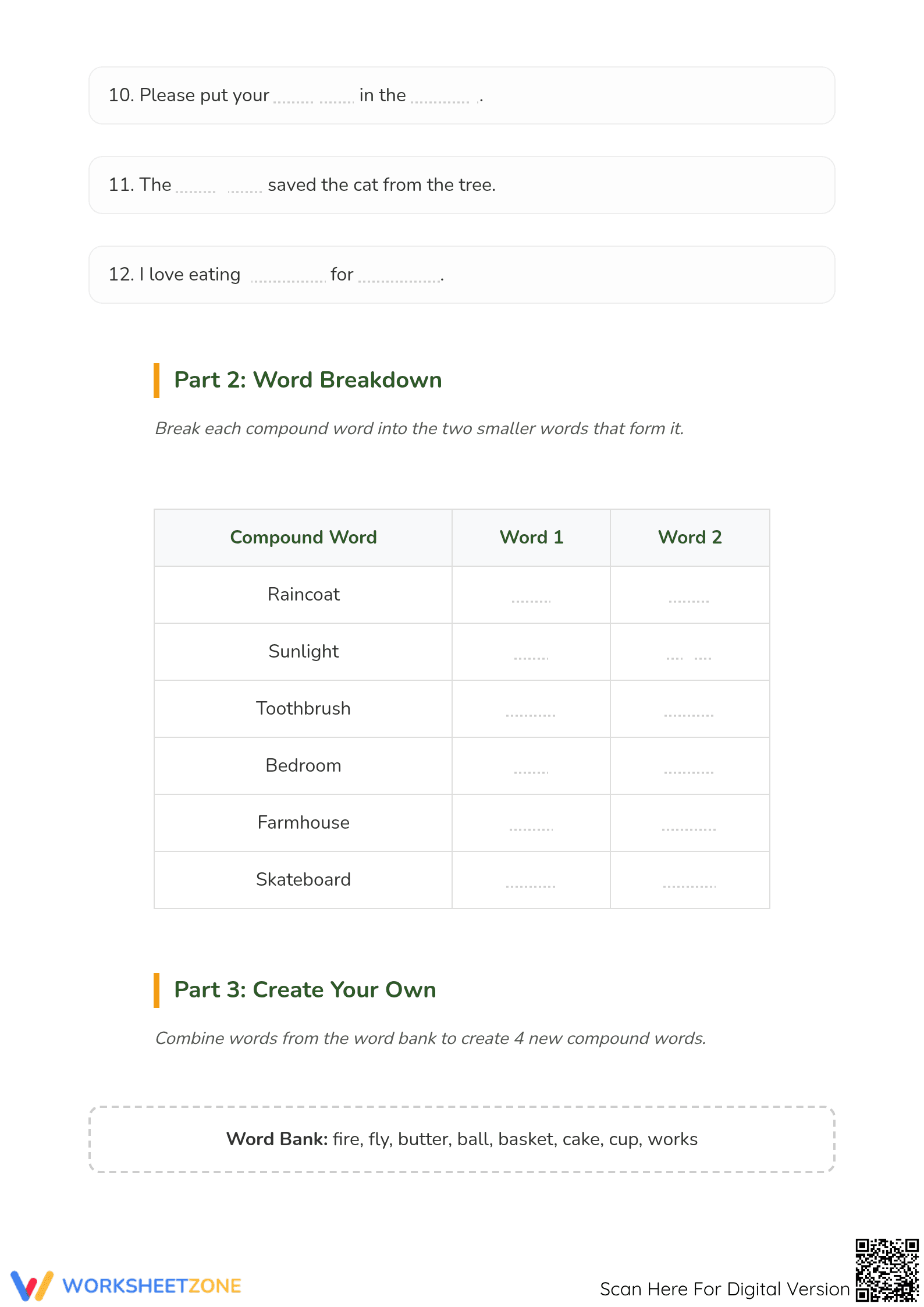
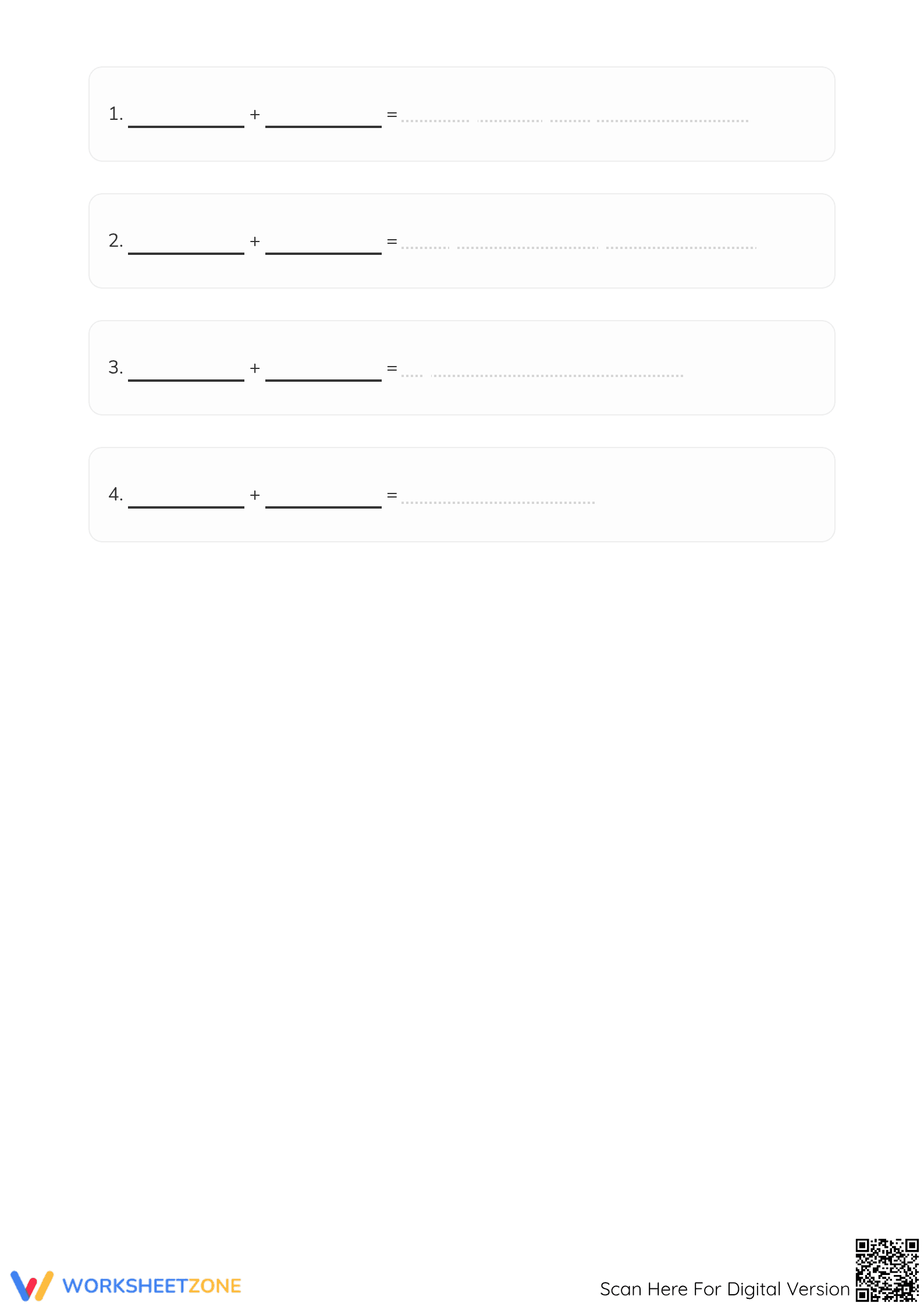
Inside this 3-page PDF, you will find three distinct sections: sentence-based identification, a word breakdown table, and a creative word-building task using a provided word bank. The layout includes clear headers, ample writing space, and a comprehensive answer key for quick grading or student self-correction.
The zero-prep workflow is designed for busy educators. Step 1: Print the 3-page PDF (30 seconds). Step 2: Distribute to students for independent work or literacy centers (1 minute). Step 3: Review using the included answer key for immediate feedback (30 seconds). Total teacher preparation time is under 2 minutes. This makes it an ideal resource for unexpected absences or morning work.
This resource aligns with `CCSS.ELA-LITERACY.L.2.4.D`, focusing on using knowledge of individual words to predict compound word meanings. It also supports `CCSS.ELA-LITERACY.L.3.4` by expanding general academic and domain-specific vocabulary. Both standard codes can be copied directly into lesson plans, IEP goals, or district curriculum mapping tools.
Use this as a formative assessment after an introductory lesson on word parts. Alternatively, assign it as a printable activity to ensure students remain engaged with core ELA standards. Monitor students during the "Word Breakdown" section to observe if they can isolate root words without visual aids. Completion typically ranges from 20 to 30 minutes depending on the grade level.
This is ideal for second through fourth-grade students, including English Language Learners who benefit from seeing how words are constructed. It pairs naturally with a compound word anchor chart or a direct instruction lesson on prefixes and suffixes to reinforce the concept of word morphology.
According to the RAND AIRS 2024 report on literacy instruction, explicit practice with morphological structures like compound words significantly improves reading comprehension and decoding speed in elementary learners. This worksheet addresses the specific need for repetitive, structured exposure to word-building patterns. By engaging with 22 distinct tasks, students move beyond rote memorization toward a functional understanding of lexical composition. The inclusion of the CCSS.ELA-LITERACY.L.2.4.D standard ensures that the practice remains focused on grade-level expectations for vocabulary acquisition. Research from Fisher & Frey (2014) suggests that the gradual release of responsibility—moving from identification to creation—is essential for long-term retention of linguistic concepts. This resource provides that exact progression, making it a reliable tool for classroom teachers, tutors, and parents seeking to reinforce foundational ELA skills through evidence-based practice and clear, measurable student outcomes.


