


























Views
Downloads


Compound Words Worksheet: Grade 4 Printable Practice
Paste this activity's link or code into your existing LMS (Google Classroom, Canvas, Teams, Schoology, Moodle, etc.).
Students can open and work on the activity right away, with no student login required.
You'll still be able to track student progress and results from your teacher account.
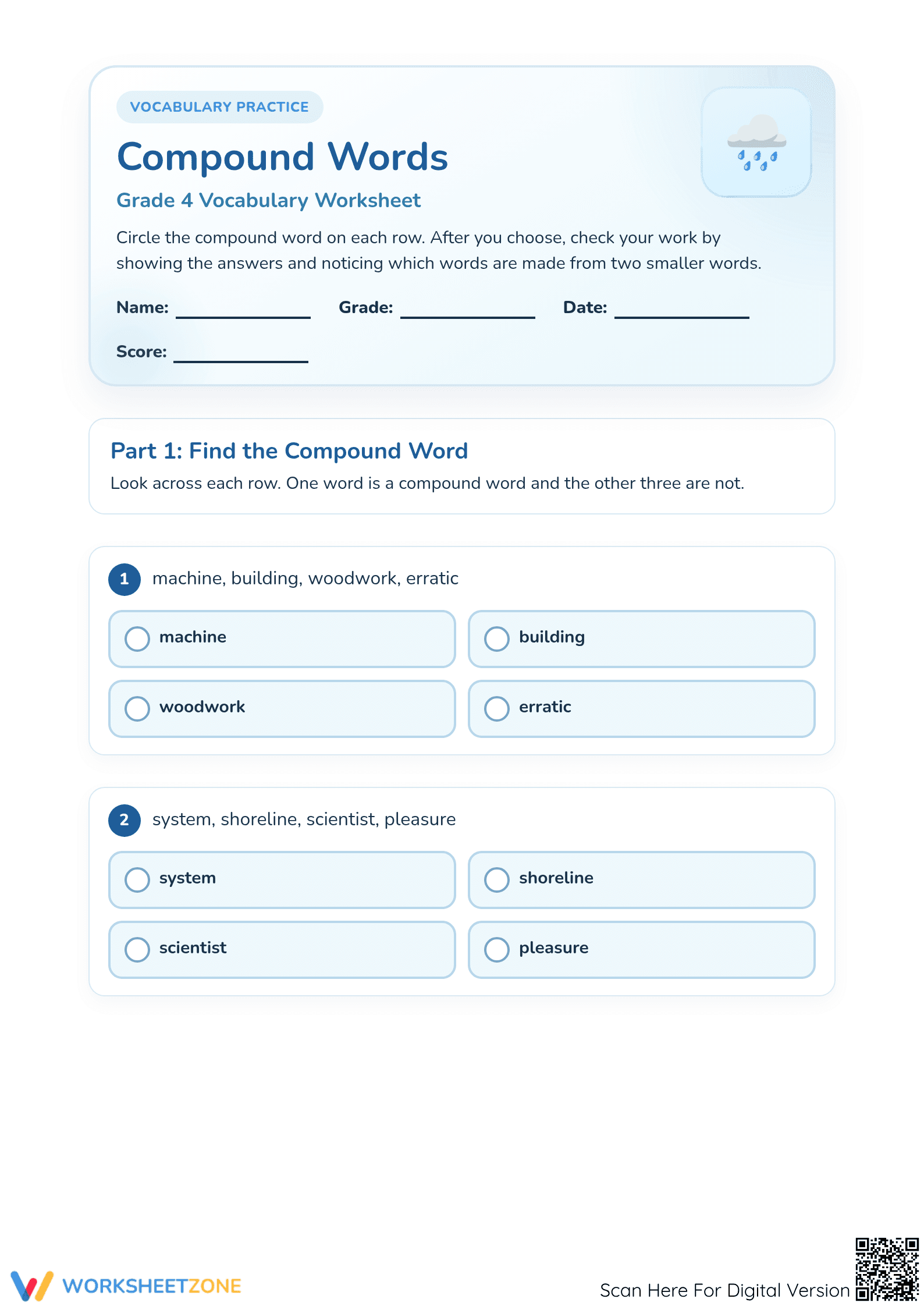
This Grade 4 compound words worksheet provides students with targeted practice in identifying and analyzing complex word structures. By isolating compound words from distractors and dissecting them into root components, learners strengthen their morphological awareness and expand their academic vocabulary. Students achieve greater reading fluency and spelling accuracy through these 12 structured exercises.
At a Glance
- Grade: 4 · Subject: ELA
- Standard:
CCSS.ELA-LITERACY.L.4.6— Acquire and use accurately grade-appropriate general academic and domain-specific words and phrases- Skill Focus: Compound Word Identification and Dissection
- Format: 4 pages · 12 problems · Answer key included · PDF
- Best For: Independent vocabulary centers, morning work, or quick formative assessment
- Time: 15–20 minutes
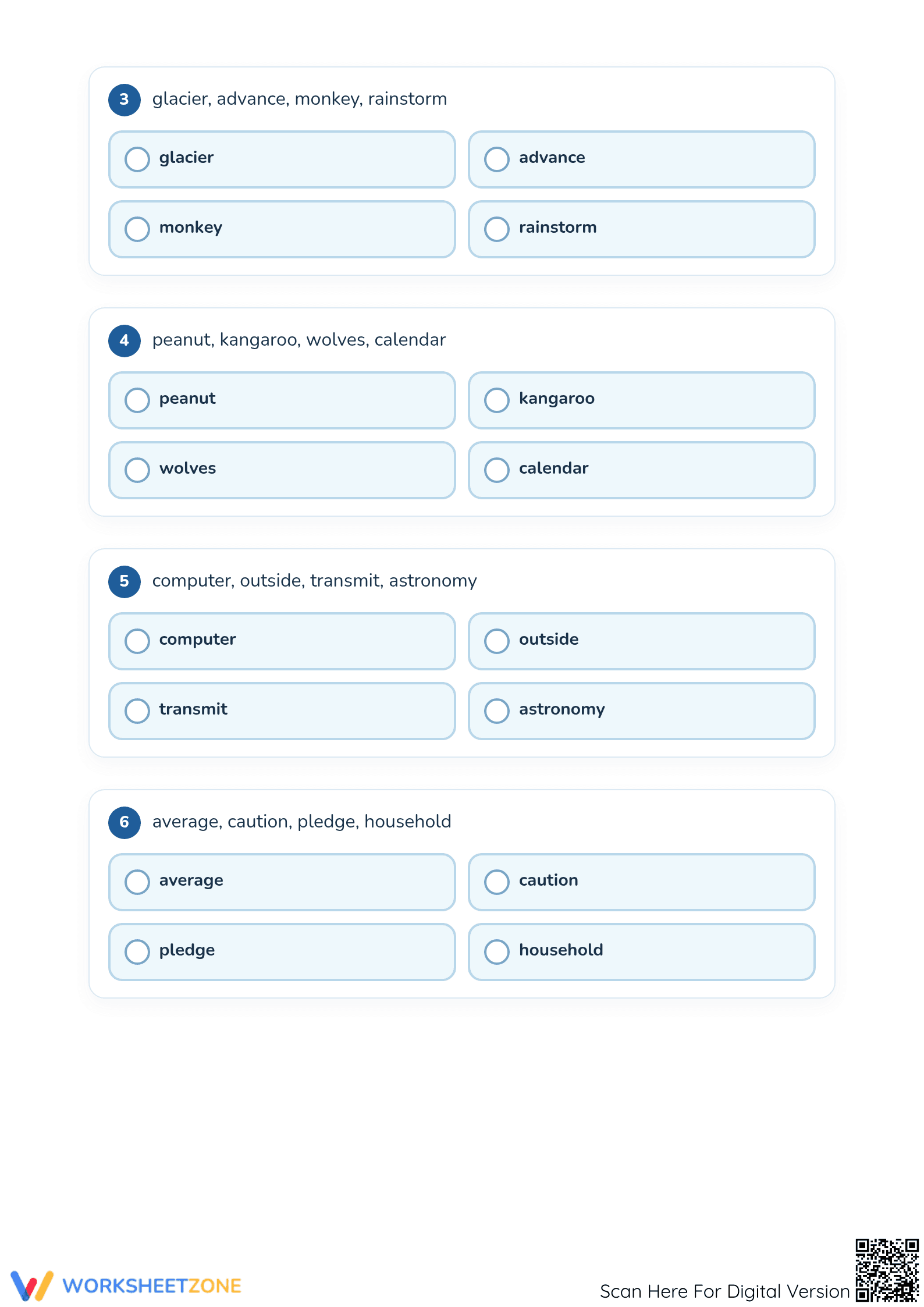
The PDF package contains four high-quality pages featuring a clear, distraction-free layout. Part 1 challenges students to identify the compound word among four options across eight distinct rows. Part 2 shifts the focus to structural analysis, requiring students to break down four specific compound words into their original root words. A comprehensive answer key is included for immediate feedback and grading efficiency.
Zero-Prep Workflow
This resource is designed for maximum efficiency in busy classrooms. First, print the four-page document in less than a minute. Next, distribute the sheets to students with zero verbal explanation needed, as the instructional headers are self-explanatory. Finally, review the completed tasks using the provided answer key in under two minutes, making this an ideal choice for sub plans or morning work routines.
Standards Alignment
The primary focus is CCSS.ELA-LITERACY.L.4.6, which requires students to acquire and use accurately grade-appropriate general academic and domain-specific words. This worksheet specifically addresses word structure and morphology, a key component of vocabulary acquisition. Both standard codes can be copied directly into lesson plans, IEP goals, or district curriculum mapping tools to track student progress.
How to Use It
Use this worksheet as a mid-lesson check for understanding after introducing the concept of closed compound words. During independent practice, walk through the room and observe if students are correctly identifying root words in Part 2, which serves as an excellent formative-assessment observation tip. Expect most Grade 4 students to complete the full sequence within 15 to 20 minutes.
Who It's For
This resource is tailored for fourth-grade students developing their literacy skills. It is particularly effective for English Language Learners who benefit from visual word-building exercises and students requiring additional support with word recognition. It pairs naturally with a vocabulary anchor chart or a short informational passage containing the targeted compound words like shoreline or rainstorm.
Academic research highlights that morphological awareness, specifically the ability to manipulate compound words, is a significant predictor of reading comprehension success in the upper elementary grades. According to a ScienceDirect TpT Analysis, structured vocabulary worksheets that combine identification with structural dissection—as seen in this 12-problem set—provide the necessary repetition for long-term retention of academic language. By aligning these tasks with CCSS.ELA-LITERACY.L.4.6, educators ensure that students are not merely memorizing lists but are instead developing a systematic approach to decoding complex words encountered in grade-level texts. This systematic exposure to word-building helps bridge the gap between simple phonics and advanced literacy, providing a durable foundation for future linguistic mastery. Educators can confidently integrate this printable resource into their curriculum as a validated tool for enhancing student outcomes in foundational language arts skills and overall vocabulary depth.


