


























Views
Downloads

Friendship Worksheet (3 Levels) | Grade K Ready
Paste this activity's link or code into your existing LMS (Google Classroom, Canvas, Teams, Schoology, Moodle, etc.).
Students can open and work on the activity right away, with no student login required.
You'll still be able to track student progress and results from your teacher account.
This multi-level friendship worksheet helps young learners define positive social relationships through creative expression and emotional identification. By asking students to visualize their peers and associate specific feelings with those interactions, the activity builds essential social-emotional foundations. Students will move from simple drawing to identifying complex traits that characterize a healthy friendship.
At a Glance
- Grade: Kindergarten · Subject: Social Skills
- Standard:
CCSS.ELA-LITERACY.W.K.2— Use drawing and writing to compose informative texts about a specific topic- Skill Focus: Friendship & Emotions
- Format: 3 pages · 3 problems · Answer key not applicable · PDF
- Best For: Social-emotional learning and morning meetings
- Time: 15–20 minutes
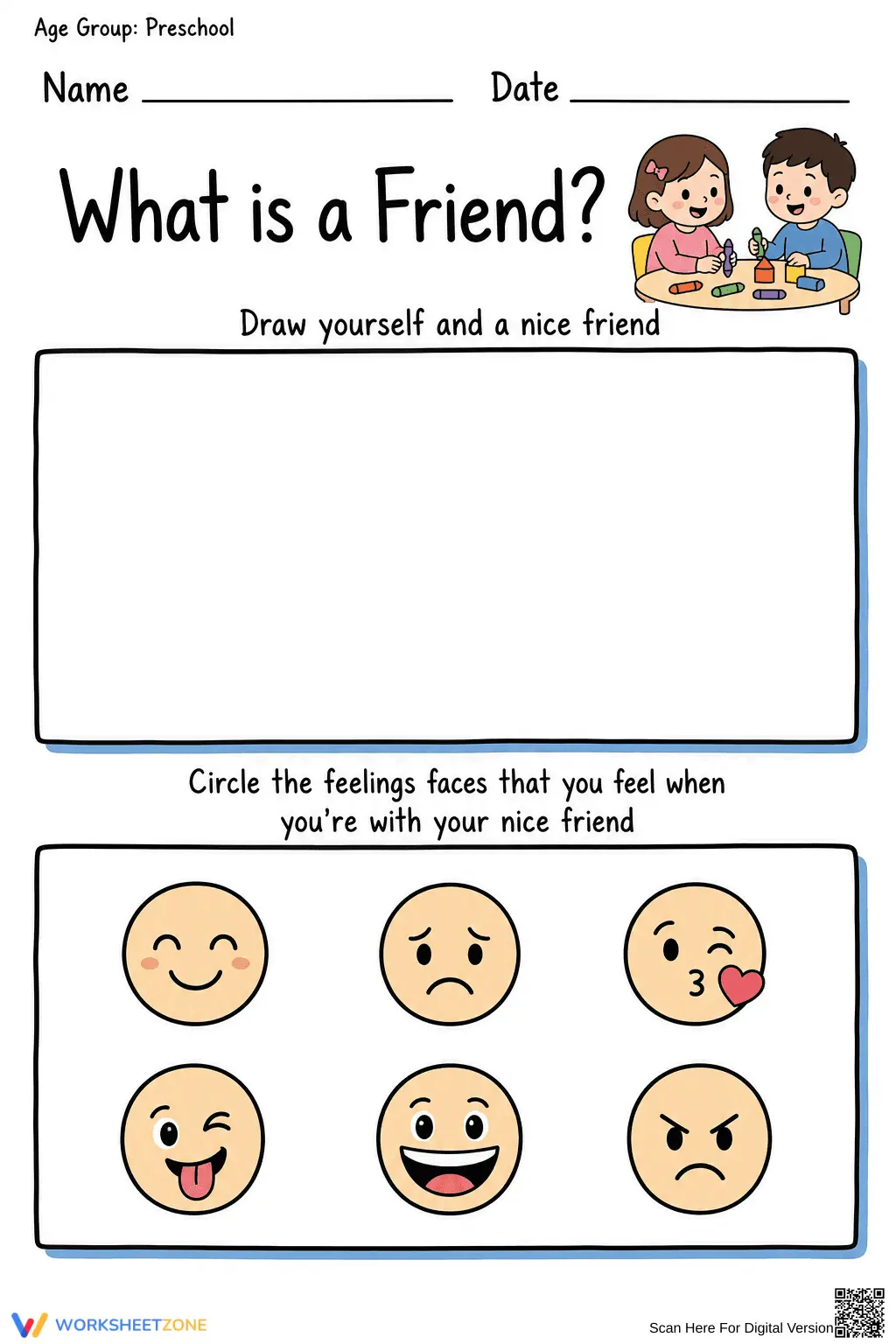
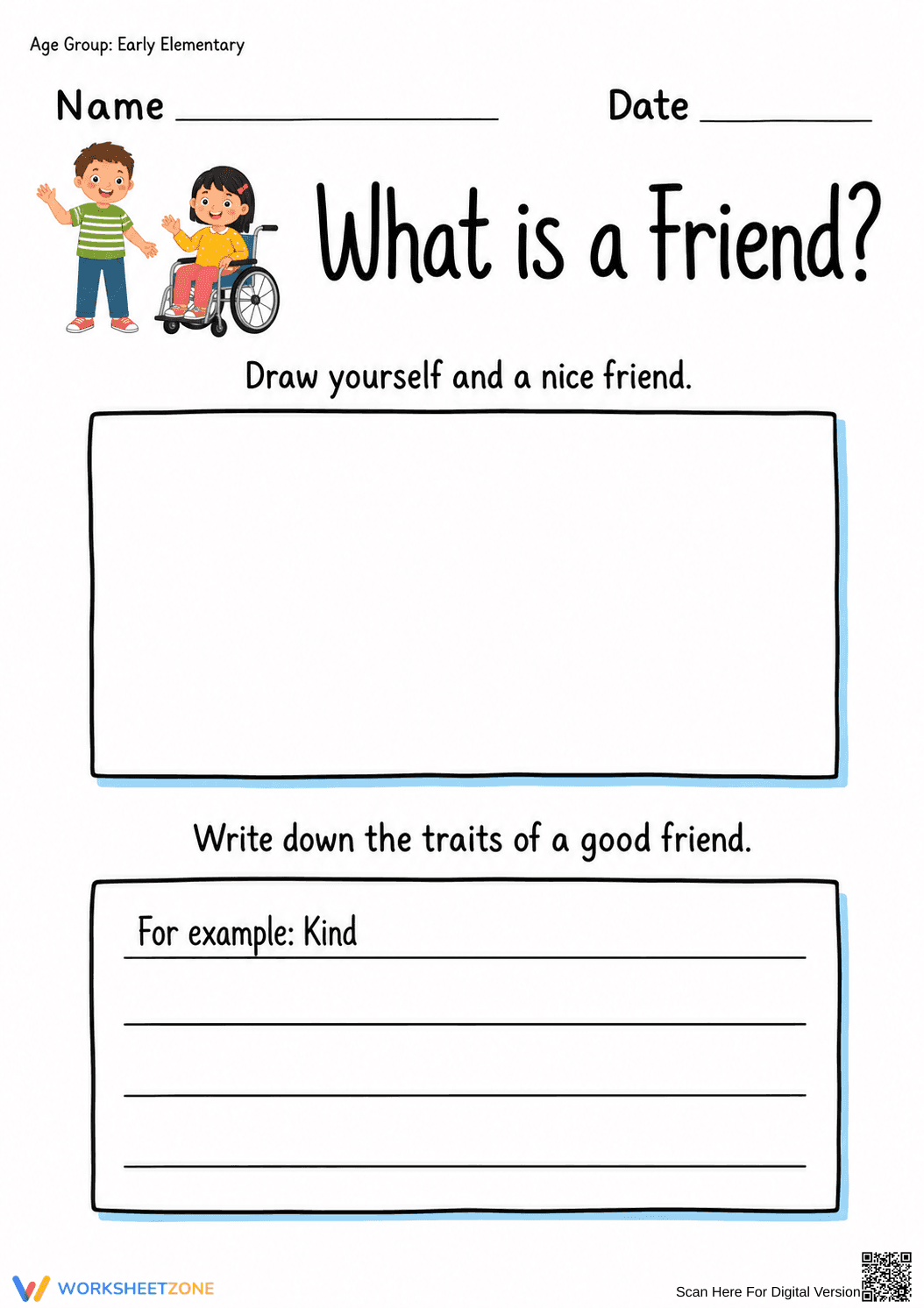
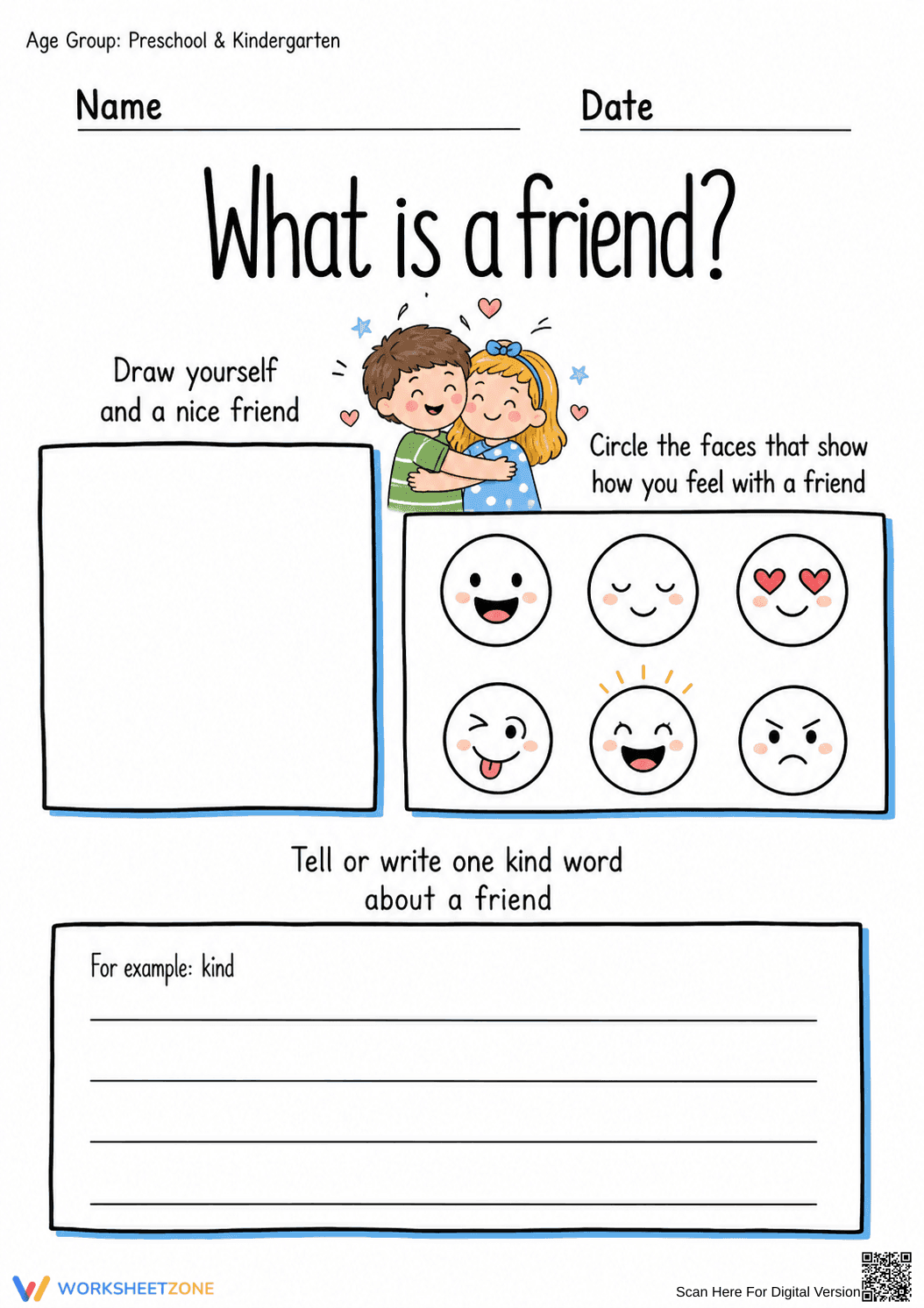
What's Inside: This resource contains three distinct versions of the "What is a Friend?" activity to support varying developmental stages. Each page features a large drawing box for self-portraiture and peer representation, a set of six emoji-style faces for emotion recognition, and varying levels of writing support. The layout is clean and student-friendly, utilizing high-contrast borders and clear instructions to minimize cognitive load for early learners.
Level Descriptions
- Below Grade (Preschool): Focuses heavily on visual literacy, requiring students to draw their friend and circle one of six emoji faces to represent their feelings without the pressure of writing.
- On Grade (Kindergarten): Balances drawing with a guided writing prompt where students identify a single kind word or trait, bridging the gap between visual and verbal expression.
- Above Grade (Early Elementary): Challenges students to list multiple traits of a good friend on four structured lines, encouraging deeper reflection on social values like kindness and sharing.
Standards Alignment
This resource aligns with `CCSS.ELA-LITERACY.W.K.2`, which requires students to use a combination of drawing, dictating, and writing to compose informative or explanatory texts. By naming the topic (friendship) and supplying information through visual and written cues, students meet the core requirements of the standard. Both standard codes can be copied directly into lesson plans, IEP goals, or district curriculum mapping tools.
How to Use It
Use this worksheet during a morning meeting or as part of a dedicated social-emotional learning block. Before distributing the pages, facilitate a brief group discussion about what makes someone a "nice friend" to activate prior knowledge. As a formative assessment, observe which emoji a student circles to gauge their current social comfort level and emotional vocabulary. Completion typically takes 15 to 20 minutes depending on the chosen level.
Who It's For
This resource is designed for preschool and kindergarten students, including those in inclusive classrooms or receiving speech and language services. It is particularly effective for students who benefit from visual scaffolds. For a complete lesson, pair this worksheet with a picture book about kindness or an anchor chart featuring positive social behaviors.
Social-emotional learning (SEL) in early childhood is critical for developing the interpersonal skills necessary for academic success and long-term well-being. This worksheet aligns with CCSS.ELA-LITERACY.W.K.2 by integrating drawing and writing to help students define the abstract concept of friendship. According to Fisher & Frey (2014), the use of visual representations like drawing and emoji-based emotion recognition serves as a powerful scaffold for young learners who are still developing their expressive language. By identifying specific traits and feelings associated with "nice friends," students build a foundational vocabulary for social interaction. Research from the RAND AIRS 2024 report emphasizes that explicit instruction in relationship skills through structured activities improves classroom climate and reduces behavioral incidents. This resource provides a tiered approach to ensure that all students, regardless of their current literacy level, can participate in meaningful reflections on their social environment and emotional health.


