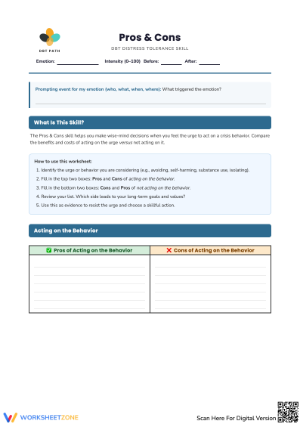
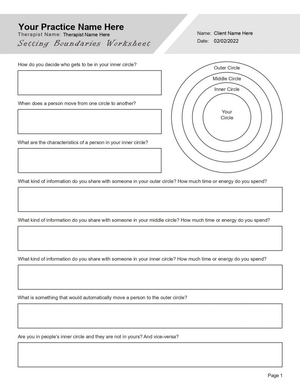
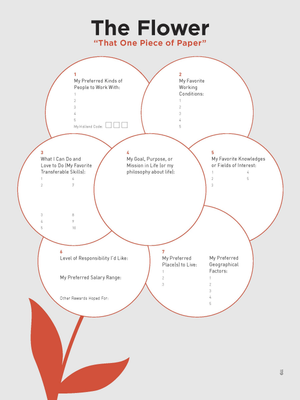
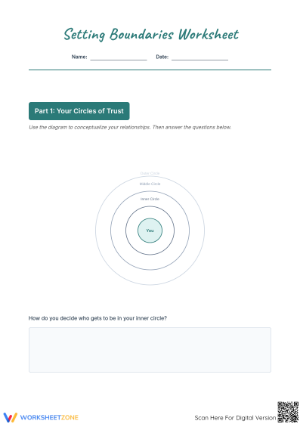
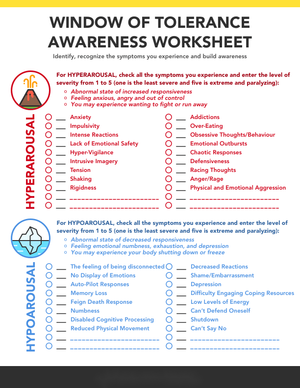
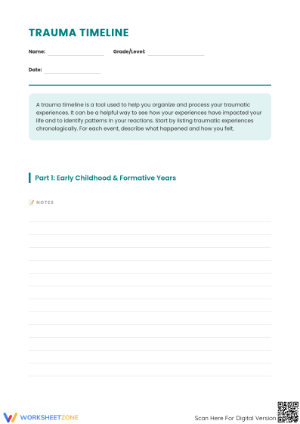
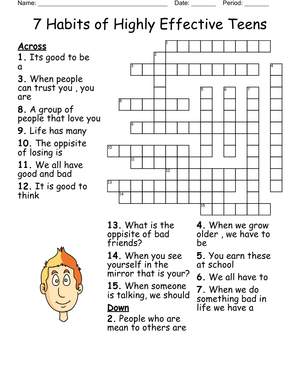
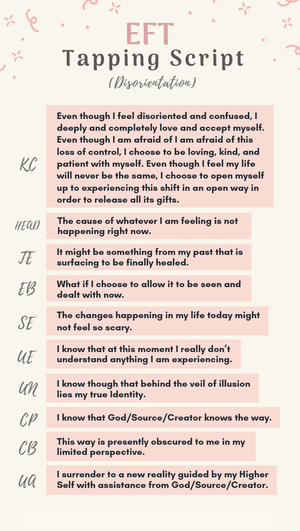
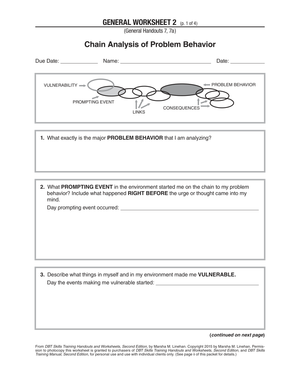
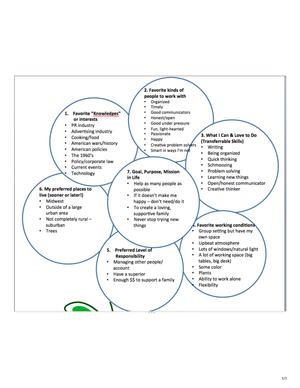
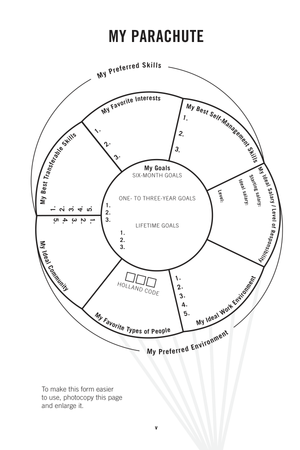
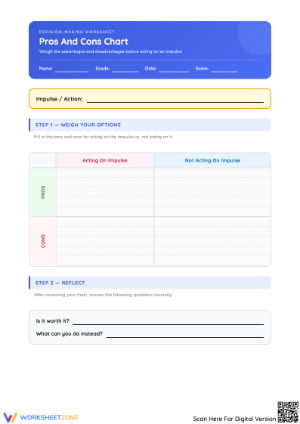
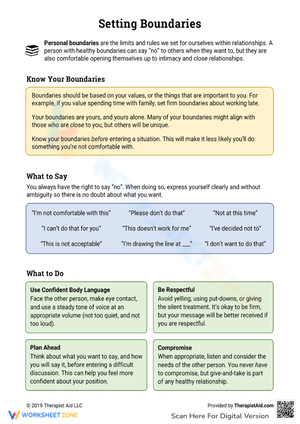
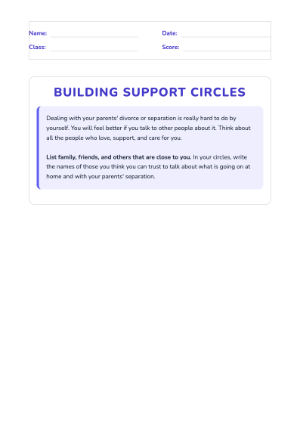
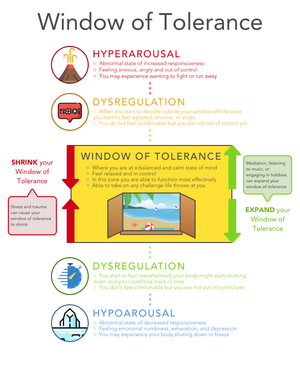
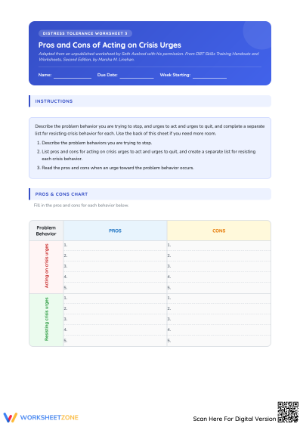
These behavior printable worksheets for 11th grade land at a developmental window when structured reflection produces real results — 16- and 17-year-olds can evaluate motives, weigh competing values, and articulate multiple perspectives in ways that make genuine analysis possible rather than rote. The set covers scenario analysis, cause-and-effect mapping, perspective-taking activities, conflict resolution planning, and self-assessment prompts written at the cognitive level high school students actually operate at.
What Each Worksheet Builds
The resources span five distinct formats, each targeting a different layer of behavioral reasoning.
- Scenario analysis: Students read a realistic situation — a social media conflict, a classroom confrontation, a workplace miscommunication between a teen and a supervisor — then identify each person's motivations, emotional triggers, and the downstream consequences of their choices. The scenarios avoid cartoon villains; every character has a legible reason for acting as they do.
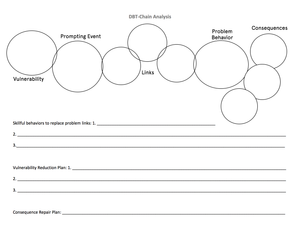
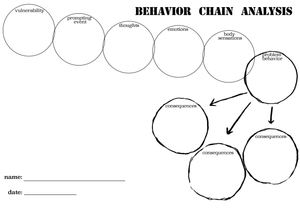
- Cause-and-effect mapping: Students trace how a specific behavior — arriving unprepared to a group project, or stepping in when someone is being excluded — ripples outward across individuals, the class, and the wider school environment. The graphic organizer format forces thinking past the immediate moment.
- Perspective-taking activities: Students receive one account of an event and rewrite it from two or three different vantage points. This goes beyond sympathy; it asks students to inhabit a different person's emotional reality and explain the internal logic of their choices.
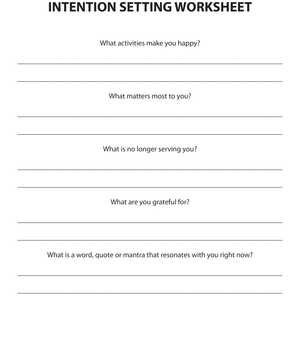
- Self-assessment and goal-setting prompts: Students rate themselves on specific behaviors — interrupting others during disagreements, defaulting to silence when they disagree, checking their phone during conversations — and then write a concrete plan for addressing one area. The worksheet asks for specifics, not general intentions.
- Conflict resolution planning: Students work through a structured process: identify the conflict, name each party's stated and unstated interests, evaluate three possible responses, and select one with a written rationale. The format mirrors what trained mediators actually do.
Mistakes Students Make That These Worksheets Help Teachers Catch
The most persistent error in 11th-grade behavior reflection is narration in place of analysis. A student asked to "analyze the behavior in this scenario" will write four sentences summarizing who said what and one sentence that reads "this was a bad choice." The worksheets address this directly by inserting stopping points — mid-scenario questions that force students to name the specific decision being made before they can continue, rather than summarizing the plot and calling it done.
A second pattern appears in perspective-taking work: students project their own emotional response onto every character. If a student would feel humiliated by public criticism, they write that all three characters felt humiliated, regardless of each character's stated background or relationship to the situation. This flattens the exercise into a mirror rather than a window. The worksheets counter this by giving each character a brief but distinct context — one who tends toward conflict avoidance, another managing their third difficult conversation that week — so the correct answer requires genuinely inhabiting someone else's frame.
Students also consistently conflate feelings with behaviors. Asked what behavior they exhibited in a conflict, they write "I felt frustrated." The worksheets separate these explicitly with labeled boxes for "what I felt" and "what I did," because the distinction between an internal state and an observable action is the actual learning objective — and one that most 11th graders have not been asked to draw clearly before.
Building These Worksheets Into Your Lesson Planning
Advisory and homeroom periods are the natural home for the shorter reflection prompts. A self-assessment worksheet takes roughly 12 minutes to complete independently, leaving time for a paired share before the bell. That sequence — private writing first, then partner conversation — consistently produces more substantive discussion than opening a topic cold to the whole group, because students arrive at the conversation with a written position already formed.
Health and psychology classes can use the cause-and-effect mapping worksheet as a direct extension of units on stress, peer pressure, or social influence. Students who have just read about the bystander effect, for example, can map the ripple effects of intervening versus staying silent in a specific scenario, which makes abstract research feel concrete and applicable.
In English classes, the scenario analysis worksheets pair naturally with character study. When students have been working through The Great Gatsby or The Kite Runner, a behavior analysis worksheet framed around a character's decision gives the close-reading work a social-emotional angle that students who resist formal literary analysis often find more accessible.
Counselors who work with students on behavioral support plans find the self-assessment and goal-setting worksheets useful for documentation. A completed worksheet shows not just what a student said in session but how they reasoned through a problem in writing — which is more useful evidence of growth than session notes alone.
Adjusting the Set for Different Learners
The scenario analysis and conflict resolution worksheets work well as-is for students reading at or above grade level. For students who struggle with multi-part written tasks, the simplest adjustment is reducing required responses from three to one or two, then conferencing verbally to capture the rest. Sentence starters help students who freeze at open prompts — "This person may have acted this way because..." removes the paralysis of a blank line without reducing the cognitive demand.
For students working above grade level, the more productive challenge is not more questions but harder ones. Ask them to identify the behavior scenario with no clean right answer — the situation where a reasonable person could defend two or three different responses — and write a brief argument for each. That task exercises the kind of moral reasoning that 11th graders are developmentally ready for but rarely get structured practice doing in writing.
Students with IEPs or behavioral support plans benefit from using the self-assessment worksheet across multiple weeks rather than as a one-time exercise. Comparing three completed worksheets from separate weeks gives both the student and their counselor a visible record of whether specific behavioral goals are shifting — more concrete than verbal check-ins alone.
Standard Alignment
These worksheets align to the CASEL (Collaborative for Academic, Social, and Emotional Learning) core competency framework, which most state SEL standards reference directly. Scenario analysis and perspective-taking activities address Social Awareness and Relationship Skills. Self-assessment and goal-setting worksheets address Self-Awareness and Self-Management. The conflict resolution planning worksheet addresses Responsible Decision-Making.
Counselors who incorporate behavior printable worksheets for 11th grade into behavioral support plan documentation can reference the specific CASEL competency targeted by each worksheet as part of formal goal tracking. Teachers in states with adopted SEL standards — including Illinois (ISBE Social/Emotional Learning Standards), Washington (OSPI SEL Standards), and Colorado (CDE SEL Competencies) — will find the worksheets map directly to late high school grade-band benchmarks.
Frequently Asked Questions
Are these worksheets used as a consequence, or can I frame them differently?
Before distributing any behavior printable worksheets for 11th grade, tell students explicitly that the work is self-directed and that completed worksheets are not shared with administrators. When students trust that reflection is genuinely private, the quality of written responses increases noticeably. Building these into a regular routine — Monday advisory, every other week — means they never read as punishment.
Can the worksheets be used in group settings, or only individually?
Both, and the sequence matters. Individual completion first, then small-group discussion, produces richer conversation than open-ended group talk. Students arrive with a written position, which means the discussion has something to push against. Without that individual step, groups tend to anchor on the first vocal opinion in the room and stop thinking independently.
How do these hold up for students who find extended writing genuinely difficult?
These behavior printable worksheets for 11th grade work well as verbal exercises for students with written expression challenges. A counselor or teacher reads the prompt aloud, the student speaks their response, and the adult scribes — or the student voice-records. The analytical work of identifying motivations, predicting consequences, and naming perspectives does not require writing proficiency to be meaningful.
Do these fit co-taught or inclusion classrooms?
Yes. The most practical co-teaching setup is parallel instruction during the individual completion phase — each teacher circulates in their half of the room, checking in with students who are stuck. During the discussion phase, the class can return to a full-group format. The worksheets themselves do not require modification for inclusion settings unless a student's IEP specifies altered content or response format.












 Interactive Worksheet Maker
 Quiz Maker
 Word Search Maker
 Crossword Puzzle Maker
 Word Scramble Generator
 Sentence Scramble Generator
 Handwriting Worksheet Generator
 Name Tracing Generator
 Fill In The Blank Generator




 BACK TOSCHOOL