




























1 / 3
0
Views
0
Downloads



0.0
0
Save
0 Likes
Share
DBT: Pros and Cons Explored
0 Views
0 Downloads

Paste this activity's link or code into your existing LMS (Google Classroom, Canvas, Teams, Schoology, Moodle, etc.).
Students can open and work on the activity right away, with no student login required.
You'll still be able to track student progress and results from your teacher account.
Information
Description
What It Is:
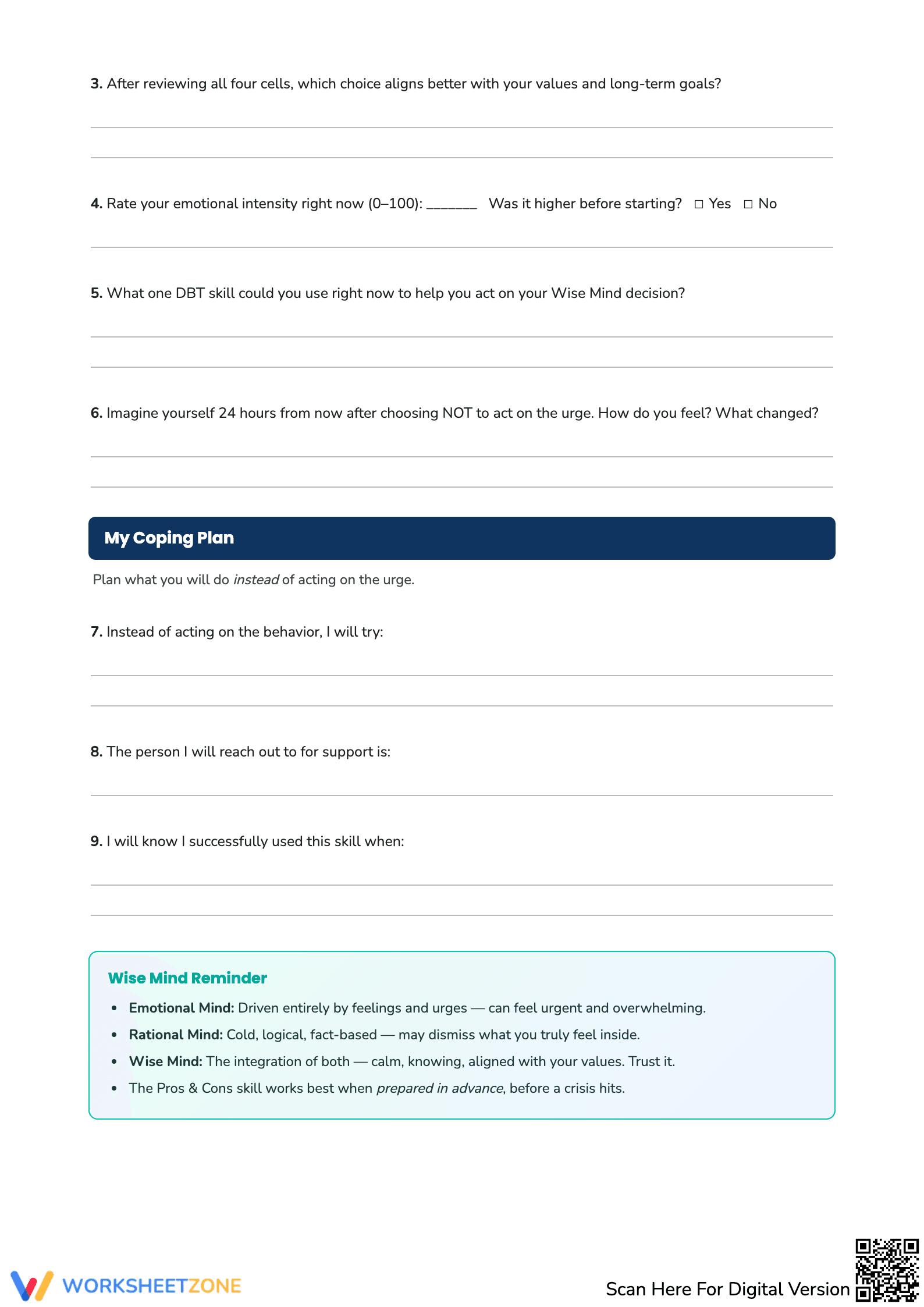
This is a DBT (Dialectical Behavior Therapy) worksheet titled 'Pros and Cons: Distress Tolerance Skill.' It provides a structured template for analyzing the pros and cons of impulse actions/behaviors versus not acting on those behaviors. The worksheet has a 2x2 grid labeled with 'Acting on Behavior' and 'Not Acting on Behavior' across the top, and 'Pros' and 'Cons' down the side. The worksheet also includes brief instructions on how to use the grid, asking the user to consider the urge or behavior, comment on short and long term outcomes, and consider the advantages and disadvantages.
Grade Level Suitability:
This worksheet is most suitable for high school students and adults. The concepts of analyzing pros and cons and considering the long-term consequences of actions require a certain level of cognitive maturity and emotional understanding typically developed in later adolescence and adulthood.
Why Use It:
This worksheet helps individuals develop distress tolerance skills by encouraging them to consciously evaluate the potential benefits and drawbacks of acting on impulses. It promotes self-awareness, thoughtful decision-making, and the ability to manage difficult emotions and situations more effectively. It is a valuable tool for those working on impulse control and emotional regulation.
How to Use It:
First, identify the urge or behavior you are trying to resist or manage. Then, fill in the grid by listing the pros and cons of acting on the behavior, and the pros and cons of not acting on the behavior. Finally, consider the short-term and long-term consequences of each option to make an informed decision about how to proceed.
Target Users:
This worksheet is designed for individuals participating in DBT therapy, those struggling with impulse control, and anyone seeking to improve their emotional regulation skills. It is also beneficial for therapists and counselors working with clients on distress tolerance techniques.
This is a DBT (Dialectical Behavior Therapy) worksheet titled 'Pros and Cons: Distress Tolerance Skill.' It provides a structured template for analyzing the pros and cons of impulse actions/behaviors versus not acting on those behaviors. The worksheet has a 2x2 grid labeled with 'Acting on Behavior' and 'Not Acting on Behavior' across the top, and 'Pros' and 'Cons' down the side. The worksheet also includes brief instructions on how to use the grid, asking the user to consider the urge or behavior, comment on short and long term outcomes, and consider the advantages and disadvantages.
Grade Level Suitability:
This worksheet is most suitable for high school students and adults. The concepts of analyzing pros and cons and considering the long-term consequences of actions require a certain level of cognitive maturity and emotional understanding typically developed in later adolescence and adulthood.
Why Use It:
This worksheet helps individuals develop distress tolerance skills by encouraging them to consciously evaluate the potential benefits and drawbacks of acting on impulses. It promotes self-awareness, thoughtful decision-making, and the ability to manage difficult emotions and situations more effectively. It is a valuable tool for those working on impulse control and emotional regulation.
How to Use It:
First, identify the urge or behavior you are trying to resist or manage. Then, fill in the grid by listing the pros and cons of acting on the behavior, and the pros and cons of not acting on the behavior. Finally, consider the short-term and long-term consequences of each option to make an informed decision about how to proceed.
Target Users:
This worksheet is designed for individuals participating in DBT therapy, those struggling with impulse control, and anyone seeking to improve their emotional regulation skills. It is also beneficial for therapists and counselors working with clients on distress tolerance techniques.


