Self care assessment worksheets pdf for 10th grade give school counselors and health teachers a structured way to prompt honest reflection on physical, emotional, and academic habits — at the exact moment in high school when those habits are quietly breaking down under mounting coursework, social pressure, and the particular exhaustion of being fifteen or sixteen without language for what's wrong. Grade 10 marks a genuine inflection point: students are old enough to recognize that something feels off, but most haven't been taught to evaluate it systematically. These worksheets do that work.
What Students Examine in Each Worksheet
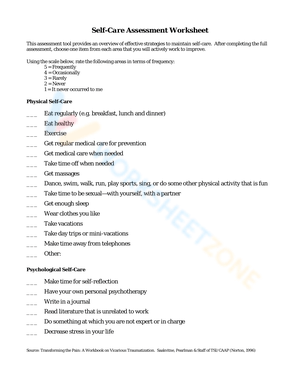
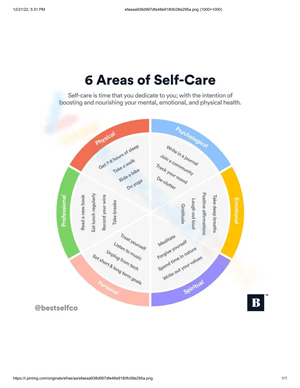
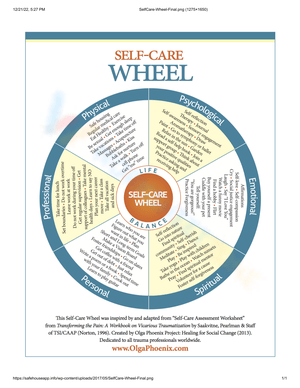
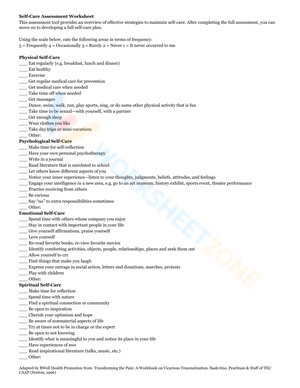
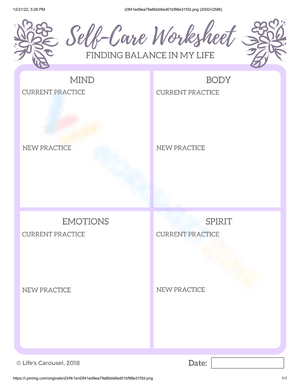
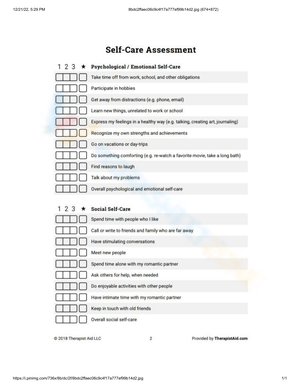
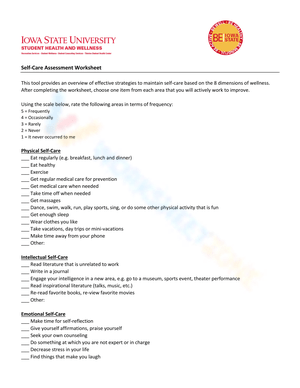
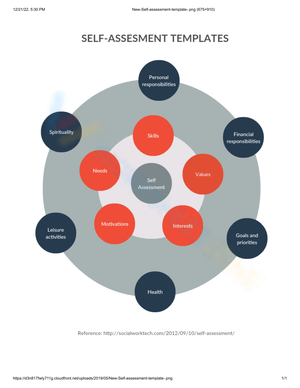
Each worksheet organizes self-care into five distinct domains, which matters instructionally because students almost always collapse the concept into a single idea — usually sleep. Separating the domains forces students to look at corners of their lives they'd otherwise skip past.
- Physical: Sleep duration and quality, hydration, meals eaten at regular intervals, and whether students are moving their bodies in any consistent way. This domain consistently surfaces the biggest gap between what 10th graders report and what they actually do.
- Psychological: Activities that engage the mind outside of school requirements — reading by choice, creative hobbies, or learning a skill entirely for personal satisfaction. Many 10th graders have quietly abandoned these since middle school.
- Emotional: Whether students are processing what they feel — through journaling, talking to someone they trust, or simply allowing themselves to rest without guilt.
- Social: The quality of peer and adult relationships: whether students feel they can ask for help, and whether their social time actually restores them or depletes them.
- Academic: Study pacing, break habits during homework sessions, and whether students can disconnect from school tasks long enough to recover mentally before the next day.
The academic domain is what distinguishes these worksheets from general wellness inventories built for adults. High school students need a category that addresses the specific stress architecture of their lives — not a generic counseling tool retrofitted for a teenager.
Why Written Self-Assessment Works Better at This Grade Level Than a Group Check-In
Group wellness check-ins in 10th grade almost always produce social performance instead of honest reflection. Students say what sounds acceptable to their peers, which means they underreport screen time, overreport sleep, and rarely mention anything that makes them feel vulnerable. A written worksheet — completed individually, quietly, with the explicit understanding that no one is collecting it — breaks that pattern. The physical act of writing slows down the reflection process. Students who would breeze through an online form in ninety seconds stop and think when they're putting words on paper.
There's also a cognitive load consideration: a well-designed worksheet guides attention across all five domains in sequence, which prevents students from fixating on their worst area while ignoring the fact that they haven't spoken to a friend outside of school in three weeks. That sequential, domain-by-domain structure produces a more complete and honest picture than any open-ended prompt.
Building These Worksheets Into Your Advisory or Health Block Without Losing Instructional Time
Advisory periods are the most natural home for self care assessment worksheets pdf for 10th grade, particularly at the start of a new semester or the week before midterms, when students are operating on stress that hasn't yet been named. A fifteen-minute block — set up with a brief framing statement about why this matters and a clear privacy guarantee — is enough time for most students to complete a full assessment. The key is not letting the debrief feel like a class presentation. After individual completion, a quick anonymous tally ("raise your hand if you slept fewer than six hours at least three nights this week") surfaces shared patterns without exposing any individual student's answers.
For health teachers running a dedicated wellness unit, the first worksheet functions as a baseline document. Students complete it on day one, seal it in an envelope with their name on the outside, and return to it four to six weeks later when they complete the same worksheet again. Placing both versions side by side and writing three observations about what changed — without any teacher judgment attached to the content — turns the assessment into a genuine formative tool rather than a one-time activity with nothing tethered to it.
Patterns in Student Work Worth Watching Before You Debrief the Class
The most consistent issue isn't dishonesty — it's conflation. Students regularly rate themselves as meeting emotional self-care needs because they "talk to friends," without distinguishing between venting in group chats and genuine emotional support. A student spending four hours a day in threads that are primarily complaint sessions may score themselves high in the social domain while experiencing significant emotional depletion. A brief domain-by-domain walkthrough before students begin the worksheet — clarifying what each category actually measures — prevents this and produces more accurate results.
The second pattern is a reversal of cause and effect in the physical domain. Students who are chronically underslept often report that they "can't fall asleep," treating it as a fixed condition rather than a downstream consequence of inconsistent bedtimes, screens in bed, and no wind-down routine. When students see those three contributing factors listed as separate line items — rather than the single word "sleep" — they start making causal connections they hadn't made before. That shift in thinking is where the real instructional value sits.
Standard Alignment
These worksheets align with two CASEL core competencies: Self-Awareness (the ability to recognize one's own emotions, thoughts, and values and understand how they influence behavior) and Self-Management (the ability to regulate emotions, set goals, and make choices that support those goals). At the 10th-grade level, both competencies are expected to operate with increasing sophistication — students aren't simply identifying feelings; they're tracing connections between daily habits and longer-term outcomes. The five-domain structure makes those connections concrete rather than abstract.
For schools using the National Health Education Standards, these worksheets address Standard 6 (students will demonstrate the ability to use goal-setting skills to enhance health) and Standard 7 (students will demonstrate the ability to practice health-enhancing behaviors and avoid or reduce health risks). The action-planning step — where students identify one specific behavior change in a single domain — is the direct instructional mechanism for Standard 6.
Adjusting These Worksheets for the Full Range of Students in One Room
For students who rush through the assessment and rate themselves uniformly high without much thought, one follow-up prompt closes that gap: "For any domain where you rated yourself above 7 out of 10, write one specific behavior that earns that score." That single requirement forces evidence-based thinking and slows down students who tend to dismiss self-reflection tasks.
Self care assessment worksheets pdf for 10th grade also work differently for students who are already in crisis or whose scores across all domains are uniformly low. For this group, the goal of the first assessment is not to produce an action plan — it's to open a door. Counselors and teachers can use the completed worksheet as a private conversation starter: "I noticed your score in the emotional domain was low — do you want to talk about what's behind that?" The worksheet gives students a structured prompt to name something they wouldn't have volunteered on their own.
For English language learners or students with reading challenges, a simplified-language version of each domain description — without reducing the depth of the reflection — takes roughly thirty minutes to create from an existing worksheet. Pairing that version with a brief verbal walkthrough of each domain before students begin allows most students to complete it independently.
Frequently Asked Questions
Should teachers collect the completed worksheets?
Generally, no. When students know a teacher will read their responses, they self-edit — especially around anything touching mental health, family stress, or social struggles. The more useful practice is asking students to keep their worksheets in a personal folder and revisit them across the semester. If a student's responses suggest they need support, a counselor follow-up is more appropriate than collecting the document itself.
How often should 10th graders complete a self-assessment?
Twice per semester is a reasonable minimum — once at the start and once mid-semester during a high-stress period. Spacing the assessments allows students to detect actual changes in their habits rather than reporting the same snapshot twice. More frequent use risks students treating each worksheet as a routine to rush through rather than a genuine reflection task.
Can these worksheets fit inside a broader SEL sequence?
That's where self care assessment worksheets pdf for 10th grade fit most sustainably — inside a broader SEL sequence rather than as a standalone activity. When students have already been introduced to the CASEL competencies and are practicing self-awareness skills in other contexts, the assessment connects more meaningfully. Without that foundation, students sometimes complete each worksheet without understanding why the domains connect to their academic or daily lives.
What should a teacher do if a student's responses signal a mental health concern?
Coordinate with your school counselor before distributing the assessment and establish a clear protocol in advance. Students are not required to share their responses, but if they want to, there should be a trusted adult available. Some teachers include a brief line at the bottom of the worksheet: "If any of these questions brought up something you'd like to talk through with an adult, let me know privately." That one line gives students a low-barrier entry point to seek support without requiring them to raise their hand in class.












 Interactive Worksheet Maker
 Quiz Maker
 Word Search Maker
 Crossword Puzzle Maker
 Word Scramble Generator
 Sentence Scramble Generator
 Handwriting Worksheet Generator
 Name Tracing Generator
 Fill In The Blank Generator