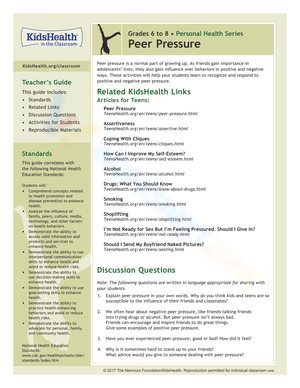
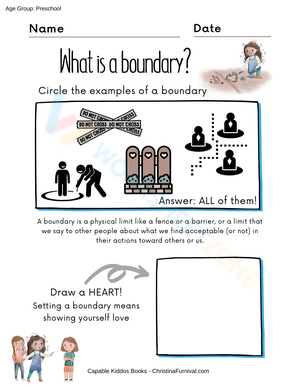
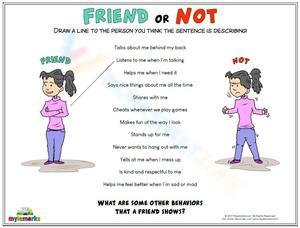
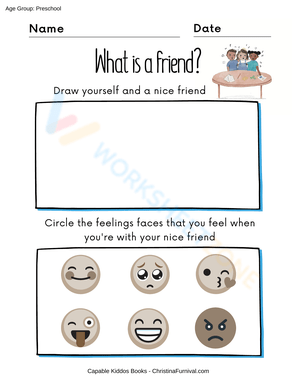
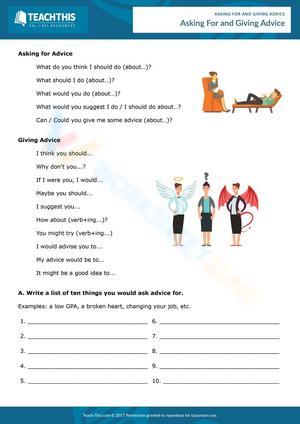
10th Grade Advice to Youth Worksheets Printable
These 10th grade advice to youth worksheets printable give teachers a ready-made framework for one of the genuinely tricky moments in secondary reading instruction: getting students to recognize that a piece of writing presenting itself as sincere advice is actually satirizing the very act of giving that advice. Twain's 1882 essay is short enough to complete in a single class period, but its ironic reversals take real instructional work to surface. This set provides that work in exercises that move from close reading into rhetorical analysis and, in the strongest tasks, into student-generated satire.
What the Worksheets Ask Students to Do
The exercises span four overlapping skill areas. Students identify specific rhetorical devices — irony, hyperbole, understatement — and annotate the passages where Twain deploys them. They track how tone shifts across the essay's six pieces of "advice," moving from a veneer of sincerity into barely-disguised absurdity. They write paragraph-length responses that compare Twain's stated position to his implied one, a task that demands students distinguish between what a writer says and what the writing actually does. The final exercise in each worksheet asks students to draft a short satirical advisory of their own — a section on obedience, or lying, or something their own generation cares about — using the structural patterns they've identified in Twain's text.
The annotation tasks give students a concrete process for slowing down on the sentences that matter most. Rather than reading the essay from top to bottom and calling it analysis, students mark every line where Twain appears to endorse a behavior that would cause social harm if followed literally. The density of those marks in the paragraph about lying — where Twain's advice escalates from "a fib" to systematic deception delivered with the breezy tone of a conduct manual — reliably surprises students who thought they'd finished with that section after one pass.
Why This Essay Lands Differently in Tenth Grade
By 10th grade, most students have encountered satire in fragments — a political cartoon, a parody ad — but haven't yet analyzed a sustained satirical argument. Twain's essay is the right length and the right difficulty for that first encounter with the full form. It's short enough to hold in working memory while discussing it, but complex enough that a single read does not exhaust it. The behavioral content also matters at this developmental moment. Tenth graders are genuinely preoccupied with authority — which rules are real, which are performative, which adults mean what they say — and Twain's essay is explicitly about that preoccupation. Students who disengage from direct instruction about integrity will sit up when they encounter Twain treating integrity as a punchline delivered with a straight face.
Where Students Consistently Misread the Essay
The most predictable error happens in the opening paragraph. Twain writes "always obey your parents, when they are present" — and students frequently mark this as genuine advice and move on. They miss the qualifying clause entirely, or they read it and interpret it as a quaint Victorian hedge rather than the essay's first live wire. The comma after "parents" does a lot of work that students need explicit training to notice. A close-reading task that isolates that sentence and asks students to identify every conditional or qualifying phrase within it usually cracks this open in a way that a class-level explanation does not.
A second persistent problem: students who successfully identify irony in isolated sentences still struggle to articulate the essay's cumulative satirical argument. They write "Twain is being sarcastic here" in the margin, but when asked what the advice, taken as a whole, reveals about adult moral instruction, they produce vague summaries about honesty. The worksheets address this by asking students to synthesize their marginal annotations into a one-sentence claim about what Twain is actually critiquing — not which device he uses, but what social target the irony points at.
Building These Worksheets Into Your Instructional Week
The 10th grade advice to youth worksheets printable work best when teachers treat the first day as a diagnostic rather than a full lesson. Give students 20 minutes to read the essay cold and answer the comprehension questions at the start of each worksheet without any prior framing of satire. What students write in that first pass reveals exactly how much they're reading at face value — which is precisely the data needed to calibrate how much explicit instruction on irony to front-load before the deeper analysis tasks.
On day two, use the rhetorical device annotation worksheet during a guided read-aloud. Twain's sentences are built on timing, and students who read them silently miss the pause that makes the conditional clause land. Reading aloud — teacher-led for the first section, student-led in pairs for the second — gives the irony its proper rhythm. The final 15 minutes of that block work well as a whole-class annotation comparison: which lines did students mark, which did they skip, and why. The creative writing task fits naturally at the start of day three as a warm-up, giving students 10 minutes to draft a single piece of satirical advice about something they find genuinely absurd about school or home expectations before they revisit how Twain structures his own.
Differentiating These Worksheets Across the Range of Readers in One Class
The 10th grade advice to youth worksheets printable include tiered question sets that keep the same text and the same core analytical task while adjusting the level of interpretive independence required. Students who need more support work from prompts that provide sentence frames for their rhetorical analysis: "In this passage, Twain appears to say ___, but his actual position is ___ because ___." Students working at grade level complete open-ended paragraph tasks with guiding questions but no sentence-level structure. Advanced students receive a comparative extension: they set Twain's essay against a contemporary satirical piece — a selected Onion essay or a specific late-night monologue — and analyze how both writers handle the same rhetorical problem of delivering critique through a voice that pretends to agree.
One honest limitation worth naming: the creative writing task frustrates students who interpret "write your own satirical advice" as permission to write something mean. The prompt works better when paired with a brief class conversation about the difference between satire that critiques a social norm and humor that targets a person. That conversation takes about five minutes and prevents a predictable range of draft problems.
Standard Alignment
These worksheets align to CCSS.ELA-Literacy.RI.9-10.6, which asks students to determine an author's point of view and analyze how rhetoric shapes meaning — the central demand of every task in this set. The annotation and synthesis exercises also address CCSS.ELA-Literacy.RI.9-10.4, the standard for determining figurative and connotative meaning and analyzing tone. In most 10th grade pacing guides, these standards appear in the second or third unit, after students have practiced basic close reading on more literal texts. Twain's essay fits well as the first challenging application of RI.9-10.6 because the gap between stated meaning and implied meaning is wide enough that students can feel the difference before they can name it.
Frequently Asked Questions
Do students need prior knowledge of Twain or the 1880s to work through these worksheets?
No prior knowledge is required. The essay's satirical targets — parental authority, social lying, the gap between stated and actual values — are legible to contemporary teenagers without historical context. A two-minute introduction establishing that Twain was writing for an audience that took moral instruction seriously is sufficient. The analysis tasks don't depend on period knowledge, so teachers who want to add context can do so without restructuring the lesson.
How long does it take to complete a full worksheet?
The annotation and comprehension sections take most students 20 to 25 minutes. The paragraph-length synthesis question adds another 10 minutes. The creative writing task, assigned as an in-class exercise, runs 15 to 20 minutes depending on how much discussion precedes it. Most teachers split the set across two class periods — the first worksheet for close reading, the second for synthesis and creative response.
Can these worksheets anchor a full unit, or are they better used as a standalone lesson?
The 10th grade advice to youth worksheets printable support both contexts. As a standalone, they carry a two- to three-day lesson on rhetorical analysis and irony. As a unit anchor, they pair well with other texts that use an ironic or unreliable voice — excerpts from Catch-22, Swift's "A Modest Proposal," or contemporary satirical nonfiction — giving students a base text to return to when identifying how irony operates structurally across different works and time periods.
What do students typically produce in the creative writing task?
The strongest student-written satirical advice pieces target school policies: hall passes, dress codes, phone rules. The ironic distance Twain models gives students a form for critique that feels less like complaining and more like argument. Teachers who collect these drafts consistently find them useful as informal data on which classroom or school expectations students experience as arbitrary — information worth having at the start of a semester.
Clear All