


























Views
Downloads

Self-Care Assessment Worksheet | Grade 9-12 Essential
Paste this activity's link or code into your existing LMS (Google Classroom, Canvas, Teams, Schoology, Moodle, etc.).
Students can open and work on the activity right away, with no student login required.
You'll still be able to track student progress and results from your teacher account.
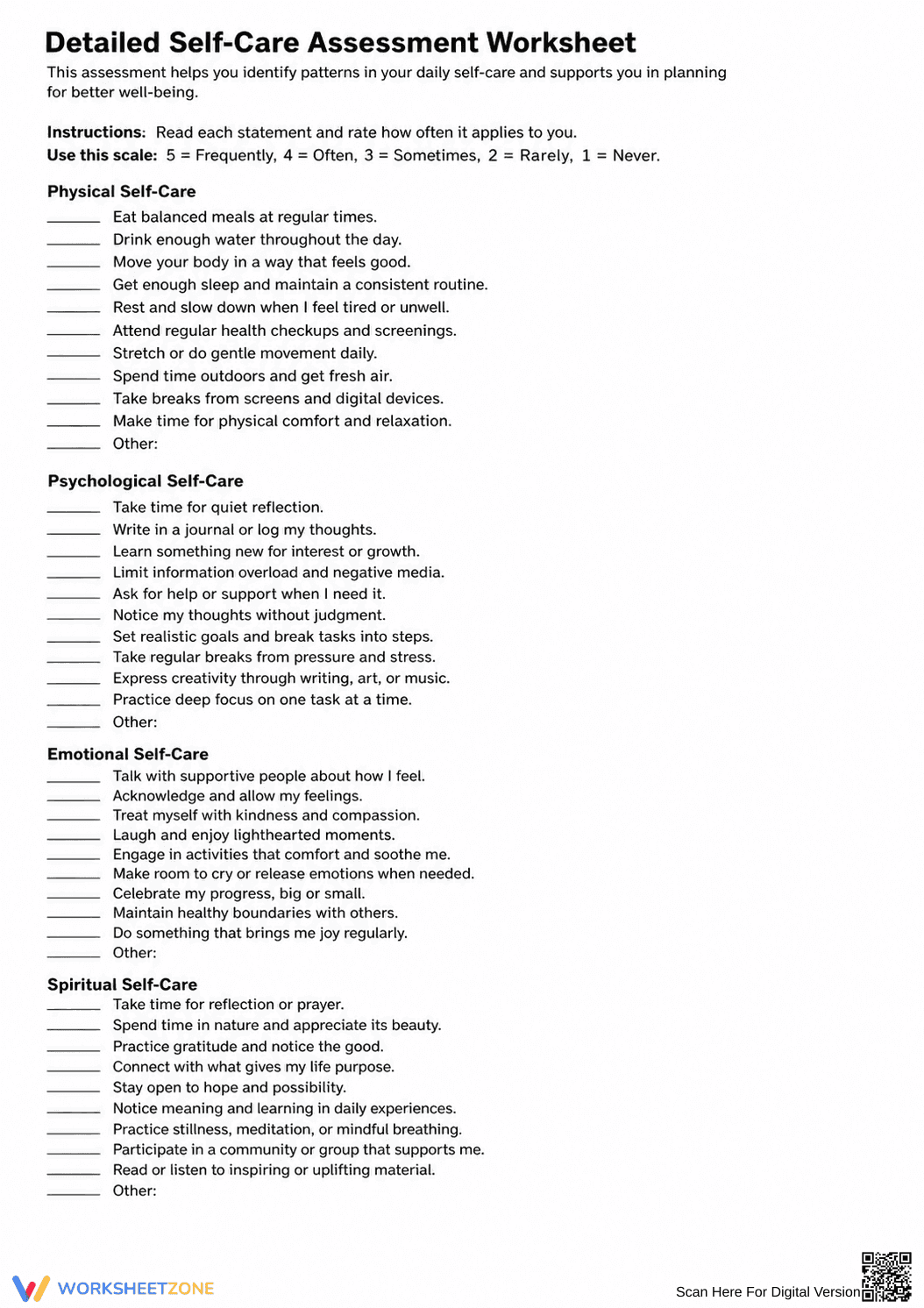
This Grade 9-12 self-care assessment worksheet empowers students to evaluate their personal well-being across four distinct domains. By rating current habits and identifying gaps, learners create a concrete action plan for improvement. This tool facilitates deep self-reflection, helping students transition from passive awareness to active health management through structured, evidence-based inquiry.
At a Glance
- Grade: 9-12 · Subject: Social Skills
- Standard:
CCSS.ELA-LITERACY.W.9-10.10— Write routinely over shorter time frames for specific tasks and purposes- Skill Focus: Self-reflection and wellness planning
- Format: 2 pages · 45 problems · Personal assessment · PDF
- Best For: Health classes and counseling sessions
- Time: 20–30 minutes
What's Inside
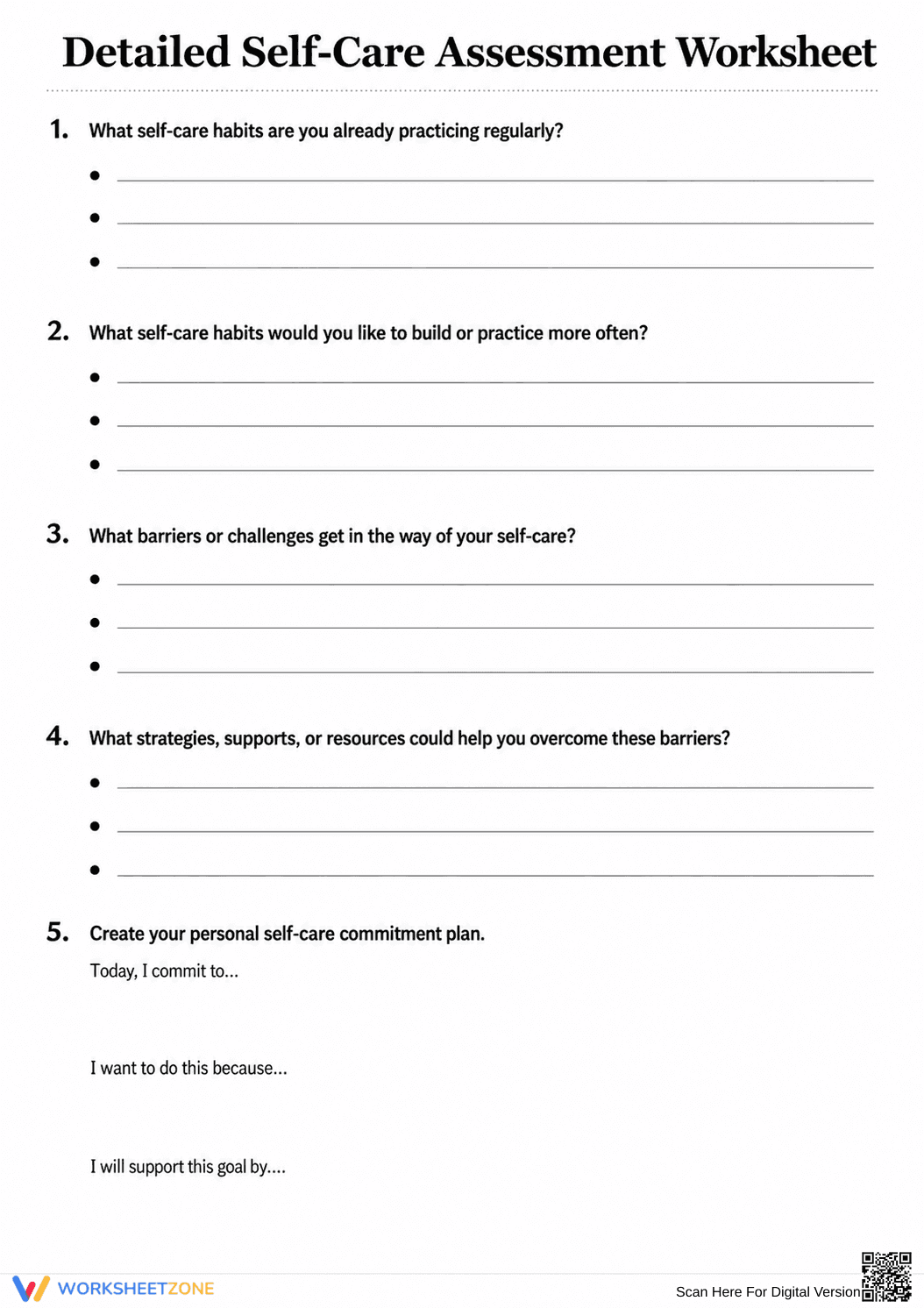
This two-page PDF features a comprehensive 40-item Likert scale assessment. Students rate their frequency of engagement in physical, psychological, emotional, and spiritual self-care activities on a scale of 1 to 5. The second page provides five critical reflection prompts designed to identify barriers to wellness and a structured "Self-Care Commitment Plan" for immediate goal setting and accountability.
Zero-Prep Workflow
- Print: Generate copies of the two-page document in less than 1 minute.
- Distribute: Hand out the sheets; instructions are self-contained and require no prior lecture.
- Review: Use the commitment plans for a 5-minute formative check on student needs.
This resource is an ideal sub plan or wellness-Wednesday activity because it requires zero teacher setup and provides immediate student engagement.
Standards Alignment
The primary standard addressed is `CCSS.ELA-LITERACY.W.9-10.10`, which requires students to write routinely for a range of tasks and purposes, including self-reflection. By identifying specific areas of neglect in the assessment phase and articulating a written plan, students satisfy the reflective components of the national literacy framework. This standard code can be copied directly into lesson plans, IEP goals, or district curriculum mapping tools.
How to Use It
Use this worksheet during a health unit on mental wellness or as a proactive tool in a school counseling group. For best results, assign the assessment after a brief discussion on the definition of holistic health. As a formative assessment, observe which categories students struggle with most to tailor future classroom support. Expected completion time ranges from 20 to 30 minutes depending on the depth of student reflection.
Who It's For
This resource is tailored for high school students, college-aged learners, and adults who need a structured way to audit their lifestyle. It is particularly effective for students in transition or those managing high-stress academic loads. It pairs naturally with a guided meditation session or a direct instruction lesson on stress management techniques.
Research by Fisher & Frey (2014) emphasizes that metacognitive reflection is a cornerstone of student agency and long-term behavioral change. This self-care assessment aligns with those findings by requiring students to move beyond simple identification into the process of strategic planning. By utilizing the `CCSS.ELA-LITERACY.W.9-10.10` framework, the worksheet ensures that students are not just listing activities but are actively developing the reflective writing skills necessary for adult autonomy. According to the NAEP, students who engage in regular self-monitoring of health behaviors report higher levels of self-efficacy. This tool provides the necessary scaffolding for that monitoring, offering 45 specific data points for student reflection. It serves as a vital bridge between theoretical health knowledge and the practical application of wellness strategies in a high-pressure educational environment. This structured approach to social-emotional learning supports the development of self-awareness and self-management competencies essential for post-secondary success.


