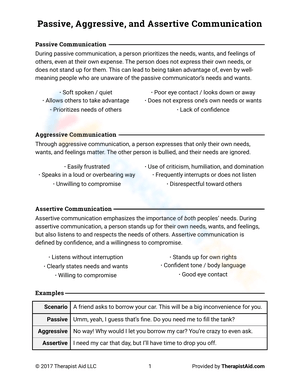
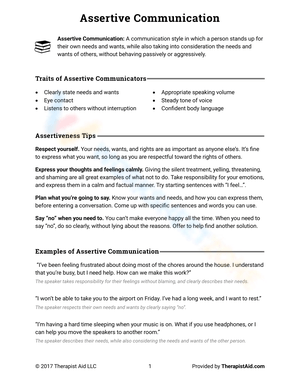
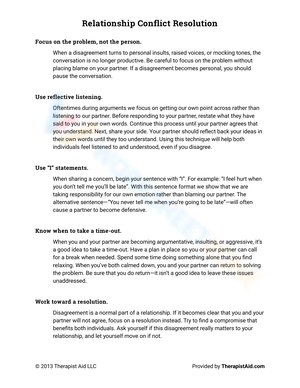
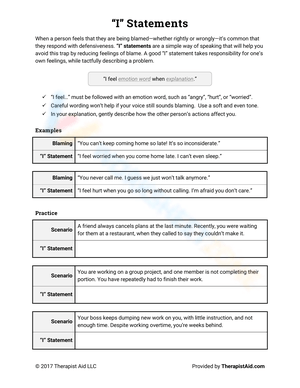
These 10th grade communication skills worksheets printable give teachers a targeted set of tools for converting abstract communication concepts into practiced, observable behaviors. The set addresses active listening, non-verbal awareness, conflict resolution through I-statements, and digital etiquette — a combination that reflects what tenth graders actually encounter in peer groups, part-time workplaces, and online spaces.
What Students Practice
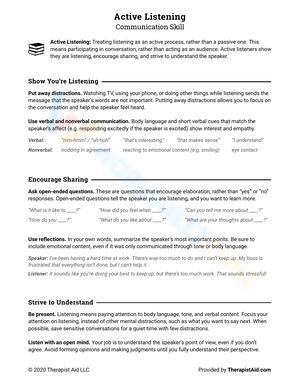
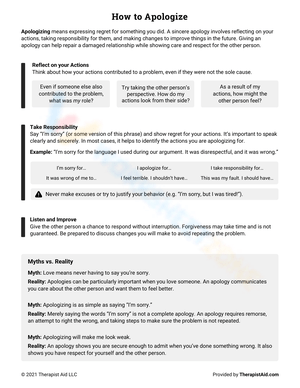
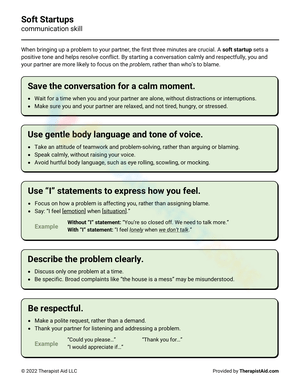
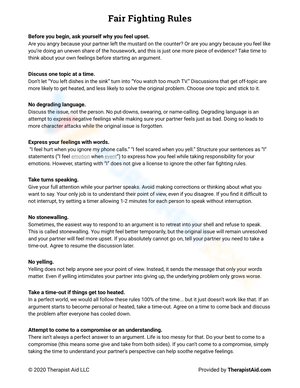
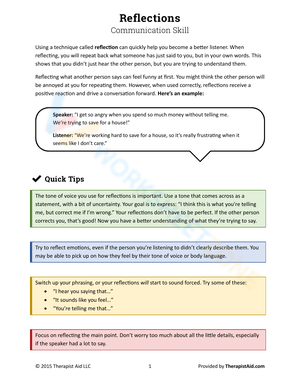
Each worksheet targets a distinct skill within the broader communication landscape. Active listening exercises ask students to paraphrase a dialogue and then formulate clarifying questions — not as a general directive, but with specific sentence stems that students gradually internalize. Non-verbal communication worksheets have students analyze scenario descriptions, labeling body language signals and explaining how each cue reinforces or contradicts the spoken message. Conflict resolution worksheets teach the mechanics of I-statements and walk students through a de-escalation sequence: identify the emotion, name the need, state the request. Digital communication worksheets address tone in text messages and professional emails — a skill most teachers find consistently underdeveloped in tenth graders specifically because students have years of informal texting habits to unlearn.
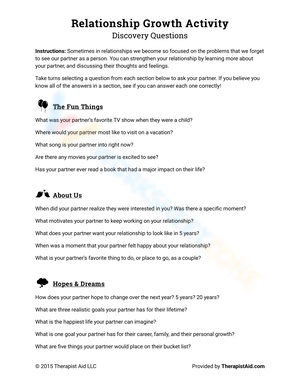
Perspective-taking runs through the entire set. Students regularly encounter scenarios that require them to step into a role unlike their own — a manager delivering feedback, a peer asking for help, a person on the receiving end of a rumor. The specificity of each scenario is what makes the practice transfer.
Mistakes Students Make That These Worksheets Help You Catch
The most persistent error in active listening exercises isn't distraction — it's the illusion of listening. Students learn quickly that nodding and maintaining eye contact reads as attentive, so they perform those behaviors without processing the content. What surfaces in their written work is a paraphrase that recodes the last sentence spoken rather than capturing the speaker's central point. Responses that begin with "She said..." rather than "Her main concern was..." reveal exactly this gap — the student transcribed rather than comprehended. These worksheets build in a paraphrase step that makes this error visible before it becomes habitual.
I-statement writing produces its own consistent error pattern. Students frequently construct statements that are grammatically correct but functionally accusatory: "I feel like you never consider my opinion" is not an I-statement — it's a you-statement with a pronoun swap. The test is whether the second clause contains a veiled judgment about another person. Worksheets that include a revision step, asking students to underline any hidden blame in their first draft, catch this pattern in writing before it reproduces in real conversations.
How to Build These Worksheets Into Your Lesson Plans
The most effective placement for this material is in advisory periods or dedicated SEL blocks where the stakes feel lower than in a core academic class. That said, these worksheets integrate naturally into English Language Arts units on discussion and debate, and into any class that runs structured group projects. Use individual worksheets as five-minute warm-ups on days when collaborative work will follow — that brief activation shifts students into a more deliberate communication mindset before the larger task begins.
For role-play activities, assign groups of three rather than pairs. Two students perform the scenario while the third observes using a structured checklist — tracking whether the listener paraphrased, whether non-verbal signals matched the spoken message, and whether I-statements slipped into veiled blame. The observer role keeps quieter students analytically engaged rather than passively waiting, and the peer feedback that follows tends to land differently than teacher correction because it comes from someone navigating the same social environment. This is also a natural place to use the 10th grade communication skills worksheets printable that include observer checklists alongside the scenario cards, since both roles are working from the same sheet simultaneously.
Jigsaw formats work well when time is limited. Assign different worksheets to different groups — one group with the active listening set, another with conflict resolution, another with digital etiquette — and then have groups teach the rest of the class what they practiced. Students are, at that moment, using the communication skills the lesson is about.
Standard Alignment
These worksheets address CCSS.ELA-LITERACY.SL.9-10.1, which requires students to initiate and participate effectively in collaborative discussions, build on others' ideas, and express their own clearly and persuasively. The active listening and perspective-taking exercises directly support the "respond thoughtfully to diverse perspectives" component — which is where classroom discussion most often breaks down, because students speak without demonstrably incorporating what they've heard. Conflict resolution and digital etiquette work extends into SL.9-10.4, asking students to adapt communication to task, purpose, and audience across spoken and written contexts.
Within the CASEL framework, the set maps to Relationship Skills — specifically communicating clearly, resolving conflicts constructively, and practicing teamwork — and to Social Awareness through its perspective-taking and empathy scenarios. SEL coordinators frequently prioritize these two competencies for sophomore year because peer social dynamics in tenth grade are near their most complex, and the gap between a student's intent and the impact their communication actually has is often widest at this age.
Differentiating These Worksheets Across Ability Levels
For students who struggle with written expression, pair the written worksheet with a verbal component first — have the student respond to the scenario aloud, then use their own spoken words as a starting point for writing. This removes the burden of composing and communicating simultaneously, which is what causes students to write superficially on SEL tasks. Students who are further along can tackle the same scenarios with sentence stems removed, relying on internalized frameworks rather than printed prompts. The 10th grade communication skills worksheets printable in this set include enough scenario variety that teachers can assign different situations based on what a student finds genuinely relevant — workplace situations for students who already hold jobs, peer-pressure scenarios for students navigating complicated friend group dynamics.
For students receiving ELL support, the digital etiquette worksheets often work well as an entry point. Written communication strips away accent and pronunciation anxiety that can make verbal role-play feel higher-stakes than the skill being practiced warrants. Beginning with text-based scenarios builds confidence that carries forward into the verbal activities.
Frequently Asked Questions
Do these worksheets require special materials or advance prep?
No special materials are needed. Each worksheet is print-ready. Role-play activities require only printed copies and small groups — observer checklists are included on the same worksheet as the scenario, so there's nothing additional to create or distribute.
How long does a typical activity take?
Individual reflection worksheets run five to ten minutes. Role-play scenarios with the observer checklist typically take fifteen to twenty minutes including debrief. Jigsaw arrangements using several worksheets can fill a full fifty-minute period. Build in debrief time — the conversation after the activity is where consolidation actually happens, and cutting it short is the most common way these lessons lose their impact.
Can these be adapted for summative assessment, or are they primarily formative?
Most of the set is built for formative use — observation during role-play, analysis of written I-statements, peer feedback on listening behavior. Several worksheets include self-assessment rubrics where students identify a specific behavior to work on, which double as documentation for goal-setting conferences. If your program requires a more summative approach, the 10th grade communication skills worksheets printable with scored rubrics can be adapted by assigning point values to each checklist criterion — the criteria are specific enough to make that conversion straightforward.












 Interactive Worksheet Maker
 Quiz Maker
 Word Search Maker
 Crossword Puzzle Maker
 Word Scramble Generator
 Sentence Scramble Generator
 Handwriting Worksheet Generator
 Name Tracing Generator
 Fill In The Blank Generator