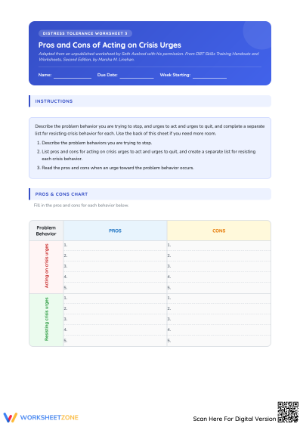
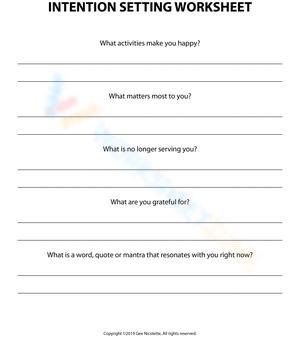
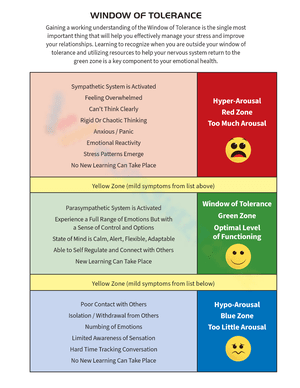
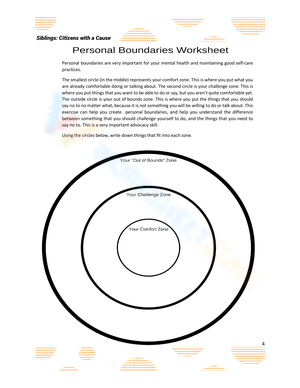
These behavior pdf worksheets for 10th grade give teachers a ready-made structure for the social-emotional work that gets displaced when academic pressure crowds out advisory time. Each worksheet targets a distinct behavioral skill — reading non-verbal cues, tracing the downstream consequences of a single choice, constructing a personal self-regulation plan — so teachers can use them one at a time or sequence them across a unit.
What's Inside the Set
Six skill areas drive these worksheets, each grounded in the social-emotional demands that tenth graders actually face:
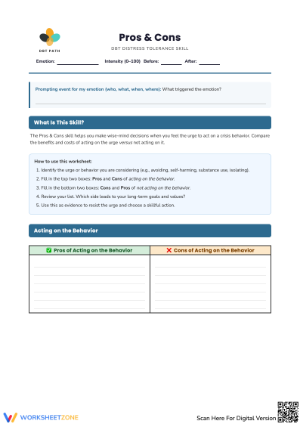
- Trigger identification: Students name the specific situations — a dismissive comment, a public grade comparison, being left out of a group conversation — that shift their emotional state, then map the physical signals that appear before they react.
- Non-verbal decoding: Students read described social scenarios, mark what posture, eye contact, and tone communicate, and write how they would adjust their own presentation given that information.
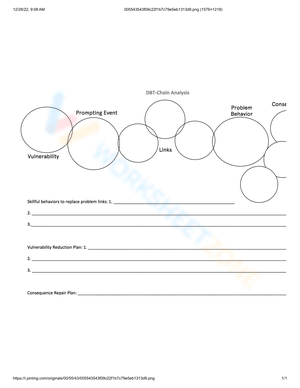
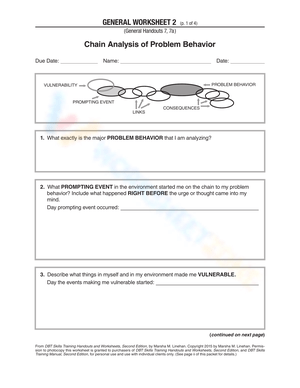
- Ripple-effect analysis: Starting from a single behavioral choice in a provided scenario, students chart first-order and second-order consequences — both positive and negative — and identify the moment where the chain could have been redirected.
- Conflict response sequencing: Rather than abstract advice, each worksheet walks students through active listening, "I" statement construction, and mutual-agreement framing applied to a named, specific situation.
- Empathy mapping: Students reconstruct a second character's internal experience from limited scenario information — a task that demands inference, not just sympathy.
- Professional transfer: Several worksheets ask students to annotate explicitly how a behavioral skill applied in a school context would look different — or the same — in a job interview or workplace meeting.
Student Errors That Show Up Consistently in This Work
The deepest problem in 10th-grade behavioral reflection is performance compliance — students writing what sounds right rather than what is true for them. On trigger-identification exercises, a student will often write "when someone disrespects me," which is socially acceptable and tells you almost nothing. The worksheets that hold up best under this pressure include follow-up prompts that force specificity: What exactly did they say? Which word landed first? Where did you feel it in your body? Without that concrete layer, the exercise stays in the abstract and produces nothing useful for the student or the teacher.
Non-verbal decoding tasks produce a different error: socially anxious students read hostility or judgment into neutral expressions. They are not being careless — they are applying a survival pattern that works for them outside the classroom. A brief anchoring discussion before these tasks — establishing that students may only use the evidence present in the scenario, not backstory they invent — reduces that overcorrection without dismissing the students' real experience.
The ripple-effect analysis tends to expose an asymmetry in how students experience cause and consequence. They trace the negative outcomes of a disruptive choice in precise, confident detail. They stall, or write vague generalities, when asked to trace the outcomes of a kind or proactive choice — because prosocial behavior feels less scripted and less viscerally real to them than conflict does. That asymmetry is worth naming openly with the class; it usually generates the most productive discussion the worksheet produces.
Standard Alignment
These worksheets map to the CASEL framework's five SEL competency domains, with particular depth in self-management and social awareness. In classroom terms, self-management — governing impulse regulation, stress tolerance, and goal-directed behavior — is the anchor competency, and every other skill in the set feeds back into it. Teachers in states with adopted SEL standards will find these worksheets match their reporting categories without needing a translation step. Illinois has the most established codified SEL requirements in the country, in place since 2004, and the competency language used there aligns closely with the skill categories across this set.
How to Build These Worksheets Into Your Lesson Plans
The behavior pdf worksheets for 10th grade in this set fit naturally into the 20-to-25 minute advisory block at the start or end of the day — the window when relational capital is highest and students are not yet defending against a content objective. Dropping a reflective behavior worksheet into the middle of an academic lesson rarely works; students read it as an interruption, and the emotional regulation it requires is not available on demand.
For restorative use after a classroom incident, the ripple-effect analysis worksheet is the most useful entry point. It gives students a written structure for naming consequences without requiring them to speak in front of peers who may still be reactive. The written format — private first, shared only if the student chooses — separates genuine reflection from the performance of remorse, which is exactly the part students resist most.
On sequencing: use the trigger-identification worksheet early in the semester because it establishes a shared vocabulary — trigger, signal, pause, response — that every subsequent worksheet assumes. The conflict-response worksheet belongs in week four or five, after students have that common language and enough trust in the room to apply it to something that feels real rather than hypothetical.
Differentiating These Worksheets Across Ability Levels
Students who struggle with sustained written output — whether because of an IEP, ELL status, or reading difficulties — can work through the non-verbal decoding and ripple-effect worksheets verbally, with a paraprofessional or peer partner recording responses. The cognitive task stays intact; only the output format changes, and that distinction matters when the goal is assessing thinking rather than writing mechanics.
For students who are well ahead of grade-level expectations in self-awareness work — typically a small group with prior SEL instruction or significant therapeutic experience — extend the empathy-mapping worksheet by asking them to reconstruct not one character's perspective but a three-way interaction, mapping where each participant's needs conflict. That extension requires no separate materials, just a written direction added to the existing worksheet.
One honest limitation: the behavior pdf worksheets for 10th grade in this set rely on scenario-based prompts, and students who find unfamiliar scenarios alienating — who need a personal connection before they can engage — sometimes disengage before the real reflection begins. For that group, allowing two or three minutes of free journaling about a real situation before transitioning to the worksheet task bridges the gap more effectively than any format adjustment to the worksheet itself.
Frequently Asked Questions
Can these worksheets be used in English or social studies rather than advisory or health?
Yes. The empathy-mapping and ripple-effect worksheets connect directly to character analysis and ethical decision-making in literature and history. Assigning empathy mapping alongside a novel or a historical case study is not a stretch — the inferential process is identical. The professional-transfer and trigger-identification worksheets are better suited to advisory because they ask students to draw on personal experience rather than a text.
What group size works best for discussion after students complete a worksheet?
Pairs and triads work better than whole-class discussion for behavioral reflection topics at this grade. In a group of six or more, students tend to perform for the group rather than think together. A three-minute pair discussion followed by one or two voluntary shares gets more honest thinking into the room than an open-forum format — and it protects students who reflected on something personal from having to broadcast it.
How should a teacher handle a worksheet where a student discloses something serious?
Before distributing any behavior pdf worksheets for 10th grade that include personal reflection prompts, establish a clear disclosure protocol with your school counselor. A brief note at the top of the worksheet — something like "If you've written about something you'd like support with, you can let me know privately" — creates a low-pressure channel without converting the exercise into a mandatory disclosure. Teachers are not counselors, and keeping that boundary explicit from the start makes the reflective work safer for everyone in the room.