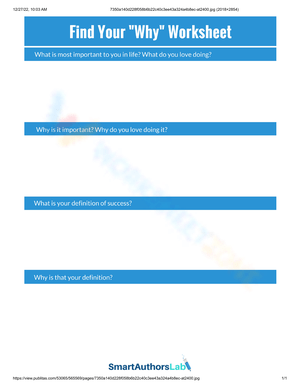
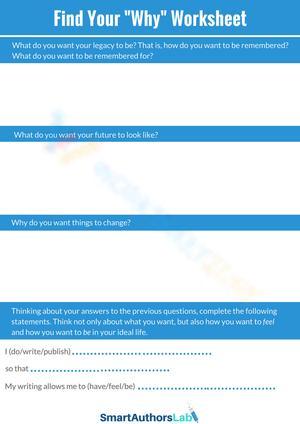
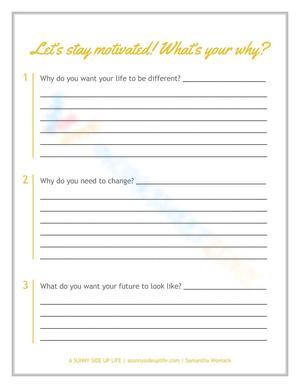
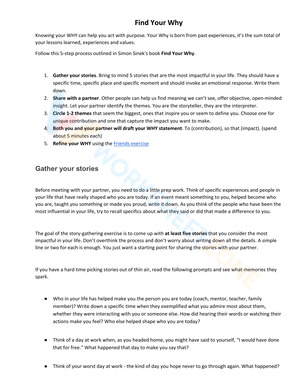
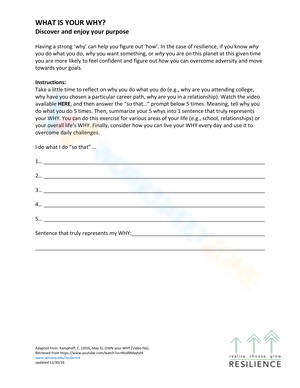
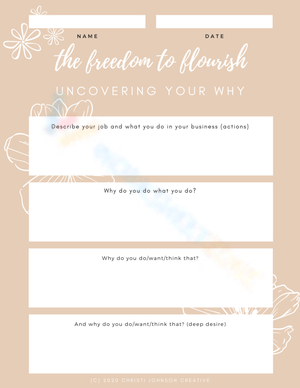
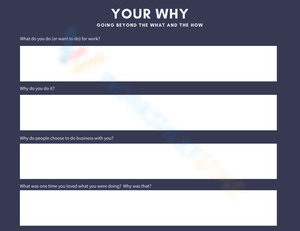
10th grade find your why printable worksheets give students a structured way to put motivation into words at a moment when the question actually carries weight. Sophomores are making real choices — about effort, course pathways, friendships, daily habits — that will shape the next two years, and many of them have no reliable framework for examining why they make those choices. These worksheets build that framework, one concrete prompt at a time.
What Each Worksheet Covers
The set moves students through a specific sequence of reflection that ends in an action — not just an insight. Students are not asked to name a goal and stop there; they work through the thinking that either supports or undermines that goal.
- Values identification: Students name two or three values that feel personally true — not abstract ideals, but things like reliability, creativity, family loyalty, or the desire to be taken seriously by adults.
- Strength and interest inventory: Prompts ask what tasks hold their attention longest, where they feel most competent, and what they would keep doing even if no grade were attached.
- Motivation mapping: Students explain why a particular goal matters to them specifically — and what they tell themselves when they feel like stopping.
- Obstacle naming: Students identify what most often gets in their way: distraction, self-doubt, competing priorities, or inconsistent follow-through.
- Concrete next step: Every worksheet closes with one specific, realistic action the student can take in the next week — not a resolution, but an actual behavior.
This sequence pushes past the vague responses that typically surface in open-ended goal setting. When a student writes I want to do better, there is nothing to work with. When they write "I value independence, my strongest subject is history, and the obstacle I keep running into is not starting tasks early enough," the conversation becomes productive.
Why Sophomore Year Is the Right Moment for This Reflection
Ninth graders are still orienting to high school; juniors are often already locked into transcript and test-prep mode. Tenth grade is the window where identity questions and practical planning are both live at once — students have a full year of high school choices to examine and enough future ahead that the reflection stays meaningful. This is one reason 10th grade find your why printable worksheets fit sophomore advisory and SEL calendars better than they fit any other year — the timing aligns with a developmental shift that is already underway.
Developmentally, most 15- and 16-year-olds are moving toward more abstract self-understanding but still need concrete language to anchor that thinking. A well-structured worksheet provides that language before they are expected to generate it themselves. A phrase like "I'm motivated by mastery, not by competition" or "I stop trying when I can't see immediate progress" becomes a reference point — especially when teachers collect the completed worksheets and return them in January or April for a deliberate side-by-side comparison.
What Student Responses Reveal About Where the Thinking Breaks Down
The most predictable issue is values inflation. Students will write "family," "success," and "loyalty" because those words feel safe, then leave the connection section blank or fill it with "it just matters to me." That gap signals the values were chosen for approval rather than from genuine self-examination. The follow-up prompt that tends to break through: Tell me about a time you actually made a choice because of that value — not what you would do, but what you did. That shift from hypothetical to memory produces a noticeably different quality of answer.
A second pattern: students who articulate real insight in the reflection but write "study more" as their action step. The distance between a strong observation and a vague resolution is where this kind of activity most often stalls. These worksheets address that gap directly by asking for a behavior, a day of the week, and a timeframe — not a category of effort. Students who resist that specificity are often the ones who most need to practice it.
Fitting These Worksheets Into the Week Without Losing the Period
Advisory, homeroom, and SEL blocks are the natural home, but the worksheets also connect to ELA when students are working on personal narrative or reflective writing. In both settings, a brief verbal warm-up before handing out the worksheet makes a real difference — "name one thing you cared enough about last week to actually argue for it" gives students something to attach the prompts to before they write. Distributing the reflection cold, at 8:10 a.m. on a Monday, rarely produces honest responses.
The activity lands especially well right after progress reports drop. Students are already primed to either dismiss feedback or act on it; a structured reflection gives them a third option — examining what is actually driving their current performance. For counselors and behavior interventionists, completed worksheets function as a record of student thinking across multiple sessions. 10th grade find your why printable worksheets are worth filing and returning mid-year: a student who answered these prompts in September and reads them again in February can see concretely whether their stated priorities match the choices they have actually been making — that comparison rarely happens without the physical record in front of them.
How to Adapt the Same Worksheet for Different Readiness Levels
Students who freeze in front of blank-line prompts respond better when the values section is formatted as a ranked checklist of 12 to 15 options rather than an open field. That one structural change reduces blank-page paralysis without altering the reflective intent. Once a student has circled a value, writing a sentence explaining why it feels true becomes manageable where it did not before.
Students who are ready for more depth can be asked to write a paragraph connecting two of their listed values, or to build a written argument for why a specific habit is costing them something concrete. The core worksheet stays the same; what changes is the extension. For English learners, a bilingual word bank for values and strengths — printed on the back of each worksheet — keeps the task linguistically accessible without simplifying the thinking itself. In counseling or small-group settings, the prompts also work verbally: moving through the worksheet as a conversation, with the teacher or counselor taking brief notes, keeps resistant writers in the reflection when writing itself is the obstacle.
Frequently Asked Questions
Are these worksheets limited to advisory or SEL use?
No. The prompts connect directly to ELA reflective writing, personal narrative pre-writing, career exploration, and behavior intervention work. In English classes, students who work through the values and motivation sections first come to the drafting stage with specific, honest content they rarely generate from a cold writing prompt alone.
How much class time does a typical session take?
Students complete the core reflection in 15 to 20 minutes. A full lesson that includes a brief warm-up, independent work time, and a structured partner share runs closer to 30 minutes. For tighter advisory slots — the 12 minutes before first period, for instance — using only the values section and the action step still produces something worth keeping.
What is the best way to use completed worksheets after the activity?
File them. The most durable use of 10th grade find your why printable worksheets is longitudinal: when students compare their September responses to what they write in February or May, they almost always notice a shift — in what they claim to value, in how they understand their own obstacles. That comparison turns abstract growth into a visible record and gives you a concrete starting point for end-of-year goal conferences.
Can these worksheets work with students who are reluctant to write?
Yes, with targeted adjustments. Checklist formats for the values section, verbal completion with a counselor scribing, and structured partner interviews using the prompts all preserve the reflective intent while lowering the writing barrier. The thinking is the goal; the format can flex to get there.












 Interactive Worksheet Maker
 Quiz Maker
 Word Search Maker
 Crossword Puzzle Maker
 Word Scramble Generator
 Sentence Scramble Generator
 Handwriting Worksheet Generator
 Name Tracing Generator
 Fill In The Blank Generator