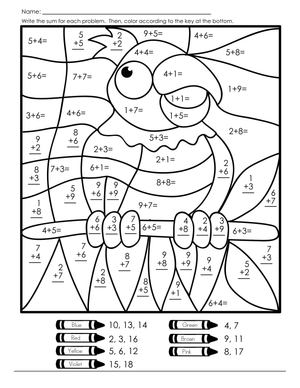
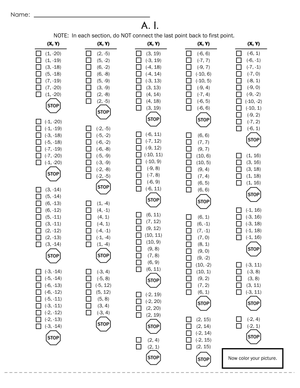
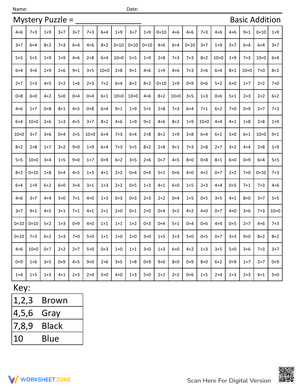
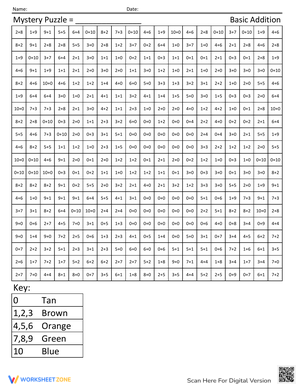
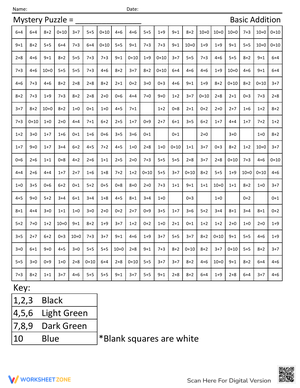
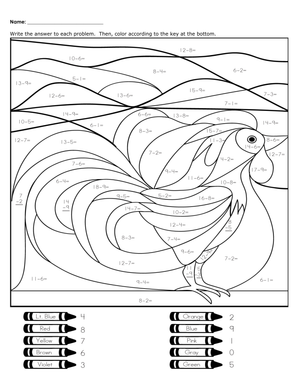
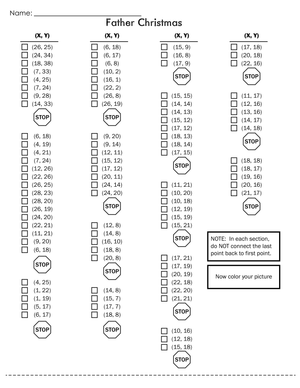
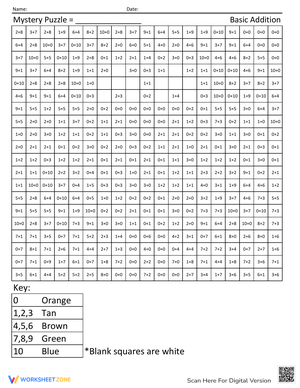
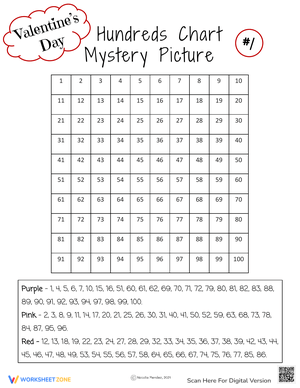
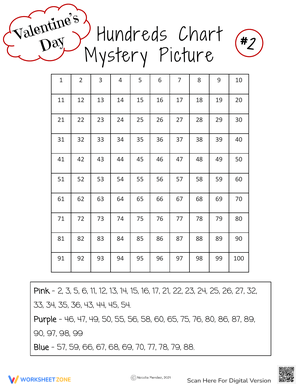
These 1st grade mystery picture worksheets pages give teachers a math practice format with a built-in motivation structure: students solve arithmetic facts, identify shapes, or work through place value problems, then use their answers to color-code a grid that slowly reveals a hidden image. The task is narrow by design — one skill, clear directions, and a visual payoff that keeps first graders accurate rather than just fast. That combination makes this format genuinely useful for independent work, center rotations, and low-prep substitute plans across the school year.
Skills These Worksheets Target
The most effective pages for Grade 1 concentrate on a single standard per worksheet. When the skill load is tight, students spend their working memory on the math itself rather than on managing a complicated task structure. The formats that produce the cleanest independent work at this level:
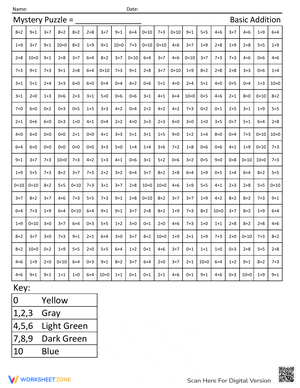
- Addition within 10: The natural starting point for independent success. Students solve one fact, locate the matching number in the key, and shade — a loop short enough to hold attention without becoming mechanical.
- Addition within 20: A step up once basic fact fluency is in place. Works well for end-of-unit review centers.
- Subtraction within 10: Well-suited to color-by-code because students can verify each answer individually and watch the image build incrementally.
- Place value — tens and ones: Pages that ask students to identify or match base-ten representations give this format a different look without changing the workload structure.
- 2D shape identification: A strong choice for early finishers. Most first graders can work through shape pages without adult support once they have been introduced to the standard in whole group.
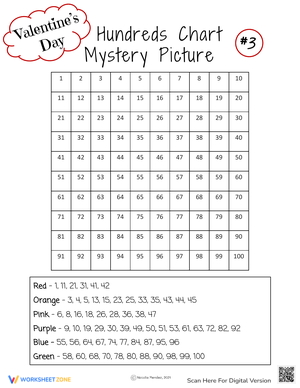
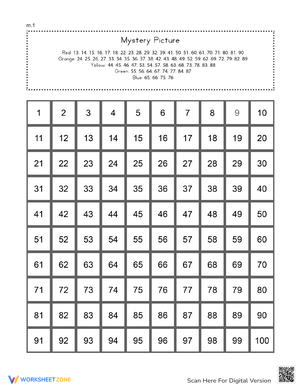
- Number comparison: Greater-than, less-than, and equal-to tasks transfer cleanly into a color-code format, particularly for students still building number-line intuition.
Pages that bundle two unrelated skills — addition facts alongside shape identification, for instance — produce more key-reading errors than math errors. The single-target design is what makes this format reliable for independent use.
Layout and Design Qualities Worth Checking Before You Print
The format only works if the physical design supports independent use. First graders need large, legible numbers, enough white space in the grid cells to color without frustration, and a key with clearly distinct codes — not six similar shades that look identical on a low-quality black-and-white copy. When the key contains more than five color options, the matching step starts to compete with the math for working memory.
Reveal timing matters too. If students have to solve 25 or 30 items before any recognizable shape appears in the grid, motivation drops before the worksheet is half finished. The strongest designs at this level show a clear partial image after the first five or six correct responses. Answer keys are a practical necessity — teachers running center rotations need a fast way to check completed work without solving every problem themselves during the debrief.
Student Errors Worth Anticipating and Addressing
The most common mistake is not a math error — it is a key-matching error. A student solves 6 + 4 correctly, writes 10, then shades the wrong color because they scanned the wrong row in the key while moving between the grid and the code list. This happens most often when the key sits at the top of a crowded worksheet and students lose their place mid-task. Having students keep a finger on the correct key row before shading reduces this substantially.
The second pattern worth watching: students who rush toward the picture instead of solving the math. They start guessing what color the image "should" be and shade based on expectation rather than calculation. A finished worksheet from this student will show a recognizable image but a blank or barely filled answer column. A quick verbal prompt — "show me your work for this problem" — catches this faster than reviewing the sheet alone at the end of the period.
On place value pages specifically, students frequently confuse the position label with the digit. Given the number 34, a student may correctly name "3 tens" but then shade the box coded for the digit 3 rather than the tens code, conflating the numeral with the answer. Walking through one example as a class before releasing students to work independently prevents this error from spreading across the group.
Building These Worksheets Into Your Lesson Plans
Mystery picture PDFs earn their keep by fitting into the gaps other formats don't fill cleanly. Morning work is the obvious placement — a self-contained page gives students a calm entry task with a clear endpoint before the formal lesson begins. Centers are equally natural: while the teacher runs a small group, students at an independent station work through a color-by-code page without needing adult direction. The task structure keeps them on track for 10 to 15 minutes without prompting.
Substitute folders may be the single most practical use. A guest teacher can distribute a worksheet, read the two-line direction aloud, and start the class without needing content knowledge or a scripted explanation. Early finisher bins work the same way — a 1st grade mystery picture worksheets page sorted by current skill means the follow-up practice connects to what the class is actually learning, not just to whatever was sitting in the folder from two units ago.
One organizational move that makes a real difference: sort printed PDFs by skill and independent success rate rather than by seasonal theme. A folder labeled "Addition Within 10 — Independent" tells you at a glance whether a page is appropriate for whole-class practice, small-group review, or intervention. Theme-based sorting looks tidy but makes it harder to pull the right worksheet quickly when you actually need it.
Adjusting the Worksheets for a Range of Learners
A set of 1st grade mystery picture worksheets pages spans readiness levels most effectively when the format stays identical across groups and only the math demand shifts. Students still solidifying addition within 10 work through one worksheet; students ready for within-20 facts work through a different one. Because the task structure looks the same, no child can easily identify they are on a modified version — which matters more than teachers expect at this age.
For students with fine motor difficulties, the coloring step can become a barrier that has nothing to do with math skill. Dot markers, colored pencils, or writing a letter symbol inside the cell instead of shading work equally well for the math purpose. A reduced problem count is another straightforward adjustment: printing the same page and covering the lower half with a blank strip lets a student complete 10 items instead of 20 without altering the skill target or the visual format.
Answer keys serve a differentiation function as well. A student who needs immediate feedback can check their completed work against the key during center time, building self-monitoring habits while reducing anxiety about errors. A student working toward greater independence submits the worksheet for teacher review. These are small logistical shifts that require no additional materials and no separate worksheet design.
Standard Alignment
The addition and subtraction pages in this set address CCSS.MATH.CONTENT.1.OA.C.6, which requires students to add and subtract within 20 using strategies such as making ten, decomposing numbers, and applying known facts. Place value worksheets align to CCSS.MATH.CONTENT.1.NBT.B.2, the standard for understanding that the two digits of a two-digit number represent amounts of tens and ones. Shape identification pages connect to CCSS.MATH.CONTENT.1.G.A.1, which asks students to distinguish defining attributes of two- and three-dimensional figures.
These standards cluster in Grade 1 because this is the year students transition from counting-on strategies toward fact-based reasoning and place value understanding. The mystery picture format supports that transition in a specific way: students must produce an answer before completing the coloring step, which demands retrieval rather than recognition. That production requirement is what makes repeated use of this format pedagogically worthwhile, not just engaging.
Frequently Asked Questions
How long does a typical mystery picture worksheet take a first grader to complete?
Most students finish in 10 to 15 minutes when working independently. Students still developing fluency with the target skill may need closer to 20 minutes, especially on place value or within-20 addition pages. Build that buffer into center rotation timing so students are not rushing through the coloring step at the end.
Are these worksheets appropriate for homework?
Yes, with one practical condition. Sending home a 1st grade mystery picture worksheets on a skill that was only introduced that day puts families in the position of fielding math questions they may not be equipped to answer. Use these pages for review homework — skills already practiced in class — rather than first-exposure work.
What if students race through the math just to get to the coloring?
Speed itself is not the problem — a first grader motivated to see the picture reveal is doing exactly what the format intends. The issue is careless answers. A brief expectation before the task ("if your picture looks strange, go back and check your math") gives students a self-monitoring strategy without turning the worksheet into an anxiety-producing assessment. After a few repetitions, most students internalize the check.
Do these work for students who are not yet reading directions independently?
The color-code mechanic is largely self-explanatory once a student understands the basic routine, which is one of its advantages at Grade 1. For students who cannot yet read the key independently, a whole-class walkthrough of the first item removes the barrier. Pairing such a student with a partner for the first two problems, then releasing to independent work, handles most readiness gaps without requiring a separate modified version of the worksheet.













 Interactive Worksheet Maker
 Quiz Maker
 Word Search Maker
 Crossword Puzzle Maker
 Word Scramble Generator
 Sentence Scramble Generator
 Handwriting Worksheet Generator
 Name Tracing Generator
 Fill In The Blank Generator