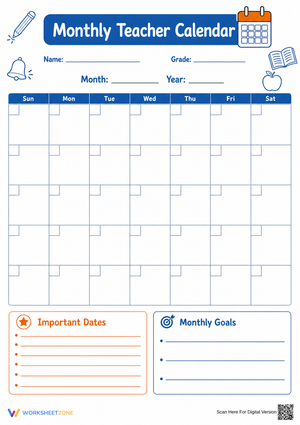
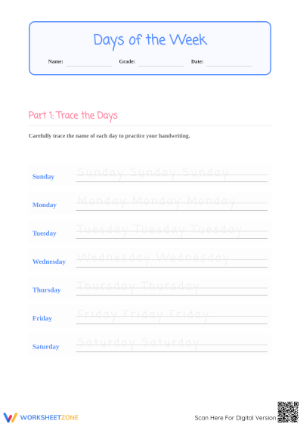
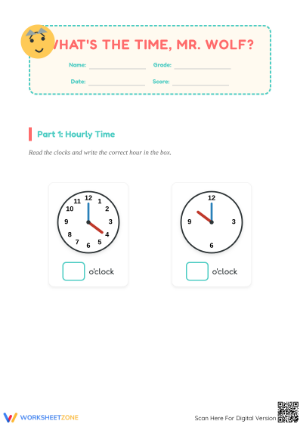
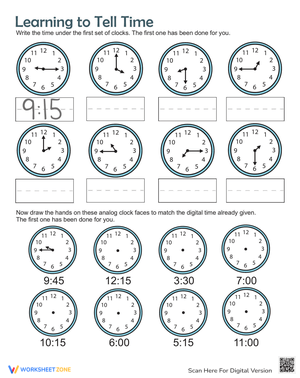
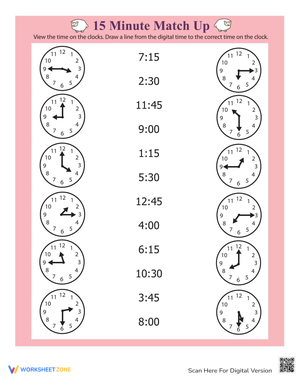
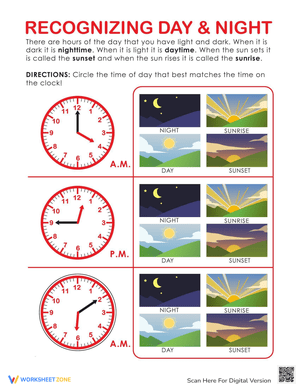
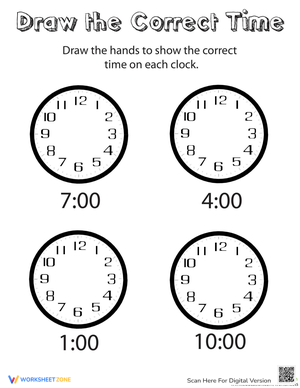
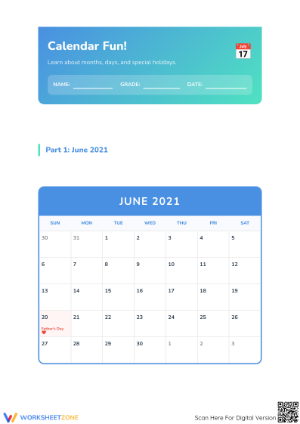
These 1st grade date and time worksheets cover two distinct skill strands that first graders tackle simultaneously: reading analog and digital clock faces to the hour and half-hour, and working with a monthly calendar grid to sequence days and months. The set gives teachers print-ready practice for both strands, with enough task variety to distribute across multiple lessons rather than a single sitting.
What the Clock and Calendar Worksheets Actually Cover
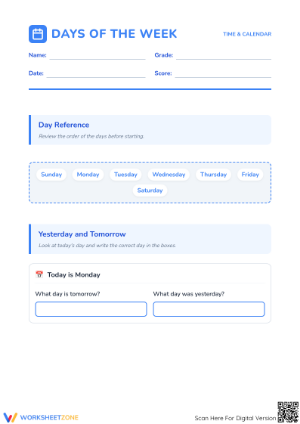
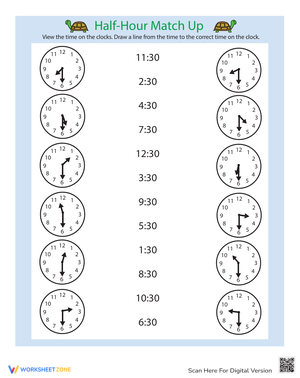
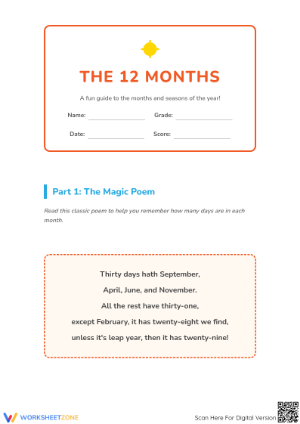
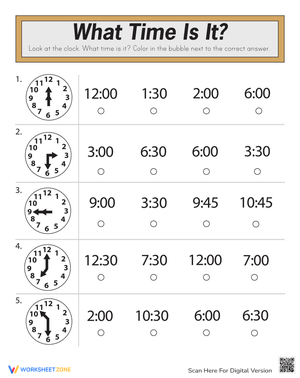
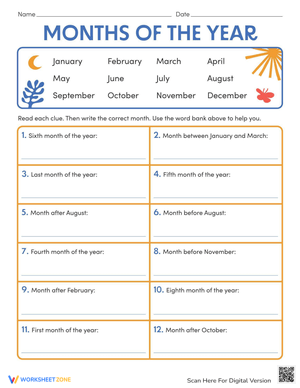
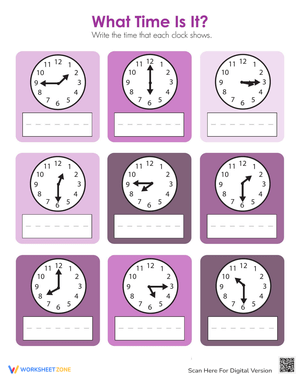
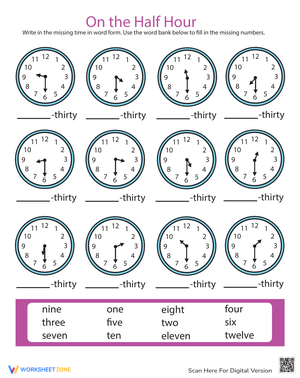
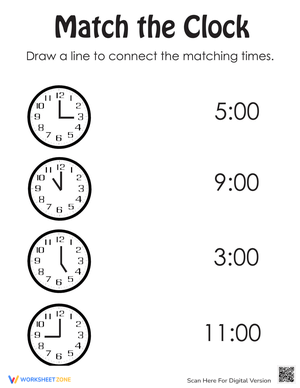
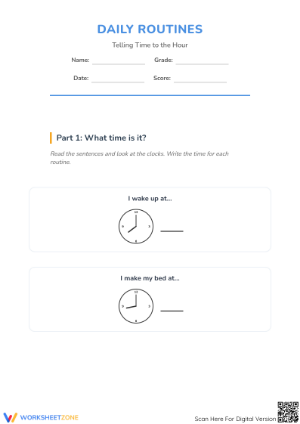
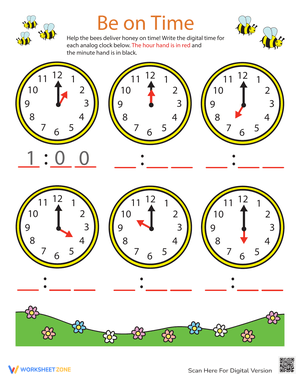
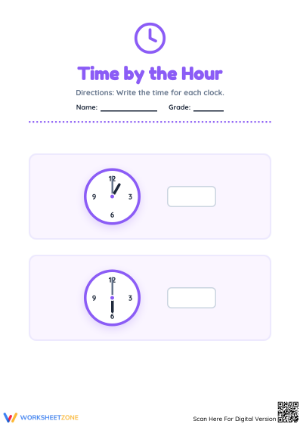
Clock reading divides into two clear phases. The first involves reading and writing times to the hour — recognizing where each hand points on an analog face and translating that into a digital format like "7:00." The second introduces the half-hour, which demands spatial reasoning about where the hour hand sits between two numbers — a conceptually harder task than the hour format suggests. Calendar work runs in parallel: naming and sequencing the seven days and twelve months, reading a standard monthly grid, identifying specific dates, and using temporal vocabulary such as yesterday, today, and tomorrow correctly in context.
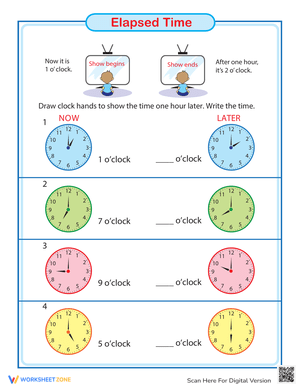
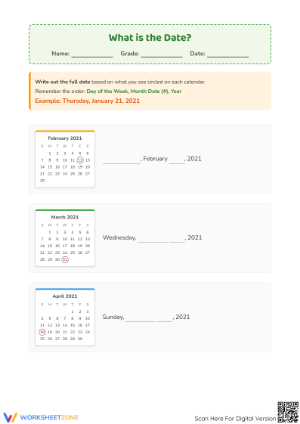
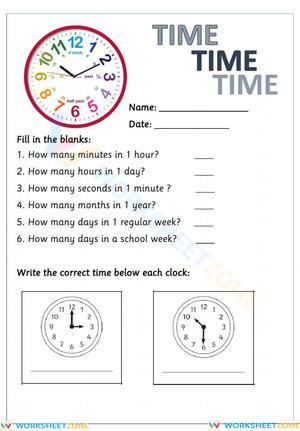
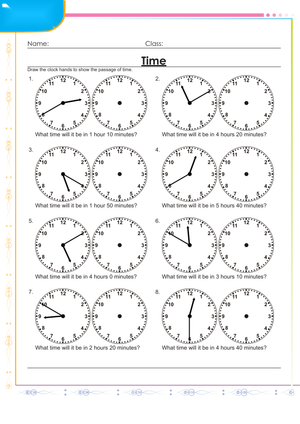
Several worksheets ask students to draw hands on blank clock faces rather than simply circle a correct answer. This production task surfaces misunderstanding that recognition formats conceal. Others require students to fill in missing days or months within a partial sequence, testing ordinal knowledge rather than simple recall of a memorized list.
Where First Graders Get Tripped Up and What to Watch For
The half-hour hour-hand placement is the most persistent clock error at this level. When a student draws 4:30, they almost always place the short hand pointing directly at the 4 — as though it were still 4:00. The correct position, midway between the 4 and 5, has no printed marker on a standard clock face, which makes it genuinely counterintuitive. Worksheets that isolate this skill and ask students to draw the hour hand across multiple problems give teachers a clear picture of who has internalized the spatial concept and who is still copying the hour-format habit. Having students shade the arc between two numbers with a crayon before drawing the hand is a low-prep move that redirects attention to the right location before the pencil goes down.
On the calendar side, a subtler error involves directionality. Most first graders answer "What day comes after Monday?" without difficulty. Reverse the question — "What day comes before Wednesday?" — and a meaningful slice of the class hesitates or answers incorrectly. The backward orientation disrupts the forward-sequence habit built through morning meeting routines. Worksheets that deliberately include both forward and backward sequence questions force students to work in both directions, which is a different cognitive operation than forward-only recall.
Fitting These Worksheets Into the Instructional Week
Calendar worksheets work well as morning meeting follow-up. Right after the class updates the date on the wall calendar together, students complete a brief written reinforcement while the routine is still active in working memory. Clock worksheets, because they require more direct instruction up front, fit better inside the main math block — introduce a time increment with a demonstration clock, work through examples together, then distribute the corresponding worksheet for independent practice while circulating to watch for hand-placement errors in real time.
Reserve the mixed-review worksheets — those combining clock reading and calendar tasks on one worksheet — for the end of the unit rather than the beginning. Presenting both strands simultaneously during initial instruction increases cognitive load in a way that slows acquisition. That combined format pays off later, during the week before a unit assessment, when students benefit from integrative retrieval practice across both skill areas.
Standard Alignment
These 1st grade date and time worksheets align to CCSS Math 1.MD.B.3, which requires students to tell and write time in hours and half-hours using both analog and digital clocks. In classroom terms, this standard arrives mid-year, after students have established foundational number sense and basic measurement vocabulary. It sits within the Measurement and Data domain — a placement that signals time-telling is treated as a quantitative skill requiring precision, not just a life-skill routine. The calendar strand, while not directly coded to 1.MD.B.3, builds the ordinal sequencing and temporal vocabulary the standard assumes students bring to clock work.
Meeting Students at Different Points in the Skill Progression
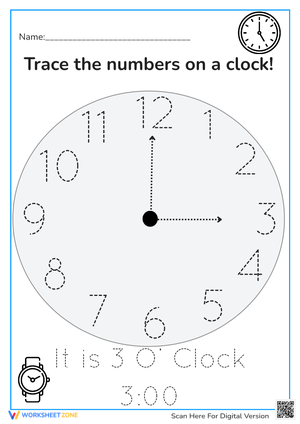
The 1st grade date and time worksheets in this set span enough of a difficulty range that teachers can assign different worksheets to different students in the same class without making that differentiation obvious. For students still building number recognition, the hour-only clock worksheets are the right entry point — they let students focus on the short hand without tracking two variables simultaneously. A useful desk tool here: a laminated strip showing the numbers 1 through 12 in clock order, so students can verify hand positions without the spatial confusion of the full circular face.
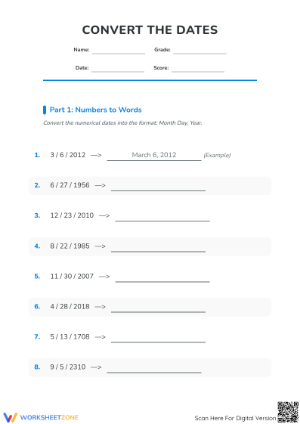
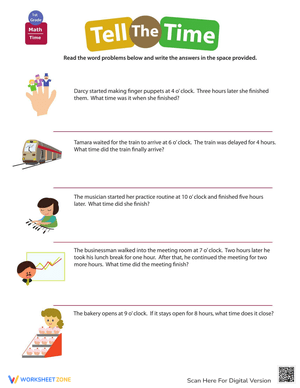
Students who read to the half-hour accurately and quickly can move into AM/PM distinctions and simple elapsed time — calculating what time it will be one hour after a given starting point. For calendar extension, students who've mastered month sequence can practice writing dates in multiple formats (June 4, 2026 versus 6/4/26), which links to writing conventions and builds date-writing automaticity that pays off across subjects.
Frequently Asked Questions
What clock skills should students have before attempting the half-hour worksheets?
Students should read analog times to the hour reliably before moving to the half-hour format. That means understanding that the short hand names the hour and the long hand at 12 signals "o'clock." Moving to the half-hour before hour reading is secure typically produces the hand-confusion errors described above, because students are managing two unfamiliar ideas at once instead of one.
How many worksheets per week is reasonable during the time unit?
During active instruction, two to three worksheets per week is a workable pace — one to follow direct instruction, one for spaced review the following day, and one mixed-review or assessment piece near the week's end. Outside the dedicated time unit, one calendar worksheet per week maintains the skill without crowding out other math work.
Do the calendar worksheets include seasons?
Several worksheets ask students to match months to their corresponding seasons, grouping December, January, and February into winter or June, July, and August into summer. This cross-referencing gives students a concrete anchor for month sequencing — students who struggle to recall month order through repetition alone often find seasonal grouping an easier retrieval hook.
Can these worksheets work for kindergarten enrichment or 2nd grade review?
The hour-only clock worksheets and basic calendar sequence tasks from this collection of 1st grade date and time worksheets transfer well to kindergarten enrichment or very early 2nd grade review. The half-hour worksheets sit squarely at the 1st grade benchmark and won't challenge 2nd graders appropriately, since that grade pushes toward five-minute intervals where the minute hand carries more interpretive weight.













 Interactive Worksheet Maker
 Quiz Maker
 Word Search Maker
 Crossword Puzzle Maker
 Word Scramble Generator
 Sentence Scramble Generator
 Handwriting Worksheet Generator
 Name Tracing Generator
 Fill In The Blank Generator