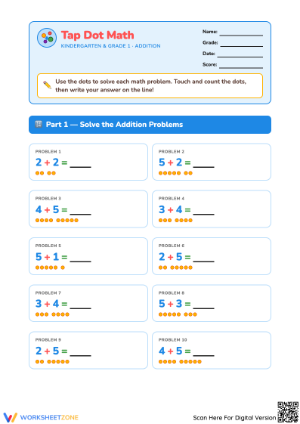
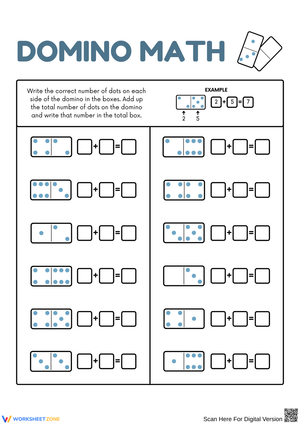
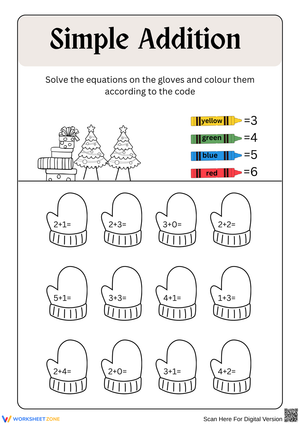
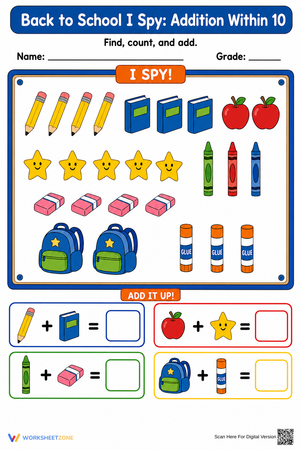
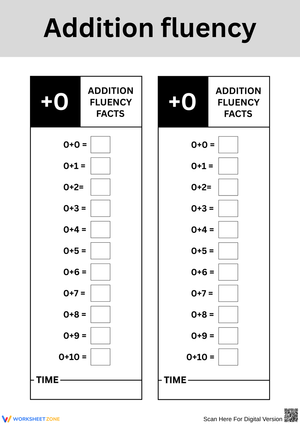
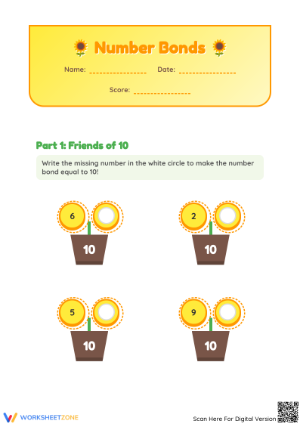
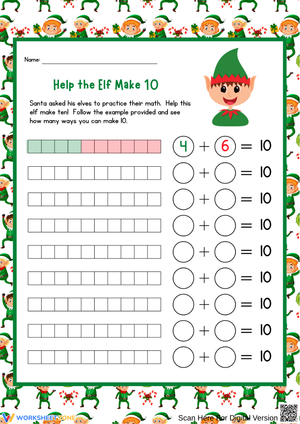
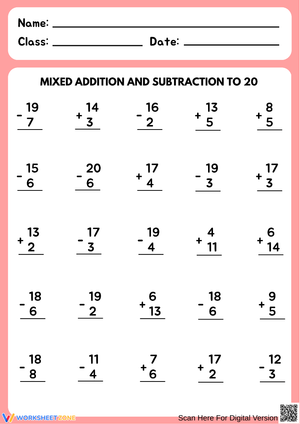
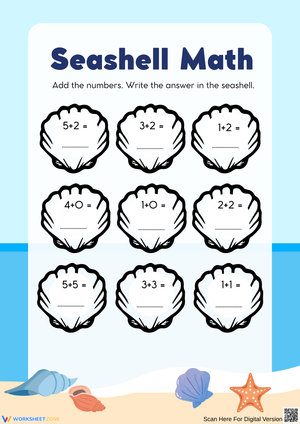
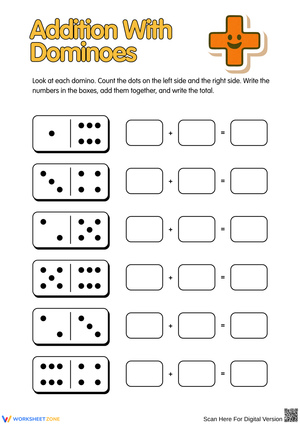
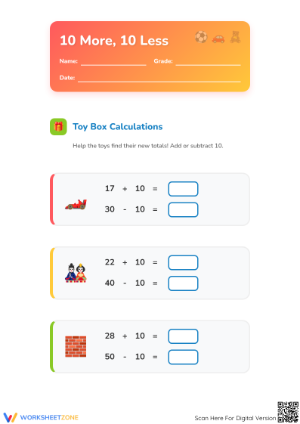
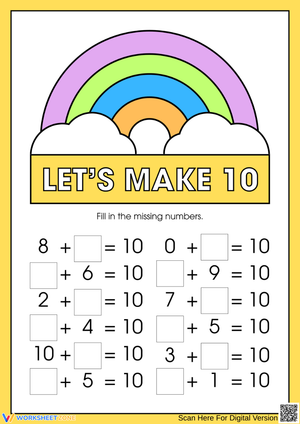
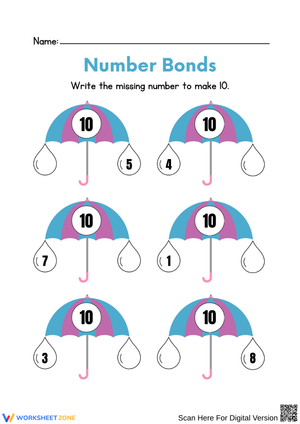
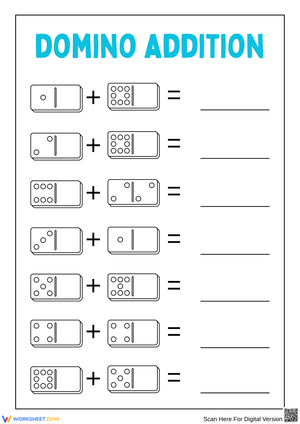
These 1st grade addition pdf worksheets cover the full arc of early addition instruction — from counting on with sums within 10 to missing addend equations that introduce part-whole thinking well before students encounter formal algebra. Teachers receive print-ready PDFs organized around the strategies first graders must internalize: counting on from the larger addend, making ten, and using known doubles as a mental anchor. Each worksheet targets a specific skill, so it's straightforward to drop one into a lesson at exactly the moment students need that practice.
The Addition Skills Targeted Across the Set
The worksheets work through skills in a deliberate sequence. Students begin with counting on — a critical shift away from counting both addends from one. A child who still recounts "1, 2, 3, 4, 5, 6 ... 7, 8, 9" to solve 6 + 3 is using a strategy that breaks down once numbers grow. Counting on from 6 takes three steps instead of nine, and that efficiency matters when students push into sums within 20.
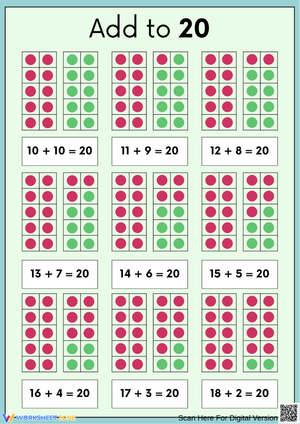
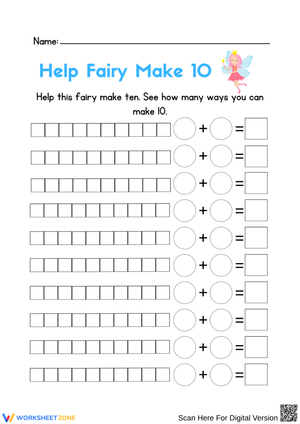
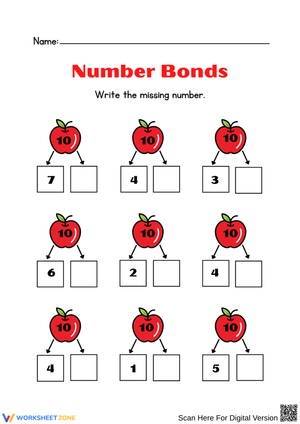
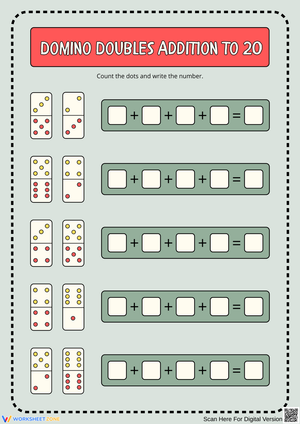
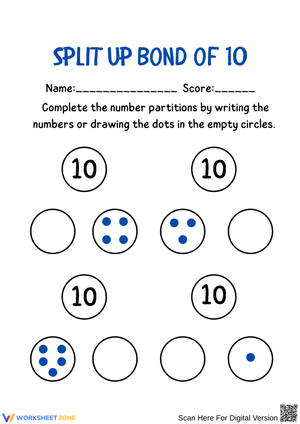
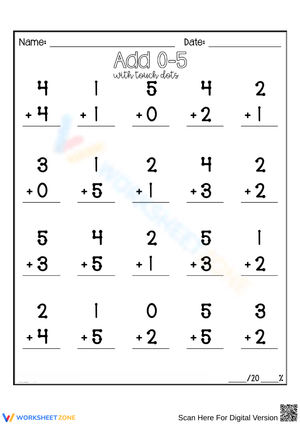
From there, the worksheets move into making ten, the most transferable mental math strategy in the first-grade toolkit. Problems like 8 + 5 get reframed: break the 5 into 2 and 3, add 8 + 2 to reach 10, then carry the remaining 3 for a sum of 13. Ten-frames support this move visually before students handle it mentally. The set also includes doubles and near-doubles practice, both horizontal and vertical equation formats, and word problems requiring students to read a short scenario, identify the relevant numbers, and write the matching equation before solving. That spread of problem types — visual, procedural, and applied — is why 1st grade addition pdf worksheets organized this way remain useful from September's first lessons through May's fluency review.
Mistakes Students Make That These Worksheets Help Surface
The most persistent error is the recount-from-one habit. A student who gets 6 + 3 correct by counting all nine objects on their fingers can still be stuck in a strategy that slows them significantly when addends grow. Watch for students who close their eyes or tap the desk quietly — that's invisible counting. These worksheets surface the habit because the addends are large enough that starting from one becomes noticeably inefficient; a student who finishes every problem in thirty seconds is not doing that.
A second error appears in making-ten work: students decompose the wrong addend. Given 9 + 4, the efficient path is to break the 4 into 1 and 3 so that 9 + 1 = 10, then 10 + 3 = 13. Students regularly reverse this and try to split the 9 instead, creating a harder calculation. When you see scratch work like "9 = 5 + 4" next to a problem such as 9 + 6, that's the reversal in action. Ask "which number needs fewer pieces to reach ten?" — it resolves quickly once students have language for the decision.
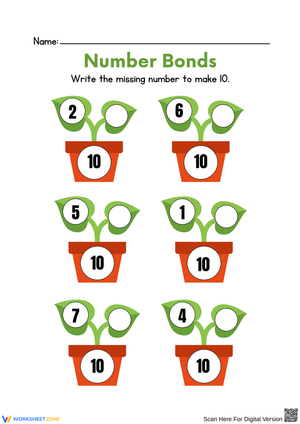
Missing addend problems generate their own confusion. Students read 5 + ___ = 9 and add 5 to 9 rather than asking what pairs with 5 to build 9. Framing the blank as a "hidden number" rather than a calculation prompt shifts the thinking in the right direction faster than re-explaining the operation.
Building These Worksheets Into Your Lesson Plans Throughout the Week
The most effective use pattern is spaced, low-stakes practice distributed across the week rather than one extended sit-down. Drop a single making-ten worksheet into Monday morning work — retrieval that early competes with the forgetting that happens over the weekend and reinforces what students practiced the prior Friday. Save word problem worksheets for the last ten minutes of math block, when students have just come through direct instruction and need a transfer task to close the lesson.
Sliding printed sheets into dry-erase pockets turns each one into a reusable center activity. Students solve with a whiteboard marker, check, wipe clean. One printed set runs through four or five center rotations before anything needs reprinting. For students who struggle with fine motor control — a real consideration in first grade — the whiteboard marker requires less pressure than a pencil and removes some of the frustration from the recording portion of the task.
These 1st grade addition pdf worksheets also function well as a doorway exit check: hand one out in the final five minutes, collect at the door, and sort into three stacks during lunch — "solid," "close," "needs another look." That sort takes about four minutes and gives a sharper read on tomorrow's small-group roster than any longer assessment would.
Standard Alignment
The core of this set addresses CCSS.MATH.CONTENT.1.OA.C.6, which requires students to add and subtract within 20 using strategies such as making ten, decomposing a number to reach ten, and applying the relationship between addition and subtraction. In practical terms, this standard anchors most of first-grade math instruction from fall through spring — the year's addition work is either building toward it or consolidating it. The fluency expectation embedded in that standard, recalling sums within 10, is what keeps the early worksheets working below 10 before extending into teens. Word problem worksheets connect to CCSS.MATH.CONTENT.1.OA.A.1, which asks students to use addition to solve add-to and put-together problem types within 20 — the two structures that appear most frequently in first-grade story problems.
Adjusting the Worksheets for a Range of Learners in Your Class
For students still working with concrete materials, pair any worksheet with a ten-frame mat and two-color counters. The student builds the problem on the mat first, then records the answer on the paper. This two-step sequence — manipulate, then record — separates the conceptual work from the writing task and shows what the student actually understands versus what the format is blocking.
Students who have moved past visual support benefit from two adjustments. First, skip ahead in the number range rather than repeating easier work — a student solid within 10 needs making-ten and missing-addend practice, not more single-digit counting-on problems. Second, ask them to note the strategy used beside each answer ("CO" for counting on, "MT" for making ten). Naming the strategy after using it builds flexibility faster than additional repetitions of the same problem type.
One genuine limitation worth naming: the word problem worksheets use school-day contexts, and students reading significantly below grade level sometimes get caught on the scenario before reaching the math. Reading the problem aloud or pairing those students with a partner for the reading portion resolves the access issue. The 1st grade addition pdf worksheets don't adjust automatically for reading load, so that accommodation stays with the teacher.
Frequently Asked Questions
What addition strategies should first graders know by year's end?
By May, students should count on reliably from the larger addend, apply making-ten for sums above 10, and recall doubles through 10 + 10 without calculating. Finger counting isn't a failure at this age, but students still finger-counting basic facts like 3 + 2 in June are signaling they need sustained retrieval practice over the summer. Fluency within 10 is the year-end benchmark stated directly in the standards.
How does a number line support addition practice at this level?
A number line makes counting on visible. Students place a finger or pencil point on the first addend and hop forward by the value of the second addend, landing on the sum. Several worksheets in this set include a printed number line directly above the equation row so students have that reference without needing a separate tool. Once a student can do the hops mentally, the printed line becomes a self-check rather than a necessary support.
Why include both horizontal and vertical equation formats?
Students who practice only vertical addition can stall when they see the same problem written horizontally on an assessment — and the reverse is equally common. The layout shift is a formatting issue, not a math issue, but it derails students who haven't seen both. Mixing formats across worksheets ensures the orientation of the numbers stops affecting performance before assessments introduce it as a surprise.
What should I do when a student is stuck on sums over 10?
Return to the ten-frame before returning to bare-number problems. Have the student fill one frame completely to show ten, then place remaining counters in a second frame. Seeing 13 as "a full ten and three more" is the conceptual move that makes the making-ten strategy work mentally. Once that visual clicks, return to the worksheet problems — the student's approach usually shifts noticeably within the same session.













 Interactive Worksheet Maker
 Quiz Maker
 Word Search Maker
 Crossword Puzzle Maker
 Word Scramble Generator
 Sentence Scramble Generator
 Handwriting Worksheet Generator
 Name Tracing Generator
 Fill In The Blank Generator