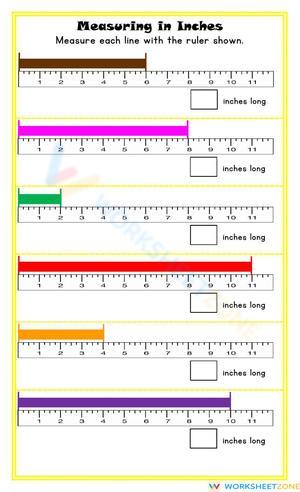
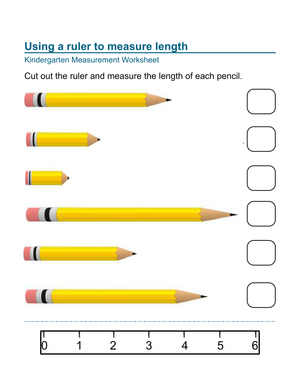
These measurement worksheets for 1st grade give teachers a focused set of printable resources built around the two skills that define early length instruction: comparing objects directly and counting non-standard units accurately. Each worksheet isolates one concept, which matters here because first graders are still learning to separate "which one is longer" from "how many units long is it"—and conflating those two questions is one of the most common early stumbles in measurement work.
The Specific Skills Covered in Each Worksheet
The set addresses four interconnected measurement concepts:
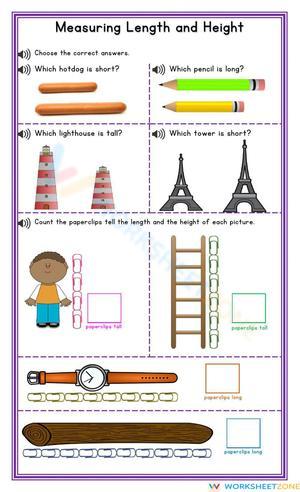
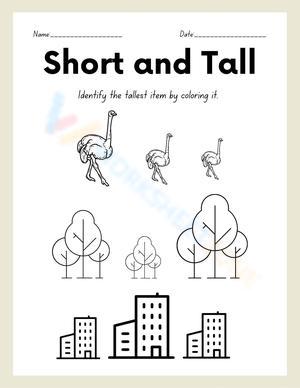
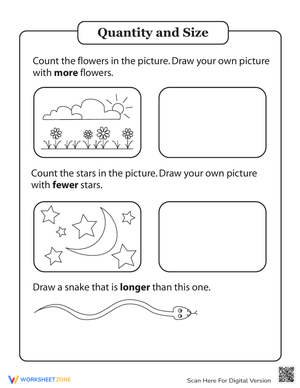
- Direct comparison — students examine two printed objects and mark which is longer or shorter without measuring
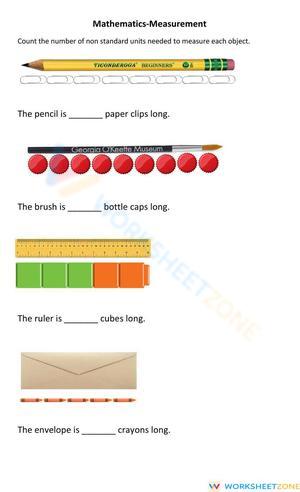
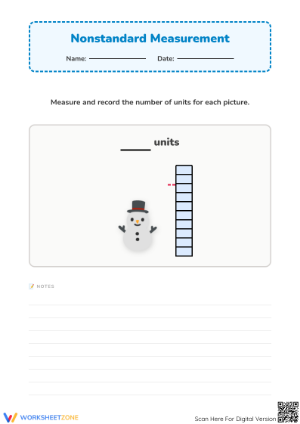
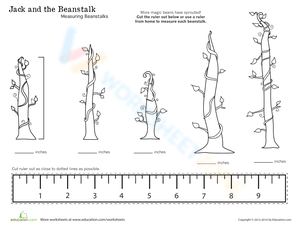
- Non-standard unit counting — students count paper clips or linking cubes aligned alongside a printed object and record the measurement as a whole number
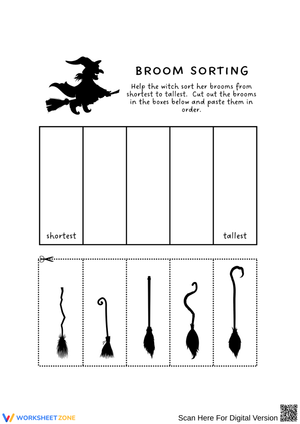
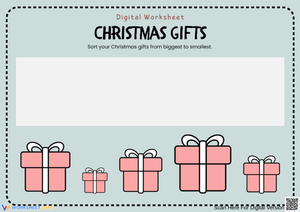
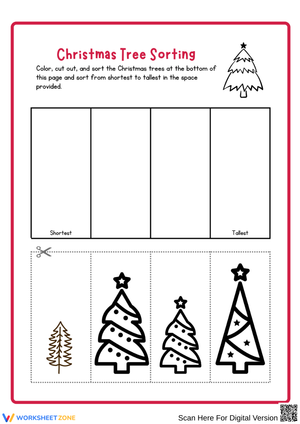
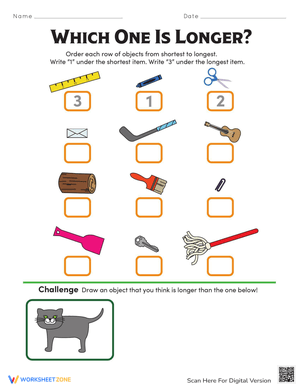
- Ordering by length — students number three or more objects from shortest to longest, which builds the idea of relative length before any ruler appears
- Indirect comparison — students use transitive reasoning to compare two objects via a third, the most conceptually demanding skill in the set
The indirect comparison worksheets deserve particular attention at the lesson-planning stage. When students are told that a ribbon is longer than a pencil and the pencil is longer than a crayon, they must conclude that the ribbon is also longer than the crayon. Six-year-olds often treat this as unanswerable without physically seeing both objects together—not because they are not paying attention, but because the idea that reasoning can replace observation is genuinely new to them at this age.
Several worksheets build measurement vocabulary explicitly through sentence frames. A prompt like "The ___ is longer than the ___" requires students to write the correct comparative term rather than circle an answer, which is especially useful for English language learners who understand the concept but have not yet produced the precise language independently.
Frequent Student Errors Worth Watching For and Addressing
The most persistent error in non-standard measurement is the gap-and-overlap problem. Students place paper clips on a printed line but leave small spaces between them or let the ends overlap slightly, then count units anyway and wonder why their answer differs from a classmate's. The correction is not reminding students of the rule verbally—it is having them compare counts with a partner on the same worksheet. When two students measure the same printed worm and arrive at different numbers, that discrepancy creates exactly the question that makes the rule stick.
In direct comparison tasks, first graders routinely ignore baseline alignment. A student will look at two printed pencils where one is positioned higher on the page and judge the lower one as shorter based on position alone. Worksheets that include a dashed starting line—or that ask students to draw one themselves before comparing—target this directly. On ordering tasks, watch for students who correctly identify the longest and shortest objects but misplace the middle ones because they are estimating by eye rather than comparing adjacent pairs systematically.
Indirect comparison produces a specific logical error worth naming: students will accept that A is longer than B and B is longer than C, then claim they "can't know" whether A is longer than C without seeing both side by side. This is not carelessness. It reflects genuine uncertainty about whether mathematical inference can stand in for physical observation—a significant conceptual step for a six-year-old, and one these worksheets give repeated structured opportunities to resolve.
How to Build These Worksheets Into Your Lesson Plans
The most effective placement for measurement worksheets for 1st grade is in the concrete-to-pictorial transition—after students have physically handled and compared objects but before they work with abstract number representations. A natural sequence: use the first ten minutes of math block for a quick hands-on comparison (two pencils, two books placed side by side), then move to the corresponding worksheet during independent work time while you pull a small group. The worksheet reinforces what students just experienced with physical objects, so the printed images carry meaning rather than appearing arbitrary.
For math centers, pairing the non-standard unit worksheets with a bin of actual linking cubes pays off immediately. Students who place a physical cube alongside the printed unit on the page are checking what "end-to-end with no gaps" looks like in real space—not just on paper. The Monday warm-up block after a weekend works well for direct comparison worksheets; they are visually clear, low-stakes, and re-engage spatial thinking quickly without requiring a full lesson setup. Collect ordering worksheets mid-unit rather than at the end. Errors on those tasks tell you specifically which students are estimating rather than comparing, and that information drives your next small-group session far more usefully than a unit-end score does.
Standard Alignment
These worksheets address two standards from the Measurement and Data domain of the Common Core State Standards for Mathematics. CCSS.MATH.CONTENT.1.MD.A.1 requires students to order three objects by length and compare the lengths of two objects indirectly by using a third; the ordering and indirect comparison worksheets map directly onto this standard. CCSS.MATH.CONTENT.1.MD.A.2 requires students to express the length of an object as a whole number of length units, laying multiple copies of a shorter object end-to-end. Classroom teachers generally introduce 1.MD.A.1 in the first half of the measurement unit, then layer in 1.MD.A.2 once students have a stable sense of comparison. The gap-and-overlap error is specifically what 1.MD.A.2 surfaces—the standard's insistence on "no gaps or overlaps" is not incidental phrasing; it is the central instructional target, and these worksheets give students repeated exposure to that rule in context.
Adjusting the Set for a Range of Learners
Students who are not yet ready for indirect comparison benefit from extended time with direct comparison worksheets, ideally placing physical objects on top of the printed images before attempting independent work. For students who grasp non-standard units quickly, the extension is not to introduce a ruler—that skill belongs in second grade—but to challenge them to measure the same printed object using two different unit types and explain in writing why the counts differ. This "same object, different units" task anticipates the central insight of standard measurement without displacing the first-grade conceptual sequence.
For students who struggle with the sentence-frame vocabulary exercises in this measurement worksheets for 1st grade set, reduce the language demand by having them draw arrows rather than write comparative terms. The arrow still demonstrates comprehension of the length relationship; the writing demand can be layered in once the math concept is stable. In mixed-ability math centers, the direct comparison worksheets serve as an accessible entry point while indirect comparison worksheets extend the session for students who finish early—no separate version required.
Frequently Asked Questions
Why do these worksheets use non-standard units instead of rulers?
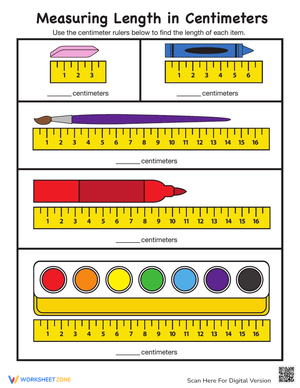
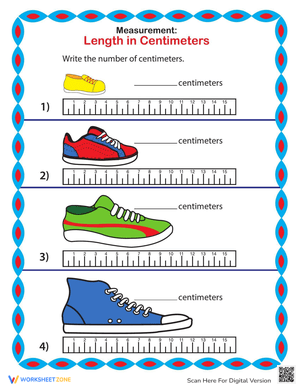
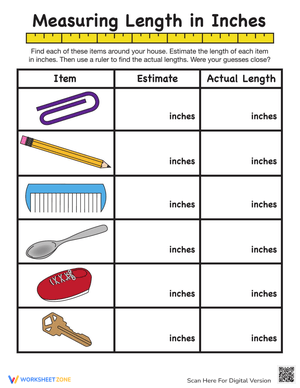
Rulers introduce two cognitive demands at once: grasping what measurement means and reading a scaled instrument. Non-standard units remove the second demand entirely so students can focus on the first. Once a student reliably lays paper clips end-to-end with no gaps, counts them accurately, and records a whole number, the conceptual work of 1.MD.A.2 is done. Introducing rulers in first grade consistently produces students who slide the tool to approximately the right position and read whatever number looks close—because they have not yet internalized what the measurement actually represents.
Can I use these worksheets with kindergarteners or second graders?
The direct comparison worksheets align with kindergarten standard CCSS.MATH.CONTENT.K.MD.A.2, which asks students to directly compare two objects with a measurable attribute in common. For second graders, these worksheets function as a fast diagnostic at the start of a measurement unit. If a student consistently leaves gaps in non-standard unit tasks or cannot work through indirect comparison problems, the first-grade conceptual foundation needs reinforcement before the ruler is introduced.
What manipulatives pair best with these worksheets?
Linking cubes and standard-sized paper clips are the most practical choices because they are uniform in size and easy for small hands to manage. One-inch square tiles also work well for shorter objects. The key criterion is uniformity—mixing different-sized manipulatives during a lesson is only useful if you are deliberately demonstrating why identical units matter, not as a default setup for independent practice.
Do these worksheets come with an answer key?
Yes. The measurement worksheets for 1st grade set includes a separate answer key for each worksheet. For ordering and indirect comparison tasks, the key notes the most common incorrect response alongside the correct answer, which helps when checking a stack of papers quickly and you want to know whether a wrong answer reflects a specific misconception or a simple careless error.













 Interactive Worksheet Maker
 Quiz Maker
 Word Search Maker
 Crossword Puzzle Maker
 Word Scramble Generator
 Sentence Scramble Generator
 Handwriting Worksheet Generator
 Name Tracing Generator
 Fill In The Blank Generator