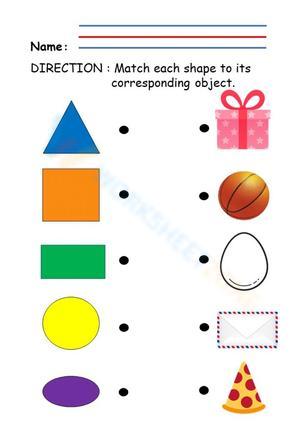
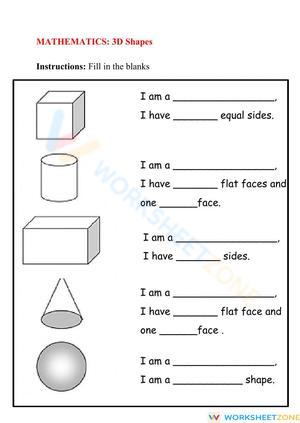
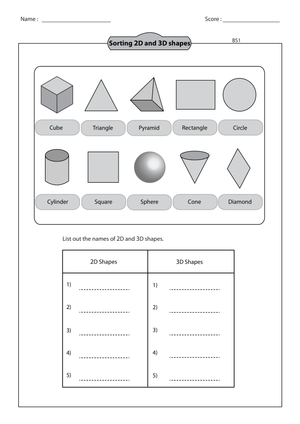
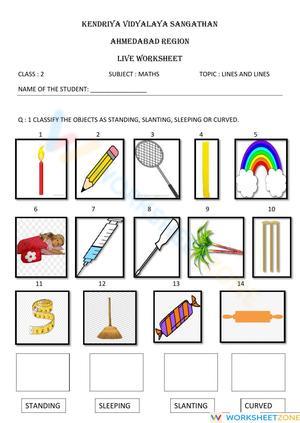
These geometry printable worksheets for 1st grade give teachers a set of standalone practice pages covering each of the three geometry standards students work through before second grade—shape identification by defining attributes, composing new shapes from smaller components, and partitioning circles and rectangles into equal shares. Each worksheet targets a single concept, so teachers can pull exactly what a class needs for a given day rather than sorting through a mixed packet.
The Three Geometry Concepts These Worksheets Target
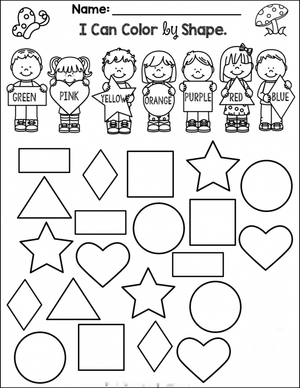
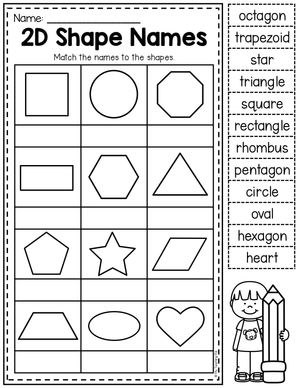
The Grade 1 geometry strand asks students to do something more cognitively demanding than naming shapes by appearance: they must explain why a shape belongs to a category based on its structural properties. Under CCSS 1.G.A.1, that means distinguishing defining attributes—the number of straight sides, whether the figure is closed—from non-defining attributes like color, size, and rotation. Each identification worksheet presents the same shape type in multiple orientations so students practice ignoring rotation as a cue, which is exactly where the most persistent Grade 1 errors appear.
The composition worksheets address CCSS 1.G.A.2. Each worksheet presents an outlined target shape and a set of smaller shapes students arrange to fill it—joining two right triangles to form a rectangle, or combining two squares to build a larger one. Partitioning worksheets (1.G.A.3) introduce equal-share vocabulary through drawing tasks in which students divide printed circles and rectangles into a specified number of parts and label each piece. The six worksheet formats across the set are:
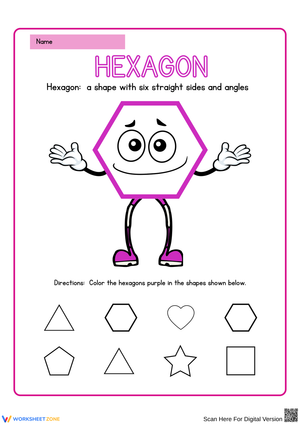
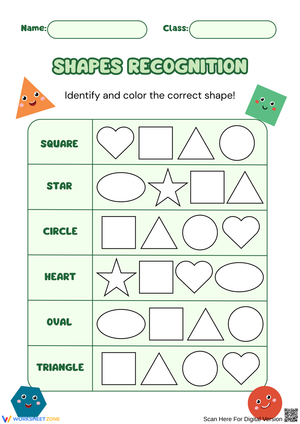
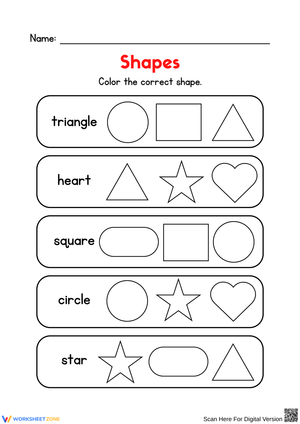
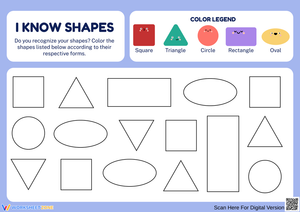
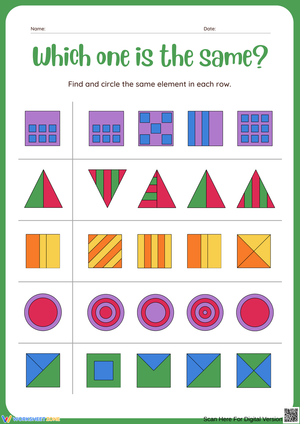
- Shape identification: sorting and circling tasks presenting shapes in varied orientations and sizes
- Attribute counting: charts where students record side and vertex counts for each shape
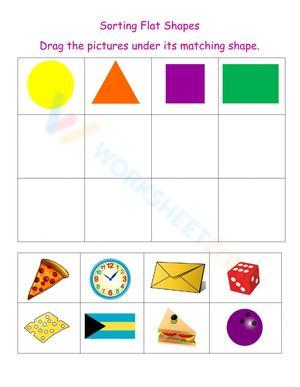
- Sort-and-classify: activities that separate defining from non-defining attributes
- Composing puzzles: outlined targets students fill using specified smaller shapes
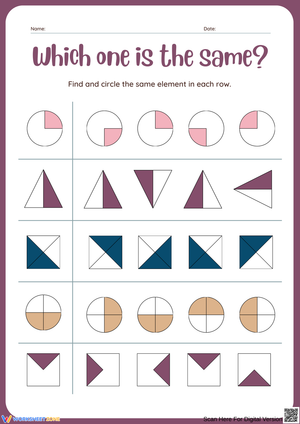
- Partitioning practice: circles and rectangles students divide into halves or fourths, then label
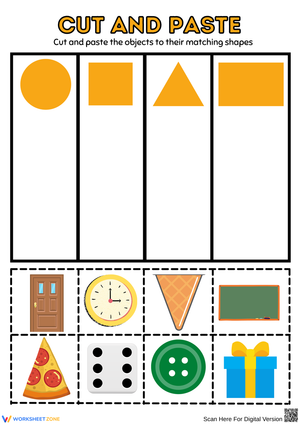
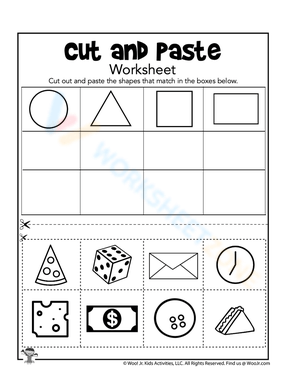
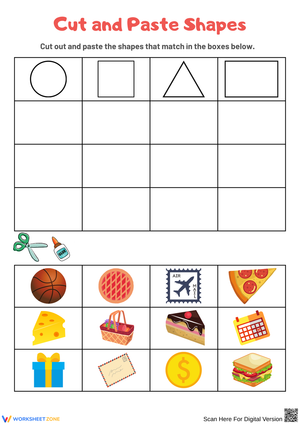
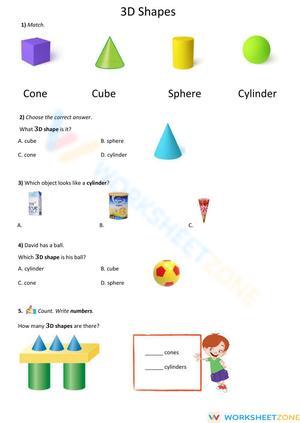
- Real-world connections: photographs of everyday objects students match to geometric shape names
Mistakes Students Make That These Worksheets Help Surface
The most persistent Grade 1 geometry misconception is treating orientation as a defining attribute. A student who correctly labels a flat square will often call that same square a "diamond" when it is tilted 45 degrees—an error that reveals pattern-matching to a memorized image rather than attribute analysis. The identification worksheets surface this quickly: a student who skips a rotated square on a "circle all squares" task signals clearly that orientation work needs a revisit, not more coloring practice.
Partitioning errors have a different character. Students frequently draw a line through a rectangle and label both pieces "halves" even when one is visibly larger. They understand that halves means two pieces but have not yet attached the constraint of equal size to the word. One reliable fix: after students draw the dividing line on the worksheet, have them cut along it and stack the two pieces. This thirty-second check turns an abstract requirement into a concrete test students can run themselves—unequal partitions become impossible to argue with when one piece sits obviously askew on top of the other.
How to Fit These Worksheets Into Your Weekly Rotation
Shape-identification pages work well as the opening five minutes of a math block. Students complete six to eight items independently while the teacher circulates, and the errors visible in that window—especially orientation mistakes—signal which students need a quick reteaching prompt before the day's main activity. Because geometry printable worksheets for 1st grade cover one skill per worksheet, they fit that window cleanly without asking students to shift between unrelated problem types partway through.
Composing and partitioning worksheets work better as center activities than as whole-class independent work. Pair students at the composing center so one partner describes which shapes to use while the other arranges them—this pushes both students to use attribute vocabulary rather than trial and error. Keep scissors at the partitioning center so students can verify equal shares by cutting and stacking. Reserve attribute-counting charts for individual assessment, since they yield clean per-student data on who can reliably count corners versus who is still guessing—data that translates directly into parent conference notes without any additional scoring work.
Standard Alignment
These worksheets address three standards within the CCSS Geometry domain for Grade 1. 1.G.A.1 covers identifying defining and non-defining attributes and building or drawing shapes to specification; in most classroom sequences, this standard opens the geometry unit because it establishes the vocabulary and reasoning framework everything else depends on. 1.G.A.2 addresses composing 2D and 3D shapes into composite shapes; most pacing guides place this one to two weeks after 1.G.A.1, once students are confident with individual shape names. 1.G.A.3 introduces partitioning into equal shares using the terms halves, fourths, and quarters; teachers typically address this standard last in the unit because evaluating a valid partition requires real fluency with shape properties. The geometry printable worksheets for 1st grade in this set follow that same instructional sequence, mapping directly to the standards in the order most districts teach them.
Differentiating These Worksheets Across the Full Ability Spread
Students who need additional support on identification tasks benefit from a reference strip clipped alongside the worksheet—each shape with its name, side count, and vertex count printed clearly. This removes the working-memory demand of retrieving vocabulary and lets the student focus on the classification reasoning the standard actually targets. For partitioning worksheets, lightly printed dotted guidelines give students a starting structure for drawing equal-length lines without removing the judgment step entirely. These adjustments take about two minutes to prepare and make the same worksheet accessible to students at significantly different readiness levels.
Students working above grade-level expectation respond well to open-ended additions written on the back of the existing worksheet: "Draw a closed figure with exactly five straight sides and list two of its defining attributes" pushes well past Grade 1 baseline while staying within the same conceptual territory. On partitioning worksheets, asking students to show two different ways to divide the same rectangle into fourths directly addresses the 1.G.A.3 understanding that equal shares do not have to look identical—a concept many advanced first graders are ready to grapple with. Neither extension requires separate geometry printable worksheets for 1st grade; both are pencil-written additions to the worksheets already in hand.
Frequently Asked Questions
What geometry skills should Grade 1 students have secured by the end of the year?
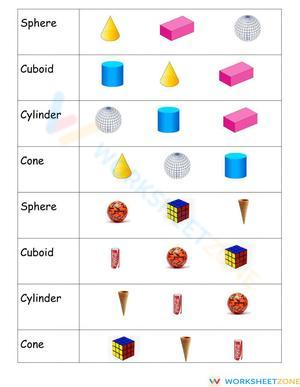
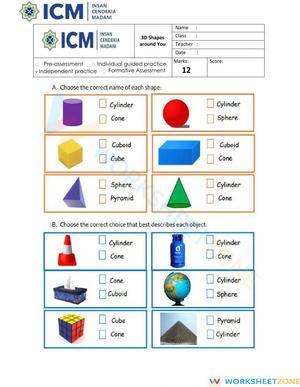
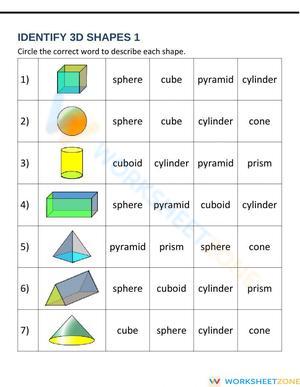
By May, students should reliably identify common 2D shapes—triangles, rectangles, squares, trapezoids, half-circles, quarter-circles—and 3D shapes—cubes, rectangular prisms, cones, cylinders—by their defining attributes rather than by a familiar orientation. They should be able to combine smaller shapes to fill a composite outline and divide a circle or rectangle into two or four equal shares, using the terms halves, fourths, and quarters correctly. These benchmarks align to CCSS 1.G.A.1 through 1.G.A.3.
How should I explain defining versus non-defining attributes to a first grader?
The clearest classroom language is: "Defining attributes are the rules a shape has to follow. Non-defining attributes are things you can change without breaking the rules." A triangle always has exactly three straight sides and is always closed—those are the rules. It can be tall or short, red or blue, point up or sideways—those are allowed changes. Attribute-counting worksheets reinforce this by presenting the same shape family in varied sizes and rotations, requiring students to count sides and vertices rather than match a memorized visual template.
Can these worksheets be used at math centers rather than during whole-class independent work?
Center use often produces stronger results for the composing and partitioning worksheets specifically. Whole-class independent work on a composing puzzle stalls when students get stuck, because one teacher cannot efficiently troubleshoot twenty students at once. At a center with two or three students, a stuck student can observe a partner's thinking and ask questions without disrupting the room. Identification and attribute-counting worksheets work fine as whole-class independent practice since students can move through them without needing to problem-solve aloud.













 Interactive Worksheet Maker
 Quiz Maker
 Word Search Maker
 Crossword Puzzle Maker
 Word Scramble Generator
 Sentence Scramble Generator
 Handwriting Worksheet Generator
 Name Tracing Generator
 Fill In The Blank Generator