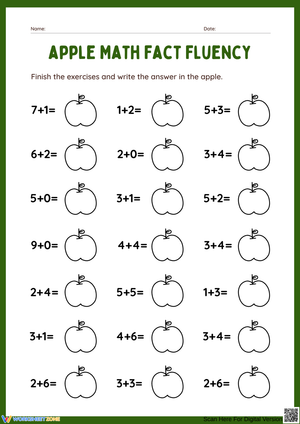
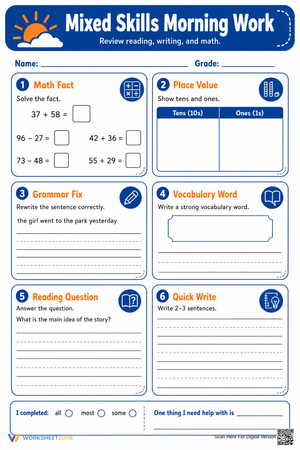
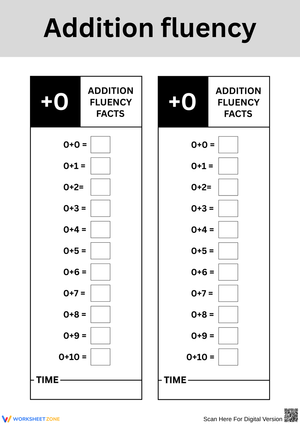
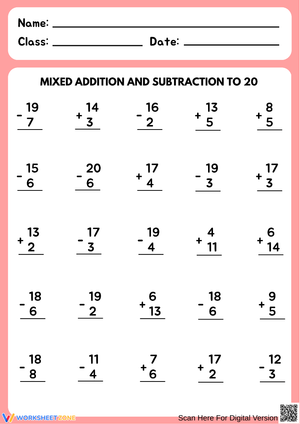
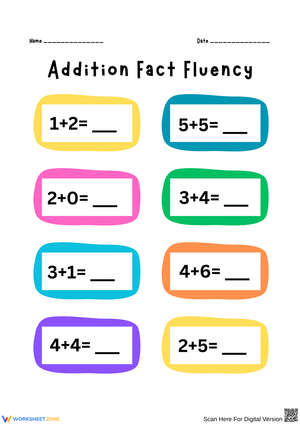
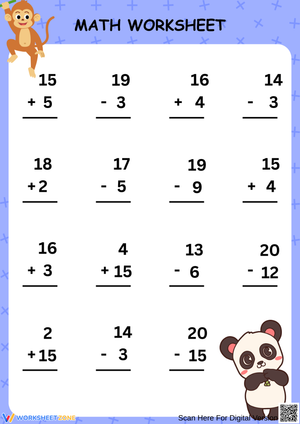
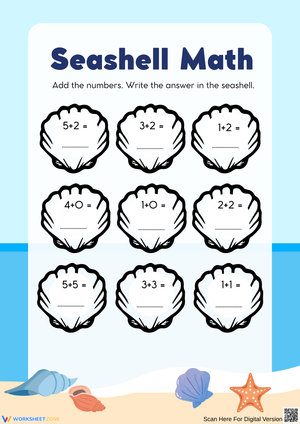
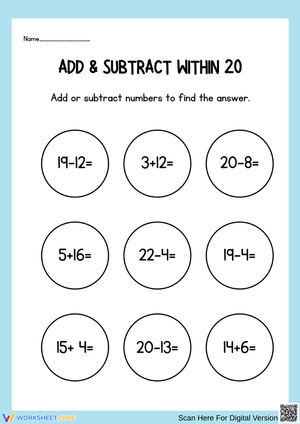
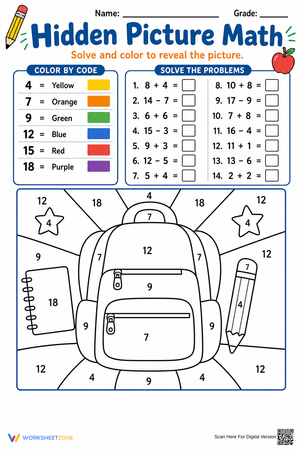
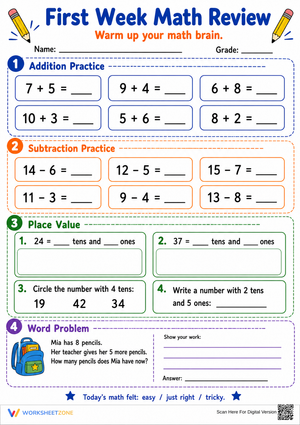
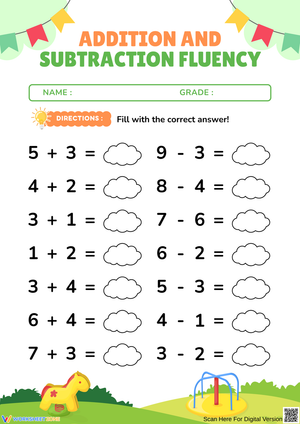
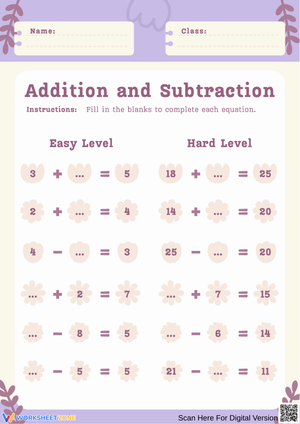
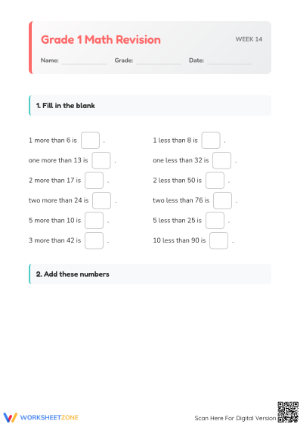
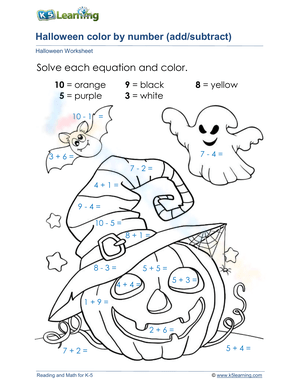
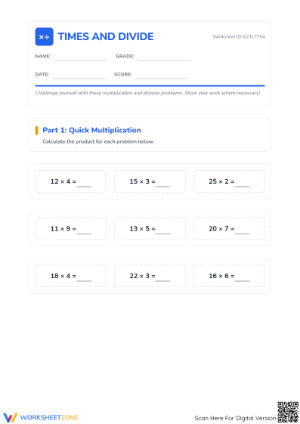
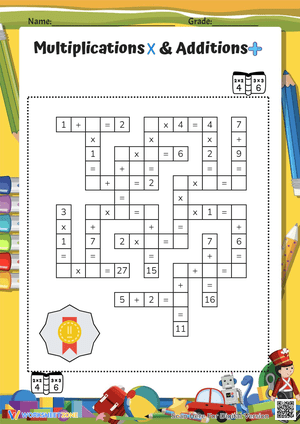
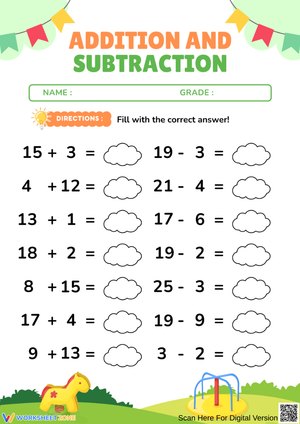
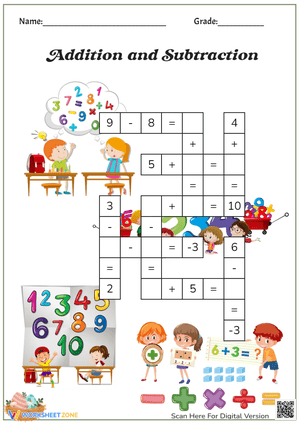
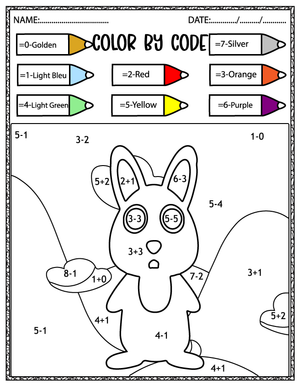
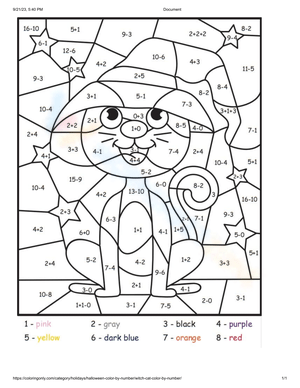
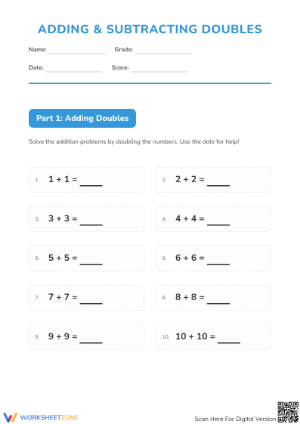
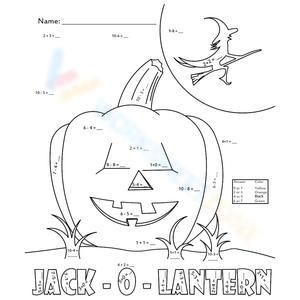
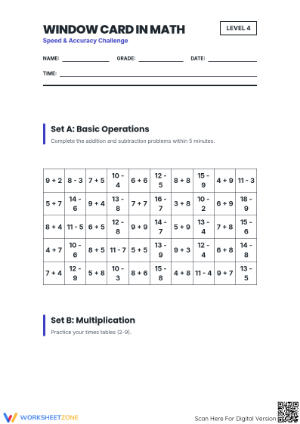
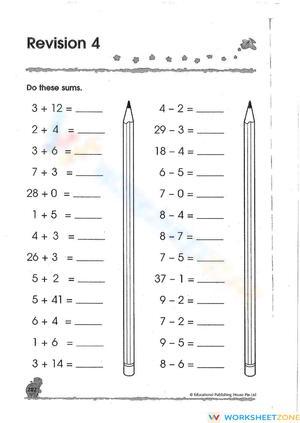
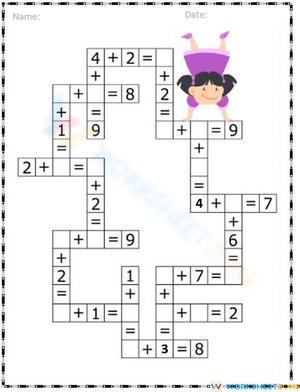
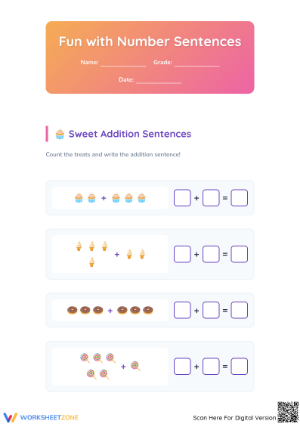
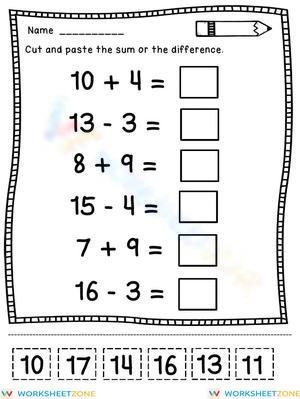
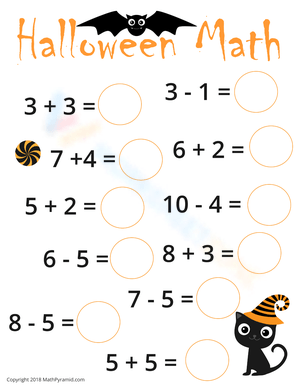
These 1st grade mixed operation worksheets resources give first-grade teachers targeted, printable practice for the precise point in the year when students are expected to read both + and − signs on the same page — a transition that reliably surfaces symbol-recognition gaps that single-operation drills never catch. Each worksheet covers addition and subtraction within 20 and presents problems in horizontal, vertical, and missing-addend formats, giving students exposure to the equation structures they'll encounter in daily fluency work and on early assessments.
The Specific Skills These Worksheets Target
Horizontal and vertical equation formats appear throughout the set by design. Horizontal problems encourage mental math strategies — counting on, making a ten, using doubles — while vertically stacked problems prepare students for the standard algorithm format they'll use consistently in second grade. Running both formats on the same worksheet establishes that the mathematical relationship stays identical regardless of how the problem is oriented on the page.
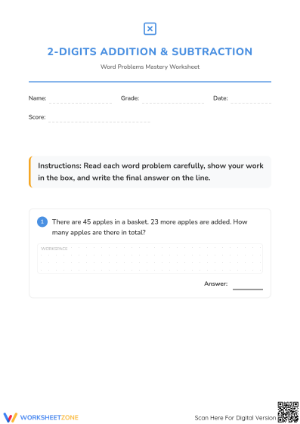
Several worksheets in this 1st grade mixed operation worksheets set also incorporate brief word problems that require students to determine which operation applies. These are deliberately short — one sentence, one question — so the cognitive load stays focused on identifying the correct operation rather than on decoding dense text. Students who handle equations fluently often freeze when asked to choose an operation from context; these short word problems build that decision-making capacity directly. Missing-addend problems, where the unknown appears at the beginning or middle of the equation, show up throughout the set because they demand a qualitatively different kind of reasoning than fill-in-the-answer problems do — and they're the format most likely to stop a confident student cold on the first encounter.
Errors First Graders Make on Mixed Operation Work — and How to Address Them
The most consistent error pattern is sign blindness. Students who have drilled addition for a week approach a mixed-operation worksheet still in addition mode — they process the numerals and skip the symbol. This is not carelessness in the usual sense; it's the natural result of pattern-matching shortcuts young brains develop through repetition. The fix is procedural: require students to circle or highlight the operation symbol as the mandatory first step on every problem, before they look at the numbers. That physical action interrupts the autopilot rhythm and forces a conscious decision about which operation is being asked. Teachers who build this step into their classroom expectations from the first day of mixed practice see measurably fewer sign errors within a week.
Missing-addend problems generate a separate category of errors worth anticipating. When students encounter 7 + ___ = 12, many instinctively add the two visible numbers — 7 and 12 — rather than interpreting the blank as the unknown quantity. Pairing a part-part-whole diagram with these problems before students attempt them independently resolves most of this confusion quickly. A third error pattern: students using counting-on strategies sometimes overshoot, counting past the second addend when totals approach 20. A number line on the desk helps, but the more lasting correction is asking students to check their answer by counting back — hearing the overshoot aloud is more instructive than any explanation from the front of the room.
Fitting These Worksheets Into Your Weekly Math Schedule
The most productive slot for this kind of practice is the first six to eight minutes of math class — Monday, Wednesday, and Friday works well — short enough to keep the tone low-stakes, frequent enough to develop retrieval strength across the week. Spaced practice at this interval builds fluency more durably than a longer block completed once. After students finish, a two-minute partner comparison on three problems surfaces strategy talk that a completed worksheet alone never reveals.
These worksheets also function well as exit tickets at the close of a fact-family lesson. Assigning four to six problems — a deliberate mix of related addition and subtraction facts — gives a quick snapshot of who has consolidated the inverse relationship and who hasn't. Teachers who keep a sorted folder of 1st grade mixed operation worksheets options, organized by range (within 10, within 20, missing addend), can pull the right worksheet for any five-minute window without hunting for materials or making on-the-spot adjustments.
Standard Alignment
CCSS.MATH.CONTENT.1.OA.C.6 requires first graders to add and subtract within 20, demonstrating fluency within 10. This standard is the direct instructional target of the equation-based worksheets in the set — students practice retrieving facts automatically rather than reconstructing them through counting strategies each time. CCSS.MATH.CONTENT.1.OA.D.8 addresses determining the unknown whole number in an addition or subtraction equation, which is precisely what missing-addend problems test. In classroom terms, teachers typically address these standards sequentially: fluency work first, then missing-addend problems once students can move through known facts without pausing to count. Placing both problem types on the same worksheet late in the unit accelerates the connection between them.
Calibrating These Worksheets for Students at Different Stages
Students who are still consolidating single-digit facts benefit from starting on worksheets limited to sums and minuends within 10. Keeping the number range small holds the cognitive demand on symbol recognition — the actual target skill — rather than on calculation. Once a student can switch operations without hesitating, extending the range to within 20 is a clear next step that doesn't require new materials.
For students already fluent with facts within 20, the 1st grade mixed operation worksheets set's missing-addend and word-problem worksheets serve as a natural extension. Asking these students to write the remaining two equations in a fact family after each problem — three additional equations per answer — deepens the algebraic thinking embedded in the standard without requiring separate challenge materials. At the other end of the spectrum, students who need additional support while working independently do well with a number line attached directly to their workspace and explicit permission to draw circles or tally marks in the margins, not as a permanent strategy but as a bridge to mental calculation they're still developing.
Frequently Asked Questions
When in the first-grade year should mixed operation practice begin?
Most first graders are ready for mixed operation work in the second half of the year, typically after winter break, once they've consolidated addition and subtraction facts within 10. Starting too early compounds two skill gaps at once — symbol recognition and fact retrieval — and tends to produce frustration rather than fluency. Students need enough command of single-operation facts that the switch-and-decide demand of mixed practice doesn't overwhelm working memory.
How many problems per session works for first graders?
Ten to fifteen problems is the productive range for a warm-up or short drill. Beyond that, accuracy tends to drop — not because students don't know the facts, but because inattention to operation signs increases with fatigue. If a student moves through fifteen problems accurately and quickly, assign a missing-addend or word-problem worksheet as the follow-on rather than a second standard equation set.
What's the most effective way to connect fact families to these worksheets?
After students complete a worksheet, select three or four problems — ideally one addition and one related subtraction problem sharing the same three numbers — and ask them to write the remaining two equations in the fact family. This takes two to three minutes and directly reinforces the inverse relationship that both 1.OA.C.6 and 1.OA.D.8 target. Students who can explain why 8 + 5 = 13 helps them solve 13 − 5 are moving toward the algebraic thinking these first-grade standards are building toward in later grades.













 Interactive Worksheet Maker
 Quiz Maker
 Word Search Maker
 Crossword Puzzle Maker
 Word Scramble Generator
 Sentence Scramble Generator
 Handwriting Worksheet Generator
 Name Tracing Generator
 Fill In The Blank Generator