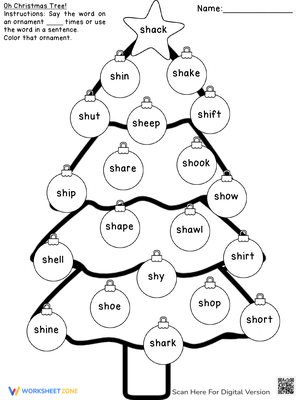
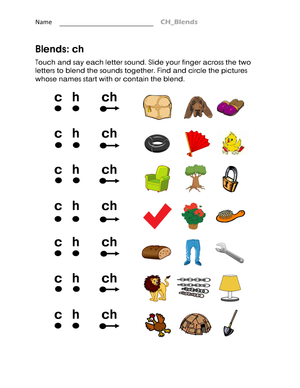
These consonant digraphs worksheets for 1st grade move students through a skill sequence that classroom phonics routines often rush: from hearing a two-letter combination as one sound, to reading it reliably in unfamiliar words, to spelling it without a visual prompt. The set covers sh, ch, th, and wh as core patterns, with ph included as extension material for students who are outpacing the unit. Decodable short-vowel words anchor every task — shop, chin, thin, when — so students are never asked to decode beyond the target pattern.
The Specific Skills Each Worksheet Targets
Each worksheet in the set focuses on one task type, which keeps practice intentional rather than scattered. The formats move from recognition to production:
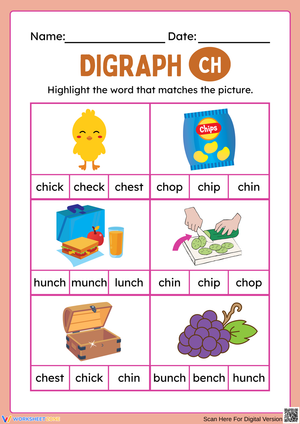
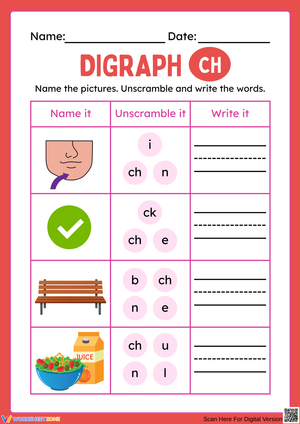
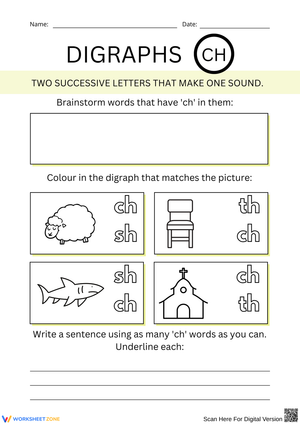
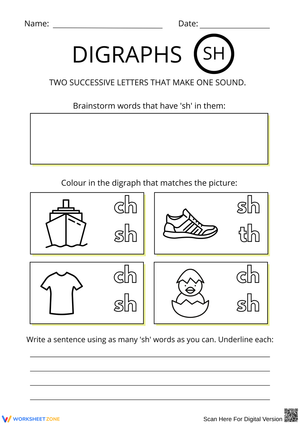
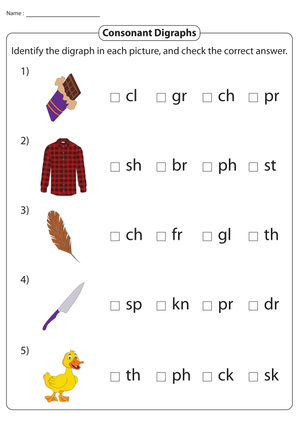
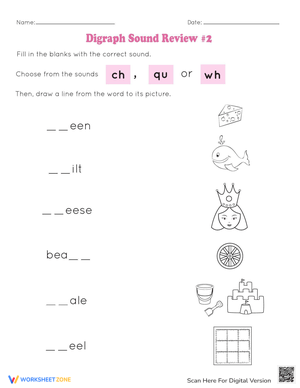
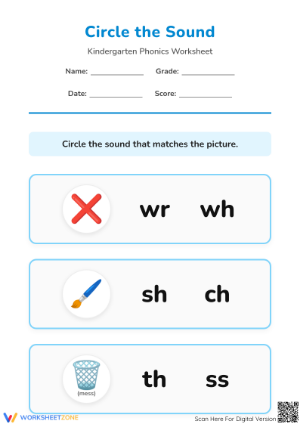
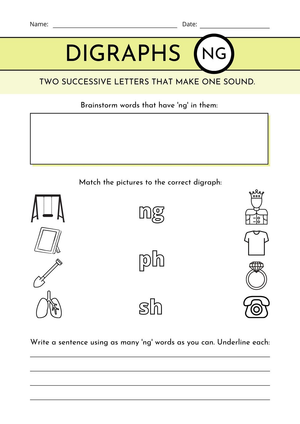
- Picture-to-digraph matching: Students say the picture name aloud, isolate the beginning or ending digraph, and mark the correct spelling. This format works well as a first-day introduction because it drops the writing load while still requiring phonemic awareness alongside print recognition.
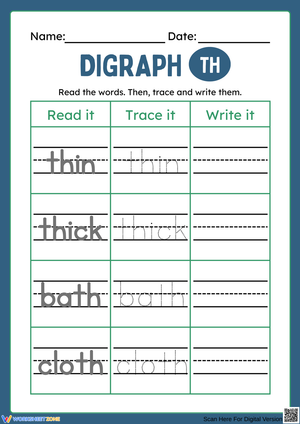
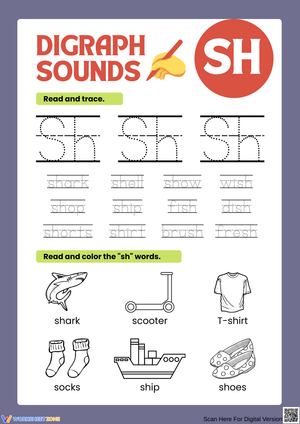
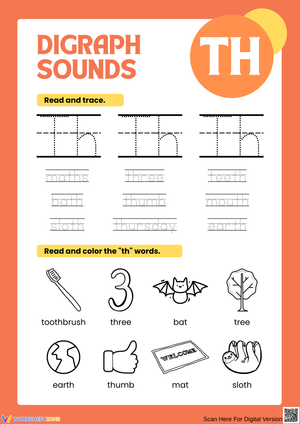
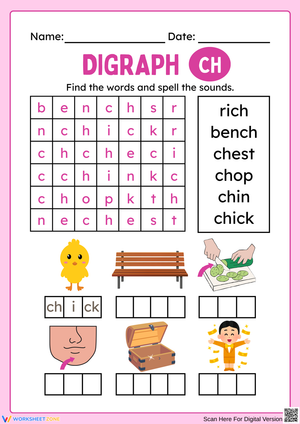
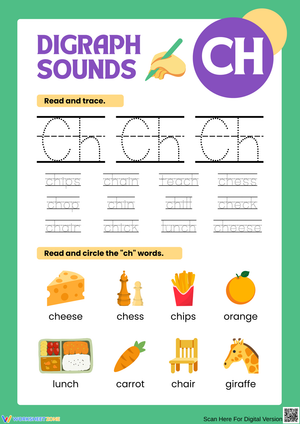
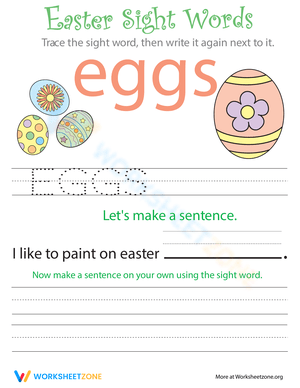
- Trace, read, and write: Students trace the digraph, read a target word, and then write it independently. The sequence cements the sound-symbol link before students move to open-ended tasks.
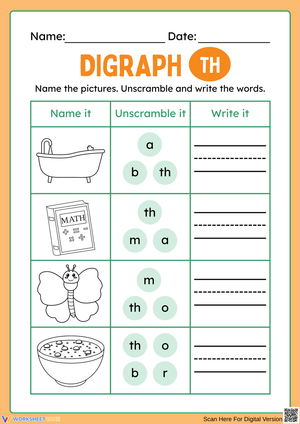
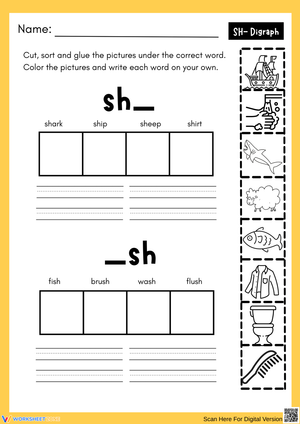
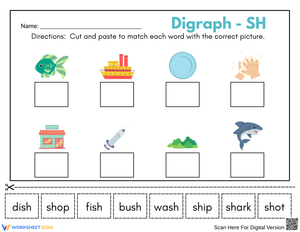
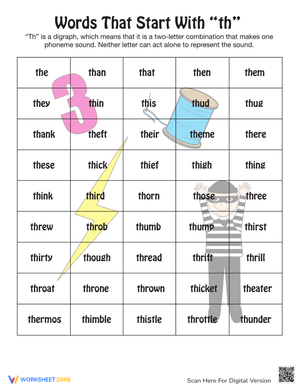
- Word sorts: Students sort words — sometimes cut-and-paste, sometimes written — under sh, ch, and th headers. Sorting is particularly revealing because a student who guesses from pictures on a matching worksheet cannot guess their way through a sort.
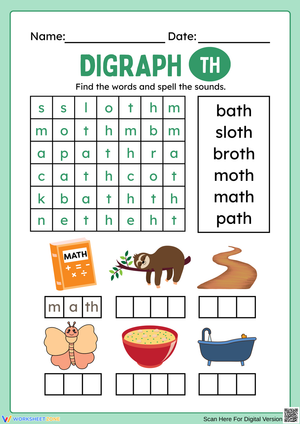
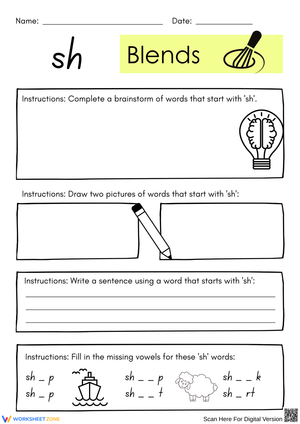
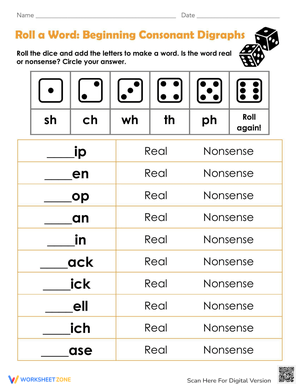
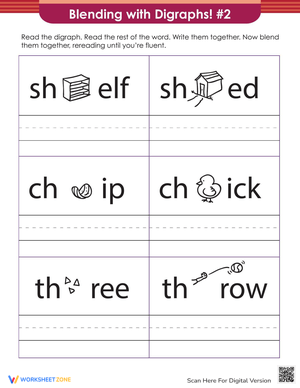
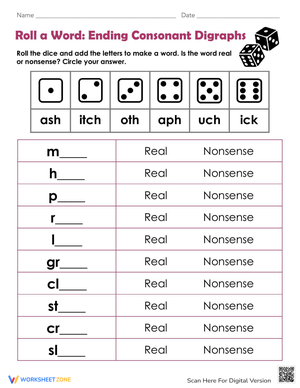
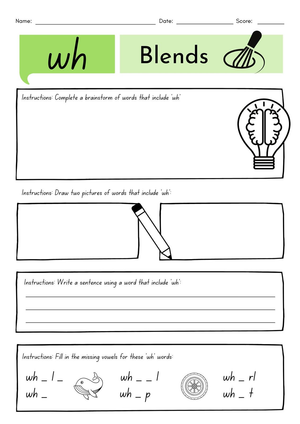
- Digraph completion: Students add the missing digraph to finish a word (__ip, wi__, ma__). The surrounding letters are always fully decodable so the only challenge is the target pattern.
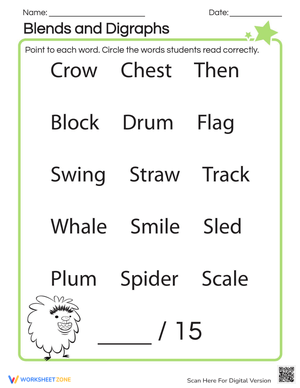
- Sentence-level reading: Students read a short sentence, underline the digraph word, or choose between two options to complete a sentence. This format matters because students need to encounter these patterns inside connected text, not only on word lists.
Student Mistakes Worth Watching and Addressing
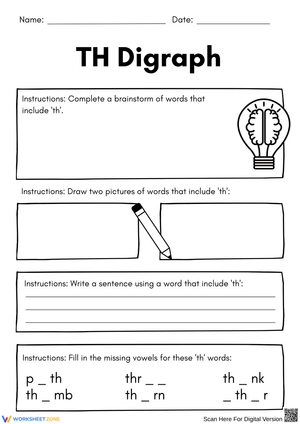
The error that surfaces most predictably in first-grade digraph work is th substitution. When students write "dat" for that or "dis" for this, they are representing the voiced dental fricative with the closest stop sound available — d. This is not carelessness; it reflects how the th sound actually feels in the mouth relative to the consonants students have already internalized. The th worksheets in this set place the digraph in both initial and final positions (that, thin, with, bath), giving teachers repeated data points on whether a student is building the pattern or consistently substituting it.
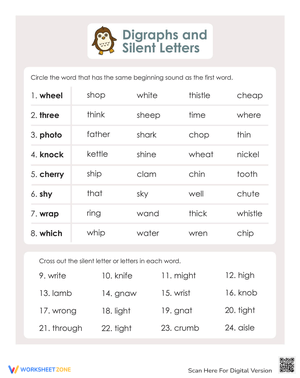
A second predictable problem appears during word sorts: students place chair under sh instead of ch because the vowel in chair sounds vaguely familiar to a word they associate with sh. Sorting without picture support is where that confusion shows up most clearly, which is why the word-sort worksheets deliberately include both digraphs in every column — students must compare patterns, not just categorize in isolation.
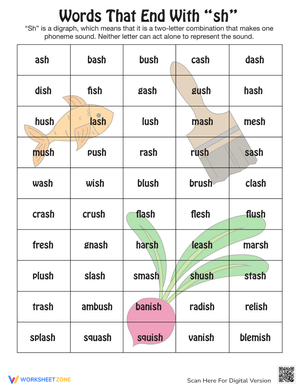
Position confusion at word endings is the third pattern to watch. Students who read chip correctly in a word list will often write "ric" instead of rich because ending digraphs are less perceptually salient than beginning ones. The sentence-level and completion worksheets give students repeated practice with digraphs in final position to address exactly this gap.
How to Fit These Worksheets Into a Phonics Lesson Week
The most productive approach is to hold the task format constant for two or three consecutive lessons while rotating the target digraph. When a first grader already knows the procedure — "sort the words, write each one in the right column" — the full 10 to 12 minutes of center time goes toward noticing the spelling pattern rather than re-reading directions. That consistency also produces cleaner informal data: if a student sorted sh and ch words correctly on Tuesday but struggles with th on Thursday, the format is not the variable.
Consonant digraphs worksheets for 1st grade slot naturally into several spots across the instructional day. The picture-matching and trace-read-write worksheets work as same-day practice immediately after whole-group phonics modeling. Word sorts run well during a 15-minute literacy center rotation because directions are simple enough to repeat across multiple weeks without additional teacher support. For the 8-minute window before specials or right after morning meeting, a short completion worksheet gives students a focused task with no setup time. Sentence-level worksheets are most effective in small-group intervention, where a teacher can pause when a student hesitates and ask for an oral explanation before the student marks an answer.
Adjusting the Work for Different Readers in the Room
Students who are still building phonemic awareness alongside print-level phonics benefit from working in pairs on the picture-matching worksheets — one student says the word aloud, both listen for the first sound, and then they mark the digraph together. That oral layer reduces the chance a student is visually pattern-matching without actually hearing the sound distinction.
On-level readers are well served by the word-sort and sentence-level worksheets as core formats. These students generally do not need picture support on every item but benefit from seeing digraphs in both initial and final positions on the same worksheet, which many single-pattern phonics pages omit.
Students who have already internalized sh, ch, and th move to mixed-pattern review and to tasks that ask them to write original phrases using at least two digraph words. The honest tradeoff is that students working several months above grade level may exhaust the extension tasks quickly — at that point, short decodable reader passages serve them better than additional worksheets.
Standard Alignment
These worksheets address RF.1.3a, the Common Core foundational skill requiring first graders to know spelling-sound correspondences for common consonant digraphs. In classroom terms, RF.1.3a appears after students have worked through most CVC patterns and are ready to see that two letters can act as one phoneme. Most Grade 1 scope-and-sequence maps place digraph instruction in the first semester — roughly late September through January — which is the window when consonant digraphs worksheets for 1st grade are among the highest-frequency phonics tools a teacher reaches for.
Frequently Asked Questions
Which digraphs should first graders learn first?
Sh, ch, and th are the strongest starting points because they appear across hundreds of early decodable words and show up in student writing almost immediately. Wh follows naturally since it anchors the question words students see in early reading — when, where, what. Ph is worth covering, but early readers encounter it far less often than the others, and moving to ph before th is secure tends to produce confusion rather than acceleration.
How do I keep daily digraph practice from feeling repetitive to students?
Rotate the worksheet type daily while keeping the same target digraph for two or three lessons. On day one, students complete a picture sort for sh. On day two, they work through a completion task using sh words. On day three, they read two short sentences and underline every sh word. The skill repeats; the activity does not. First graders tolerate review far better when the surface format changes even slightly, and rotating task types gives teachers different angles on the same skill rather than the same snapshot repeated.
My students read digraph words correctly in isolation but miss them inside sentences. What is happening?
Reading words on a list is a different cognitive task from reading them in running text. In a word list, every item presents the same category of challenge. Inside a sentence, students are managing syntax, meaning, and decoding simultaneously — and digraphs mid-sentence get less focused attention than they do during a drill. The sentence-level worksheets address this directly, but they work best after students have already shown consistent accuracy on isolation tasks. Moving to sentence practice too early tends to produce guessing from context rather than genuine digraph recognition.
Which worksheets travel home well as homework?
The picture-matching and trace-read-write worksheets are the most reliable take-home formats because most families can follow the task without explanation. Word sorts are less dependable — cut-and-paste pieces get lost, and family members sometimes sort by meaning or rhyme rather than by spelling pattern, which can quietly reinforce the wrong habit. Consonant digraphs worksheets for 1st grade that make the trip home successfully are the ones that require nothing more than what is printed on the page: a clear picture, a clear prompt, and one specific thing to do.












 Interactive Worksheet Maker
 Quiz Maker
 Word Search Maker
 Crossword Puzzle Maker
 Word Scramble Generator
 Sentence Scramble Generator
 Handwriting Worksheet Generator
 Name Tracing Generator
 Fill In The Blank Generator