


























Views
Downloads

Essential Digraphs Worksheet | Grade K-1 Phonics
Paste this activity's link or code into your existing LMS (Google Classroom, Canvas, Teams, Schoology, Moodle, etc.).
Students can open and work on the activity right away, with no student login required.
You'll still be able to track student progress and results from your teacher account.
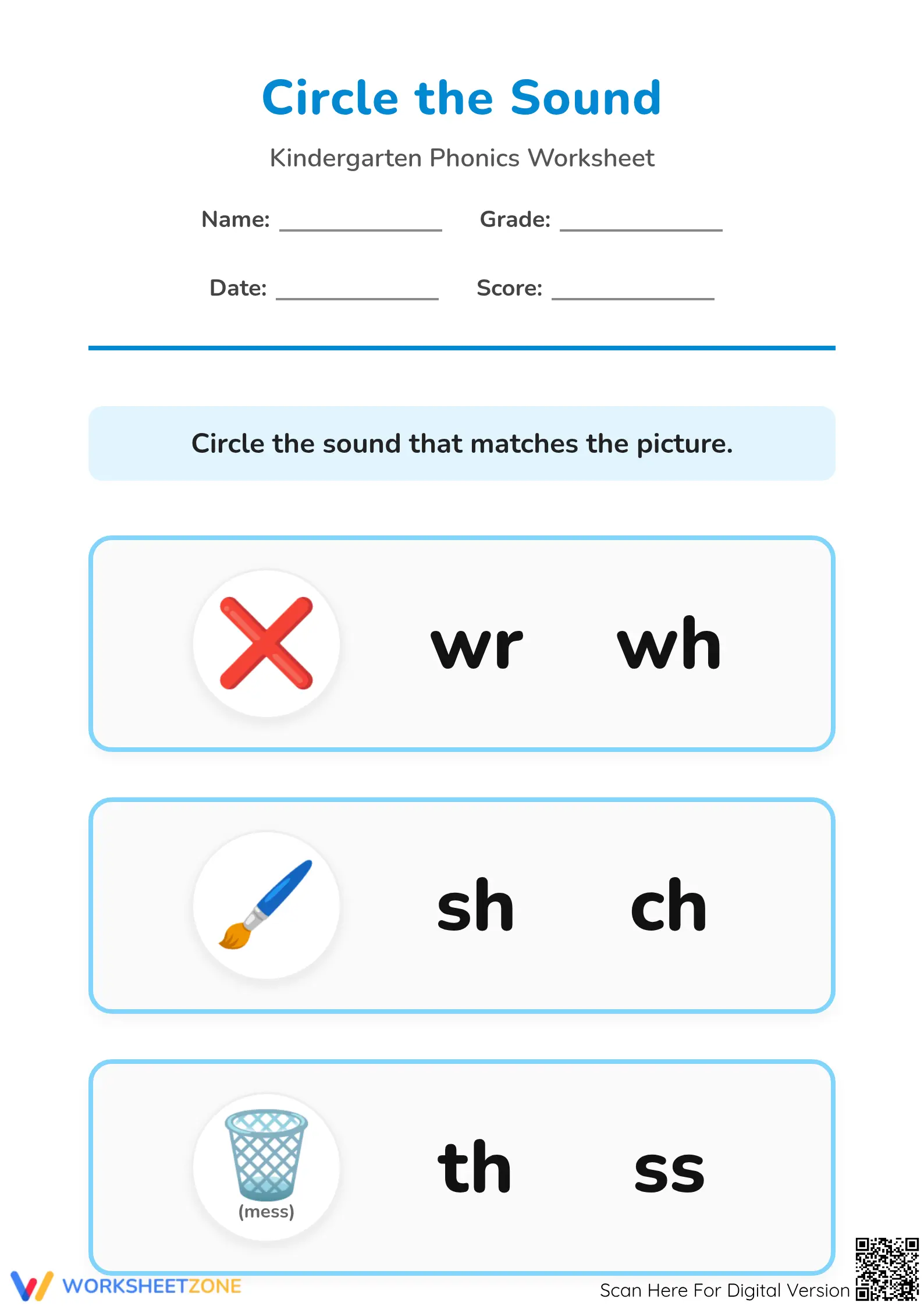
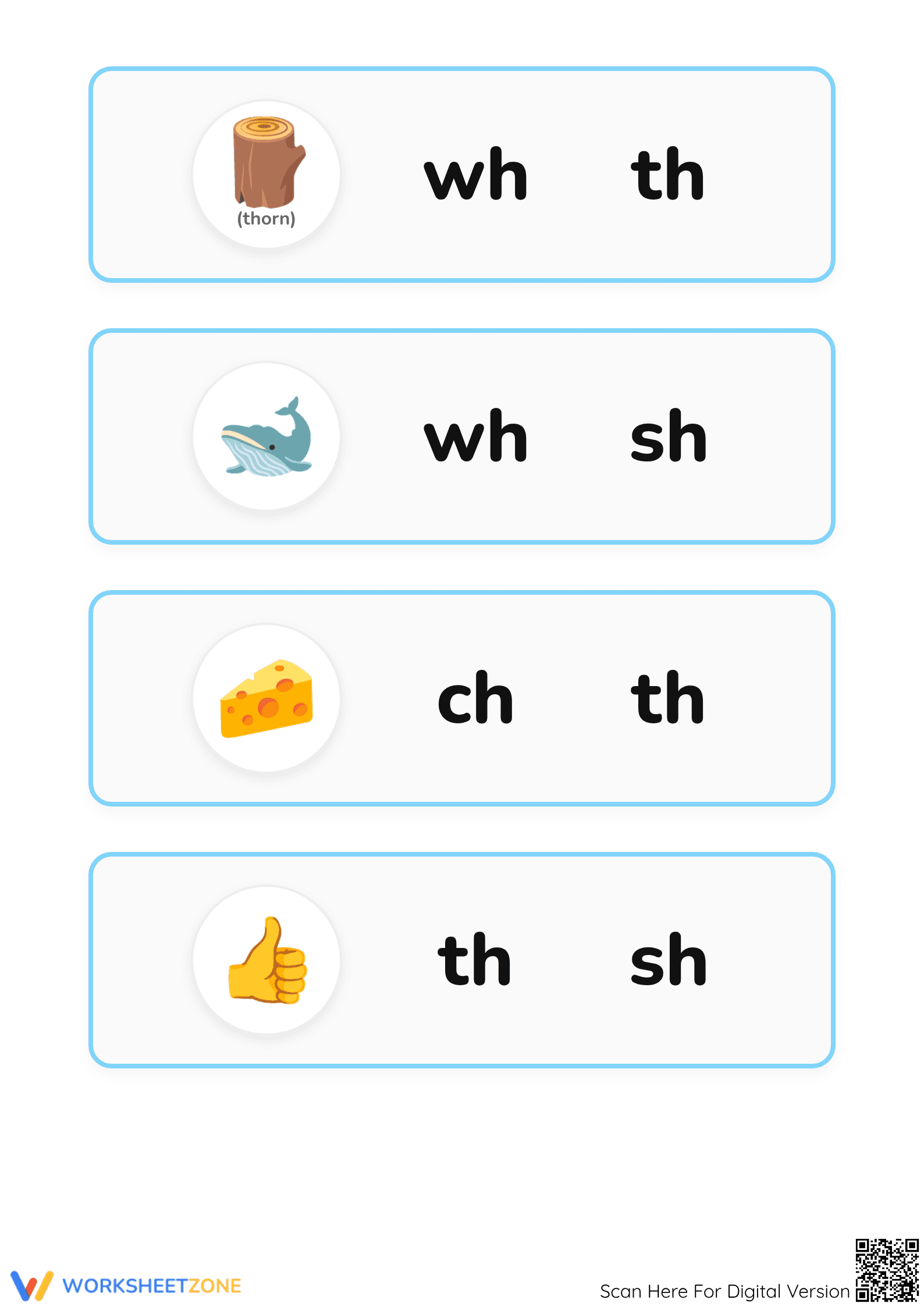
This Kindergarten and First Grade phonics worksheet helps early readers master consonant digraphs through visual identification. Students look at high-quality images and select the corresponding sound from two options. By connecting phonemes to graphemes, learners build the foundational decoding skills necessary for reading fluency and accurate pronunciation.
At a Glance
- Grade: Kindergarten · Subject: ELA
- Standard:
CCSS.ELA-LITERACY.RF.1.3.A— Know the spelling-sound correspondences for common consonant digraphs- Skill Focus: Consonant Digraphs (sh, ch, th, wh, wr, ss)
- Format: 3 pages · 8 problems · Answer key included · PDF
- Best For: Independent phonics practice and centers
- Time: 10–15 minutes
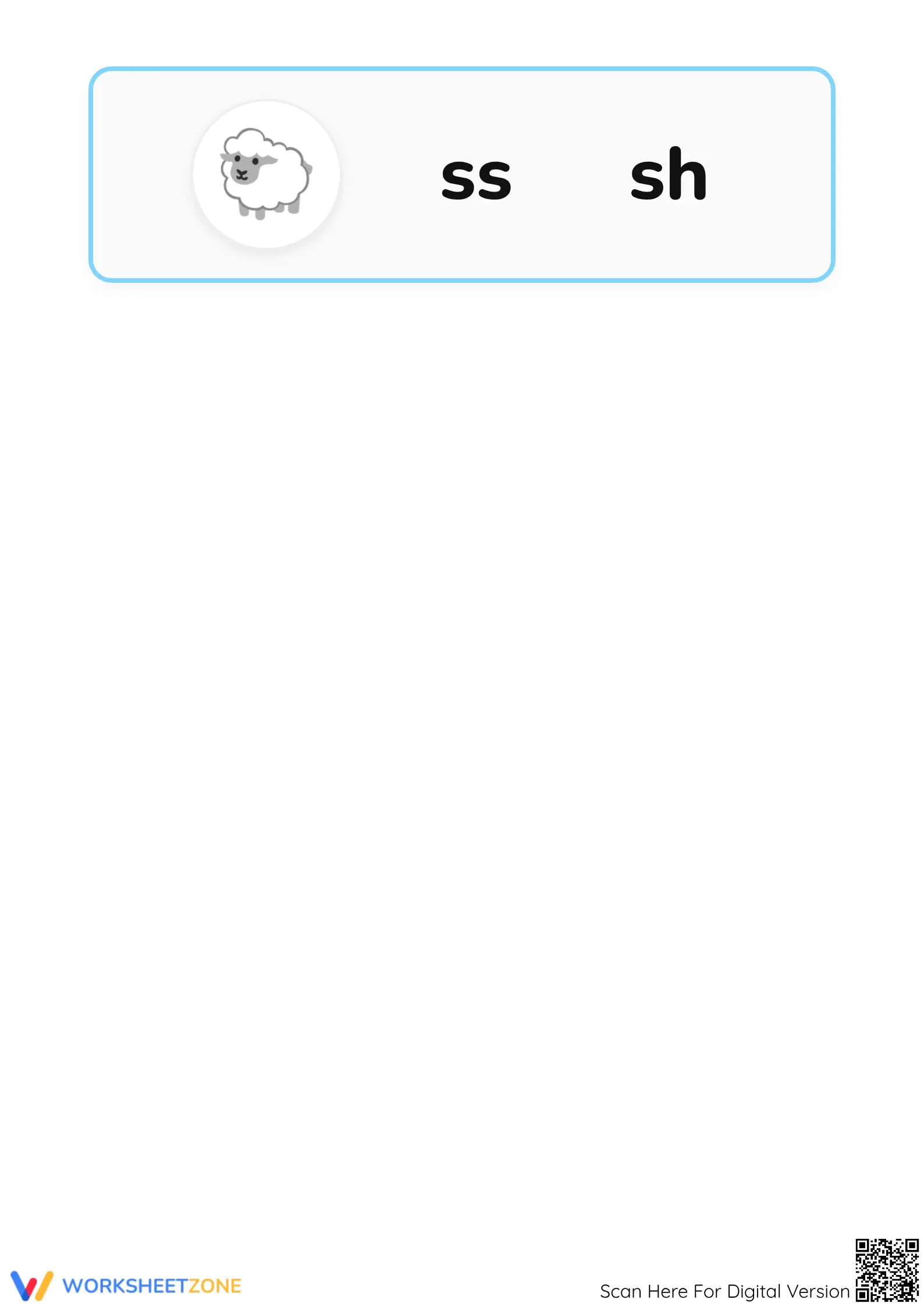
This 3-page PDF contains 8 distinct identification tasks. Each problem features a clear, colorful icon representing a common word (like "whale," "cheese," or "brush") paired with two possible digraph choices. The layout is spacious and student-friendly, minimizing visual clutter to help young learners focus on the specific letter combinations. A full answer key is provided for quick grading and immediate feedback.
This resource is designed for immediate classroom implementation with a total teacher prep time of under 2 minutes. First, print the three pages (or select specific pages for targeted practice). Second, distribute the sheets to students during your literacy block or as a morning work activity. Finally, use the included answer key to review responses in seconds or allow students to self-check their work. It is an ideal choice for emergency sub plans due to its self-explanatory nature.
The primary focus is `CCSS.ELA-LITERACY.RF.1.3.A`, which requires students to "Know the spelling-sound correspondences for common consonant digraphs." This worksheet specifically targets the identification of sh, ch, th, wh, wr, and ss in various word positions. This standard code can be copied directly into lesson plans, IEP goals, or district curriculum mapping tools to ensure instructional alignment.
Use this worksheet as a formative assessment after introducing digraphs during direct instruction. It works exceptionally well in a literacy center where students can work independently. Teachers should observe if students are sounding out the picture names or simply guessing, providing a perfect opportunity for a quick check-in on phonemic awareness. Completion typically takes 10 to 15 minutes depending on student proficiency.
This resource is ideal for Kindergarten students ready for advanced phonics or First Grade students needing reinforcement. It is also a valuable tool for English Language Learners (ELL) who benefit from the strong visual-to-text connection. Pair this worksheet with a digraph anchor chart or a shared reading passage to reinforce the sounds in context and build confidence in decoding unfamiliar words.
According to the RAND AIRS 2024 report on early literacy, explicit instruction in phonics, specifically letter-sound correspondences like consonant digraphs, is a critical predictor of later reading success. This worksheet aligns with evidence-based practices by providing isolated practice on the CCSS.ELA-LITERACY.RF.1.3.A standard, allowing students to focus entirely on the phoneme-grapheme relationship without the cognitive load of complex sentence structures. Research from Fisher & Frey (2014) emphasizes that visual scaffolds, such as the icons used in this 8-task set, support the gradual release of responsibility by providing a concrete anchor for abstract sounds. By engaging with these 3 pages of targeted practice, students develop the decoding automaticity required for fluent reading. This resource serves as a reliable tool for educators seeking to implement high-leverage phonics activities that meet rigorous state and national standards for early childhood literacy development.


