


























Views
Downloads
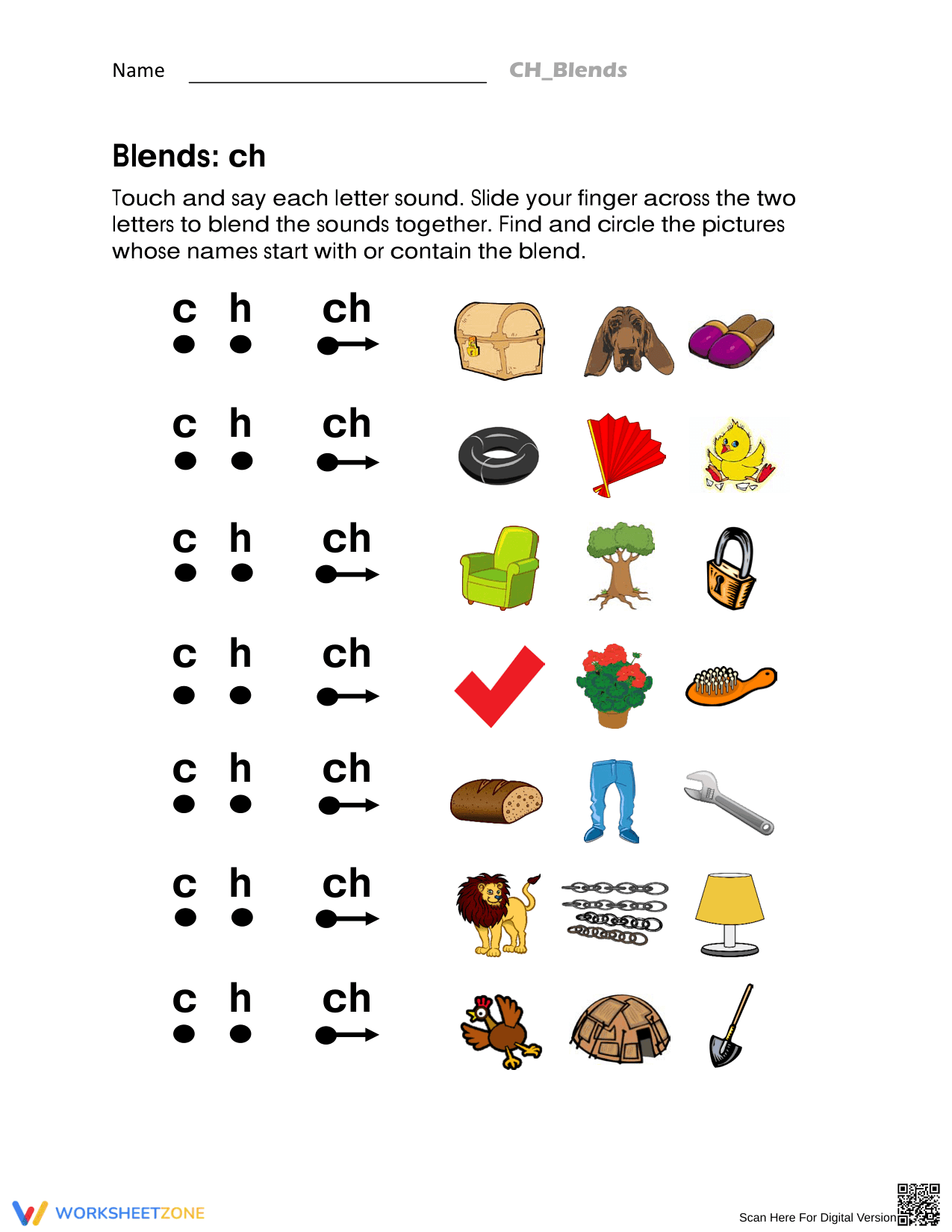

Essential Digraphs: Blending ch Worksheet | Grade 1 Phonics
Paste this activity's link or code into your existing LMS (Google Classroom, Canvas, Teams, Schoology, Moodle, etc.).
Students can open and work on the activity right away, with no student login required.
You'll still be able to track student progress and results from your teacher account.
This essential Grade 1 phonics worksheet focuses on the "ch" digraph, helping students master the transition from individual letter sounds to smooth blending. By combining tactile "touch and say" actions with visual identification, learners solidify decoding skills and gain confidence in pronouncing words containing common consonant digraphs. Students will develop the foundational skills necessary for reading fluency through structured, repetitive practice.
At a Glance
- Grade: 1 · Subject: English Language Arts (ELA)
- Standard:
CCSS.ELA-LITERACY.RF.1.3.A— Know the spelling-sound correspondences for common consonant digraphs- Skill Focus: Consonant Digraph Blending (ch)
- Format: 1 page · 34 tasks · Answer key included · PDF
- Best For: Independent phonics centers or quick formative assessment
- Time: 10–15 minutes
This single-page PDF includes a focused instructional sequence. The left side features seven rows of "touch and say" prompts for isolating and blending the "ch" digraph. The right side presents twenty high-quality illustrations, challenging students to identify objects that contain the target blend, such as a chest or chick. A complete answer key is provided for immediate feedback and quick grading.
Zero-Prep Workflow
- Print (30 seconds): Download the PDF and print as many copies as needed for your literacy block or small group instruction.
- Distribute (30 seconds): Pass out the worksheets with pencils; the self-explanatory layout is perfect for independent work or literacy centers.
- Review (1 minute): Use the answer key to check work or facilitate peer-review to reinforce sound recognition and decoding.
Total teacher prep time is under two minutes, making this an ideal choice for emergency sub plans or quick bell-ringer activities during phonics instruction.
Aligned to CCSS.ELA-LITERACY.RF.1.3.A, this resource directly supports decoding skills for common consonant digraphs. Students practice phoneme segmentation and blending, which are foundational components of reading fluency. Both standard codes can be copied directly into lesson plans, IEP goals, or district curriculum mapping tools to track student progress toward primary phonics mastery.
Use this worksheet during the independent practice phase of a phonics lesson after introducing the "ch" sound. It works exceptionally well as a formative assessment tool; observe students as they "touch and say" to ensure they are correctly isolating the phonemes before blending. Most first-grade students will complete the activity in 10 to 15 minutes, allowing for immediate feedback during small group rotations.
This resource is designed for first-grade students, but it also serves as an intervention tool for older learners needing phonological support. The tactile "slide and blend" component provides necessary scaffolding for kinesthetic learners. Pair this with a short "ch" reading passage or a classroom anchor chart for a comprehensive and engaging literacy experience that supports all learner profiles.
Research in Fisher & Frey (2014) emphasizes that tactile feedback accelerates phonemic mastery in early readers. This "ch" blending worksheet applies these principles by requiring students to physically engage with letter sounds before applying knowledge to a visual search task. By isolating the CCSS.ELA-LITERACY.RF.1.3.A standard into discrete "touch, say, and blend" actions, the resource reduces cognitive load. National assessments like the NAEP show that students who master foundational decoding skills early demonstrate higher reading comprehension scores later. This 34-task sequence provides the repetitive practice necessary for orthographic mapping, ensuring that the "ch" sound becomes an automatic part of the student's reading repertoire. The integration of phoneme-grapheme correspondence with image association creates a multi-sensory experience that supports long-term retention and reading fluency across diverse primary learner profiles.


