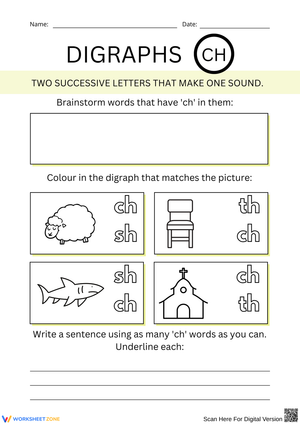
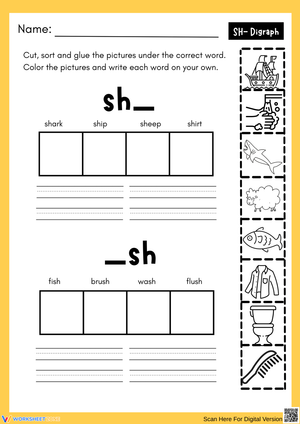
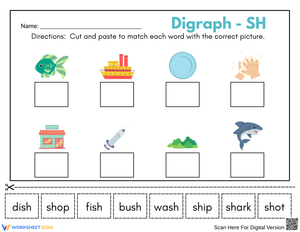
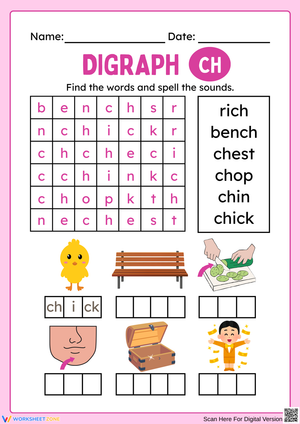
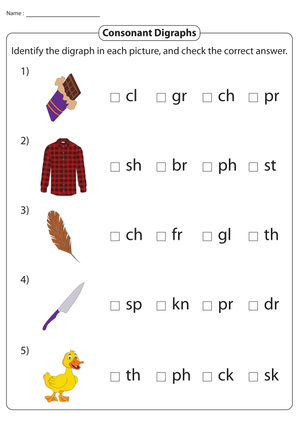
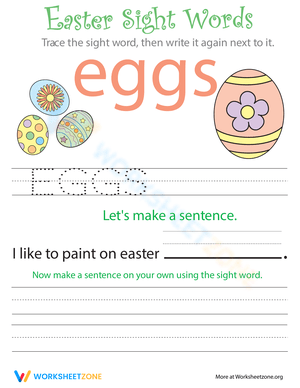
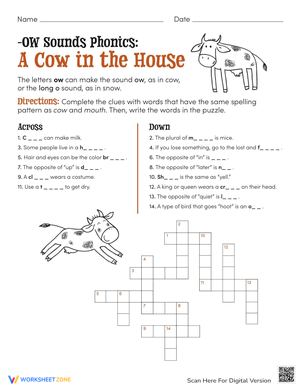
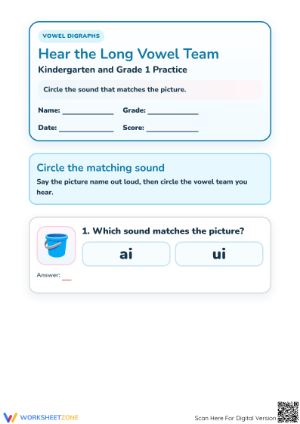
These digraphs worksheets for 1st grade give teachers a print-ready set of focused practice tools for one of the trickiest transitions in early phonics — the moment students discover that two letters can fuse into a completely new sound that neither letter makes on its own. The set targets five core consonant digraphs: sh, ch, th, wh, and ck, moving students from first recognition through independent spelling across a range of exercise formats. Each worksheet stands alone, so a teacher can pull exactly what a lesson calls for rather than working through a fixed sequence.
The Five Digraphs and What Each Worksheet Targets
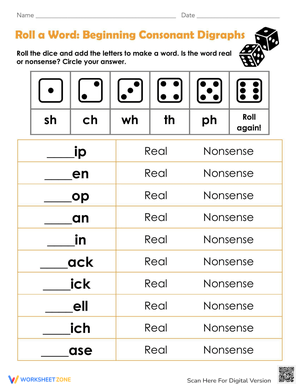
The exercise types shift across the set to keep practice from feeling repetitive, and each digraph gets at least one worksheet that addresses its specific phonological quirk.
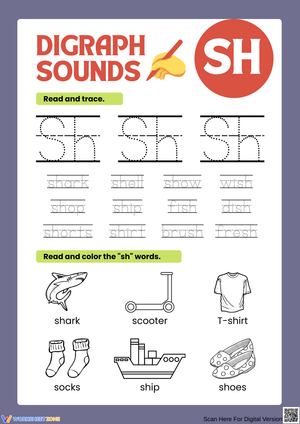
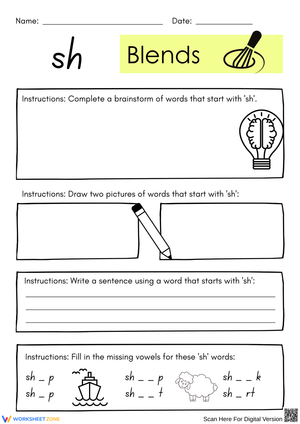
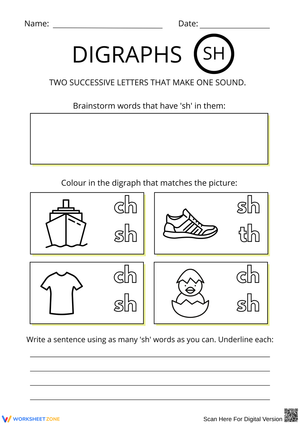
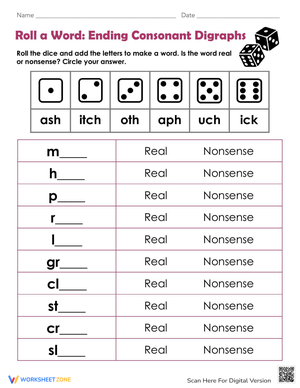
- sh — Students underline or circle sh in both initial and final positions (ship, fish), then write the word independently. Because sh is a continuous sound children can sustain without stopping airflow, it is the natural entry point for this sequence.
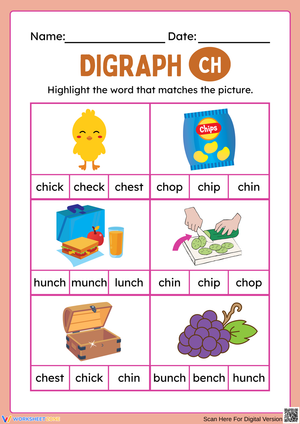
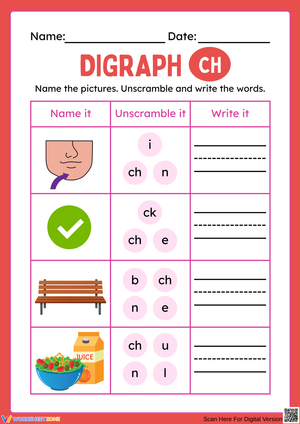
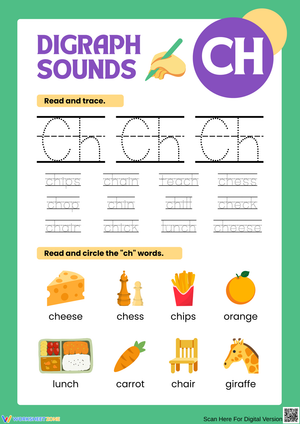
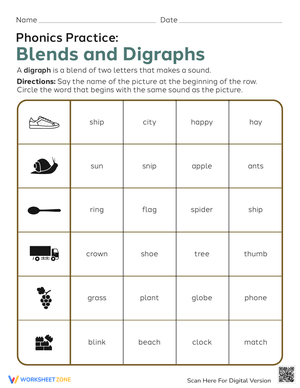
- ch — Worksheets pair ch directly against sh through picture-sorting tasks. The contrast forces students to attend to the quick burst of air that separates "chin" from "shin" — a distinction they routinely skip during independent writing.
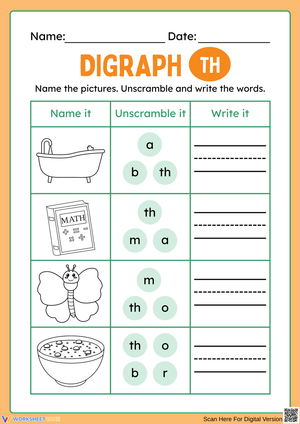
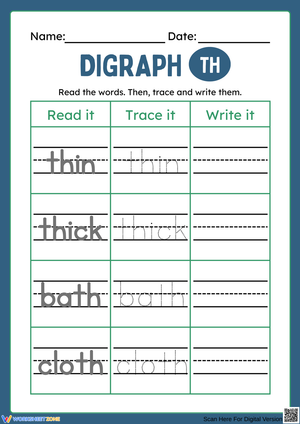
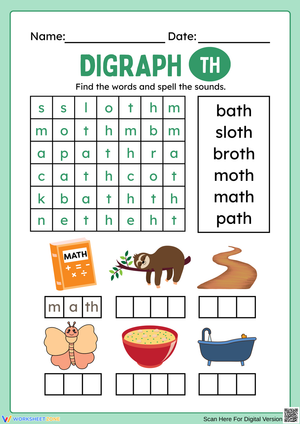
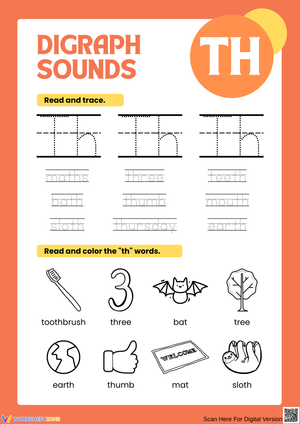
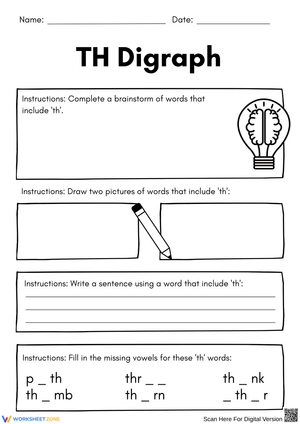
- th — Two worksheets address th separately: one for the voiced version (this, that, them) and one for the unvoiced (thin, math, thumb). Students sort words into two columns, which surfaces the voiced/unvoiced split without requiring metalinguistic vocabulary six-year-olds do not yet own.
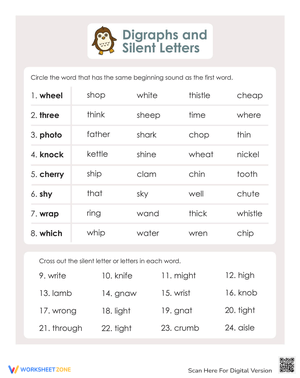
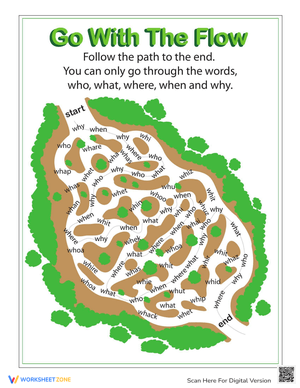
- wh — Exercises focus on question words (what, when, where, why) alongside a small set of nouns (whip, wheat). Because wh and w are phonetically identical in most American dialects, spelling practice is the real instructional work here, not sound recognition.
- ck — Every word on the ck worksheet contains a short vowel before the digraph (duck, pack, trick). This makes each worksheet do double duty: students reinforce short vowel sounds at the same time as they absorb the rule that ck follows a short vowel, never a long one.
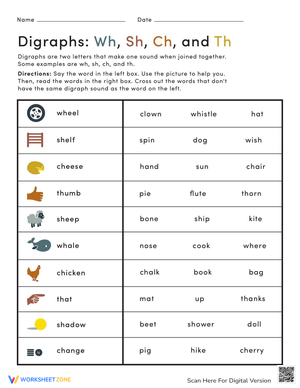
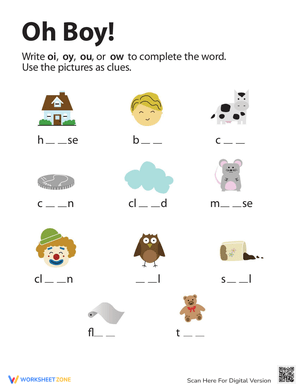
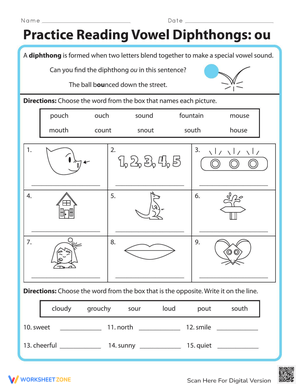
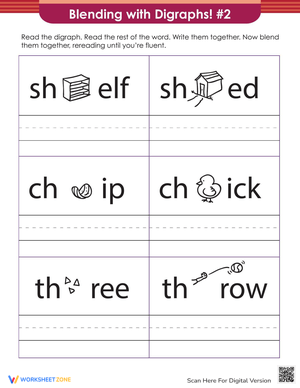
Picture-labeling tasks appear throughout the set because connecting a visual referent to the printed word reduces the cognitive demand of the decoding step. When a child already knows the picture shows a "shell," she can focus entirely on how the letters represent the sounds rather than splitting attention between meaning and form.
Frequent Student Errors Worth Watching For
The most persistent error in first-grade writing is substitution — students replace a digraph with the letter that most closely resembles its sound. A child who has confidently learned f will apply that confidence to the unvoiced th, writing "fink" where "think" belongs or "fumb" where "thumb" should appear. The th worksheet that asks students to rewrite a misspelled word correctly — given a picture cue — targets this substitution pattern directly. When that error shows up on the worksheet, it tells the teacher the student has a phonetic strategy but not yet the specific pattern knowledge.
A second reliable error involves ck position. Students who decode "duck" accurately still write "duk" or "duc" in their own stories, having not internalized that the /k/ sound after a short vowel takes a two-letter spelling. The ck worksheet builds the habit by requiring students to complete partial words — "du__," "pa__," "tri__" — where they must supply the digraph rather than a single letter. Errors on that task are immediate and visible, which makes the worksheet a clean formative check before moving students into blend instruction.
Smart Ways to Work These Worksheets Into Your Week
These worksheets slot most naturally into the independent practice phase of a phonics lesson, after whole-group instruction and guided reading have introduced the target digraph. Pulling one worksheet as a Monday warm-up after morning meeting, then returning to a second for partner practice on Wednesday, gives students the spaced retrieval that solidifies the pattern without making phonics feel like a daily obligation.
The sorting worksheets — where students cut out picture cards and place them in initial or final columns — run well in literacy centers during the reading block. They require no teacher facilitation once students understand the task, freeing the teacher to run small groups. The color-by-digraph worksheets are best saved for the ten minutes before afternoon dismissal when sustained reading is unrealistic: students stay on task, and they are still practicing sound-to-letter correspondence in a way that does not demand much working memory. Using the digraphs worksheets for 1st grade as exit tasks at the end of a phonics unit also gives teachers a clean paper record of who has internalized each digraph and who needs another round of targeted work before blends begin.
Standard Alignment
These worksheets directly address CCSS.ELA-LITERACY.RF.1.3.A, which requires first graders to know the spelling-sound correspondences for common consonant digraphs. In classroom terms, this standard lands in the middle of the first-grade phonics progression — students arrive having secured short vowels and basic CVC words, and digraphs are the first point where the alphabetic principle gets genuinely complicated. Mastery here is gating: students who leave first grade without solid digraph spellings carry that gap into second-grade work on long vowel patterns and multisyllabic words, where digraph knowledge is assumed rather than taught. That makes RF.1.3.A one of the higher-stakes phonics checkpoints in the primary grades.
Differentiating These Worksheets Across Ability Levels
Students who are still shaky on basic CVC decoding need the picture-support worksheets first — the ones where an image of a "chip" appears next to a fill-in-the-blank frame. Removing the picture from the same task creates a meaningfully harder version for students ready to work from sound alone. That single structural change produces two difficulty tiers from one worksheet without printing anything additional.
For students who have already secured sh and ch and need a push, the voiced/unvoiced th sorting worksheet is the natural next demand. It requires genuine auditory discrimination — students must produce the sound, notice whether their larynx vibrates, and then categorize the word. Pairing the worksheet with a small handheld mirror (students watch whether their tongue appears between their teeth) turns an abstract phonological task into something concrete enough for a six-year-old to act on independently. Students below grade level may need that mirror routine as a prerequisite before the sorting task makes sense; students above grade level can complete the sort, then write one original sentence per column that includes at least two th words.
Frequently Asked Questions
What is the difference between a digraph and a consonant blend?
In a blend, every letter contributes its own sound — you can hear both the s and the t in "stop." In a digraph, the two letters produce a sound that neither letter makes alone — the s and h in "shop" produce /sh/, not /s/ followed by /h/. The distinction changes how students approach an unfamiliar word: blends are decoded by producing each sound rapidly in sequence; digraphs require recognizing a stored pattern.
Which digraph should I introduce first?
Start with sh. It appears in vocabulary first graders already own (shop, fish, shell, wish), and it is a continuous sound students can sustain long enough to hear clearly. Ch typically follows because contrasting it against sh is one of the most efficient ways to teach both at once. Save th for after students have the first two secured — the voiced/unvoiced split adds complexity that lands better once digraph recognition itself is stable.
How do I use these worksheets with students who are already reading above grade level?
The digraphs worksheets for 1st grade follow the standard first-grade phonics sequence, but extending them is straightforward. After completing a worksheet correctly, advanced students write original sentences that include at least two digraph words from the set, then trade sentences with a partner for a peer editing check. That moves practice from isolated decoding into connected writing — which is the next developmental demand anyway.
Can these worksheets be sent home for family practice?
Yes, and the PDF format makes reprinting simple when a worksheet is lost or crumpled. When one goes home, a brief note explaining the target sound — "this week we practiced the sh sound, as in 'ship' and 'fish'" — prevents well-meaning caregivers from accidentally reinforcing the wrong pronunciation. A single sentence of context is usually enough. The digraphs worksheets for 1st grade format is clean and self-explanatory, so most families can support practice without additional instruction beyond that note.












 Interactive Worksheet Maker
 Quiz Maker
 Word Search Maker
 Crossword Puzzle Maker
 Word Scramble Generator
 Sentence Scramble Generator
 Handwriting Worksheet Generator
 Name Tracing Generator
 Fill In The Blank Generator