Understanding effective reading comprehension activities for students is key to helping them connect with texts, improve critical thinking skills, and foster a love for reading. By using fun, interactive strategies, teachers can make learning more engaging and enjoyable.
In this post, we’ll go over plenty of classroom-tested ideas that make reading both productive and enjoyable for elementary and middle school learners.
10 reading comprehension activities
Here are various fun and engaging activities for reading comprehension that can bring new energy into your classroom—fun, flexible, and well-loved by teachers all over the U.S. for getting students truly engaged with what they read.
1. Roll & respond (Dice Prompts for Active Recall)
Roll & Respond is a simple yet powerful activity that gets students thinking after reading. This activity makes reading reflection feel more like a game than a test—building confidence, encouraging participation, and reinforcing essential comprehension strategies in a fun, low-pressure way.

How it works:
Each student (or a pair/group) gets a six-sided die. After reading a short passage—this could be a story, an article, or even a paragraph from their reading book—they roll the die and answer the matching prompt.
- Summarize the paragraph
- Predict what might happen next
- Describe the character in detail
- Ask a question about something unclear or interesting
- Make a connection (to self, another text, or the world)
- Find a new vocabulary word and explain it in their own words
2. Character hot seat (Role-play for perspective-taking)
Character Hot Seat is one of the most interactive reading comprehension activities for students. It brings character analysis to life by turning the classroom into a stage where students become the characters they’re reading about.

Unlike worksheets or silent reading tasks, this activity gets students talking. It encourages them to process the story out loud, reflect on character motivations, and respond creatively — all while staying grounded in the text.
How it works:
After reading a passage or story, choose one student to sit in the “hot seat.” This student will role-play a character from the text and answer questions from the class — as if they are that character. The class asks questions like:
- “Why did you make that decision?”
- “How did you feel when that happened?”
- “What do you wish you had done differently?”
- “If you could talk to another character, what would you say?”
The student in the hot seat must respond in first person and use evidence from the text. This encourages deeper thinking and close reading.
3. Visualize & sketch
Visualize & Sketch is a creative and calming activity that taps into students’ imagination. After reading a passage, students draw what they pictured in their minds and explain their thinking.
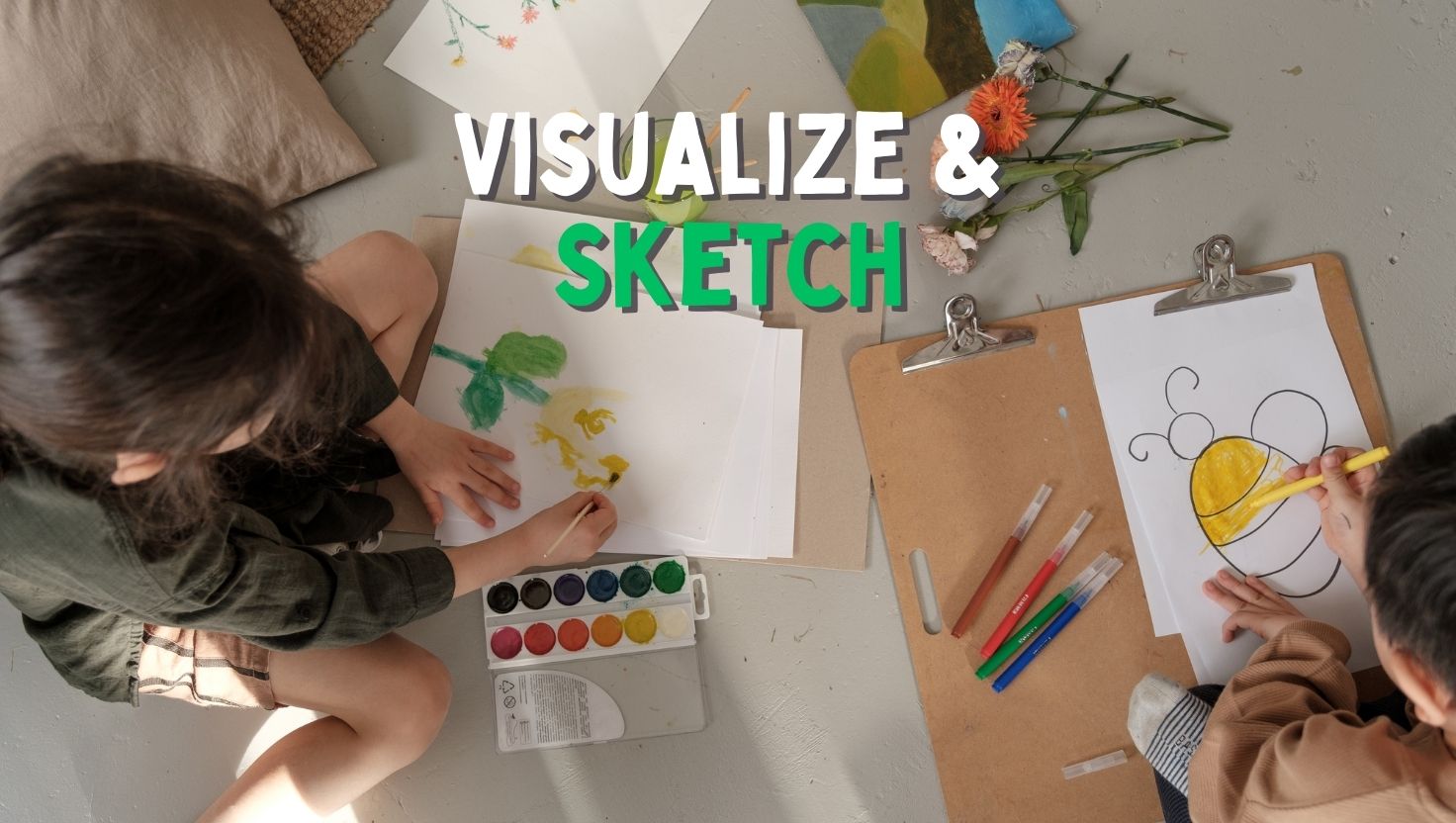
Visualizing while reading improves memory, supports comprehension, and helps students create stronger mental models of a text. When students can see the story in their minds, they’re far more likely to connect with it — and remember it.
How it works:
After reading a scene or descriptive paragraph, students close their eyes and create a mental picture of what they just read. Then, they sketch that image on paper.
Once finished, students write 2–3 sentences explaining what they drew and why, referring to specific words or phrases from the text that guided their drawing.
4. Sticky note connections (Metacognitive thinking in action)
Sticky Note Connections is a simple but powerful reading strategy that encourages students to monitor their thinking as they read. It turns quiet reading into an active, thoughtful process.

By marking their thoughts directly on the text (or in a book-friendly way), students engage with what they’re reading in real time—building deeper understanding and stronger recall.
How it works:
Each student gets a small stack of sticky notes before reading. As they go through the text, they pause to mark certain moments using simple icons or symbols. For example:
- Something new or surprising
- A question they have
- A personal connection
- An important or interesting detail
You can model this first by reading a few lines out loud and placing sticky notes on a projected version of the text.
Understanding why something happened in a story is just as important as knowing what happened. You can use these cause and effect worksheets for grade 2 to help students connect the dots between events.
5. Story retelling cubes (Oral language development)
Retelling Dice is a playful and structured way to help young readers recall and organize the key events of a story.

It’s one of the most effective activities for reading comprehension when it comes to developing sequencing and summarizing skills — especially in early elementary classrooms. Plus, it gets students talking!
How it works:
Use a large foam die labeled with sentence stems on each side. Students take turns rolling the die and responding to the prompt based on the story they just read. Common sentence stems include:
- “What happened first?”
- “What was the problem in the story?”
- “How was the problem solved?”
- “What happened next?”
- “Who were the main characters?”
- “How did the story end?”
You can print these stems and tape them to any classroom dice—or use a pocket die for easy switching.
6. True or false toss (Movement + comprehension check)
Need to get students moving and thinking? True or False Toss is among the most high-energy reading comprehension activities that combines physical movement with quick comprehension checks.

The quick pace encourages critical thinking and boosts reading fluency, all while keeping students physically active and mentally engaged.
How it works:
- Set up two labeled bins or boxes in opposite corners of the room: one for “True” and one for “False.”
- Use beanbags, soft balls, or paper wads as toss items.
- Read a statement aloud based on a previously read text.
- Students decide whether the statement is true or false.
- Toss the beanbag into the correct bin to show their answer.
7. Text evidence detectives (Citing with purpose)
Teaching students to “prove it with the text” is one of the most powerful activities you can add to your routine.

With Text Evidence Detectives, students learn to support their thinking by digging into the passage and finding exact words or phrases that back up their answers.
How it works:
Give students a short reading passage and a set of comprehension questions. Instead of answering from memory or guessing, students must highlight or underline the exact part of the text that supports each response.
You can frame it as a detective challenge: “Your answer isn’t complete without your ‘evidence tag’!”
8. Reading buddies chat (Peer-to-peer processing)
Sometimes, the best reading comprehension strategy is simple: let students talk it out. Reading Buddies Chat gives students a safe, structured space to process what they read—out loud—with a partner.

It’s a low-prep, high-impact activity that builds collaboration, communication, and deeper understanding of the text.
How it works:
After reading a passage (independently or together), students pair up and use sentence stems to guide their conversation. The goal? Encourage thoughtful reflection and evidence-based responses—not just “I liked it.” Discussion stems to try:
- “I noticed that…”
- “This reminds me of…”
- “I think the author meant…”
- “One part I found interesting was…”
- “I had a question about…”
You can print stems on bookmarks, display them on the board, or give students “chat cards” to prompt their thinking.
9. Create a headline (Main idea + synthesis)
One of the simplest ways to check comprehension? Ask students to be the editor. In this activity, after reading a passage, article, or even a whole chapter, students are challenged to write a one-sentence headline that captures the core message or theme.
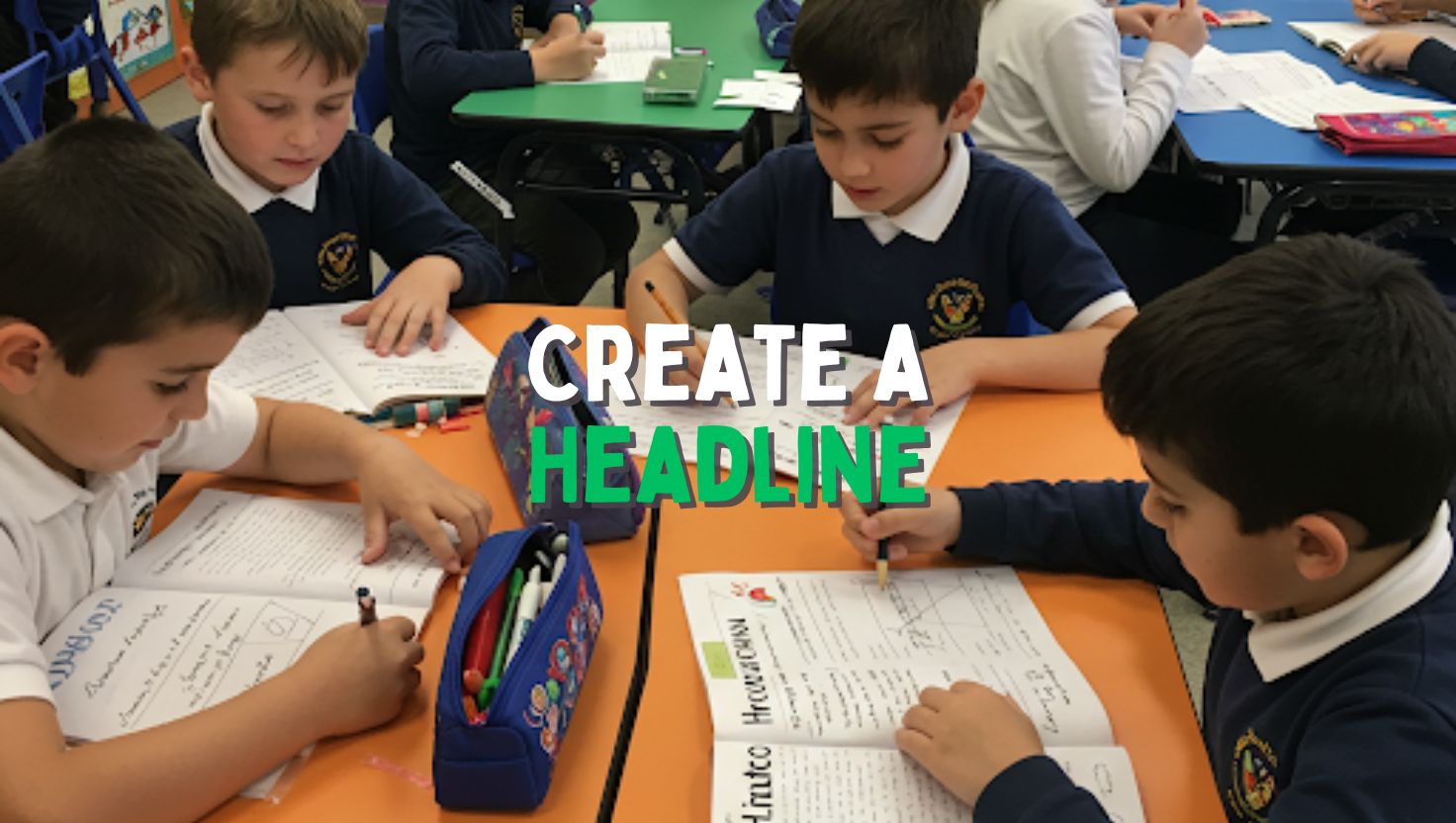
This helps them practice identifying the main idea, making connections, and thinking critically about how to communicate meaning with clarity. Plus, it’s quick, creative, and can spark some great class discussions when students share and compare their headlines.
How it works:
After reading a short story, article, or passage, students craft a single sentence that could serve as a headline in a newspaper or blog. Their goal? To sum up the most important idea clearly and creatively. Students can draw a matching image or write a subheading to extend their thinking.
10. Reading escape room (Gamified comprehension)
If your students love mystery, puzzles, and a little friendly competition—this one’s for you.

The Reading Escape Room transforms traditional comprehension questions into an immersive challenge where each correct answer brings students one step closer to “unlocking” the room. It’s one of the most exciting comprehension activities to boost engagement while still targeting key reading skills.
How it works:
Design a sequence of reading-based puzzles. Each one can only be solved if students correctly answer comprehension questions, find supporting text evidence, or make inferences based on clues.
You can build the escape room digitally (using Google Forms or PowerPoint) or create physical stations around the classroom with envelopes, codes, and locks.
Why is reading comprehension a challenge for students?
Many students can decode words, but that doesn’t mean they understand them. According to the National Assessment of Educational Progress (2022), only 32% of U.S. fourth graders performed at or above the proficient level in reading comprehension.
This highlights a key misconception: We often assume reading fluency equals comprehension. In reality, comprehension is a cognitive process requiring decoding, vocabulary, background knowledge, inference, and metacognitive strategies—all at once.
FAQs
1. What are the big 5 reading activities?
The big 5 reading activities refer to five core components that are essential for developing strong and effective reading skills:
- Phonemic Awareness – the ability to hear, identify, and manipulate individual sounds in spoken words.
- Phonics – understanding the relationship between written letters and spoken sounds.
- Fluency – reading text accurately, quickly, and with appropriate expression.
- Vocabulary – knowing the meaning of a wide range of words and phrases.
- Comprehension – understanding, interpreting, and reflecting on the meaning of a text.
These five elements work together to help students become confident and skilled readers
2. What is a fun way to teach reading comprehension?
To make reading comprehension fun, use variety, interaction, and creativity. Let students discuss, question, visualize, and learn through movement and playful challenges. The more students feel involved and curious, the more enjoyable and effective the learning becomes.
Conclusion
Whether you’re trying to make reading more fun or just looking for new ways to help your students actually get what they read, these activities have got you covered. Try mixing things up, keep it playful, and most of all, make space for students to think, talk, and connect with what they read using Reading Comprehension Strategies Worksheets from WorksheetZone.