


























Views
Downloads
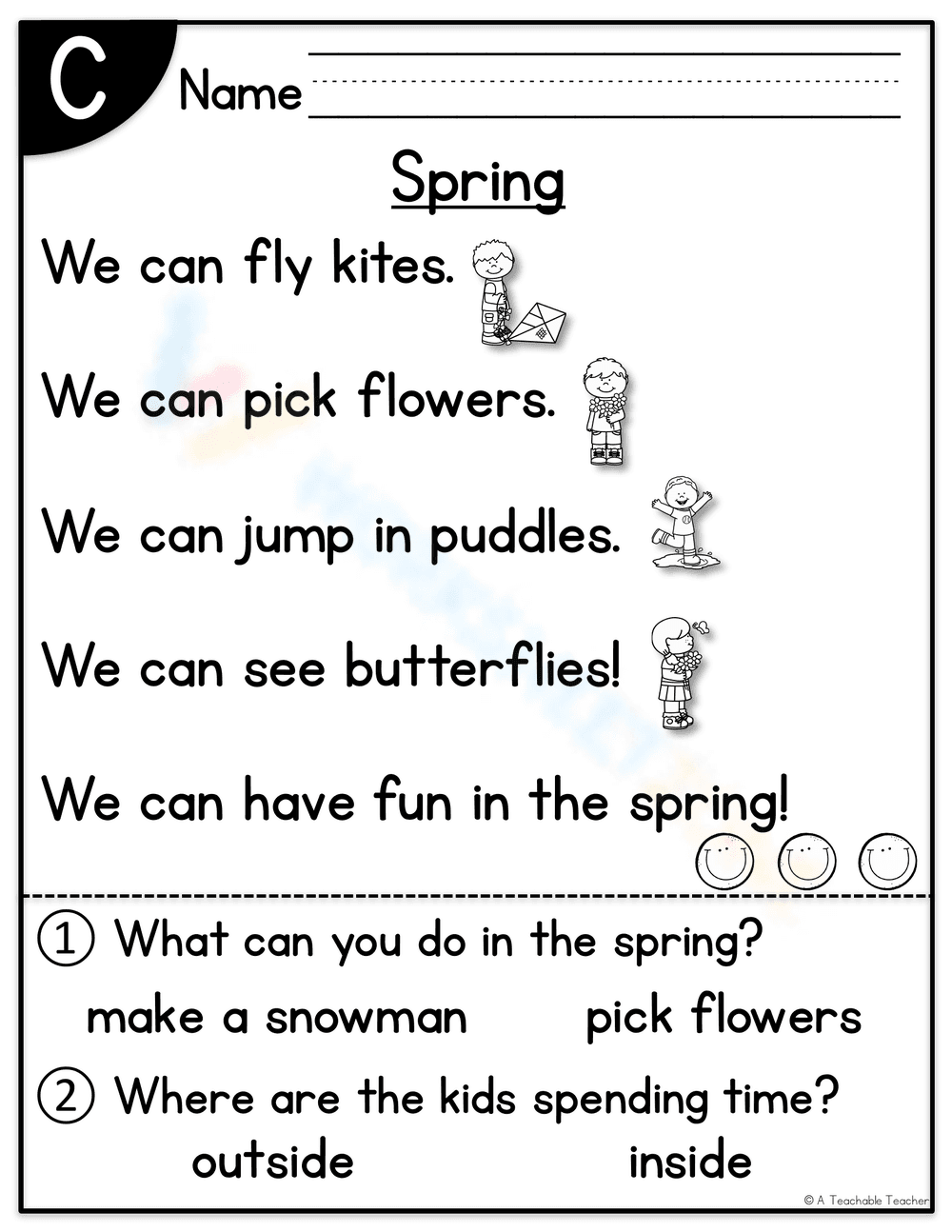

Grade 2 Spring — Printable No-Prep Worksheet
Paste this activity's link or code into your existing LMS (Google Classroom, Canvas, Teams, Schoology, Moodle, etc.).
Students can open and work on the activity right away, with no student login required.
You'll still be able to track student progress and results from your teacher account.
This Grade 2 reading comprehension worksheet helps early readers build foundational literacy skills by identifying key details in a simple text about spring. Students read five short sentences and answer two text-dependent multiple-choice questions to demonstrate understanding. This resource builds reading confidence and text-evidence skills immediately.
At a Glance
- Grade: Grade 2 · Subject: Reading
- Standard:
CCSS.ELA-LITERACY.RI.2.1— Ask and answer questions about key details in a text- Skill Focus: Literal comprehension and detail recall
- Format: 1 page · 2 problems · No answer key · PDF
- Best For: Independent morning work or quick reading assessment
- Time: 5–10 minutes
This clean, single-page PDF features a short, repetitive passage about common spring activities, accompanied by clear illustrative icons to support vocabulary acquisition. Below the text, students encounter 2 multiple-choice questions focusing on "what" and "where" details. The page also includes three smiley-face tracking graphics to encourage students to read the passage three times for fluency.
This resource is designed for an instant, zero-prep classroom workflow. First, print the single-page PDF in under 1 minute. Next, distribute the sheets to students during transition times, requiring less than 30 seconds of teacher setup. Finally, review student answers individually or as a whole group in 2 minutes. The self-explanatory layout makes it an ideal emergency sub plan option.
Standards Alignment
This activity directly aligns with the Common Core State Standard CCSS.ELA-LITERACY.RI.2.1, which requires students to ask and answer questions such as who, what, where, when, why, and how to demonstrate understanding of key details in a text. Both standard codes can be copied directly into lesson plans, IEP goals, or district curriculum mapping tools.
How to Use It
Use this worksheet during the independent practice portion of your reading lesson, immediately following direct instruction on finding text evidence. It also functions well as a quick formative-assessment exit ticket; observe whether students refer back to the text to locate the answers. Expect students to complete the reading and the 2 questions within 5 to 10 minutes.
Who It's For
This worksheet targets Grade 2 students who are developing early reading fluency, but it also serves as excellent remedial practice for older struggling readers. Pair this worksheet naturally with a seasonal anchor chart about spring weather or a shared reading passage to reinforce thematic vocabulary and context clues.
According to research from Fisher & Frey (2014) on close reading, prompting young learners to read a short passage multiple times significantly increases literal comprehension and vocabulary retention. This worksheet supports that methodology by incorporating three tracking smileys that prompt students to read the text three times before answering. By targeting the core requirements of CCSS.ELA-LITERACY.RI.2.1, the resource ensures that students practice locating explicit details, such as identifying where the characters are spending time and what activities they perform. This structured repetition builds the cognitive pathways necessary for automaticity in early readers. Utilizing simple, high-frequency sentence structures alongside clear visual cues allows diverse learners to access the text independently, making it a reliable tool for measuring foundational reading progress in early elementary classrooms.


