Understanding the Role of Verb Tenses in Student Writing
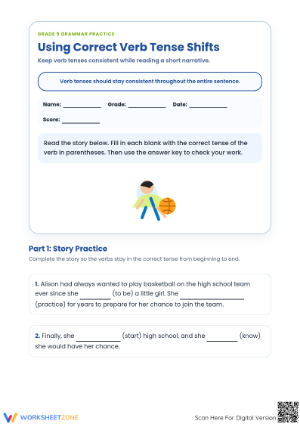
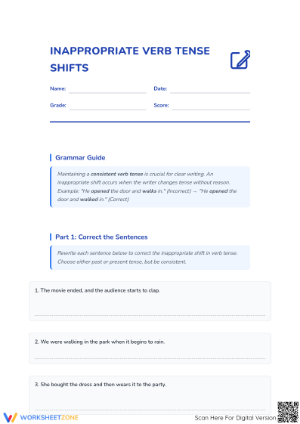
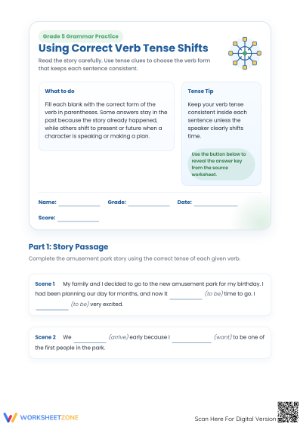
Verb tenses serve as the chronological backbone of English communication, providing the necessary temporal context for any action or state of being. For students, mastering these forms is not merely about memorizing conjugation tables but about developing the ability to convey complex sequences of events with precision. When a student understands the subtle difference between 'I walked' and 'I was walking,' they gain the tools to paint more vivid pictures in their narratives. In the classroom, teachers often observe that early writing tends to be stuck in a single tense, usually the simple present or simple past. As teachers, our goal is to help them move beyond these basic structures and integrate more sophisticated temporal relationships. Using structured verb tenses pdf worksheets allows for the targeted practice required to internalize these rules and apply them consistently across various writing genres, from personal narratives to formal academic essays.
Exploring Past, Present, and Future Tenses in the Classroom
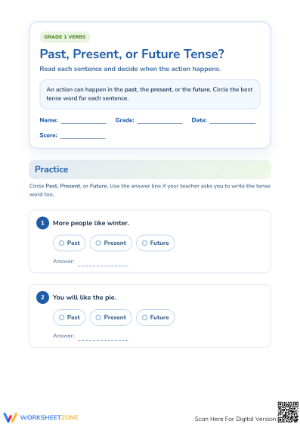
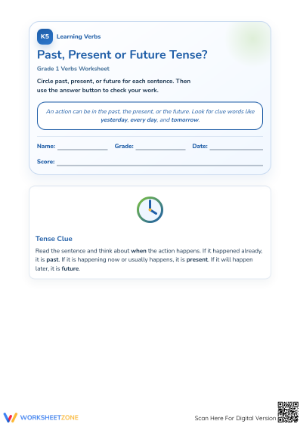
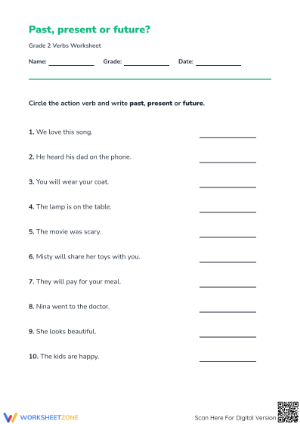
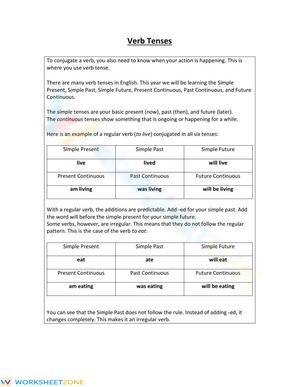
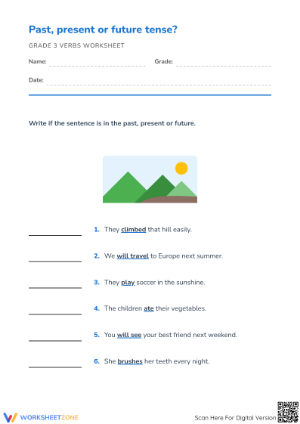
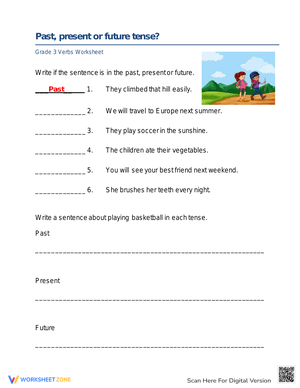
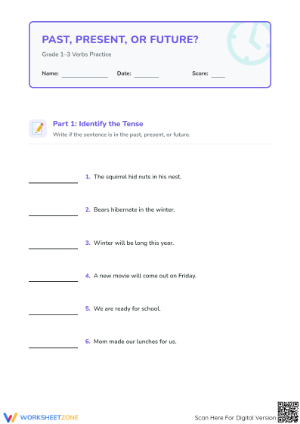
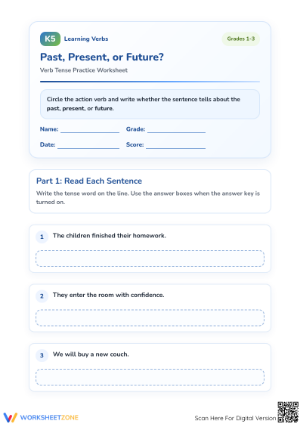
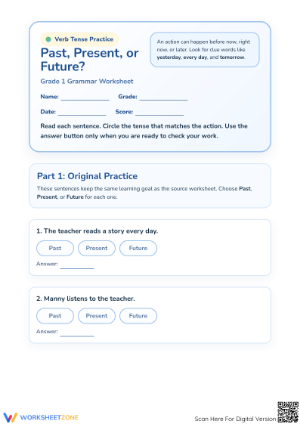
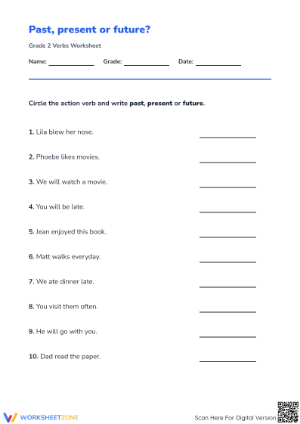
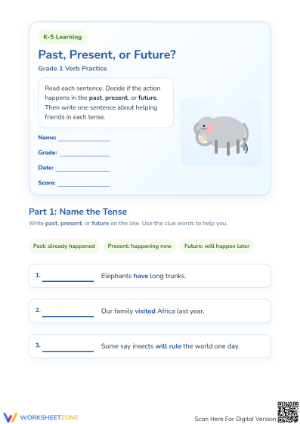
The primary focus of early grammar instruction usually revolves around the three simple tenses: past, present, and future. These are the most frequently used forms in daily communication and serve as the entry point for younger learners. Simple present tense often describes habitual actions or general truths, while simple past indicates completed actions and simple future points toward events yet to happen. While these seem straightforward, students often struggle with the irregular forms that characterize English. For instance, the transition from 'go' to 'went' rather than 'goed' is a common hurdle that requires repetitive exposure and practice. Verb tenses pdf worksheets specifically designed for these simple forms allow students to practice these irregularities until they become second nature, providing a foundation for more advanced linguistic structures as they progress through their educational journey.
Scaffolding Instruction for Perfect and Continuous Tenses
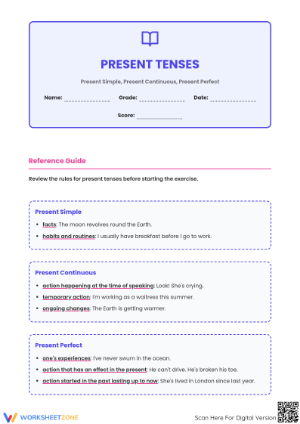
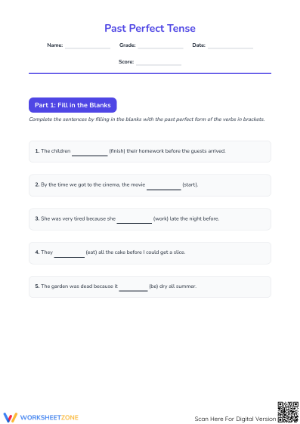
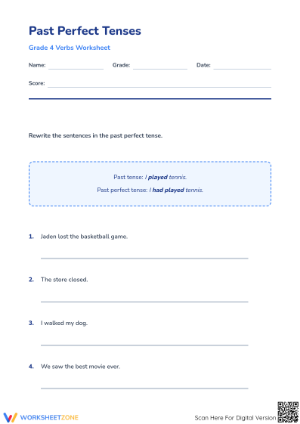
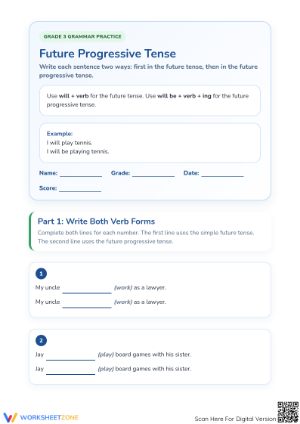
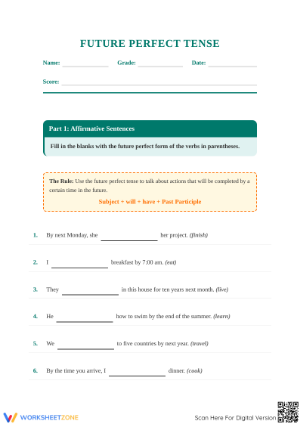
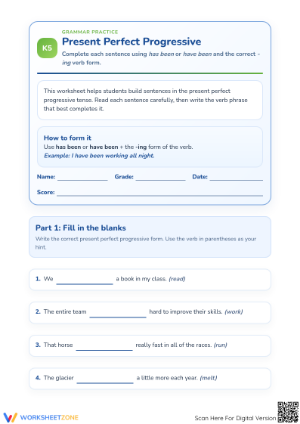
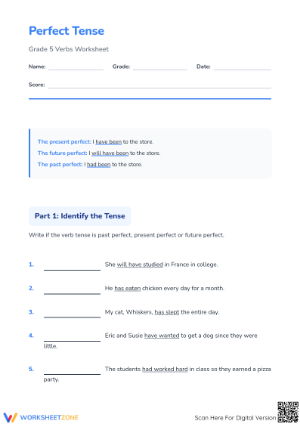
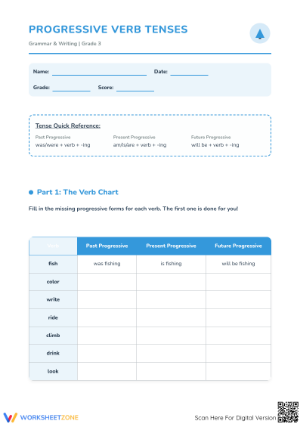
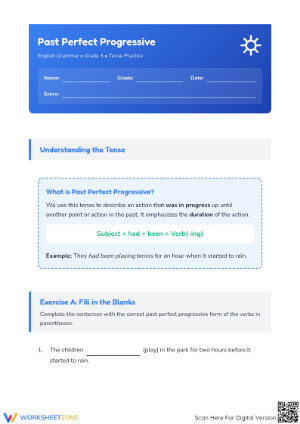
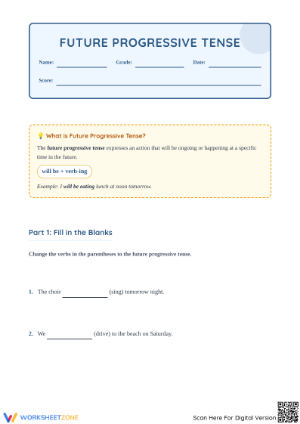
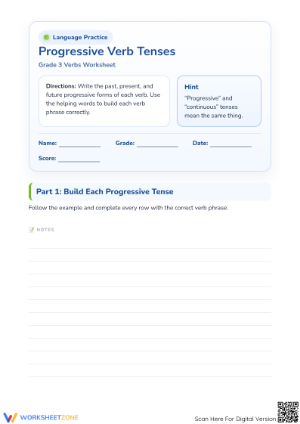
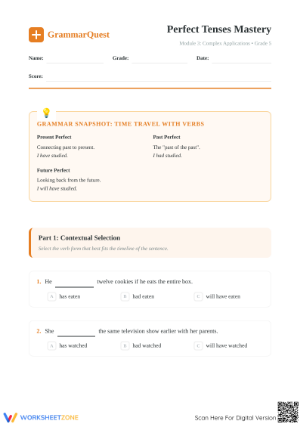
As students progress, the introduction of continuous and perfect tenses becomes necessary to express more nuanced temporal relationships. The continuous tenses describe ongoing actions, while the perfect tenses indicate actions that have a relationship to another point in time or have been completed relative to the present. These forms often require auxiliary verbs like 'to be' or 'to have,' which adds complexity. For many students, the leap from 'I eat' to 'I have eaten' involves understanding an action that started in the past but has relevance now. High-quality verb tenses pdf worksheets provide the scaffolding needed to break down these multi-part verb phrases into manageable components, helping students see the patterns across past, present, and future contexts. By mastering these aspects, students can communicate simultaneous actions and completed states with much greater clarity and sophistication in their writing.
Teacher Tips for Implementing Grammar Worksheets
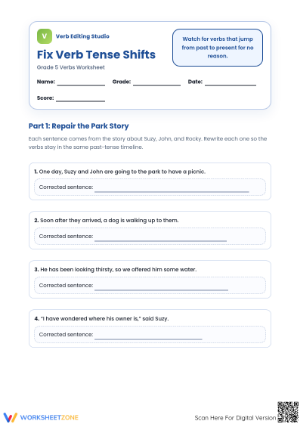
Integrating grammar worksheets into a busy classroom schedule requires a strategic approach to ensure they are seen as valuable learning tools. One effective method is to use worksheets as a diagnostic tool at the beginning of a unit. By seeing where students struggle, teachers can tailor their direct instruction to meet the actual needs of the class. For instance, if a majority of the class is comfortable with simple tenses but fails to use the present perfect correctly, the teacher can skip the basics and focus on the more advanced concepts. This saves time and keeps students engaged with appropriately challenging material. Another tip is to encourage peer-to-peer correction. After students complete a verb tenses pdf worksheet, they can swap papers and explain why a particular answer is correct. This forces them to vocalize the grammar rules, which significantly reinforces their own understanding and promotes a collaborative learning environment.
Differentiating Instruction with Verb Tenses PDF Worksheets
Every classroom is composed of students with varying levels of linguistic proficiency, making differentiation a necessity for effective instruction. Verb tenses pdf worksheets are particularly well-suited for this, as they can be easily sorted by difficulty level. For English Language Learners (ELLs), worksheets might focus more heavily on visual aspects and basic sentence structures, often including word banks or matching exercises. Meanwhile, advanced students can be challenged with worksheets that require correcting subtle tense errors in complex passages or writing their own paragraphs using a specific mix of tenses. This ensures that every student is working at their edge of learning without becoming frustrated or bored. Teachers can also provide tiered assignments where students choose exercises from different sections of a worksheet, allowing for student agency while still ensuring that core curricular standards are met for everyone.
Addressing Common Misconceptions in Verb Usage
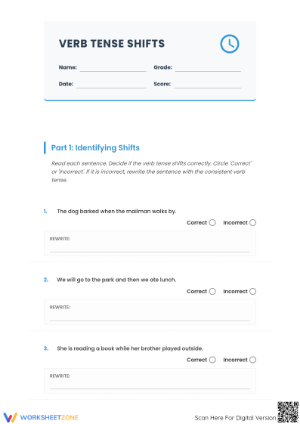
Expert analysis of student writing reveals that the transition from simple tenses to continuous forms often marks a significant leap in narrative complexity, allowing students to describe simultaneous actions rather than just sequential events. Recognizing this leap allows teachers to provide more targeted support during this critical phase of development. For example, a student might be ready to move from 'The dog barked' to 'The dog was barking while I was running away.' According to English Grammar Rules - Verb Tenses at Grammarly.com, verbs are the only part of speech that can indicate time. Researchers suggest that focused practice on the 12 distinct English tenses is essential for clarity, especially since many students struggle with irregular past forms and perfective aspects in complex narratives. Worksheets that specifically target these complex constructions help students make this transition more smoothly and build a solid foundation for all future academic writing tasks.
Measuring Progress with Formative Tense Assessments
Assessment is a vital part of the learning cycle, and verb tenses pdf worksheets provide an excellent medium for both formative and summative evaluation. Formative assessment allows teachers to adjust instruction based on student performance in real-time. For example, a quick 'exit ticket' worksheet with three questions about the past participle can tell a teacher if the class is ready to move on the next day. These low-stakes assessments reduce student anxiety and provide immediate feedback that is essential for long-term learning. More comprehensive worksheets can serve as summative assessments at the end of a unit, providing a clear picture of overall mastery. When designing these assessments, it is important to include a mix of question types, including multiple choice, fill-in-the-blank, and open-ended writing prompts, to get a holistic view of the student's abilities and identify areas where additional support may be needed.
Frequently Asked Questions
1. What are the 12 verb tenses in English?
The 12 tenses are categorized into four aspects: simple, continuous, perfect, and perfect continuous. Each exists in the past, present, and future. For example, you have the simple past, present, and future; the past, present, and future continuous; and the past, present, and future perfect and perfect continuous forms. Understanding these 12 distinct forms allows writers to express a wide range of temporal relationships and nuances in their communication accurately, ensuring that the reader understands exactly when events occurred relative to one another in any given context or narrative.
2. How can I teach verb tenses to kids effectively?
Effective instruction for children involves a mix of visual aids, physical movement, and repetitive practice to solidify understanding. Using timelines helps students visualize the abstract concept of time. Incorporating 'acting out' verbs in different tenses can also be helpful for kinesthetic learners. Complementing these activities with verb tenses pdf worksheets provides the necessary written reinforcement. Start with the simplest forms and gradually introduce more complex tenses as the students build confidence and understanding throughout the school year, ensuring they have ample opportunities to apply what they have learned in their own writing.
3. Why are PDF worksheets better for verb tense practice?
PDF worksheets offer a structured and consistent format for practice that is easy to print and distribute, making them ideal for classroom use or homework. Unlike digital-only tools, physical worksheets allow students to focus entirely on the task without the potential distractions of a screen or internet connectivity issues. They also provide a permanent record of a student's work, which can be used for review, assessment, and tracking progress over the course of a school year. This allows teachers and parents to see tangible evidence of academic growth and identify specific areas where the student may need further practice or instruction.












 Interactive Worksheet Maker
 Quiz Maker
 Word Search Maker
 Crossword Puzzle Maker
 Word Scramble Generator
 Sentence Scramble Generator
 Handwriting Worksheet Generator
 Name Tracing Generator
 Fill In The Blank Generator