


























Views
Downloads

Past, Present, Future Tense Worksheet | Printable Grade 1
Paste this activity's link or code into your existing LMS (Google Classroom, Canvas, Teams, Schoology, Moodle, etc.).
Students can open and work on the activity right away, with no student login required.
You'll still be able to track student progress and results from your teacher account.
Mastering verb tenses is a foundational step in developing early literacy. This Grade 1 ELA worksheet provides a comprehensive environment for students to recognize and apply past, present, and future tenses. Through identification and creative writing, learners build the structural awareness necessary for reading comprehension and expressive writing success.
At a Glance
- Grade: 1 · Subject: ELA
- Standard:
CCSS.ELA-LITERACY.L.1.1.E— Use verbs to convey a sense of past, present, and future- Skill Focus: Verb Tense Identification and Application
- Format: 2 pages · 9 problems · Answer key included · PDF
- Best For: Grammar centers and independent practice
- Time: 15–20 minutes
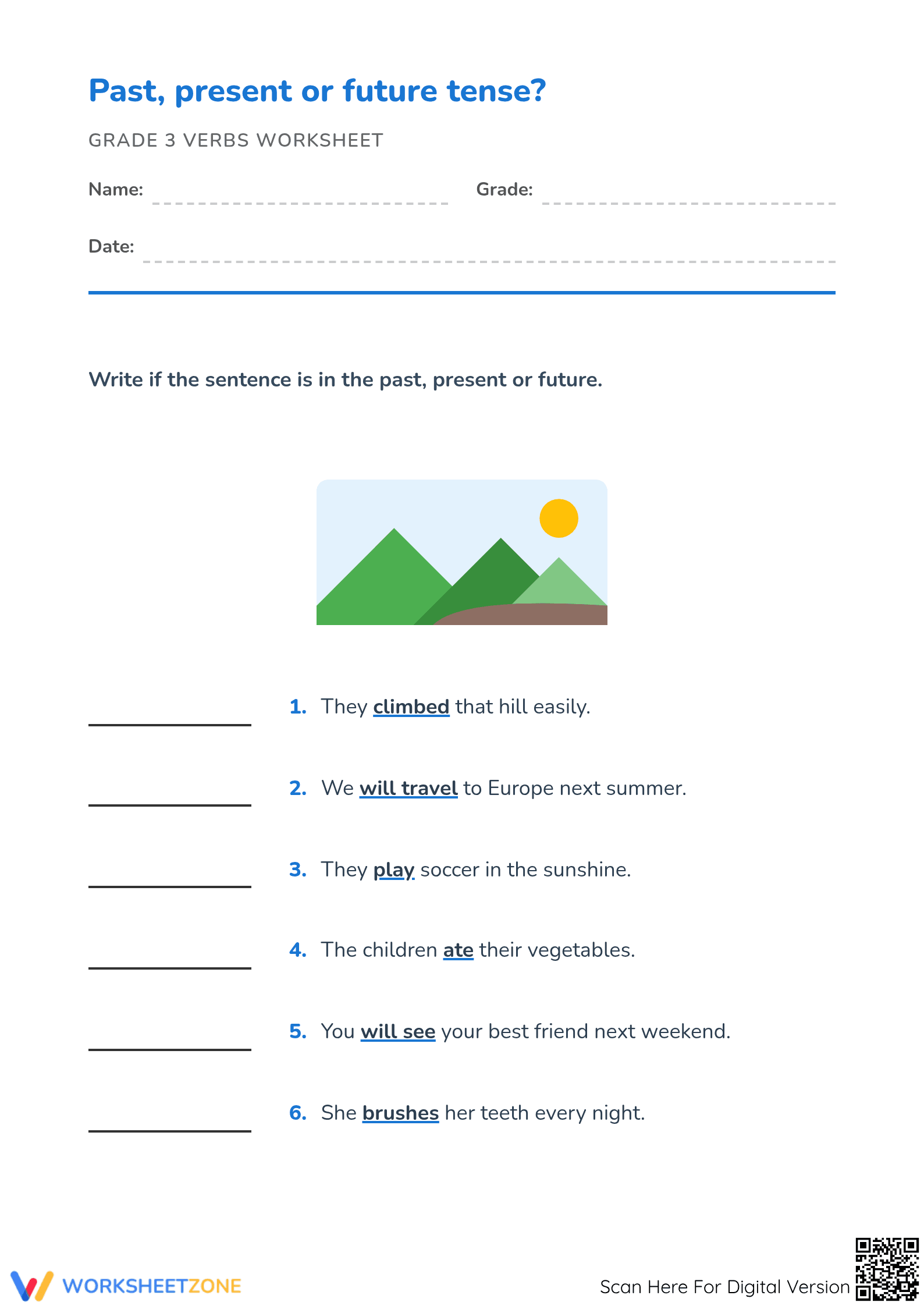
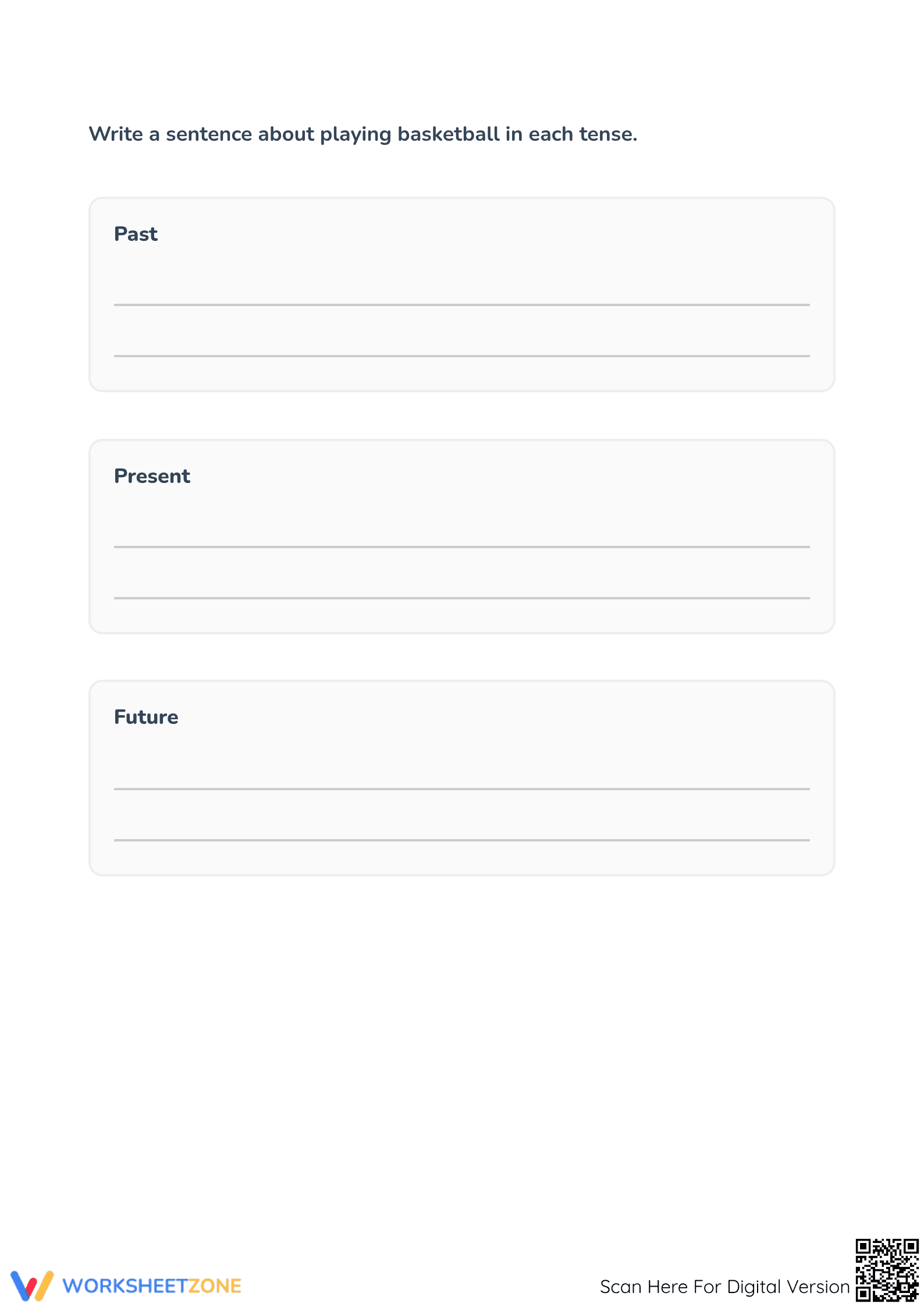
What's Inside: This two-page resource features two instructional phases. Page one contains six identification tasks where students categorize underlined verbs into their respective tenses. Page two transitions to application, challenging students to write original sentences about playing basketball in all three tenses. A full answer key is included for efficient grading.
Skill Progression: The worksheet employs a gradual release model.
- Guided Identification: Six sentences provide high-context cues to help students distinguish between past, present, and future actions.
- Supported Categorization: Students practice labeling tenses, reinforcing structural patterns like the use of "will" for future events.
- Independent Application: The final task requires students to generate their own verb forms from scratch.
Standards Alignment: This resource meets `CCSS.ELA-LITERACY.L.1.1.E`, requiring students to use verbs to convey past, present, and future. By isolating this specific language strand, the worksheet allows for targeted intervention. This standard code can be copied directly into lesson plans, IEP goals, or district curriculum mapping tools to ensure instructional coherence.
How to Use It: Use this as a formative assessment after direct instruction. The first page serves as a check for understanding, while the second page works well for small group centers. Encourage students to share their sentences aloud to practice oral language skills. Completion typically takes 15 to 20 minutes.
Who It's For: This resource is ideal for Grade 1 students exploring formal grammar. It also serves as an excellent review for Grade 2 learners or as an intervention for students requiring additional support. Pairing this with a temporal anchor chart provides a robust learning experience for diverse populations.
The development of temporal awareness in verb usage is a critical milestone in early literacy development. According to research from Fisher & Frey (2014) on the gradual release of responsibility, students benefit significantly from moving from identification to independent generative writing tasks. This worksheet aligns with `CCSS.ELA-LITERACY.L.1.1.E`, providing 9 structured opportunities for students to differentiate between past, present, and future actions. By requiring learners to categorize verbs like "climbed" and "will travel" before writing their own sentences about basketball, the resource reinforces the syntactic patterns essential for reading fluently and writing clearly. Such focused grammar practice is supported by NAEP findings, which suggest that explicit instruction in sentence-level mechanics leads to improved overall writing quality in the primary grades. This printable PDF serves as a reliable, standards-aligned tool for building linguistic precision and ensuring that young writers can accurately convey when events occur in their narratives.


