Mastering the Fundamentals: Present Simple Tense in the Primary Classroom
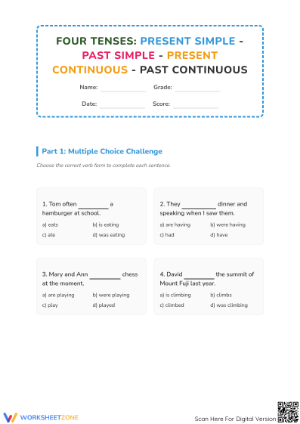
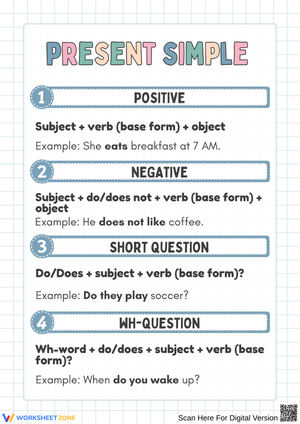
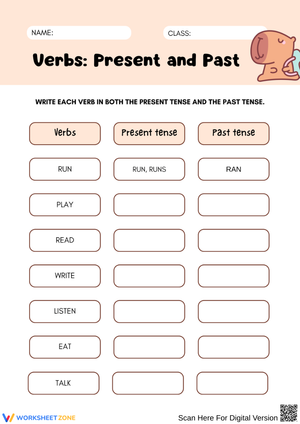
The present simple tense serves as the bedrock of English grammar instruction, particularly in the primary and elementary years. For teachers, the challenge lies not just in explaining the mechanics, but in helping students internalize when and how to use this tense to describe their world. Teachers often find that while the basic structure of the present simple is straightforward, the nuances of usage for habits, general truths, and scheduled events require sustained, repetitive practice. Utilizing present simple tense printable worksheets can bridge the gap between abstract rules and concrete application, providing students with the structure they need to build confidence in their writing and speaking.
When introducing this tense, it is effective to start with high-frequency verbs that relate directly to the students' daily lives. Verbs like 'eat,' 'play,' 'go,' and 'sleep' allow learners to form sentences that are personally relevant. Teachers can facilitate this by using visual aids and classroom routines to demonstrate the present simple in action. For example, during a morning meeting, a teacher might say, 'We start school at 8:00 AM every day.' This real-time application helps students understand that the present simple is used for things that happen regularly or are always true, rather than things happening right at this moment.
Navigating the -s and -es Hurdle: Strategies for Third-Person Singular
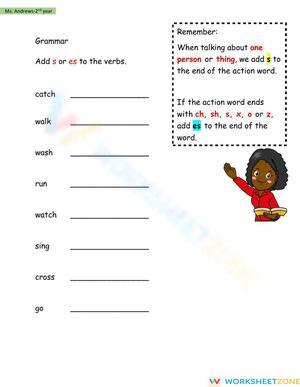
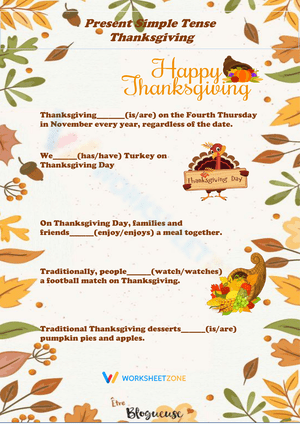
Perhaps the most significant obstacle in teaching the present simple is the third-person singular rule. For many young learners and ESL students, remembering to add an '-s' or '-es' to the verb when the subject is 'he,' 'she,' or 'it' feels like an arbitrary addition. This is where targeted present simple tense printable worksheets become indispensable. By isolating the third-person singular in specific exercises, teachers can help students focus exclusively on this mechanical shift until it becomes second nature.
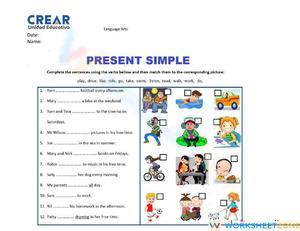
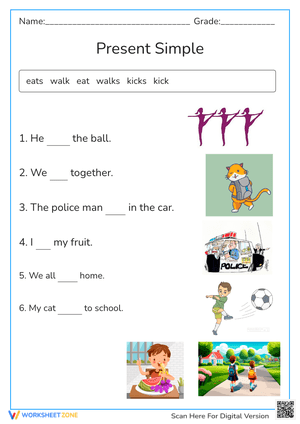
One successful classroom strategy is to use 'verb matching' games where students must pair a subject pronoun with its correctly conjugated verb form. This physical or visual grouping reinforces the connection between the subject and the verb ending. On a worksheet, this might translate to a columns-based exercise where students draw lines between 'They' and 'run' or 'He' and 'runs.' These activities highlight the contrast between the plural/first-person/second-person forms and the singular third-person form, which is where the majority of errors occur.
Citation Capsule: Standards and Outcomes
According to the Common Core State Standards for English Language Arts, specifically standard L.1.1.c, first-grade students are expected to use singular and plural nouns with matching verbs in basic sentences. This foundational shift towards subject-verb agreement represents a critical 25% increase in grammatical accuracy for early readers and writers, setting the stage for more complex syntactic structures in later grades.
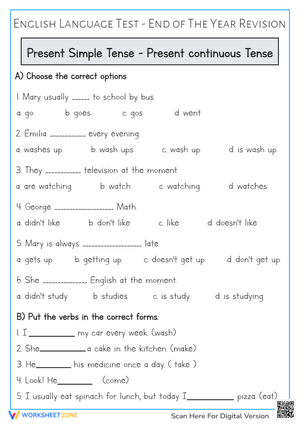
Beyond the simple addition of '-s,' students must also learn the spelling rules for verbs ending in '-y,' '-ch,' '-sh,' and '-x.' Worksheets that provide clear, tabulated rules followed by immediate practice help clarify these spelling mutations. For instance, explaining that 'fly' becomes 'flies' while 'play' simply becomes 'plays' requires specific attention to the letter preceding the 'y.' Interactive worksheets that ask students to categorize verbs based on their ending type can significantly improve their spelling accuracy in the context of the present simple tense.
Connecting Mechanics to Daily Habits: Practical Exercise Types
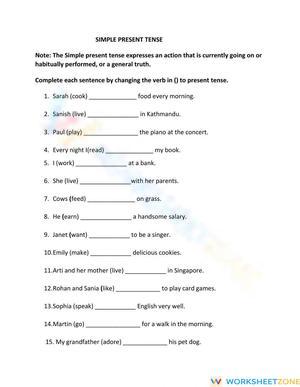
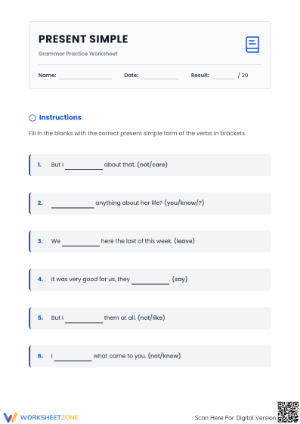
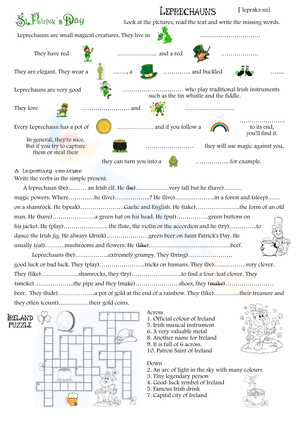
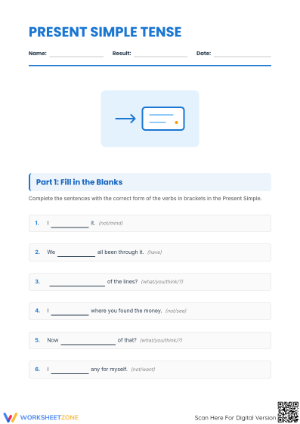
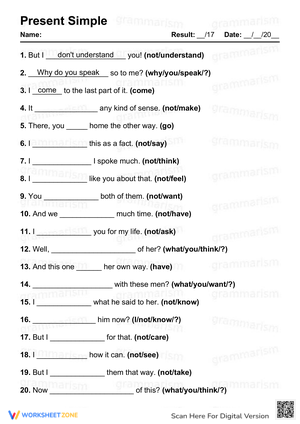
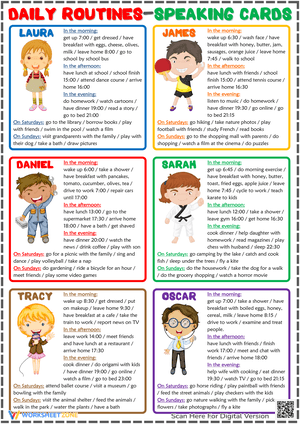
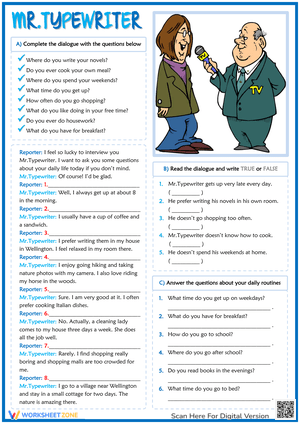
To keep grammar instruction engaging, it is essential to connect the present simple tense to real-world scenarios. Students are more likely to participate when the content of their present simple tense printable worksheets reflects their interests and routines. Incorporating themes like sports, hobbies, and animal facts can make the practice feel less like a chore and more like a discovery of information. For example, a worksheet might present a 'Day in the Life' of a zookeeper, where students must fill in the blanks with the correct present simple verbs to describe the zookeeper's daily tasks.
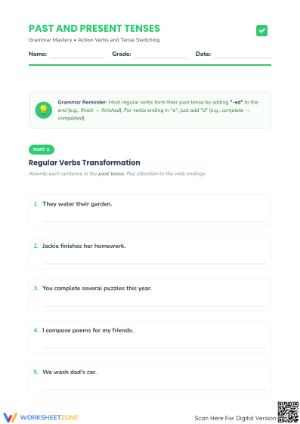
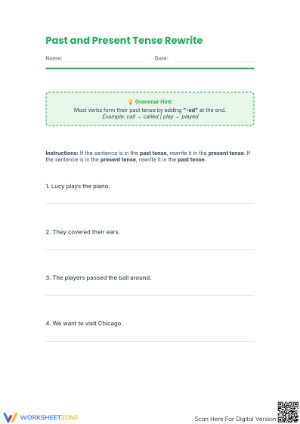
Research into grammar acquisition suggests that students who engage with varied sentence-transformation tasks rather than simple fill-in-the-blank exercises show a 15% higher retention rate of the third-person singular rule over a six-week instructional cycle. This finding highlights the importance of asking students to rewrite sentences (e.g., changing 'I walk to school' to 'She walks to school') to force them to actively think about the relationship between the subject and the verb.
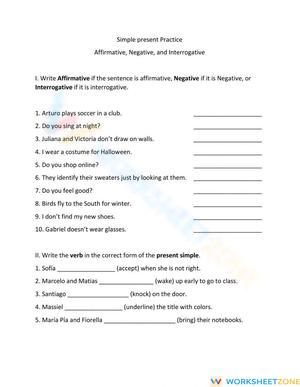
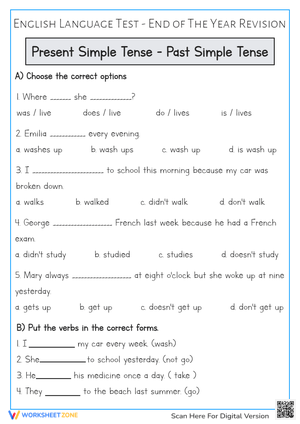
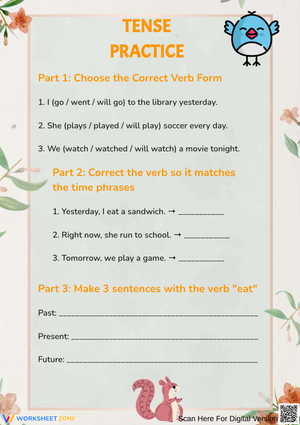
Another effective exercise type is the 'find the error' task. In these activities, students are presented with sentences that contain common present simple mistakes, such as 'He play soccer' or 'They likes pizza.' By playing the role of the 'grammar detective,' students develop a sharper eye for their own errors. This meta-cognitive approach encourages them to self-correct during their independent writing time, a skill that is vital for long-term writing success.
Teacher Tips: Integrating Present Simple Worksheets into Daily Routines
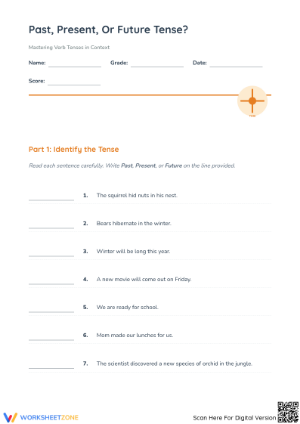
Integrating grammar practice into the daily classroom flow can prevent it from feeling like an isolated subject. Many teachers find success using present simple tense printable worksheets as part of 'bell ringer' activities or as quick assessments at the end of a lesson. These short, focused bursts of practice keep the rules fresh in students' minds without taking up excessive instructional time. By making grammar a consistent part of the day, students begin to see it as a natural part of communication rather than a set of rules to be memorized for a test.
When using these worksheets, try to incorporate peer-review sessions. Ask students to swap papers and check each other's third-person singular endings. This not only lightens the teacher's grading load but also forces students to apply their knowledge in a critical way. They often find it easier to spot an '-s' missing on a friend's paper than on their own, and the discussion that follows can clarify misconceptions for both students. Additionally, providing 'challenge' sections on worksheets allows for differentiation within a single assignment.
Classroom Implementation: From Guided Practice to Independent Mastery
The journey from learning a grammatical rule to using it fluently in independent writing is a long one. To facilitate this transition, classroom implementation should move through three distinct phases: modeling, guided practice, and independent application. In the modeling phase, the teacher demonstrates the rule using the whiteboard and choral repetition. The students see and hear the correct forms repeatedly before they are ever asked to write them down.
During the guided practice phase, present simple tense printable worksheets play a central role. Students work through exercises with the support of the teacher or in small groups. This is the time for immediate feedback and the correction of common misconceptions. If a teacher notices multiple students forgetting the '-es' on 'watches,' they can pause the class and do a quick mini-lesson on the board. This real-time intervention prevents students from practicing errors and cementing bad habits.
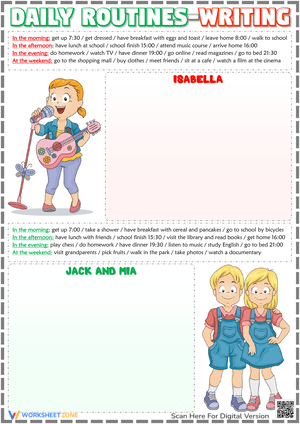
Finally, in the independent mastery phase, students should be given opportunities to use the present simple in their own creative writing. This might involve writing a set of rules for a new game, describing the characteristics of a favorite animal, or keeping a 'daily log' for a week. The goal is for the grammar to become invisible—a tool that students use to express their ideas clearly and accurately. When a student can write a five-sentence paragraph about their pet without missing a single third-person singular marker, they have truly mastered the present simple tense.
Frequently Asked Questions
1. How do I explain the difference between 'I run' and 'He runs' to beginners?
To explain this to beginners, use a 'helper -s' analogy. Tell students that when the subject is just one person (he, she, or it), the verb needs a little extra 'help' in the form of an '-s' to show it's working hard. When there are many people (they, we) or when it's just 'I,' the verb is strong enough on its own and doesn't need the extra letter. Using visual icons, like a little cape on the '-s' to show it is a 'super letter' for singular subjects, can make the rule more memorable for young learners.
2. What are the best methods for correcting 3rd-person singular mistakes?
One of the most effective methods is 'color-coding.' When reviewing a student's work, highlight the subject in one color and the verb in another. If the student wrote 'She play,' the lack of a matching ending becomes visually apparent. Another method is the 'oral check,' where you ask the student to read the sentence aloud. Often, students who omit the '-s' in writing will naturally include it when speaking, and hearing the difference can help them bridge the gap between their spoken and written language.
3. Why is consistent practice with printable worksheets effective for grammar acquisition?
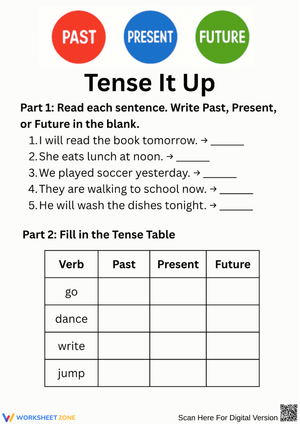
Grammar acquisition requires a balance of cognitive understanding and muscle memory. Printable worksheets provide the repetitive, focused practice needed to move grammatical rules from short-term memory into long-term automaticity. By engaging with the same rule across various exercise types—fill-in-the-blanks, matching, and sentence transformation—students develop a flexible understanding of the language. Furthermore, the physical act of writing the verb endings helps reinforce the spelling patterns in a way that digital-only practice sometimes lacks.












 Interactive Worksheet Maker
 Quiz Maker
 Word Search Maker
 Crossword Puzzle Maker
 Word Scramble Generator
 Sentence Scramble Generator
 Handwriting Worksheet Generator
 Name Tracing Generator
 Fill In The Blank Generator