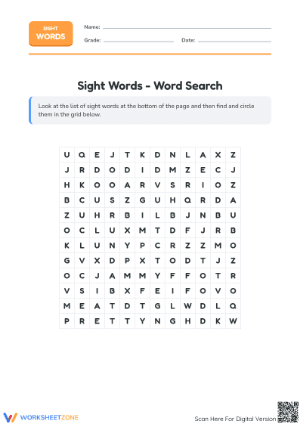
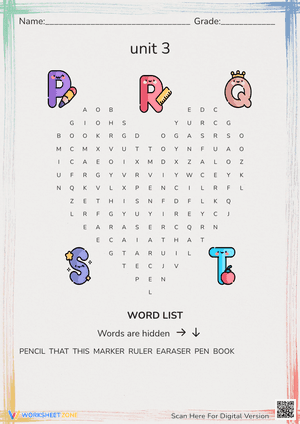
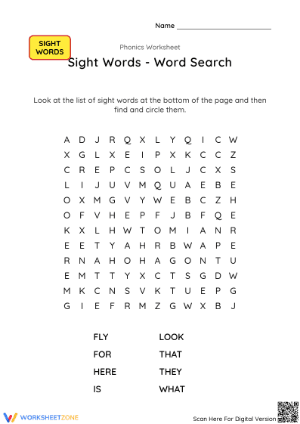
Sight word word searches are not a replacement for phonics instruction. They serve a different purpose: building automatic visual recognition of words that students need to know instantly, on sight, without stopping to decode. This matters most for words that resist regular phonetic patterns.
Edward William Dolch compiled his list of 220 sight words in 1936, plus a separate list of nouns, specifically because these words are hard to sound out or illustrate with a picture. Words like said, was, and of do not follow predictable spelling-to-sound rules, so decoding strategies alone will not get a young reader there. A word search asks students to hold the whole word shape in mind and scan for a visual match, which is exactly the kind of practice that supports automaticity for this word category.
Used alongside phonics lessons rather than instead of them, a sight word word search reinforces the words your explicit phonics instruction cannot fully cover.
Sending Word Searches Home as Low-Prep Homework
Word searches travel well because they need no parent training to be useful. A caregiver does not need to know phonics rules or reading strategies to sit with a child and help them scan for a word. This makes sight word word searches a practical homework option for families who want to support reading practice but are not sure how.
Because the words come straight from your classroom instruction, students are reinforcing exactly what you are teaching rather than practicing an unrelated skill at home.
Classroom Implementation
Start by matching the word list to where each group of students actually sits, using Dolch pre-primer through third-grade lists or Fry's first 100 through 300 words as your source. Print a batch of puzzles at each level so you are ready to hand out the right version without last-minute copying.
Rotate the word lists roughly every one to two weeks so students keep encountering new words rather than repeating a mastered set. Keep an answer key with every puzzle so early finishers can self-check, and use a simple tally sheet to note which words gave individual students trouble. That tally becomes your quick reference when planning the next small-group review.
Frequently Asked Questions
1. What grade levels are sight word word searches appropriate for?
They work best in kindergarten through second grade, when students are building the high-frequency word bank that supports early reading fluency. Older students who are behind on sight word recognition can also benefit from the same activity format.
2. How are sight word word searches different from phonics-based word searches?
A sight word word search draws its word bank from lists like Dolch or Fry, which include words that do not follow regular spelling patterns. A phonics-based word search instead targets words that share a specific sound or spelling rule, so the two activities build different skills.
3. How can teachers use word search results to identify students who need targeted sight word intervention?
Watch which students take noticeably longer to locate specific words, or who mark the wrong letters near a target word. Tracking those patterns across a few puzzles points to the exact words that belong in a small-group review list.
4. Should sight word word searches be timed or untimed in the classroom?
Untimed is best for initial exposure to a new word list, since the goal is accurate recognition, not speed. Once students are comfortable with a list, a light time limit can add a fluency element without turning the task into a stressful drill.
5. How often should teachers rotate sight word lists used in word search activities?
Every one to two weeks keeps the activity aligned with new instruction while giving students enough repeated exposure to build recognition before moving on to the next set of words.












 Interactive Worksheet Maker
 Quiz Maker
 Word Search Maker
 Crossword Puzzle Maker
 Word Scramble Generator
 Sentence Scramble Generator
 Handwriting Worksheet Generator
 Name Tracing Generator
 Fill In The Blank Generator