


























Views
Downloads

Grade K Sight Words — Printable No-Prep Worksheet
Paste this activity's link or code into your existing LMS (Google Classroom, Canvas, Teams, Schoology, Moodle, etc.).
Students can open and work on the activity right away, with no student login required.
You'll still be able to track student progress and results from your teacher account.
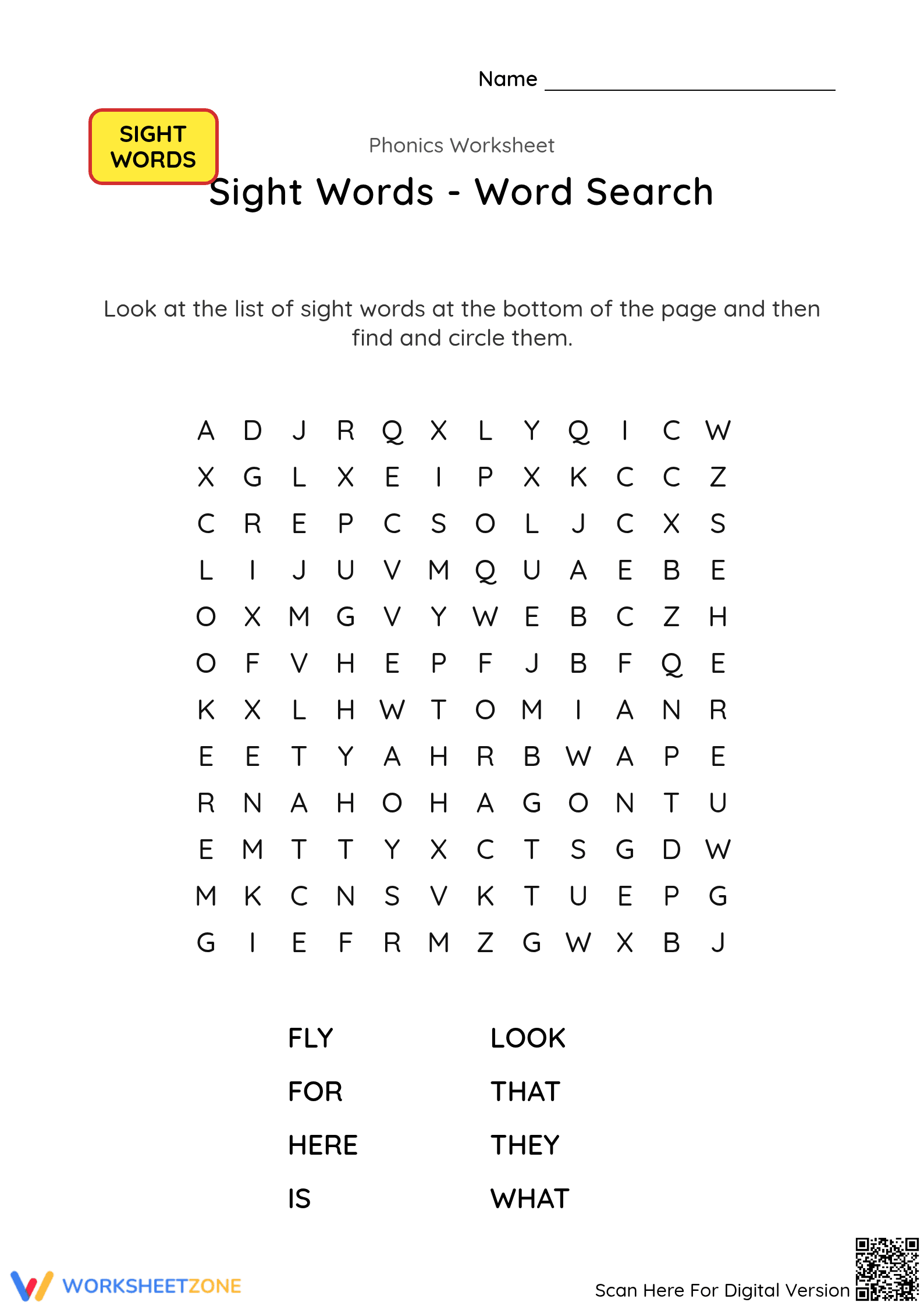
This Kindergarten sight word worksheet helps early readers build automaticity and word recognition skills. Students search for eight high-frequency words hidden in a letter grid, reinforcing spelling patterns and visual memory. This engaging activity provides essential practice for foundational reading fluency without requiring any complex instructions or setup.
At a Glance
- Grade: Kindergarten · Subject: ELA
- Standard:
CCSS.ELA-LITERACY.RF.K.3.C— Read common high-frequency words by sight.- Skill Focus: Sight word recognition
- Format: 1 page · 8 problems · No answer key · PDF
- Best For: Independent practice
- Time: 10–15 minutes
This single-page resource features a classic word search puzzle tailored for early learners. The bottom of the page provides a clear word bank containing eight essential sight words: fly, for, here, is, look, that, they, and what. The letter grid uses clear, uppercase typography to prevent visual crowding. The straightforward layout ensures students can immediately understand the task.
Zero-Prep Workflow
This resource is designed for immediate classroom implementation with minimal teacher effort.
- Print (1 minute): Simply download the PDF and print the required number of copies. The black-and-white design is ink-friendly and copies clearly.
- Distribute (1 minute): Hand out the worksheets along with pencils or highlighters. The instructions are self-explanatory.
- Review (3 minutes): Quickly scan completed puzzles or have students peer-check their found words.
Total teacher prep time is under two minutes, making this an excellent option for morning work or emergency sub plans.
Standards Alignment
This activity aligns directly with CCSS.ELA-LITERACY.RF.K.3.C: Read common high-frequency words by sight. By actively searching for these specific words, students reinforce their orthographic mapping skills. Both standard codes can be copied directly into lesson plans, IEP goals, or district curriculum mapping tools.
How to Use It
This word search serves as an excellent independent activity during literacy centers. While you conduct small group guided reading instruction, other students can work on this puzzle to reinforce their sight word vocabulary. Alternatively, use it as a calming morning work assignment as students arrive and settle into the classroom routine. As a formative assessment tip, observe which students struggle to locate words; this may indicate a need for further practice with letter recognition or visual scanning. Most students will complete this task within 10 to 15 minutes.
Who It's For
This worksheet is primarily designed for Kindergarten students developing their foundational reading skills. It also serves as appropriate review material for first graders or targeted intervention for older students needing extra high-frequency word practice. For differentiation, you might provide struggling readers with a highlighter to mark the first letter of each target word in the grid. Pair this activity with a sight word anchor chart or flashcard drill for a comprehensive literacy lesson.
Mastering high-frequency vocabulary is a critical component of early literacy development. According to Fisher & Frey (2014), repeated exposure to sight words in varied contexts significantly improves reading fluency and overall text comprehension. This worksheet supports CCSS.ELA-LITERACY.RF.K.3.C by requiring students to read common high-frequency words by sight. The word search format encourages active visual scanning and letter-by-letter analysis, which aids in orthographic mapping—the process by which readers store written words for immediate, effortless retrieval. By engaging with words like "look," "they," and "what" in a puzzle format, young learners build the automaticity necessary for tackling more complex texts. Integrating targeted activities like this into daily routines ensures students receive the multiple exposures required to move these essential words into their long-term memory, ultimately fostering confident early readers.


