


























Views
Downloads
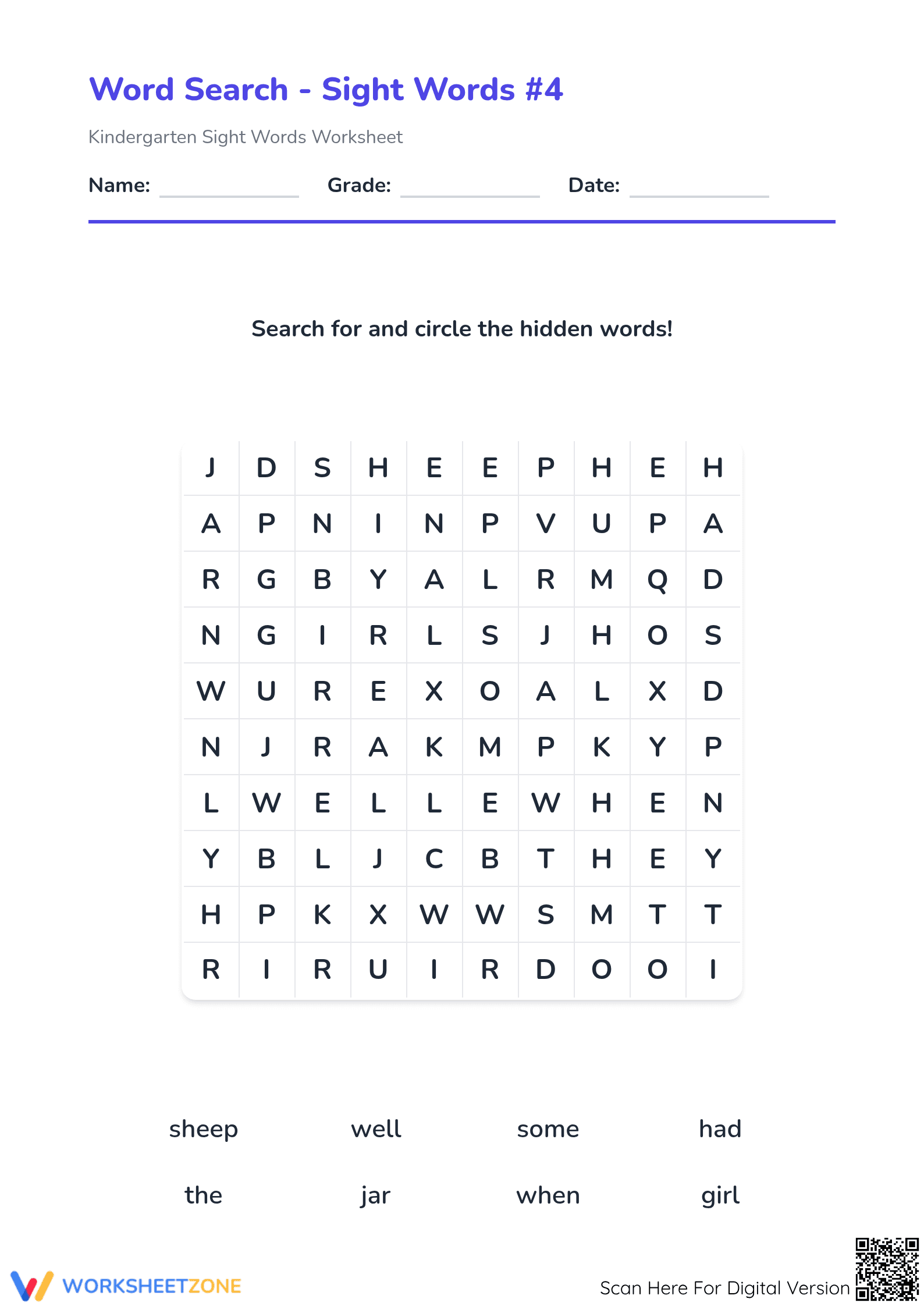

Grade K Sight Words — Printable No-Prep Worksheet
Paste this activity's link or code into your existing LMS (Google Classroom, Canvas, Teams, Schoology, Moodle, etc.).
Students can open and work on the activity right away, with no student login required.
You'll still be able to track student progress and results from your teacher account.
This Kindergarten sight word search worksheet helps early readers build automaticity with high-frequency vocabulary. By actively scanning for and circling eight essential sight words, students strengthen their visual discrimination and spelling skills. This engaging puzzle format provides a fun, low-stress environment for foundational reading practice.
At a Glance
- Grade: Kindergarten · Subject: ELA
- Standard:
CCSS.ELA-LITERACY.RF.K.3.C— Read common high-frequency words by sight- Skill Focus: Sight Word Recognition
- Format: 1 page · 8 problems · Answer key included · PDF
- Best For: Independent literacy centers
- Time: 10–15 minutes
This single-page printable features a clear, 10x10 letter grid and a word bank containing eight high-frequency words: sheep, well, some, had, the, jar, when, and girl. The large, legible font is specifically designed for early childhood learners to prevent visual fatigue. A complete answer key is provided, showing the exact location of each hidden word to make grading or self-checking fast and accurate.
This resource is designed for immediate classroom implementation with a streamlined workflow:
- Print (1 minute): Generate copies of the single-page puzzle and keep the answer key on your desk.
- Distribute (1 minute): Hand out the worksheets during morning work or literacy block transitions.
- Review (1 minute): Quickly check student work against the provided key or project the key for self-correction.
With under two minutes of total teacher prep time, this activity is an excellent addition to any emergency sub plan or fast-finisher folder.
This activity is directly aligned to CCSS.ELA-LITERACY.RF.K.3.C: Read common high-frequency words by sight. By repeatedly exposing students to these specific letter sequences in a puzzle format, the worksheet reinforces orthographic mapping. Both standard codes can be copied directly into lesson plans, IEP goals, or district curriculum mapping tools.
Integrate this word search into your daily routine as a morning work activity to settle students while reinforcing vocabulary. Alternatively, place it in an independent literacy center alongside letter tiles or sight word flashcards. As a formative assessment tip, observe students while they work: notice if they are searching letter-by-letter or if they are scanning for whole-word chunks, which indicates stronger orthographic memory. Most kindergarteners will complete this puzzle in 10 to 15 minutes.
This resource is ideal for Kindergarten and advanced Preschool students who are building their foundational reading skills. It serves as an excellent differentiation tool for visual learners who benefit from game-based practice rather than traditional flashcard drills. Pair this worksheet with a shared reading session focusing on a big book that heavily features the target sight words.
Developing automaticity with high-frequency vocabulary is a critical milestone in early literacy. According to a 2024 report by EdReports, instructional materials that provide repeated, varied exposure to sight words significantly improve reading fluency in primary grades. This worksheet supports that pedagogical goal by aligning with CCSS.ELA-LITERACY.RF.K.3.C, requiring students to read common high-frequency words by sight. The word search format encourages active visual scanning, which strengthens the neural pathways responsible for orthographic mapping. By shifting the task from simple rote memorization to an engaging puzzle, educators can lower the affective filter and increase time-on-task. This targeted practice ensures that early readers can quickly recognize essential vocabulary, freeing up cognitive resources for more complex decoding and reading comprehension tasks as they progress through the primary grades.


