


























Views
Downloads

Printable Sight Words Worksheet | Kindergarten ELA
Paste this activity's link or code into your existing LMS (Google Classroom, Canvas, Teams, Schoology, Moodle, etc.).
Students can open and work on the activity right away, with no student login required.
You'll still be able to track student progress and results from your teacher account.
This Kindergarten sight words worksheet helps early readers build essential reading fluency by identifying high-frequency words within complete sentences. By focusing on recognition rather than phonetic decoding, students develop the automaticity required for smooth reading. This resource provides a structured environment to practice 12 specific sight words in a meaningful context.
At a Glance
- Grade: Kindergarten · Subject: English Language Arts
- Standard:
CCSS.ELA-LITERACY.RF.K.3.C— Read common high-frequency words by sight- Skill Focus: Contextual word recognition
- Format: 3 pages · 12 problems · Answer key included · PDF
- Best For: Independent literacy centers or morning work
- Time: 15–20 minutes
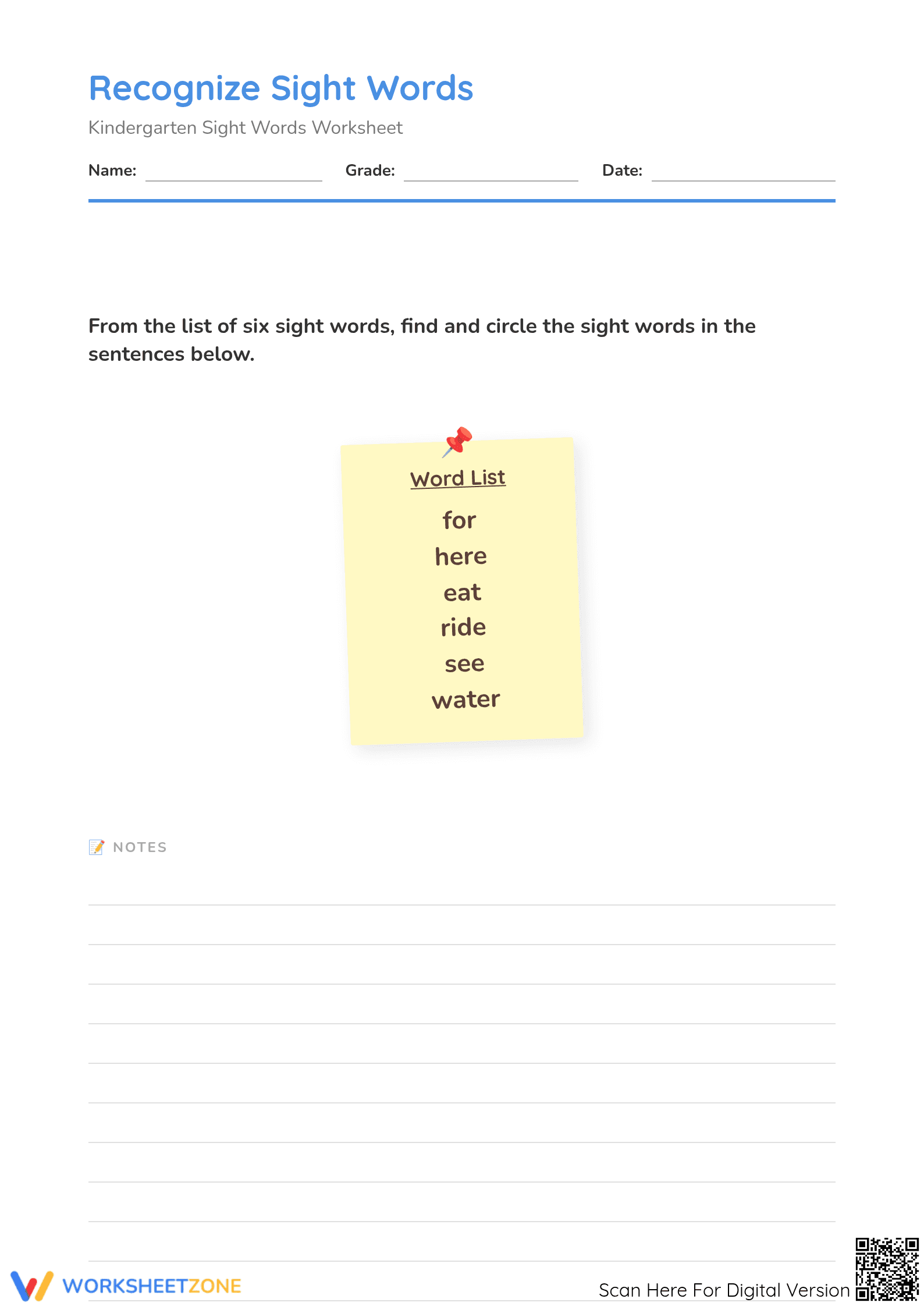
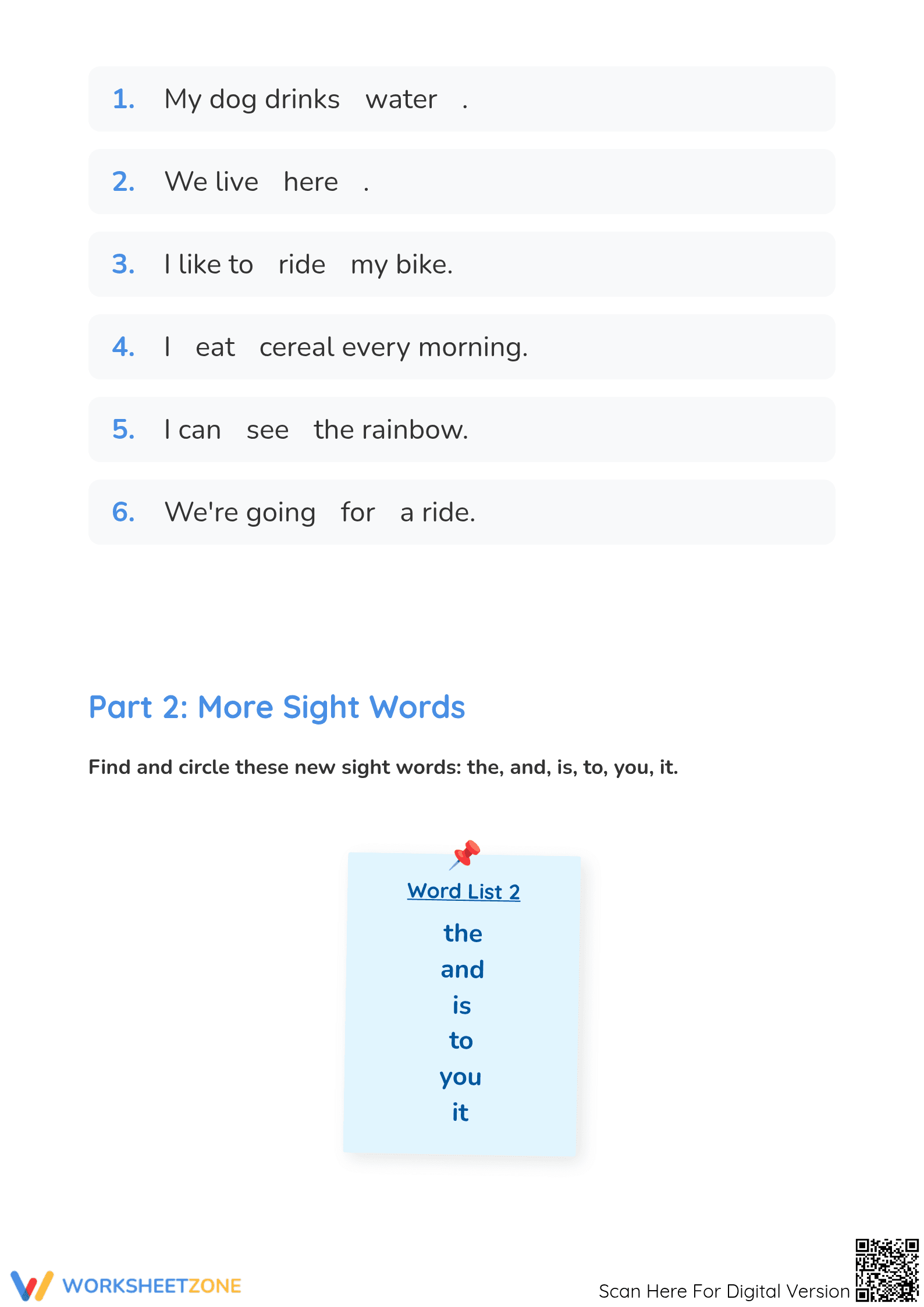
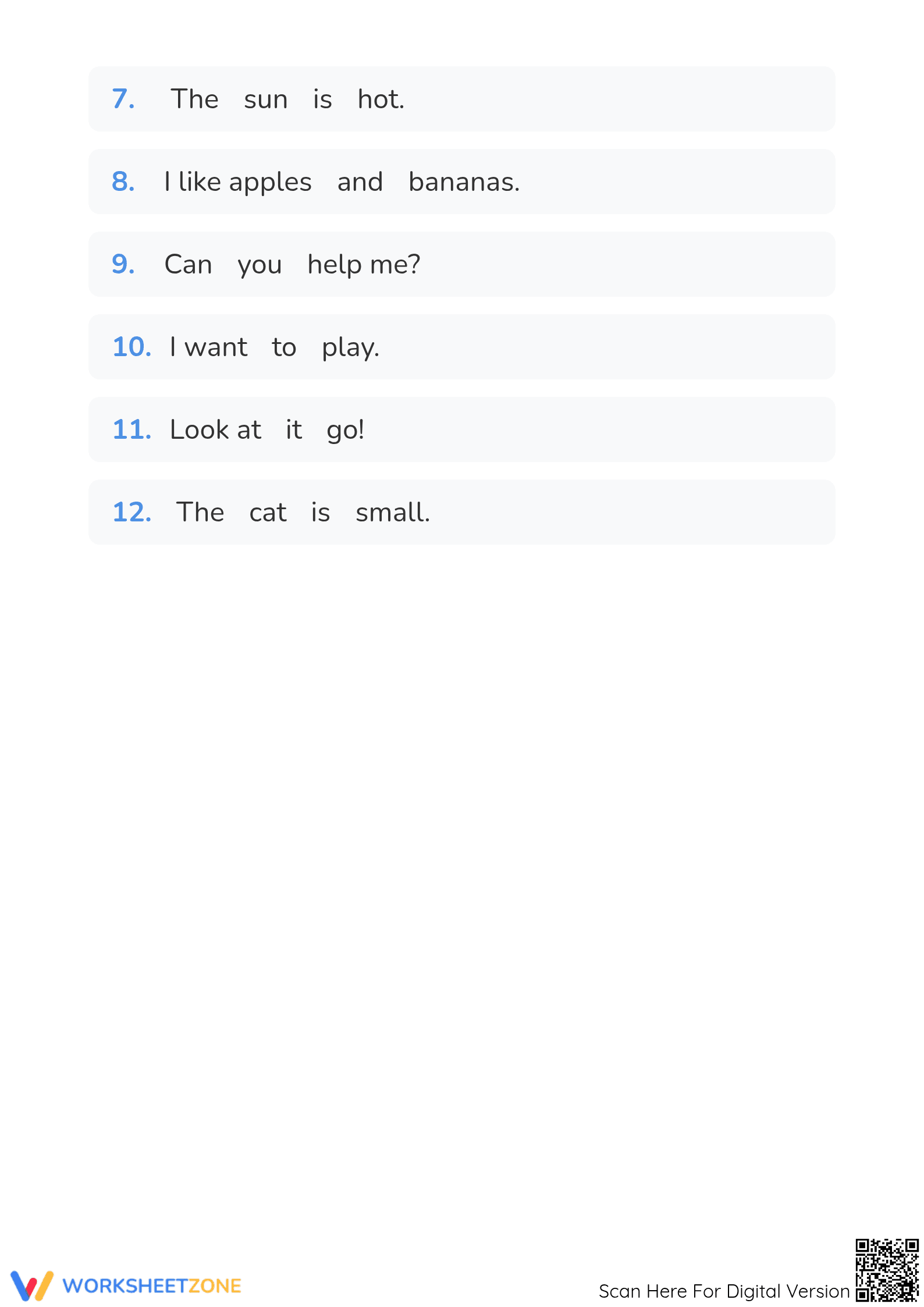
Inside this 3-page PDF, you will find two distinct parts designed to prevent cognitive overload. The first section introduces a word list featuring "for," "here," "eat," "ride," "see," and "water." The second section expands the challenge with "the," "and," "is," "to," "you," and "it." Each page features clear, large-print sentences with ample spacing, making it accessible for young learners developing fine motor skills and tracking abilities. A full answer key is provided to facilitate quick grading.
This resource follows a zero-prep workflow designed for busy educators. First, print the three pages for your class. Second, distribute the sheets and briefly read the word list aloud to ensure auditory familiarity. Third, review the completed work using the included answer key to identify common recognition errors. Total teacher preparation time is under 2 minutes, making this an ideal solution for emergency sub plans or supplemental practice during small group rotations.
The primary alignment for this activity is `CCSS.ELA-LITERACY.RF.K.3.C`, which requires students to read common high-frequency words by sight. By embedding these words into simple sentences like "My dog drinks water," the worksheet also supports foundational concepts of print. These standard codes can be copied directly into lesson plans, IEP goals, or district curriculum mapping tools to ensure compliance with state and federal literacy frameworks.
To maximize the impact of this worksheet, use it during the "You Do" phase of a gradual release model. After introducing a new sight word, assign the corresponding page to verify students can transfer that knowledge to a new text. For a formative assessment tip, observe whether students use the word bank as a constant reference or if they circle words instantly, indicating the transition from decoding to true sight recognition. Expect most students to finish in 15 to 20 minutes.
This activity is tailored for Kindergarten students, though it serves as an excellent intervention tool for first graders needing additional support or Preschoolers showing advanced readiness. It pairs naturally with a classroom word wall or physical flashcards. For English Language Learners (ELL), the simple sentence structures provide helpful models for basic English syntax while they master the high-frequency vocabulary.
The development of a robust sight word vocabulary is a prerequisite for reading comprehension. When students recognize words like "the" and "is" instantly, their cognitive resources are freed to focus on text meaning rather than reading mechanics. This worksheet targets `CCSS.ELA-LITERACY.RF.K.3.C` by providing 12 high-frequency targets in a controlled linguistic environment. By requiring students to find and circle words within sentences, the task moves beyond isolated rote memorization and into functional literacy. Consistent practice with these high-utility words correlates strongly with overall reading proficiency scores in early elementary grades. This resource provides the repetitive, low-stakes exposure necessary for long-term orthographic mapping and reading success.


