


























Views
Downloads

Kindergarten Sight Words Worksheet | Printable Ready
Paste this activity's link or code into your existing LMS (Google Classroom, Canvas, Teams, Schoology, Moodle, etc.).
Students can open and work on the activity right away, with no student login required.
You'll still be able to track student progress and results from your teacher account.
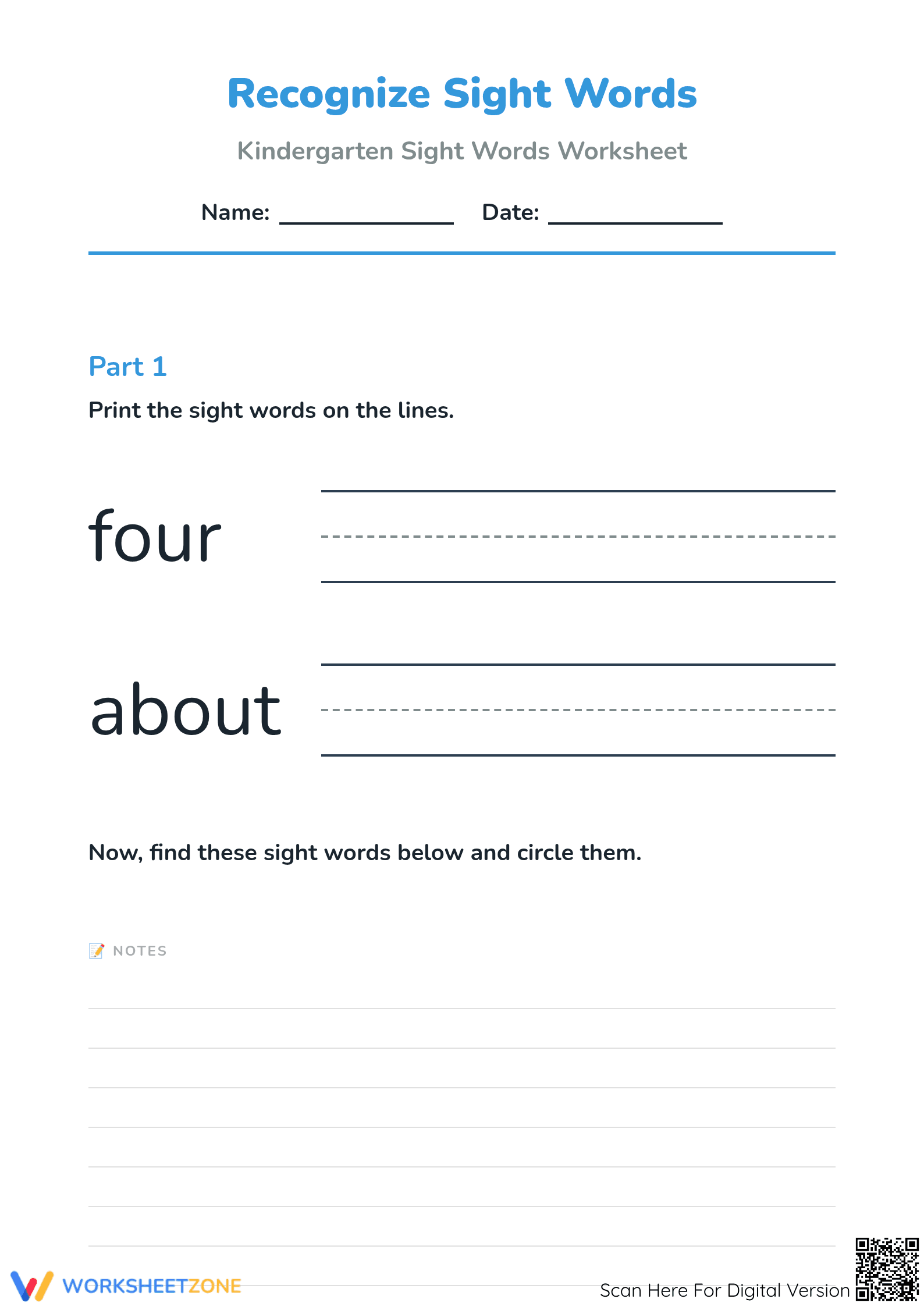
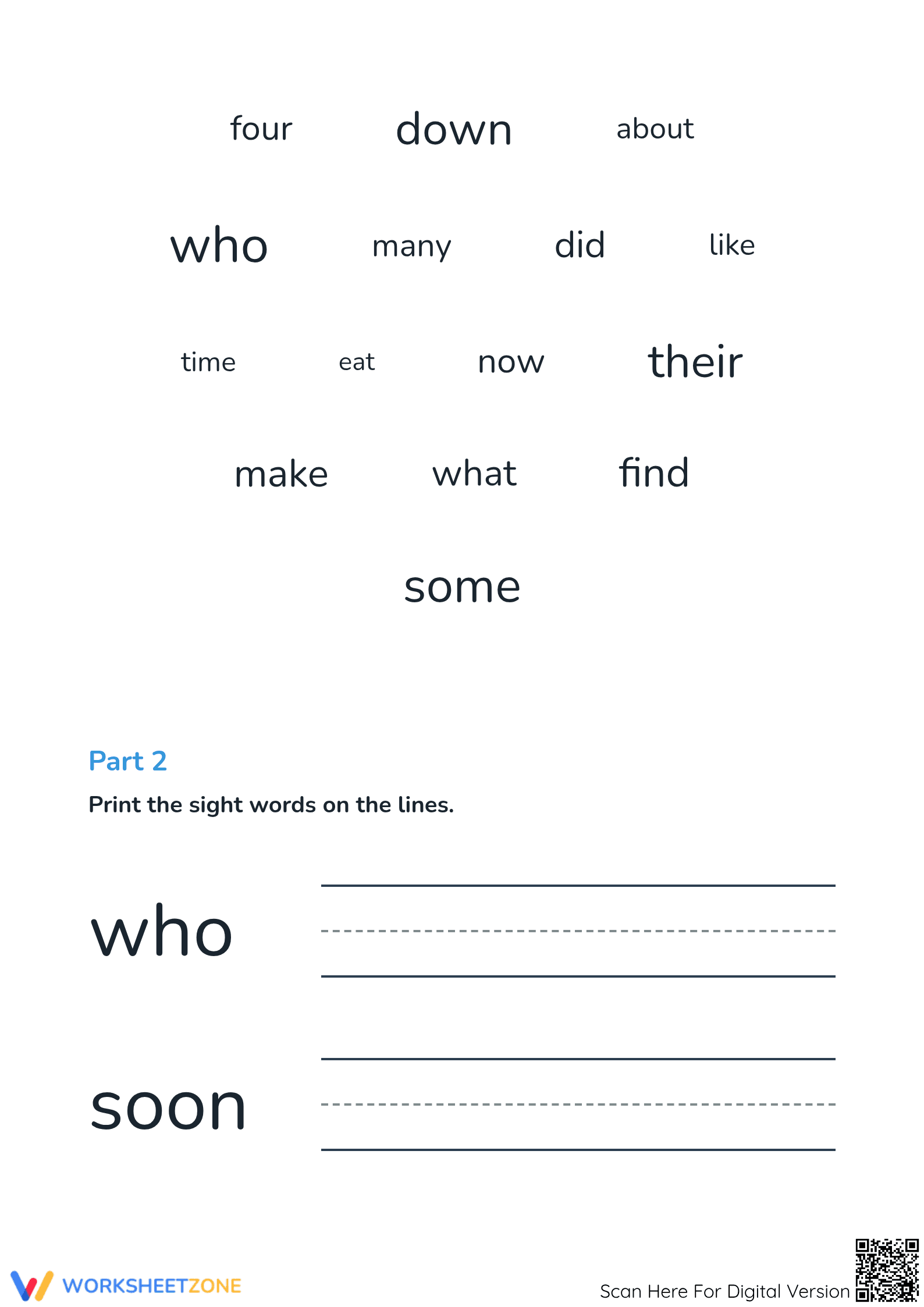
This Kindergarten sight word worksheet helps early learners master high-frequency vocabulary through a combination of tactile printing and visual discrimination. By engaging with words like "four," "about," and "who," students build the automaticity required for fluent reading. This resource ensures young readers transition from decoding to instant recognition of essential Dolch and Fry words.
At a Glance
- Grade: Kindergarten · Subject: ELA
- Standard:
CCSS.ELA-LITERACY.RF.K.3.C— Read common high-frequency words by sight- Skill Focus: Sight word recognition and printing
- Format: 3 pages · 6 tasks · Answer key included · PDF
- Best For: Morning work or literacy centers
- Time: 15–20 minutes
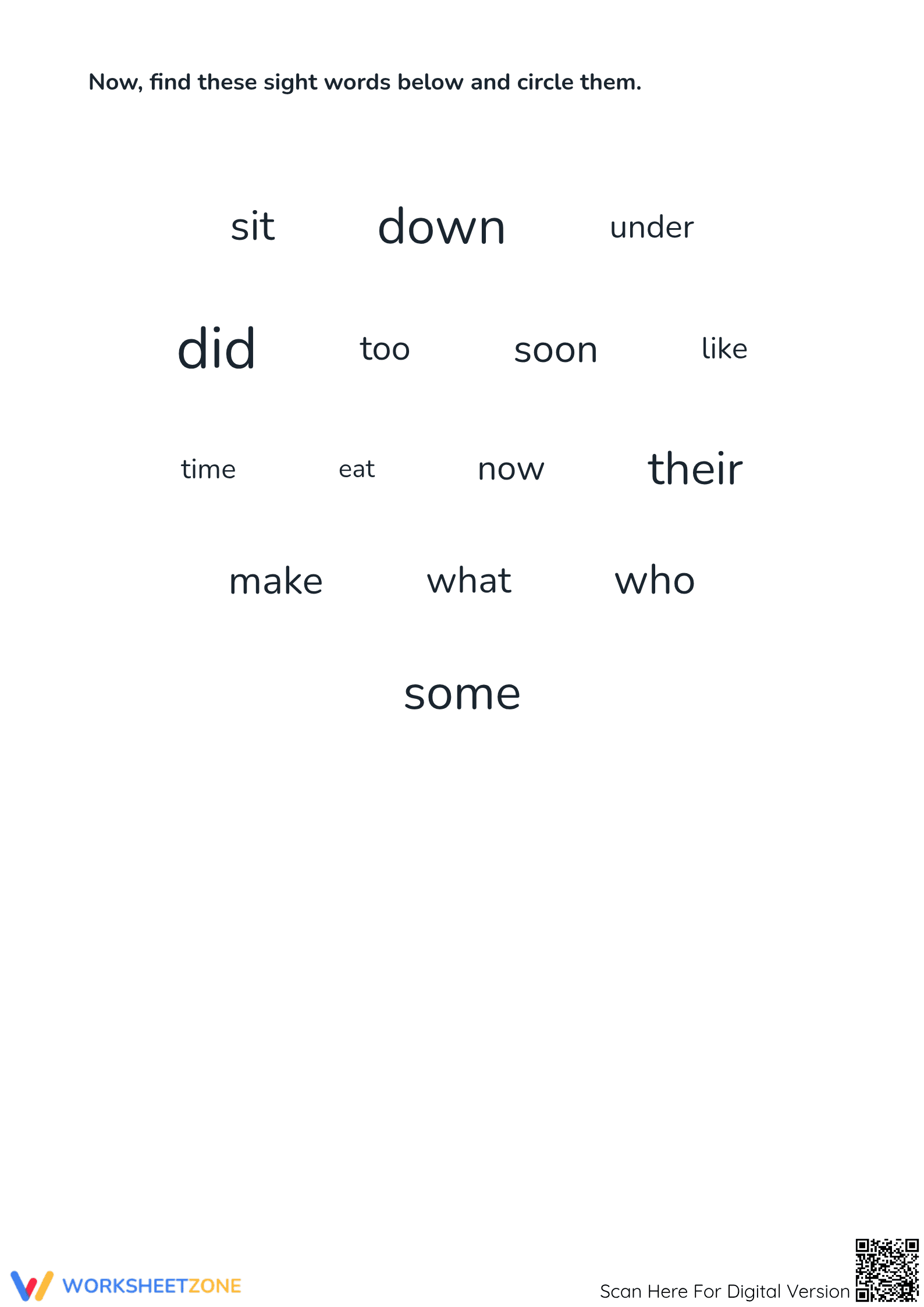
What's Inside: The packet contains three pages of interactive practice. Each section features large-print target words with primary-ruled lines for handwriting practice, followed by a "word cloud" visual search task. The layout includes clear headers, a dedicated notes section for teacher feedback, and a comprehensive answer key for quick grading or student self-correction.
Zero-Prep Workflow
Teachers can implement this resource in under 2 minutes. First, print the 3-page PDF (30 seconds). Next, distribute the sheets to students during independent literacy blocks (30 seconds). Finally, use the included answer keys to review student work or provide immediate feedback during small-group instruction (60 seconds). It is an ideal sub-plan component for early elementary classrooms.
Standards Alignment
This resource aligns with `CCSS.ELA-LITERACY.RF.K.3.C`, which requires students to read common high-frequency words by sight. By requiring students to both write and locate these words within a field of distractors, the worksheet reinforces orthographic mapping. Both standard codes can be copied directly into lesson plans, IEP goals, or district curriculum mapping tools.
How to Use It
Assign this worksheet during the independent practice phase of a gradual release lesson on high-frequency words. It serves as an excellent formative assessment; observe if students can locate the target words in the cloud without hesitation. Completion typically takes 15 to 20 minutes depending on the student's fine motor speed and familiarity with the vocabulary.
Who It's For
Designed for Kindergarten students and advanced Preschoolers, this resource supports Tier 1 instruction and RTI interventions. It pairs naturally with sight word flashcards or a classroom word wall to provide multiple exposures to the same vocabulary set, helping students who struggle with visual memory.
According to the RAND AIRS 2024 report, repetitive exposure to high-frequency words in varied contexts—such as writing and visual searching—is critical for developing reading fluency in early childhood. This worksheet addresses CCSS.ELA-LITERACY.RF.K.3.C by providing structured opportunities for students to "Read common high-frequency words by sight." By integrating handwriting with visual identification, the resource leverages multi-sensory learning principles that help solidify word shapes in long-term memory. Research from Fisher & Frey (2014) emphasizes that such focused practice reduces the cognitive load during reading, allowing students to focus on comprehension rather than decoding. This 3-page set provides the necessary repetition for mastery, ensuring that students can recognize common words with automaticity. It is a reliable tool for any evidence-based literacy program aiming to meet national foundational reading standards.


