


























Views
Downloads
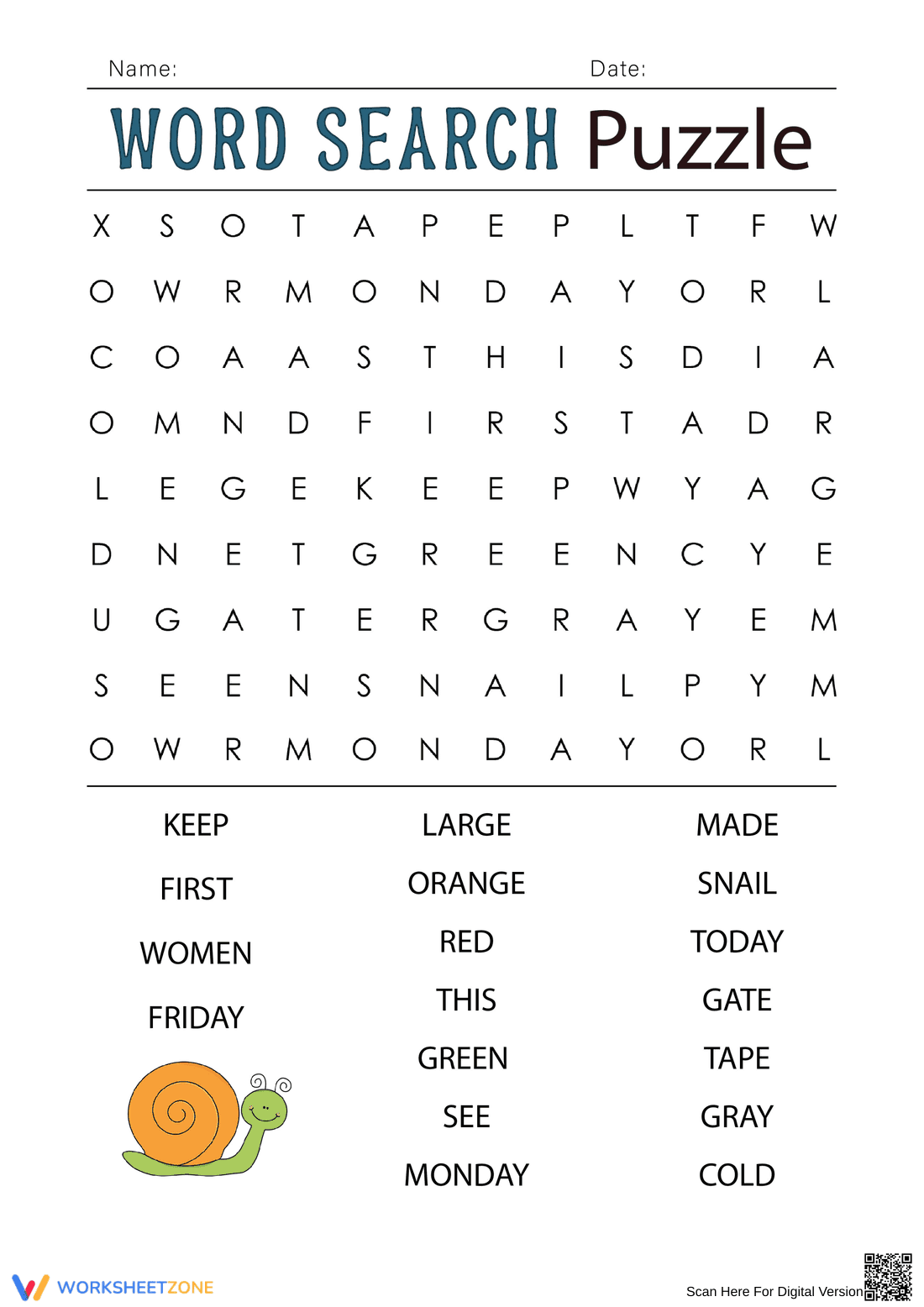

Grade 1 Word Search — Printable No-Prep Worksheet
Paste this activity's link or code into your existing LMS (Google Classroom, Canvas, Teams, Schoology, Moodle, etc.).
Students can open and work on the activity right away, with no student login required.
You'll still be able to track student progress and results from your teacher account.
This Grade 1 word search worksheet helps students build essential vocabulary and spelling recognition skills. By actively scanning for and identifying high-frequency sight words, young learners reinforce their reading fluency in a highly engaging format. Perfect for morning work or early finishers, this puzzle makes word recognition enjoyable.
At a Glance
- Grade: 1 · Subject: ELA
- Standard:
CCSS.ELA-LITERACY.RF.1.3.G— Recognize and read grade-appropriate irregularly spelled words accurately in independent tasks- Skill Focus: Sight Word Recognition and Spelling
- Format: 1 page · 18 problems · Answer key not included · PDF
- Best For: Independent practice, morning work, or early finisher activities
- Time: 10–15 minutes
What's Inside
Inside this single-page printable, educators will find a classic word search puzzle featuring an 18-word vocabulary bank. The word list includes a mix of high-frequency sight words, color words, and days of the week, such as "MONDAY," "GREEN," and "FIRST." A clear, easy-to-read letter grid accommodates early elementary visual tracking skills, while a fun snail illustration adds a touch of visual engagement.
Zero-Prep Workflow
- Print (1 minute): Simply download the PDF and print a class set. No special formatting or color ink is required.
- Distribute (1 minute): Hand out the puzzle during morning routines, literacy centers, or as a fast-finisher activity.
- Review (3 minutes): Students can self-check their work by comparing found words with peers or a teacher copy.
Total teacher prep time is under two minutes, making this an ideal, stress-free addition to any substitute teacher plan.
Standards Alignment
Aligned to CCSS.ELA-LITERACY.RF.1.3.G, this resource supports students as they recognize and read grade-appropriate irregularly spelled words. By repeatedly exposing learners to these foundational terms in a puzzle format, it reinforces orthographic mapping. Both standard codes can be copied directly into lesson plans, IEP goals, or district curriculum mapping tools.
How to Use It
This word search is highly versatile for daily classroom routines. Use it as a quiet morning work activity to settle students before direct instruction begins, or place it in a literacy center for independent vocabulary reinforcement. As a formative assessment observation tip, teachers can monitor which students struggle to track letters horizontally or vertically, indicating a need for targeted visual-spatial reading support. Expected completion time ranges from 10 to 15 minutes.
Who It's For
This worksheet is designed primarily for first-grade students mastering early reading skills, though it serves as excellent review for second graders or a challenge for advanced kindergarteners. For differentiation, teachers can highlight the first letter of each word in the grid for students needing extra scaffolding. Pair this puzzle with a direct instruction lesson on days of the week or color words to maximize retention.
Developing automaticity with high-frequency vocabulary is a critical milestone in early literacy development for primary students. This resource directly targets CCSS.ELA-LITERACY.RF.1.3.G by requiring students to recognize and read grade-appropriate irregularly spelled words within a distracting visual field. According to Fisher & Frey (2014), providing students with structured, independent practice opportunities significantly improves their ability to transfer isolated skills into fluent reading comprehension. Word searches offer a low-stakes, high-engagement method for this exact type of orthographic mapping. By actively scanning for specific letter sequences horizontally and vertically, young learners strengthen their visual discrimination, spatial awareness, and working memory. This targeted repetition ensures that foundational terms move from short-term recall to long-term sight recognition. Ultimately, mastering these sight words supports broader reading fluency, enhances decoding proficiency, and builds essential confidence across all primary subject areas, setting the stage for future academic success.


