


























Views
Downloads

Sight Words Word Search Worksheet | Grade K-1 Essential
Paste this activity's link or code into your existing LMS (Google Classroom, Canvas, Teams, Schoology, Moodle, etc.).
Students can open and work on the activity right away, with no student login required.
You'll still be able to track student progress and results from your teacher account.
This printable sight word worksheet helps early learners identify and internalize high-frequency vocabulary through engaging visual search and tactile writing practice. By combining letter-pattern recognition with handwriting reinforcement, students build the foundational fluency required for independent reading. This resource ensures students can recognize words like "pretty," "said," and "run" instantly in various contexts.
At a Glance
- Grade: Kindergarten · Subject: ELA
- Standard:
CCSS.ELA-LITERACY.RF.K.3.C— Read common high-frequency words by sight to build early reading fluency- Skill Focus: Sight word recognition and handwriting
- Format: 2 pages · 14 tasks · Answer key included · PDF
- Best For: Morning work or independent literacy centers
- Time: 15–20 minutes
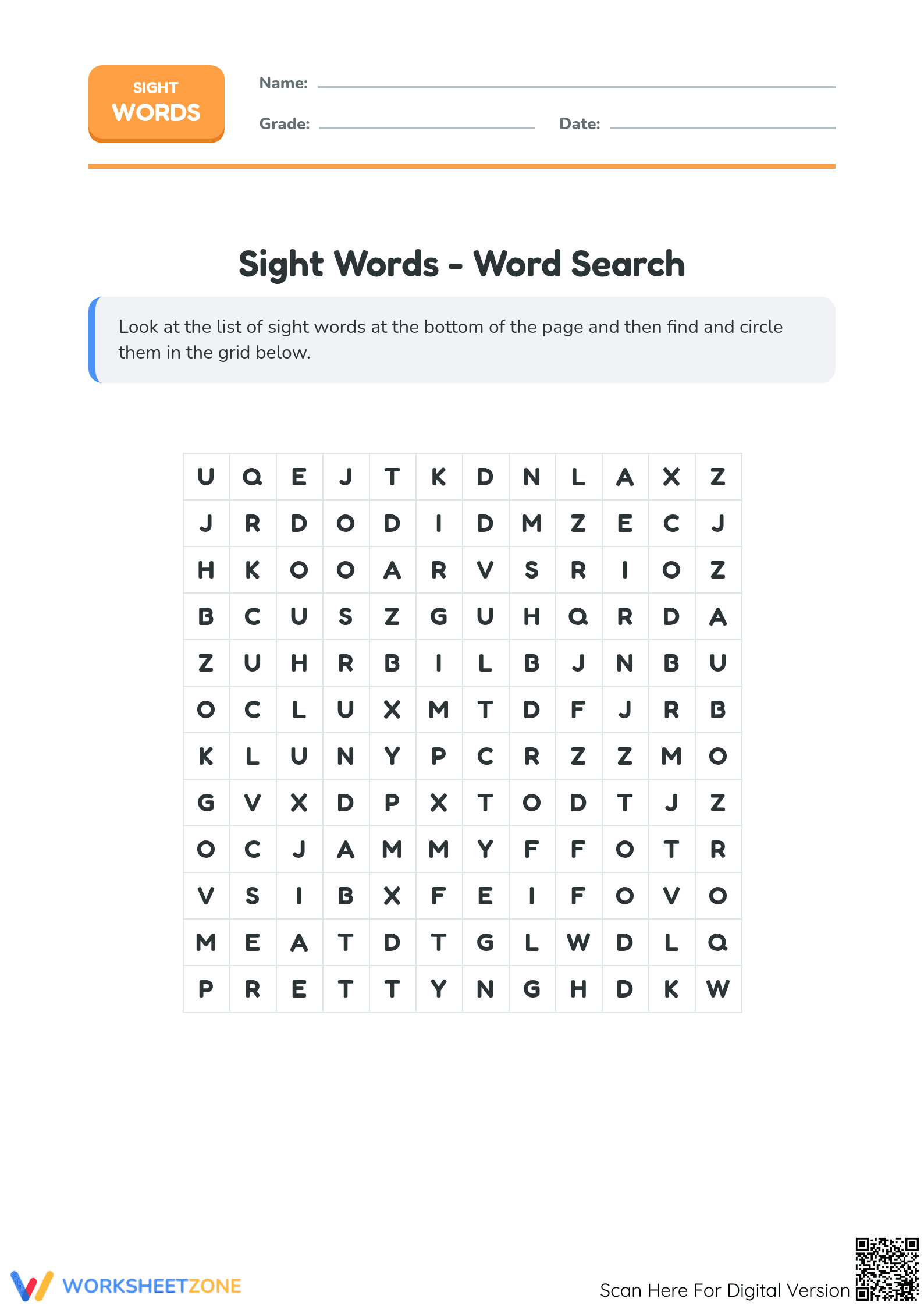
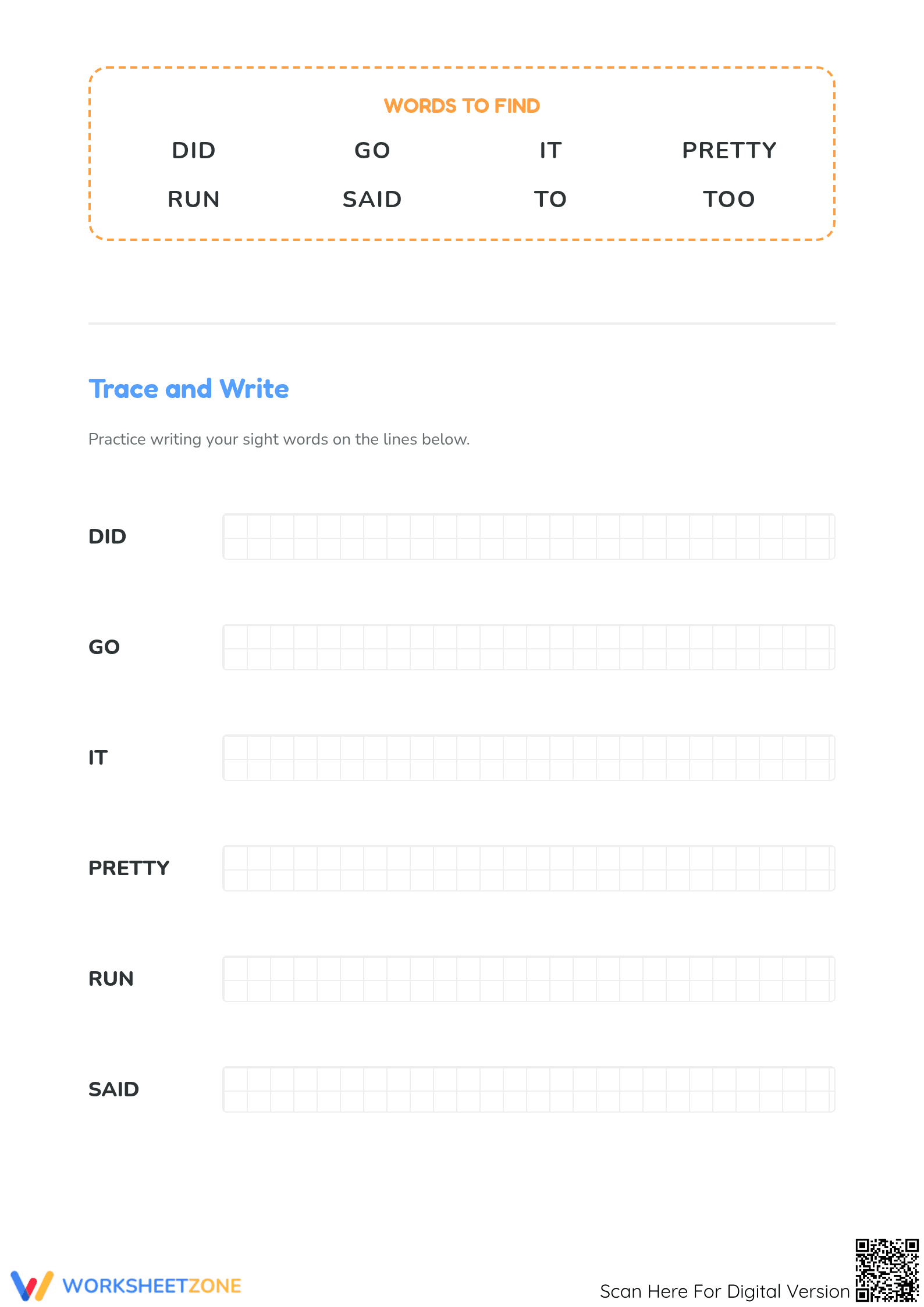
The packet contains two distinct pages designed for a comprehensive literacy session. Page one features a clear 12x12 letter grid where students locate eight specific sight words. Page two provides a "Trace and Write" section with structured letter boxes, helping students transition from visual recognition to motor production. A full answer key is included for quick grading and student self-correction.
Zero-Prep Workflow
- Print: Generate the two-page PDF for each student in your cohort (30 seconds).
- Distribute: Hand out the sheets and briefly point out the word bank at the top of the second page to guide the search (30 seconds).
- Review: Use the provided answer key to check the word search and tracing lines for immediate feedback (1 minute).
This streamlined process makes the worksheet an ideal choice for emergency sub plans or transition periods.
Standards Alignment
This resource aligns with CCSS.ELA-LITERACY.RF.K.3.C, which requires students to read common high-frequency words by sight. By isolating these words in a search grid and requiring written reproduction, the worksheet supports the orthographic mapping process. This standard code can be copied directly into lesson plans, IEP goals, or district curriculum mapping tools.
How to Use It
Use this worksheet during the independent practice phase of a lesson after introducing new sight words. It serves as an excellent formative assessment; observe if students are finding words horizontally or vertically to gauge their visual scanning maturity. Expect students to spend approximately 10 minutes on the search and 10 minutes on the tracing and writing section.
Who It's For
This is designed for Kindergarten and Grade 1 students, as well as Preschoolers ready for letter-string recognition. It is particularly effective for English Language Learners (ELLs) who need repetitive exposure to high-frequency vocabulary. Pair this with a sight word anchor chart or a leveled reader containing the target words for maximum impact.
According to the RAND AIRS 2024 report on early literacy, the integration of visual search tasks with motor-based writing exercises significantly enhances the retention of non-decodable high-frequency words. This worksheet utilizes these principles by requiring students to first identify the word CCSS.ELA-LITERACY.RF.K.3.C in a complex letter field and then reproduce it through tracing. Research from Fisher & Frey (2014) emphasizes that word work should be brief, focused, and frequent to move vocabulary from short-term memory to automaticity. By providing 14 specific tasks across two pages, this resource offers the necessary repetition without overwhelming young learners. The inclusion of structured boxes for writing ensures that students maintain proper letter sizing and spacing, which is a critical component of early ELA standards. This evidence-based approach to sight word instruction supports the development of the orthographic lexicon necessary for fluent reading and future writing success.


