


























Views
Downloads
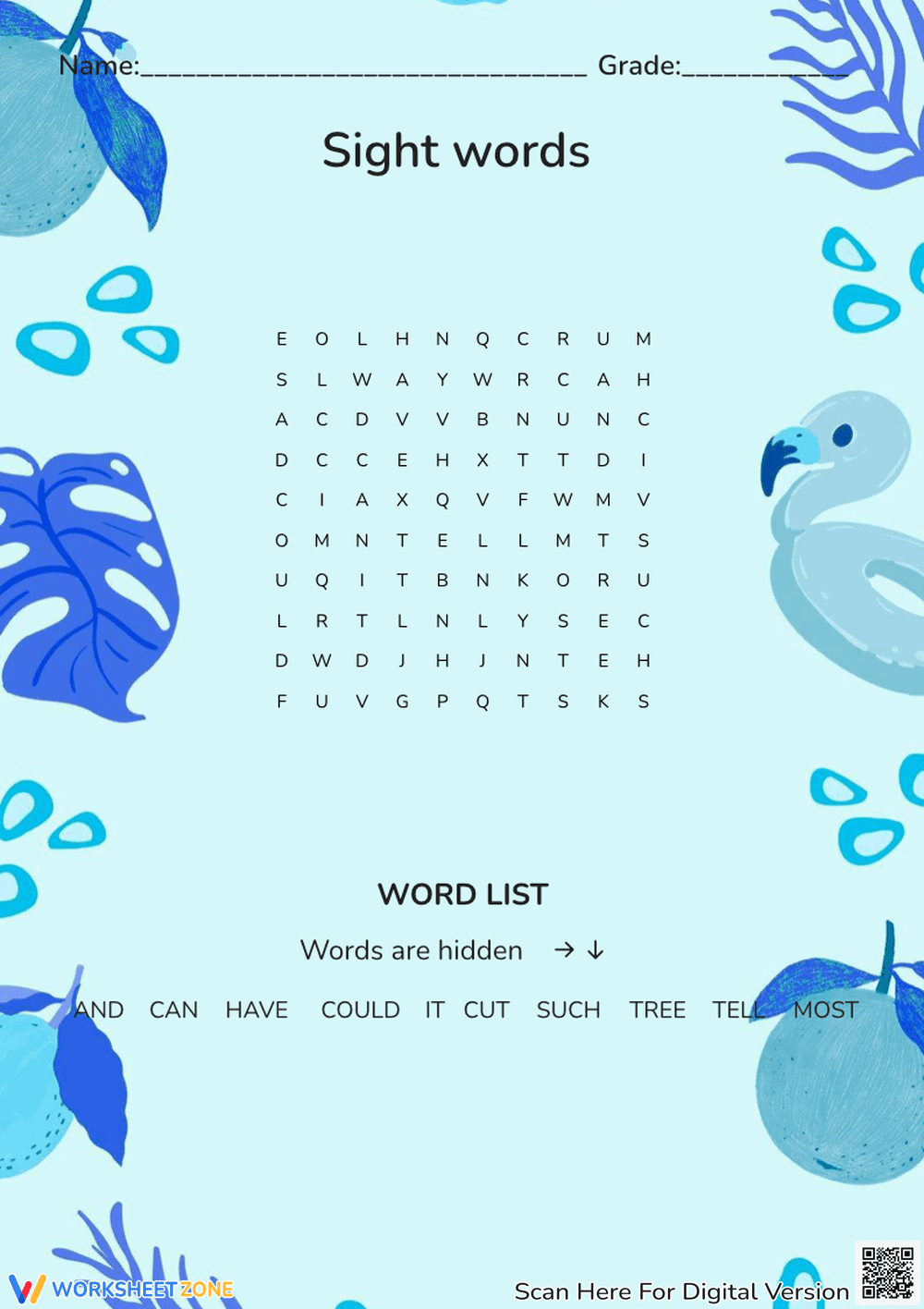

Printable Grade 1 Sight Words Word Search Worksheet
Paste this activity's link or code into your existing LMS (Google Classroom, Canvas, Teams, Schoology, Moodle, etc.).
Students can open and work on the activity right away, with no student login required.
You'll still be able to track student progress and results from your teacher account.
This Grade 1 sight words word search worksheet reinforces word recognition and spelling through active visual search. Students identify and circle 10 high-frequency words hidden horizontally and vertically. This activity builds foundational reading fluency and vocabulary retention in early learners.
At a Glance
- Grade: Grade 1 · Subject: English Language Arts
- Standard:
CCSS.ELA-LITERACY.RF.1.3.G— Recognize and read grade-appropriate irregularly spelled words- Skill Focus: Sight word recognition and spelling
- Format: 1 page · 10 words · Answer key not included · PDF
- Best For: Morning work or independent spelling practice
- Time: 10–15 minutes
This single-page PDF features a clear 10-by-10 grid filled with uppercase letters. Below the grid, a clean word bank lists 10 essential high-frequency words: and, can, have, could, it, cut, such, tree, tell, and most. Visual direction arrows guide young learners to search only from left to right and top to bottom, preventing confusion and supporting early tracking habits.
Zero-Prep Workflow
This resource requires minimal teacher preparation and integrates smoothly into classroom routines:
- Print (1 minute): Print enough copies for your class. No collation required.
- Distribute (30 seconds): Pass out the sheets with pencils. The layout allows students to begin immediately.
- Review (30 seconds): Check progress or display the page for a quick whole-class check.
With a setup time under two minutes, this worksheet serves as an excellent sub plan or transition task.
Standards Alignment
This activity aligns directly with the Common Core State Standards for English Language Arts, specifically CCSS.ELA-LITERACY.RF.1.3.G, which requires students to recognize and read grade-appropriate irregularly spelled words. By searching for these specific letter sequences, students reinforce orthographic mapping and word-form recognition. Both standard codes can be copied directly into lesson plans, IEP goals, or district curriculum mapping tools.
How to Use It
Use this worksheet during your phonics block immediately following direct instruction on high-frequency words. Alternatively, assign it as a quiet independent activity during literacy centers. For a quick formative assessment, observe which students systematically scan the grid row-by-row versus those who search randomly. Expect students to complete the puzzle in 10 to 15 minutes.
Who It's For
This worksheet targets first-grade students developing foundational reading skills. It also supports kindergarteners ready for enrichment or second-grade students requiring remedial spelling intervention. Pair this activity with a shared reading passage containing the same target words to help students transition from isolated word recognition to contextual reading.
This spelling resource targets CCSS.ELA-LITERACY.RF.1.3.G by focusing student attention on the orthographic patterns of 10 high-frequency words. According to research by Fisher & Frey (2014) on gradual release of responsibility, structured visual tasks like word searches help solidify word recognition by encouraging students to scan for specific letter sequences. This repetitive visual processing strengthens orthographic mapping, which is critical for automatic word retrieval during oral reading. This visual search strategy helps transition students from phoneme-grapheme mapping to rapid whole-word recognition. By isolating these high-frequency words in a grid, the activity reduces cognitive load for early readers while reinforcing spelling structures. Teachers can integrate this worksheet into daily literacy routines, knowing it supports evidence-based practices in early reading acquisition. The structured format ensures students spend time actively processing letters, making it an efficient tool for classroom spelling reinforcement.


