Why a Printable Classroom Rules Poster Anchors Day One
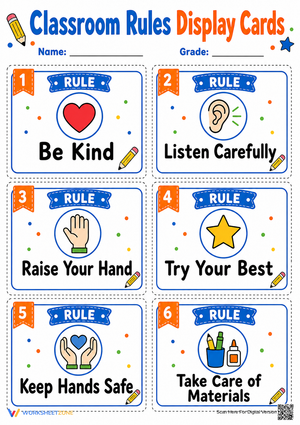
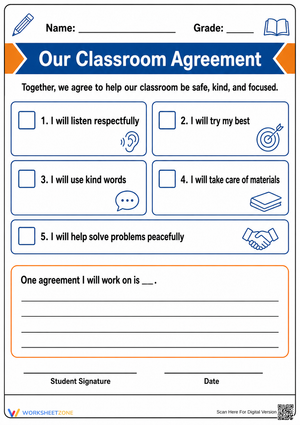
Before the first lesson starts, students are already reading the room. A printable classroom rules poster gives them something concrete to read: a short, visible list of expectations that tells them how this class works. For K-6 teachers, posting rules on day one turns vague hopes for good behavior into a shared reference everyone can point to. When a student forgets to raise a hand or talks over a classmate, you redirect to the poster instead of inventing a rule on the spot. That single reference point keeps your responses consistent from the first morning, which is exactly what young students watch for.
That consistency matters most during the back-to-school window, when routines are still forming. A printed display removes the guesswork for students who genuinely don't know what's expected yet. It also saves you from repeating the same reminders all morning, because the answer is already on the wall where every student can see it. The Worksheetzone regulation templates are built to print without setup, so the poster is ready before the first bell.
What to Put on a Rules Poster for Elementary Students
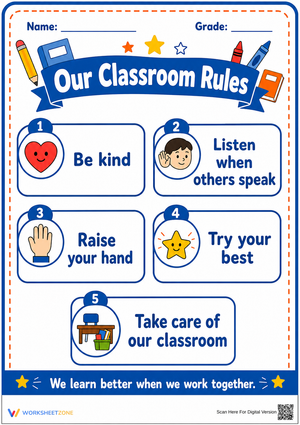
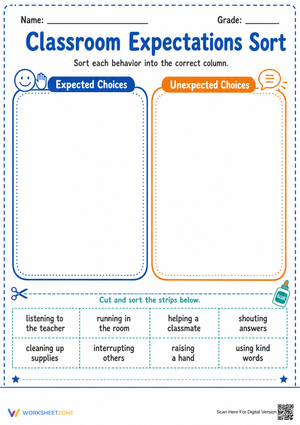
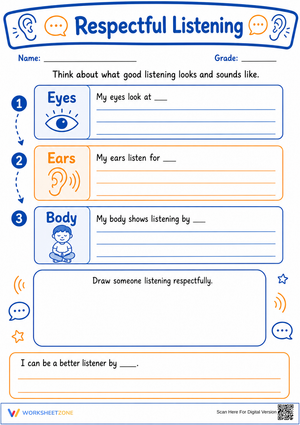
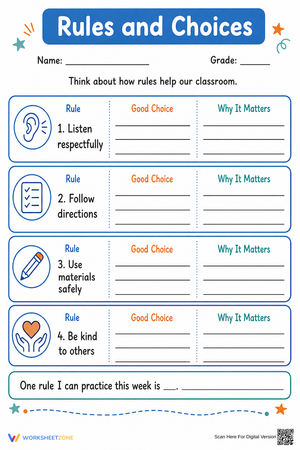
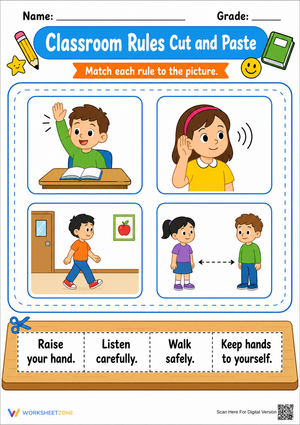
Keep the list short. Three to five positively framed rules are easier for elementary students to remember than a long column of don'ts. Phrase each one as an action: "We listen when others speak," "We keep hands and feet to ourselves," and "We try our best." Positive wording tells students what to do instead of only what to avoid, which gives you something to praise rather than only something to correct.
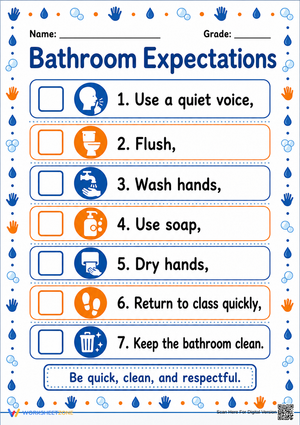
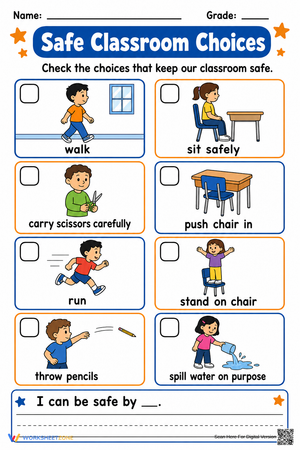
Pair each rule with a simple icon or color cue so pre-readers and early readers can interpret the poster on their own. CDC classroom management guidance recommends posting rules and consequences and reviewing them periodically so students always have access to them. A poster that lives at eye level, near the front of the room, meets that bar without extra effort once it's printed and laminated.
Differentiating Posters from K-2 to Grades 3-6
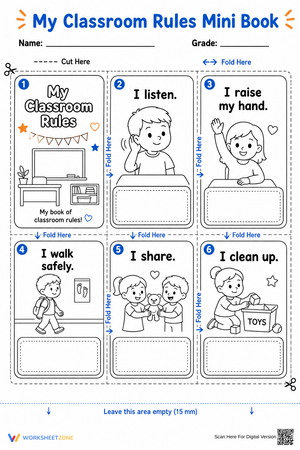
A kindergarten poster and a fifth-grade poster shouldn't read the same way. In K-2, lean on pictures, large fonts, and three or four rules with a single concrete example each. Many early-grade students can't yet decode a full sentence, so the icon carries the meaning while the words reinforce it during read-alouds of the rules.
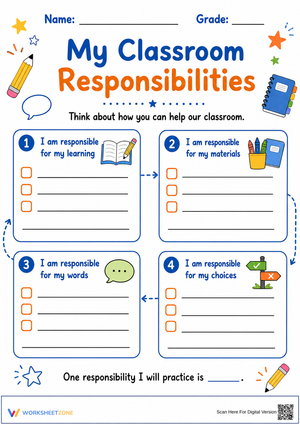
By grades 3-6, students can handle more nuanced language and shared ownership. Add rules that name responsibility, respect, and effort, and invite the class to help word them during the first week. Older elementary students hold expectations more reliably when they had a voice in writing them, and a printable template gives you a clean frame to drop their language into.
Pairing the Poster with a Full Regulation System
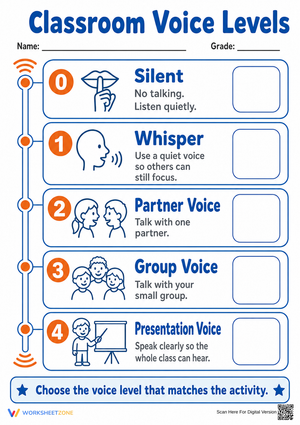
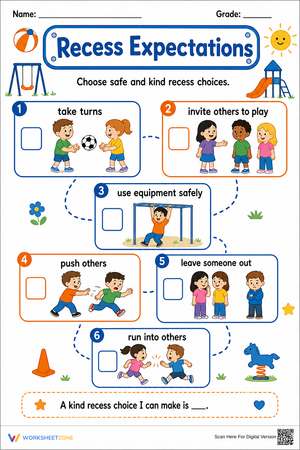
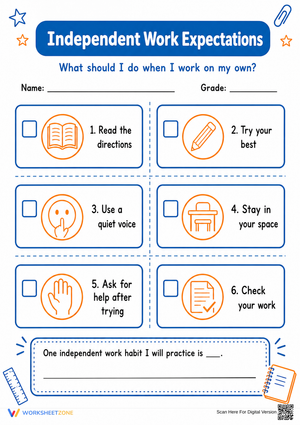
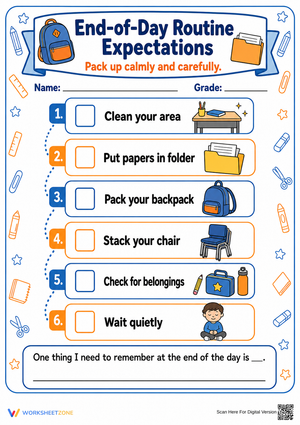
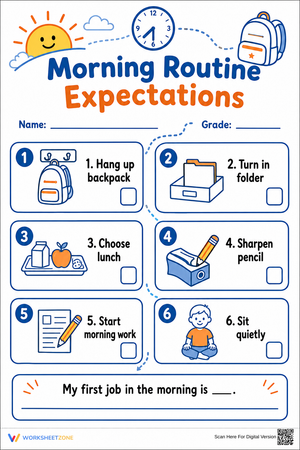
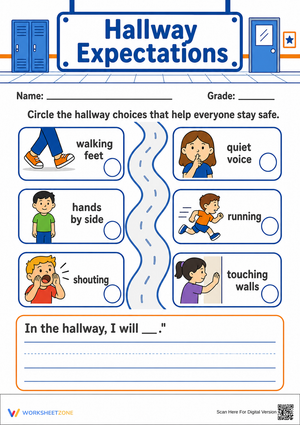
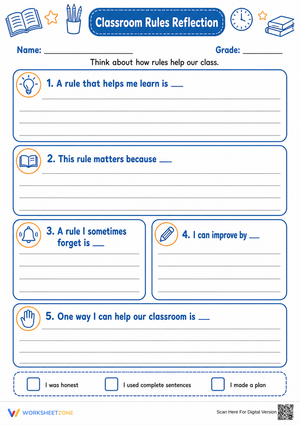
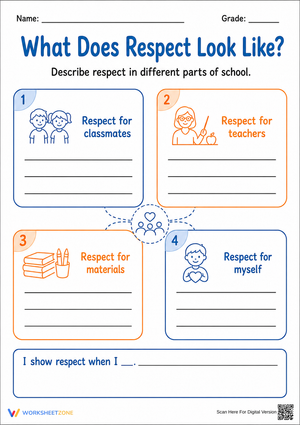
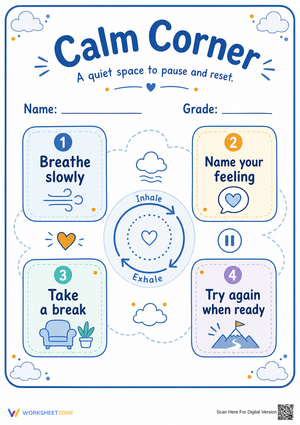
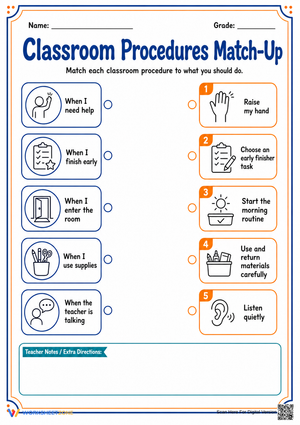
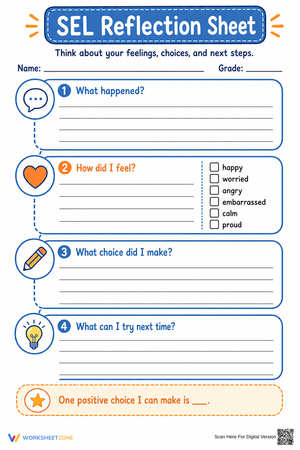
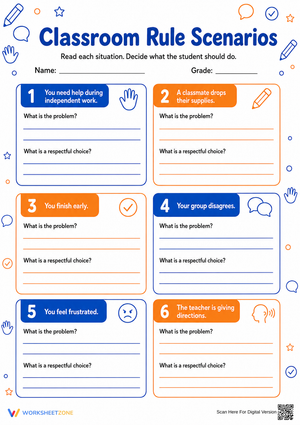
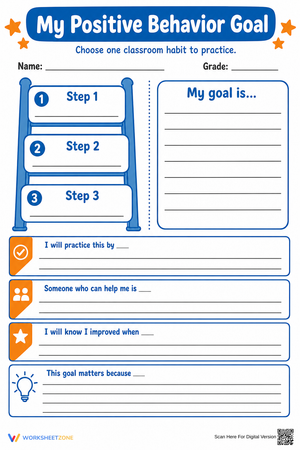
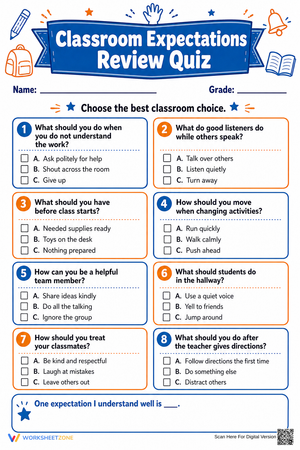
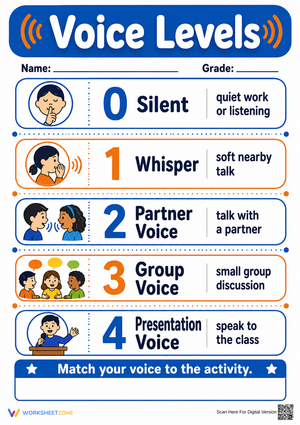
A rules poster works best as the centerpiece of a connected system rather than a lone sign. Voice level charts tell students how loud to be during independent work versus group projects. Behavior reflection sheets give a student a calm way to think through a choice and a plan to reset. Routine checklists spell out the steps for arrival, transitions, and dismissal.
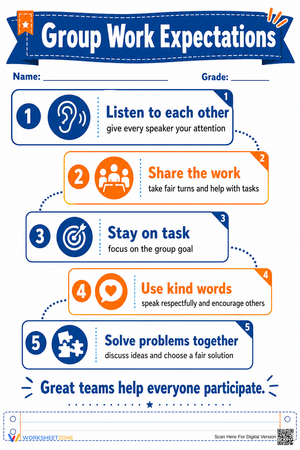
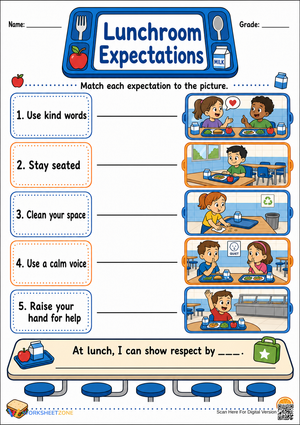
These pieces map onto the specific moments where elementary behavior tends to wobble: morning routines, hallway travel, the lunchroom, group work, and end-of-day procedures. When the poster sets the broad expectations and the supporting templates handle each transition, students get the same message in every part of the day instead of a new set of rules in every space.
Color-coding ties the system together visually. If the rules poster uses green for "ready" behavior, carry that same green onto the voice level chart and the routine checklists. Students start to read the color as fast as the words, which speeds up transitions and lowers the number of verbal reminders you have to give. A consistent palette across printed pieces turns a stack of separate worksheets into one recognizable language.
The Zero-Prep Advantage in the Back-to-School Rush
The first weeks of school are the busiest planning stretch of the year. Between rosters, assessments, and parent communication, designing a rules poster from scratch is the kind of task that quietly eats an afternoon. A ready-to-print template removes that step entirely: you choose the version that fits your grade, print, and post. The Worksheetzone regulation templates are formatted to print cleanly on standard paper, so there's no resizing or layout fiddling before the poster goes up.
That time savings has a real classroom payoff. The hours you don't spend formatting are hours you can put into teaching the expectations, practicing routines, and watching how your specific group responds. A poster only works if students learn it, and zero-prep formatting frees you to invest in the part that actually changes behavior.
Frequently Asked Questions
1. What should a printable classroom rules poster include for elementary students?
Three to five positively phrased rules, each paired with an icon or color cue. Use action language such as "We listen when others speak," and keep the visual simple enough for pre-readers to interpret on their own.
2. How do teachers introduce a classroom rules poster at the start of the year?
Teach it like a lesson on day one. Read each rule, model the behavior, and let students practice the routine. In grades 3-6, invite the class to help word the rules so they share ownership.
3. How does posting classroom rules support PBIS?
A poster is a core Tier 1 support that makes universal expectations visible to every student. The Center on PBIS links fidelity of schoolwide positive behavior support to stronger grade-level benchmark performance. The display gives staff a shared reference and gives students a constant, predictable cue about what's expected.
4. Which grade levels benefit most from a printed rules display?
Every K-6 grade benefits, but the format should shift. K-2 needs picture-heavy posters with few words, while grades 3-6 can handle longer, student-authored expectations with more detail.
5. How can a rules poster be used beyond the first week of school?
Revisit it after breaks, at the start of new units, and whenever routines slip. A mid-year reprint and quick review keeps the expectations active through spring instead of fading after August.












 Interactive Worksheet Maker
 Quiz Maker
 Word Search Maker
 Crossword Puzzle Maker
 Word Scramble Generator
 Sentence Scramble Generator
 Handwriting Worksheet Generator
 Name Tracing Generator
 Fill In The Blank Generator