Why a Back to School I Spy Worksheet Solves a Real First-Week Problem
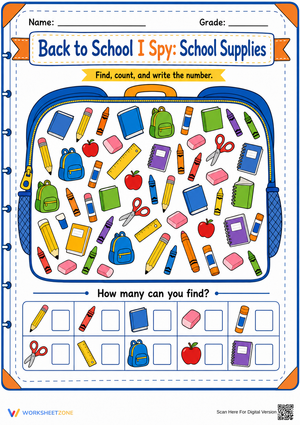
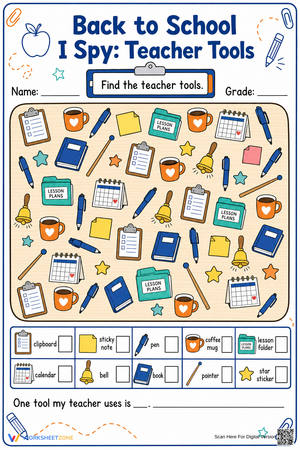
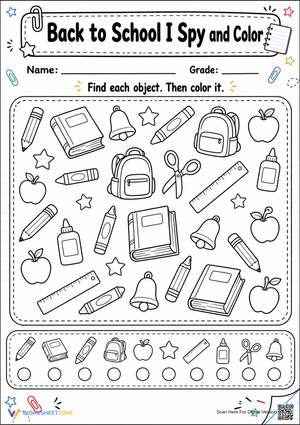
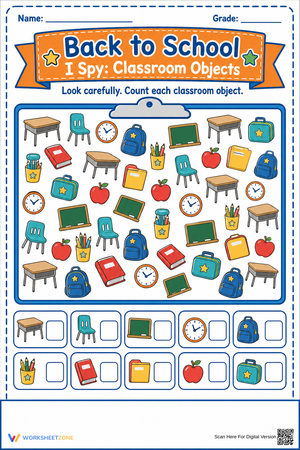
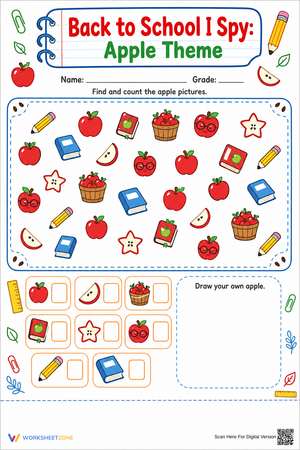
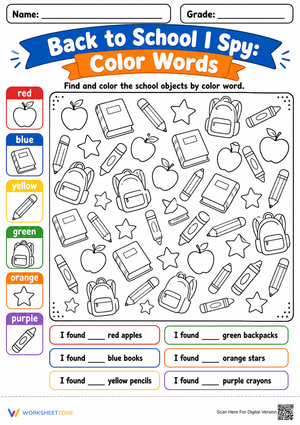
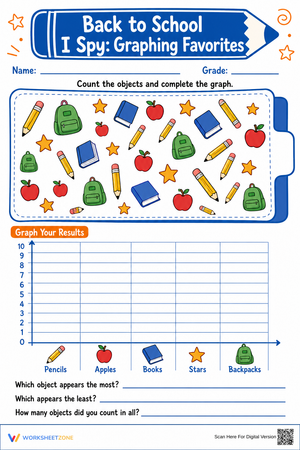
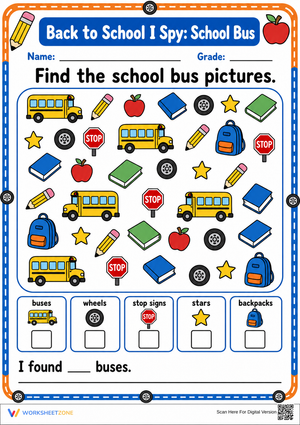
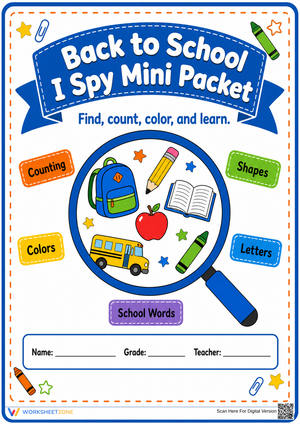
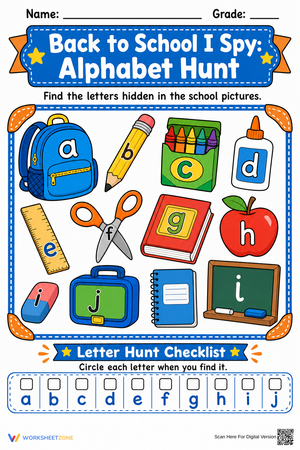
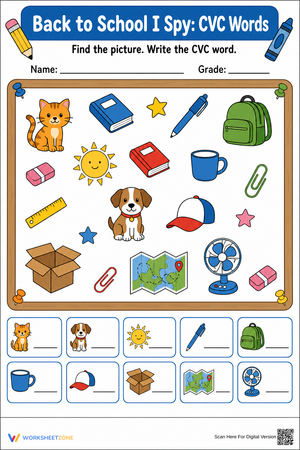
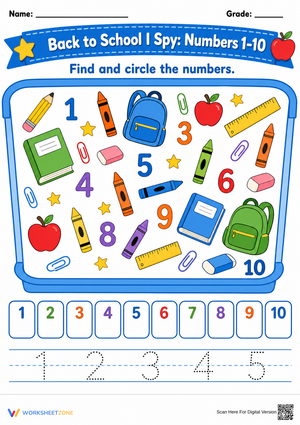
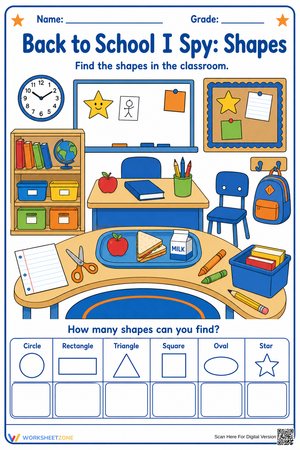
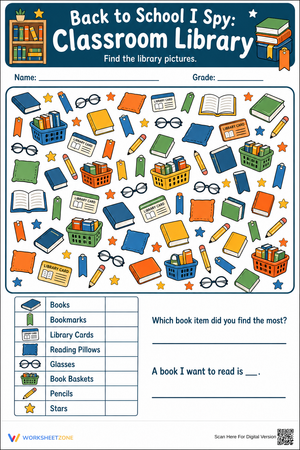
The first days of a new school year rarely go according to a tidy schedule. Enrollment paperwork, supply sorting, and one-on-one conversations with families all pull a teacher's attention away from whole-group instruction. A back to school i spy worksheet gives K-2 students something meaningful to do while that logistical work happens in the background. Because it is a single printable page, there is nothing to assemble, laminate, or explain at length. Students can pick it up, look at the picture, and start counting or circling items almost immediately.
This matters most on day one, when routines have not been established yet and attention spans are short. An I Spy sheet does not require multi-step directions or a partner, so it works equally well as an individual seat activity or a quiet opener while the teacher takes attendance.
What Skills Students Actually Practice
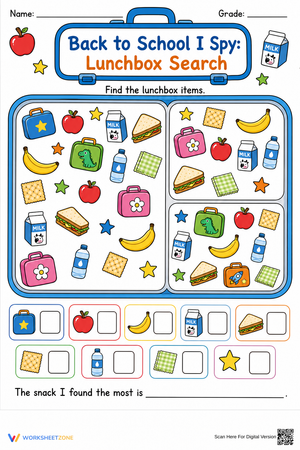
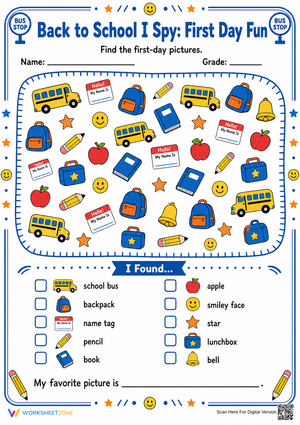
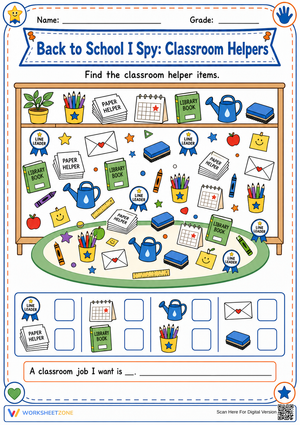
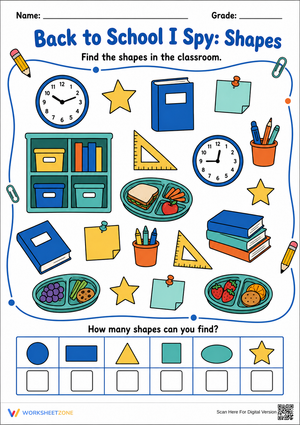
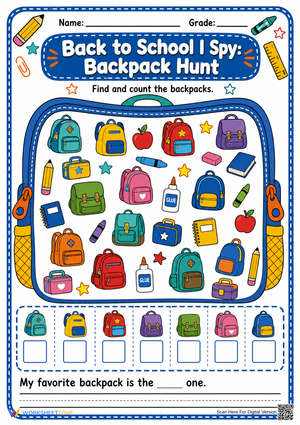
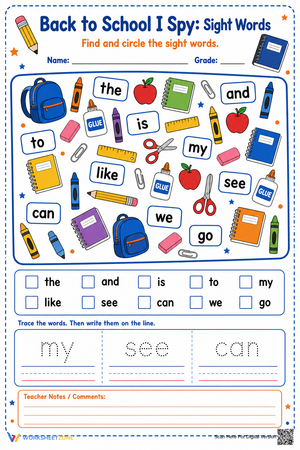
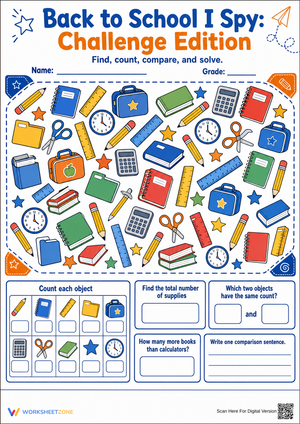
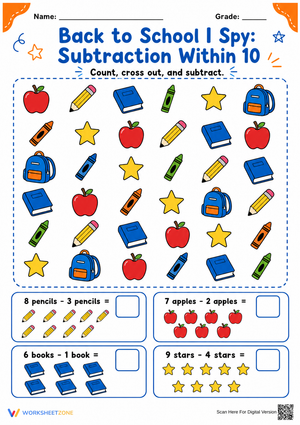
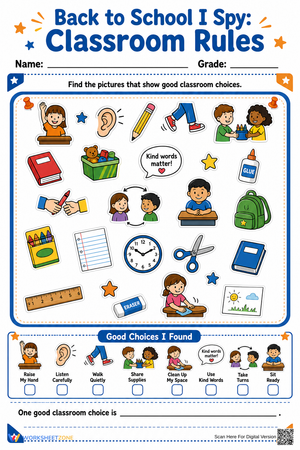
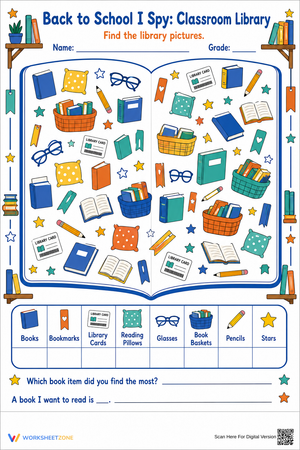
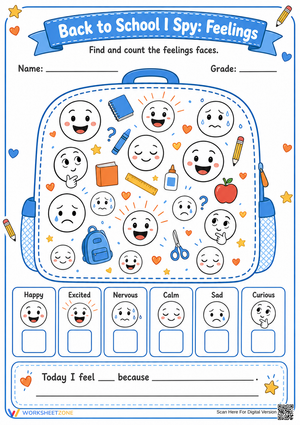
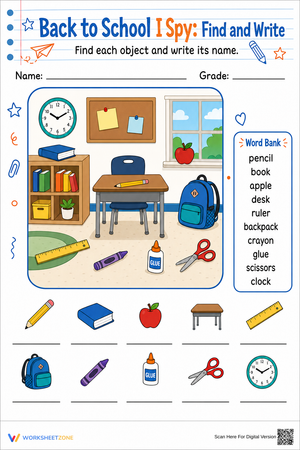
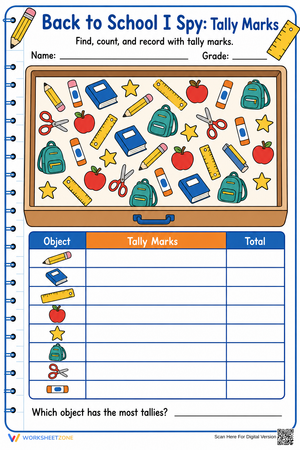
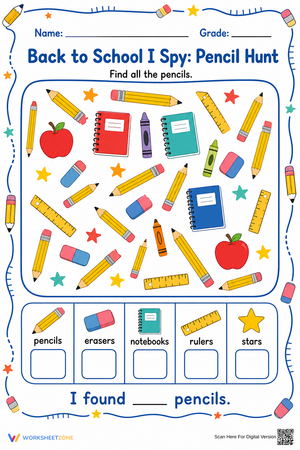
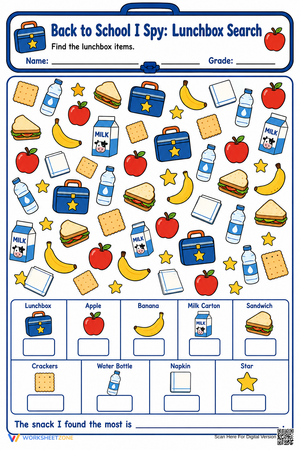
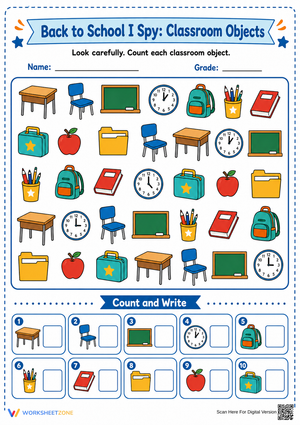
Although the format looks simple, a back to school I Spy sheet asks students to use several early academic skills at once. They scan a busy scene, sort objects into categories, compare quantities, and often record a number or a word next to each item they find. This combination of visual discrimination and counting is why many kindergarten and first-grade teachers treat I Spy pages as an informal diagnostic: a student who struggles to locate and count small objects on a cluttered page is often showing the same visual tracking difficulty that later shows up in reading line-by-line text, so it is worth a quick note for future small-group planning.
Because the activity does not require reading fluency to complete, it is accessible to students who are still building letter and sound knowledge, while still offering a stretch task for students who can write full number sentences or label items with words.
Using I Spy as a First-Day Icebreaker
Many teachers open the first morning with the I Spy sheet on each desk before students even find their seats. It gives new students something familiar and low-pressure to focus on instead of standing awkwardly by the door. Because everyone works at their own pace, there is no risk of a student finishing before instructions are even given.
A short section titled Classroom Implementation below outlines how to fold this into a full first-week routine rather than a one-off filler task.
Pairing I Spy With a Classroom Scavenger Hunt
Once students finish the printed I Spy page, many teachers extend the activity into a live classroom scavenger hunt. Instead of finding pictures on paper, students look for the same categories of objects around the actual room: pencils, books, a clock, a calendar. This turns a static worksheet into a chance to learn where classroom supplies live, which cuts down on interruptions later in the week when students ask where to find scissors or extra paper.
This pairing also gives the teacher a natural reason to walk the room with students, pointing out labeled bins, the line-up spot, and the classroom job chart, all while the I Spy theme keeps the tone playful rather than lecture-style.
Morning Work and Transition Uses Beyond Day One
Because I Spy sheets are self-contained, they are not limited to the very first morning. Teachers commonly keep a small stack on hand for the rest of the first week, using them as morning work while attendance and lunch counts are taken, as a calm-down activity after recess, or as an early-finisher option during centers. This flexibility is part of why the format stays popular well past the opening day, especially in classrooms where routines are still being reinforced.
Differentiating I Spy for Mixed-Readiness Groups
A single I Spy page can support a wide range of readiness levels if a teacher plans two or three response options in advance. Students who are still learning number formation might simply circle each item they find. Students who are ready for more can write the total count next to each category, and students working above grade level can add a simple sentence naming their favorite item on the page. None of these variations require a different worksheet, only a different expectation for how students respond, which keeps prep time low even with a mixed classroom.
Classroom Implementation
To get the most out of a back to school I Spy worksheet, plan its use before the first bell rings.
- Place the worksheet and a pencil on each desk before students arrive so it is the first thing they see.
- Give a thirty-second verbal direction only: find and count the items, no reading required.
- Use finishing time to call small groups for individual check-ins or supply collection.
- Save a few copies for the rest of the week as morning work or an early-finisher task.
- Debrief as a whole group afterward by asking students to share one item they found, turning a quiet activity into a quick community-building moment.
Keeping the activity this simple protects the teacher's attention for the real first-week priorities: greeting families, confirming enrollment details, and helping students find their cubbies and seats.
Frequently Asked Questions
1. What grade levels are back-to-school I Spy worksheets best suited for?
They are most commonly used in K-2 classrooms, where counting, visual discrimination, and vocabulary are still developing and reading independence is limited.
2. How long does a back-to-school I Spy activity typically take in class?
Most students complete a single page in five to ten minutes, which makes it a good fit for the short windows available during first-week logistics.
3. Can I Spy worksheets be used for early finishers or classroom transitions?
Yes. Because the sheet is self-contained and does not need teacher guidance to complete, it works well as an early-finisher task or a calm transition activity after recess or lunch.
4. What skills do students practice with an I Spy back-to-school worksheet?
Students typically practice counting, sorting, comparing quantities, visual tracking, and early vocabulary as they scan the picture and record what they find.
5. How can teachers extend the I Spy activity into a full classroom scavenger hunt?
After finishing the printed page, students can search for the same categories of objects around the actual classroom, which doubles as a way to learn where supplies and classroom areas are located.












 Interactive Worksheet Maker
 Quiz Maker
 Word Search Maker
 Crossword Puzzle Maker
 Word Scramble Generator
 Sentence Scramble Generator
 Handwriting Worksheet Generator
 Name Tracing Generator
 Fill In The Blank Generator