


























Views
Downloads

Calligraphy Letter Tracing | Essential Grade 10-11 Practice
Paste this activity's link or code into your existing LMS (Google Classroom, Canvas, Teams, Schoology, Moodle, etc.).
Students can open and work on the activity right away, with no student login required.
You'll still be able to track student progress and results from your teacher account.
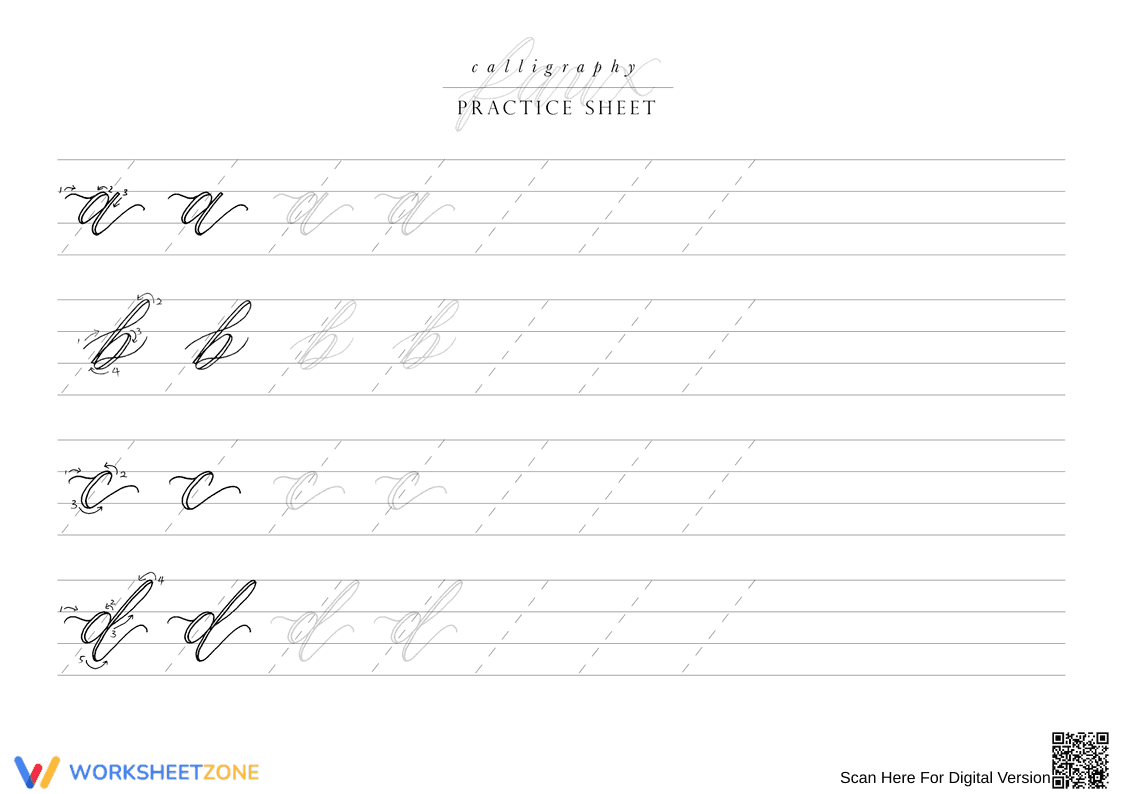
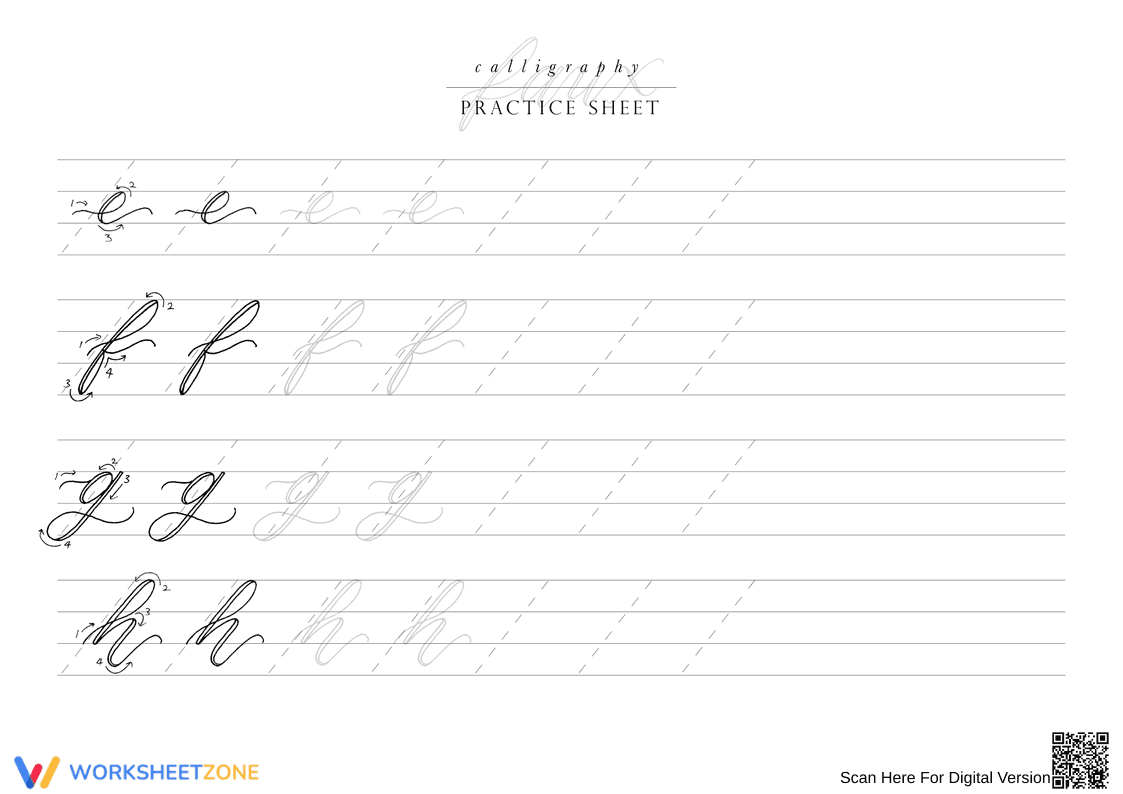
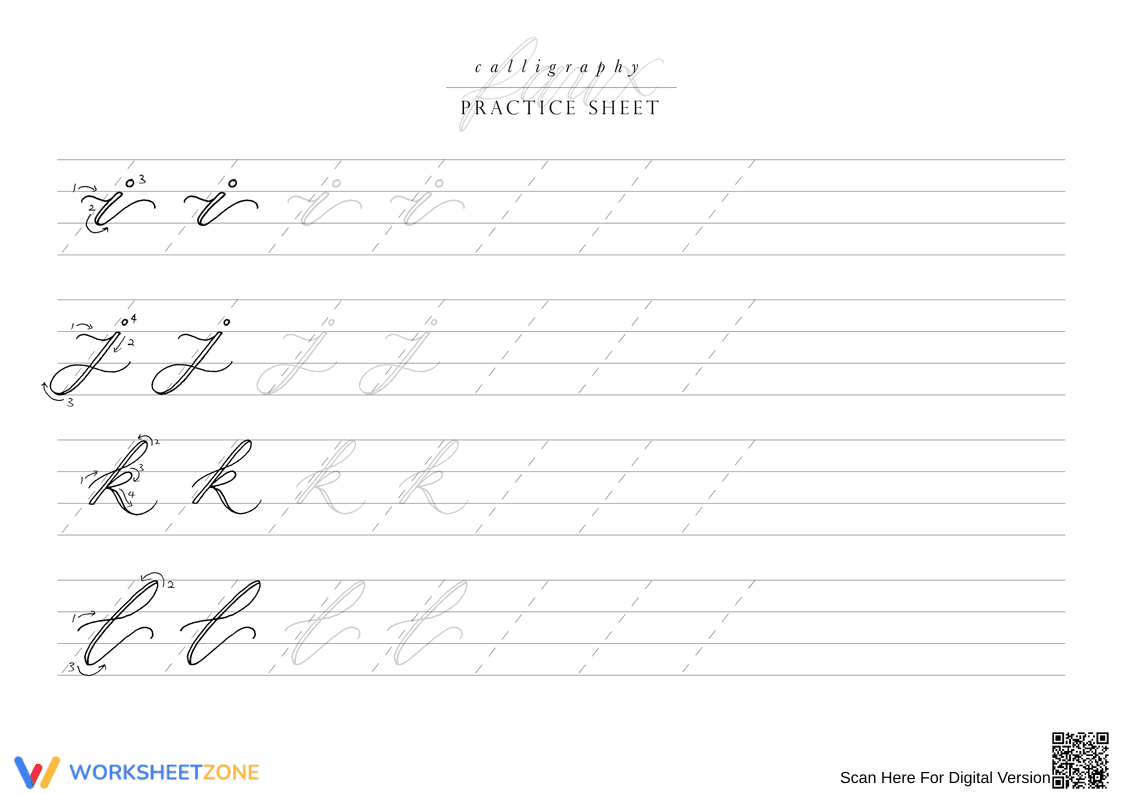
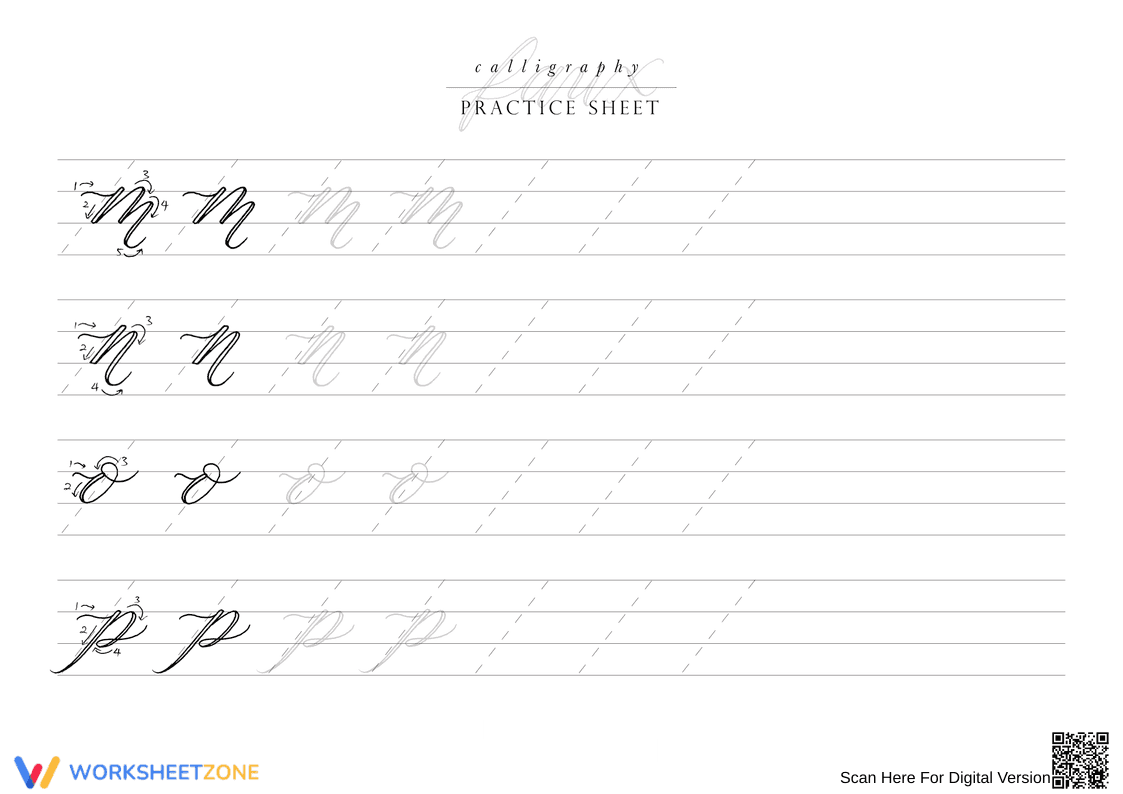
This Grade 10 and 11 calligraphy worksheet provides a structured approach to mastering the elegant Copperplate script. Students focus on precise letter formation and stroke pressure, leading to improved handwriting aesthetics and artistic expression. By following the numbered directional arrows, learners develop the muscle memory required for professional-grade calligraphy and formal cursive writing.
At a Glance
At a Glance
- Grade: 10-11 · Subject: Handwriting
- Standard:
CCSS.ELA-LITERACY.L.9-10.1— Demonstrate command of the conventions of standard English when writing- Skill Focus: Copperplate calligraphy formation
- Format: 1 page · 4 letter rows · No answer key · PDF
- Best For: Creative electives and handwriting improvement
- Time: 15–20 minutes
What's Inside
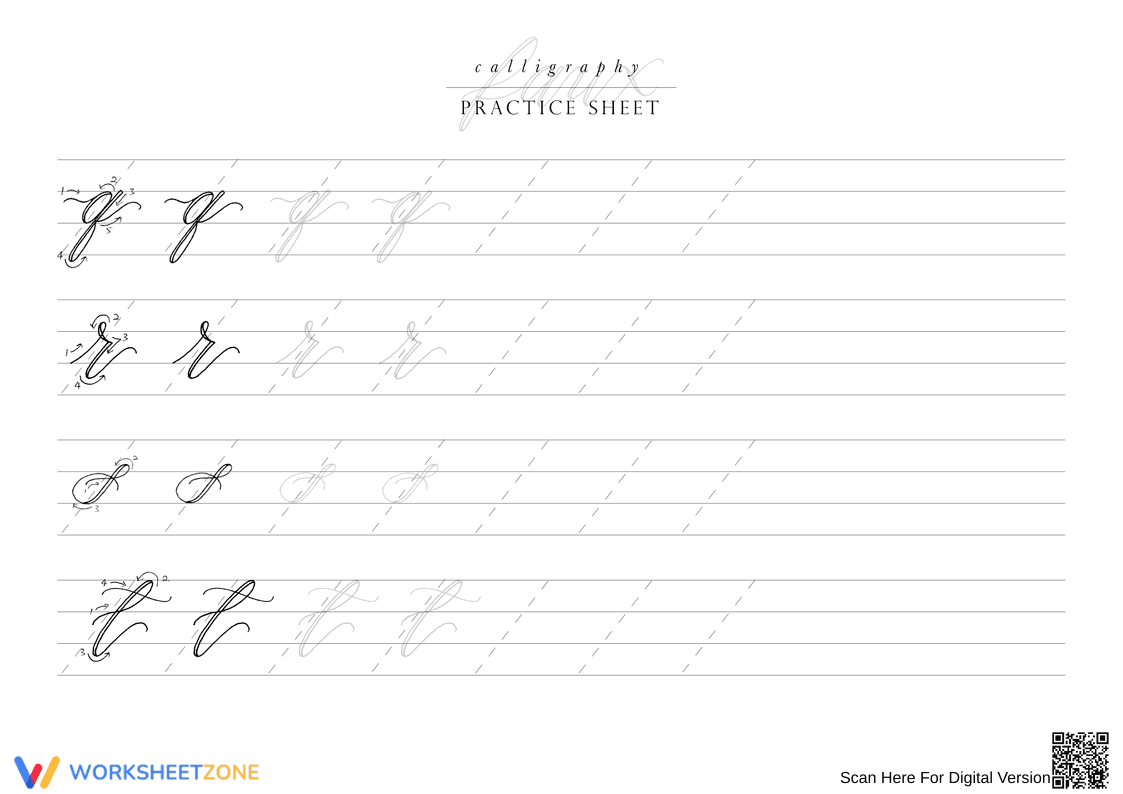
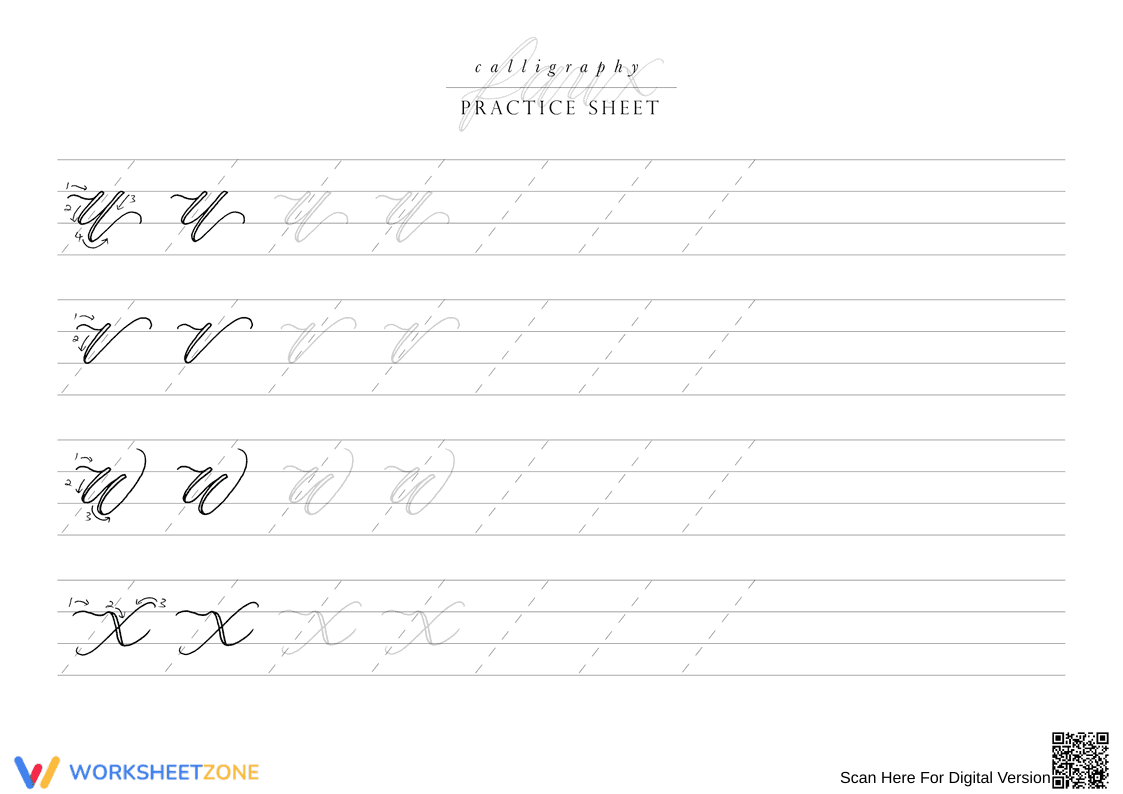
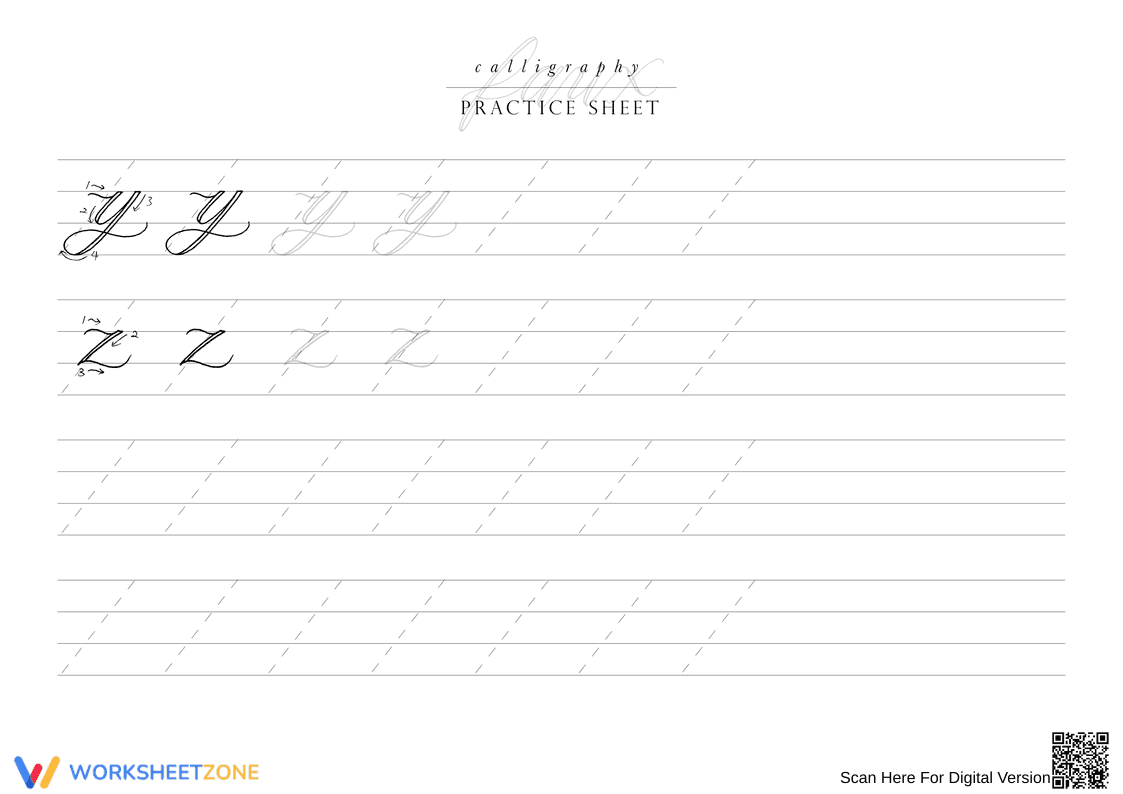
This single-page PDF features four distinct rows dedicated to the lowercase letters 'a' through 'd'. Each row includes a primary model with numbered stroke guides, two faded tracing examples for initial support, and ample blank slanted grid space for independent practice. The layout utilizes a 55-degree slant line to ensure consistent letter angle and professional spacing.
Skill Progression
- Guided Practice: Students begin by observing the primary letter model, using the numbered arrows to identify the correct sequence and direction of each pen stroke.
- Supported Practice: Learners trace two ghosted letter forms to stabilize their hand movements and internalize the specific curves and loops of the Copperplate style.
- Independent Practice: Students complete the row by free-handing the letters on the slanted grid, maintaining the 55-degree angle without direct tracing support.
This worksheet utilizes a gradual-release methodology, moving from high-support modeling to independent execution to ensure technical precision.
Standards Alignment
The primary standard is CCSS.ELA-LITERACY.L.9-10.1, which requires students to demonstrate command of the conventions of standard English grammar and usage when writing. While often applied to syntax, this standard encompasses the physical legibility and formal presentation of written work. This resource also supports fine motor development and artistic literacy. Both standard codes can be copied directly into lesson plans, IEP goals, or district curriculum mapping tools.
How to Use It
Use this worksheet during the instructional phase of a creative writing or art elective. It serves as an excellent warm-up activity to settle students and focus their attention on detail. For formative assessment, observe the student's grip and the consistency of their downstrokes versus upstrokes. Expect students to spend approximately 15 to 20 minutes to complete the page with high quality.
Who It's For
This resource is designed for high school students in Grades 10 and 11 who wish to refine their personal handwriting or explore formal lettering. It is particularly effective for students who benefit from tactile, repetitive tasks to improve focus. Pair this worksheet with a dedicated calligraphy pen or a fine-liner marker to achieve the best visual results.
According to the Fisher & Frey (2014) framework for gradual release of responsibility, structured tracing activities provide the necessary scaffolding for complex motor tasks like calligraphy. This worksheet aligns with `CCSS.ELA-LITERACY.L.9-10.1` by focusing on the physical conventions of writing, which are foundational to clear communication. Research from the RAND AIRS 2024 report suggests that high school students who engage in aesthetic writing practices often show increased engagement with literacy tasks and improved fine motor control. By providing 4 specific letter models with directional guides, this resource ensures that students move from guided observation to independent mastery within a single session. The inclusion of slanted grid lines reflects best practices in handwriting instruction, allowing for the 55-degree consistency required in Copperplate script. This targeted practice is essential for developing the legibility and stylistic flair expected in advanced academic and professional correspondence.


