


























Views
Downloads

Grade 4 Faux Calligraphy — Printable No-Prep Worksheet
Paste this activity's link or code into your existing LMS (Google Classroom, Canvas, Teams, Schoology, Moodle, etc.).
Students can open and work on the activity right away, with no student login required.
You'll still be able to track student progress and results from your teacher account.
This printable faux calligraphy worksheet helps fourth and fifth-grade students develop precise fine motor control. By practicing foundational strokes with clear directional guides, learners build the muscle memory required to produce clear, beautifully styled lettering for special projects and everyday writing tasks.
At a Glance
- Grade: 4 · Subject: Handwriting
- Standard:
CCSS.ELA-LITERACY.W.4.4— Produce clear and coherent writing- Skill Focus: Faux calligraphy strokes
- Format: 1 page · 6 problems · No answer key · PDF
- Best For: Independent practice and art centers
- Time: 15–20 minutes
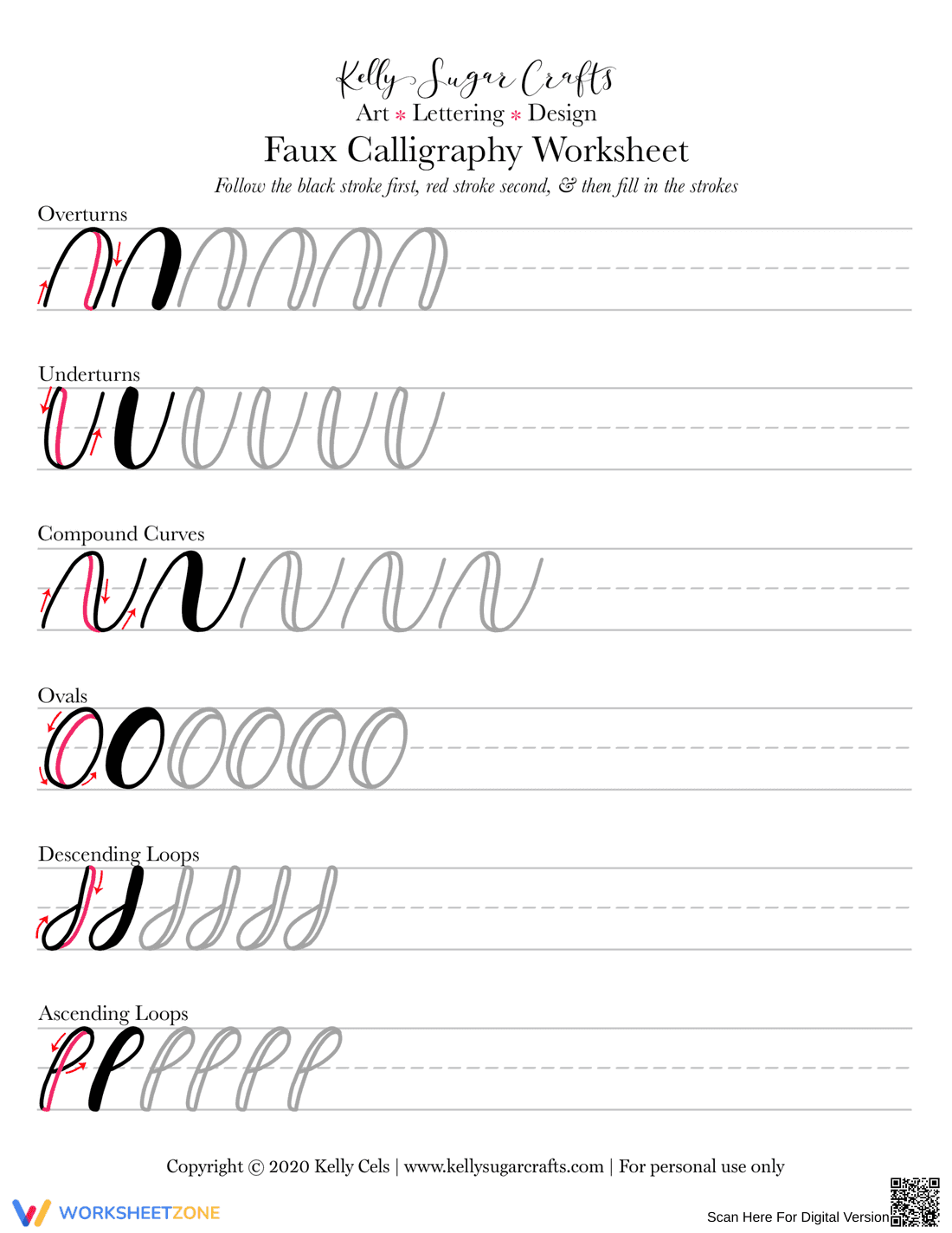
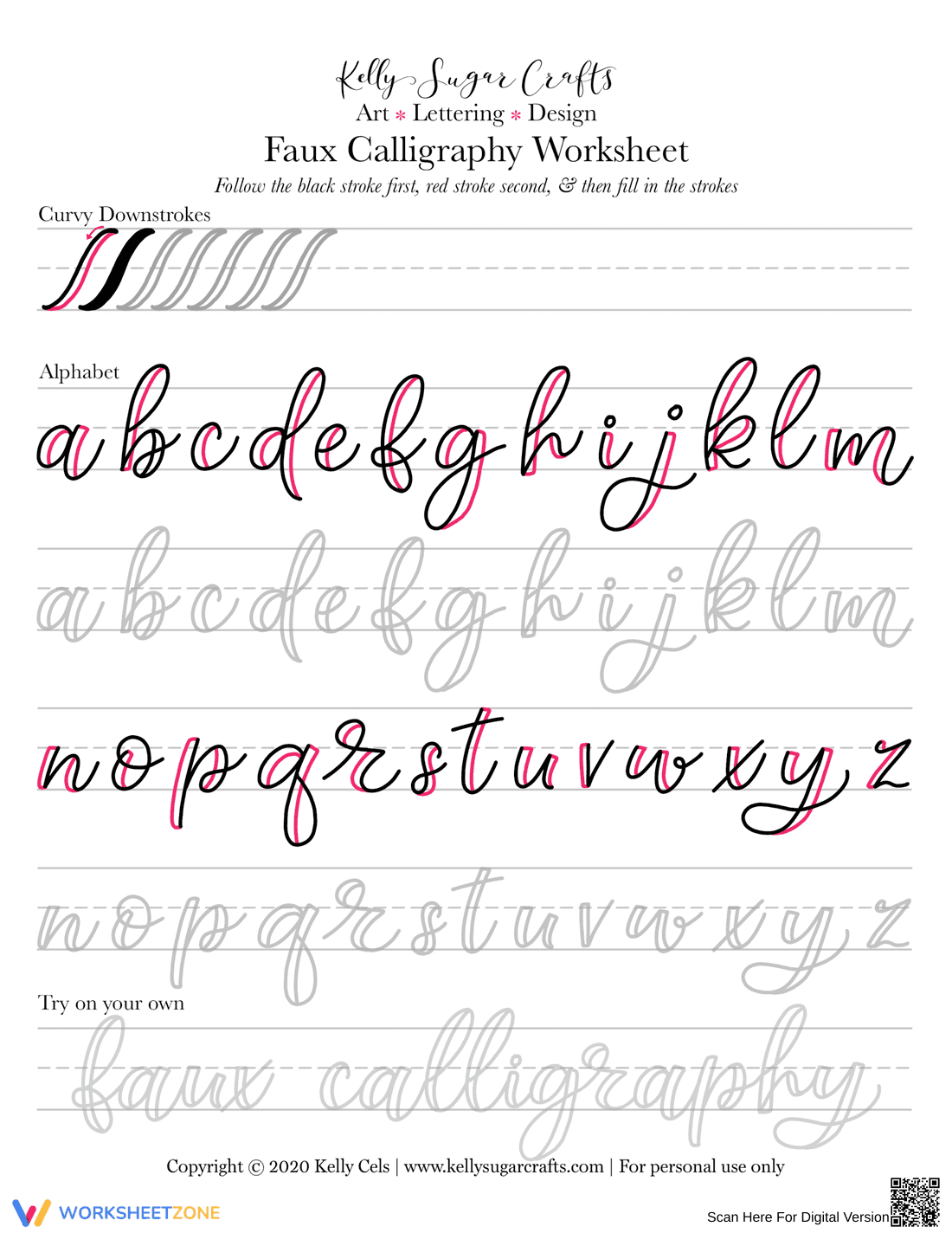
This single-page resource features six rows of tracing practice, each dedicated to a fundamental calligraphy stroke. Students work through overturns, underturns, compound curves, ovals, descending loops, and ascending loops. The worksheet includes explicit visual instructions showing the stroke sequence. Faded outlines provide immediate scaffolding, allowing students to trace before attempting shapes independently.
This resource is designed for a zero-prep workflow:
- Print (1 minute): Download the PDF and print a class set.
- Distribute (1 minute): Hand out worksheets with standard pencils or markers. No special pens needed.
- Review (2 minutes): Model the directional arrows on the board before students begin.
Total teacher preparation takes under two minutes, making this ideal for morning work or a substitute teacher plan.
This activity aligns with CCSS.ELA-LITERACY.W.4.4, requiring students to produce clear and coherent writing appropriate to task and purpose. Mastering these controlled strokes supports overall handwriting legibility and fine motor endurance. Both standard codes can be copied directly into lesson plans, IEP goals, or district curriculum mapping tools.
Integrate this worksheet as a calming transition activity after recess, allowing students to focus on mindful strokes to reset their attention. Alternatively, use it when students are preparing to publish final drafts of poems. As a formative assessment tip, observe students to ensure they follow the directional arrows rather than just coloring the shapes. Expected completion time is 15 to 20 minutes.
This worksheet is designed for fourth and fifth-grade students refining their artistic writing skills. It serves as an excellent differentiation tool for older students needing fine motor practice through a mature, aesthetic task. Pair this resource with a seasonal greeting card project where students apply their lettering techniques.
Developing legible and aesthetically pleasing handwriting remains a critical component of elementary education, directly impacting a student's ability to communicate effectively. This resource targets CCSS.ELA-LITERACY.W.4.4, focusing on the ability to produce clear and coherent writing through structured fine motor practice. According to Fisher & Frey (2014), explicit instruction in foundational skills, including handwriting and stroke sequence, significantly reduces cognitive load during complex writing tasks. When students do not have to expend excessive mental energy on letter formation, they can allocate more working memory to idea generation, vocabulary selection, and organizational structure. By practicing specific faux calligraphy strokes—such as compound curves and ascending loops—students build the automaticity and muscle memory necessary for fluent writing production, ultimately supporting broader literacy and communication goals across all academic disciplines.


