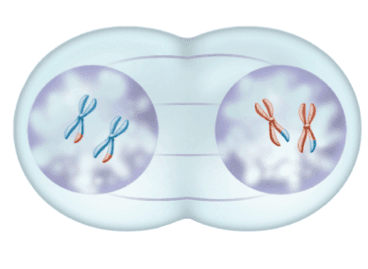
These mitosis printable worksheets for 9th grade give biology teachers a structured practice set that moves students through every stage of cell division—phase-identification diagrams, vocabulary matching, sequencing tasks, and comparison activities that push past rote labeling. The resources fit naturally into direct instruction, independent practice, and onion root tip lab units.
What the Set Covers
Each worksheet targets a specific layer of cell division knowledge rather than trying to cover everything at once. The core formats include:
- Phase-identification diagrams: Students label chromosomes, spindle fibers, centrioles, the cleavage furrow (animal cells), and the cell plate (plant cells) across prophase, metaphase, anaphase, and telophase.
- Sequencing tasks: Illustrated phase cards ask students to arrange stages in correct order and—on some versions—write a sentence explaining what structural change makes each transition necessary. That extra step forces causal reasoning, not just memorization.
- Vocabulary practice: Fill-in-the-blank and matching worksheets cover interphase (G1, S, and G2), sister chromatids, centromere, kinetochore, and cytokinesis—the terms most likely to appear on unit exams.
- Compare-and-contrast organizers: Graphic organizers set mitosis alongside meiosis, addressing chromosome count, number of daughter cells, genetic identity, and biological purpose. This is where most 9th graders need the most time.
- Plant vs. animal cell comparison: A dedicated worksheet highlights the cleavage furrow in animal cells versus the cell plate in plant cells, a distinction that often disappears from student responses by exam day.
The interphase worksheets give that stage its own coverage across G1, S, and G2—making clear that DNA replication happens before mitosis begins, not during it. Students who skip that distinction cannot correctly explain why daughter cells are genetically identical to the parent cell.
Mistakes Students Make That These Worksheets Help You Catch
The most consistent error we see in student work is treating interphase as dormancy. Students absorb the phrase "resting phase" early in the unit and carry that misconception forward. Every worksheet that touches interphase includes a prompt requiring students to name what specifically happens during S phase and distinguish it from G1 and G2. Addressing this before moving into the mitotic phases prevents a cascade of confusion about chromosome number in daughter cells.
The second recurring problem involves sister chromatids versus chromosomes. Before anaphase, a duplicated chromosome consists of two sister chromatids joined at the centromere—but students consistently label this structure as "two chromosomes." When anaphase pulls them apart, students then can't account for the chromosome count in each daughter cell. Worksheets that require explicitly labeling the centromere attachment point, and that ask students to count chromosomes at each stage, surface this error early. A third sticking point: students who handle animal cell diagrams comfortably often stall on plant cell division because the cleavage furrow they've memorized doesn't appear. The plant vs. animal comparison worksheet addresses that gap before the unit exam reveals it.
Recommended Lesson-Planning Strategies for These Worksheets
Phase-labeling diagrams work well as guided notes during initial instruction—students fill in structure names while the teacher walks through each phase on the projector, keeping cognitive load manageable during the first encounter with new vocabulary. Once direct instruction ends, a sequencing strip makes a clean five-minute consolidation activity: students arrange phases in correct order and justify the sequence before the bell. These mitosis printable worksheets for 9th grade also pair directly with onion root tip microscope labs. Teachers who assign the phase-identification worksheet before the lab find that students spend far more time analyzing slides and far less time asking what they're looking at, because the paper diagrams have already built the visual vocabulary the lab requires.
Vocabulary and fill-in-the-blank worksheets work as Monday warm-ups during the first week of the unit—seven or eight minutes at the start of class, done in pencil, checked against a projected answer key. The mitosis-versus-meiosis comparison organizer belongs two or three days before the unit exam, not the night before, so students have time to revisit anything the organizer reveals they've mixed up.
Standard Alignment
These resources connect to NGSS HS-LS1-4, which asks students to "use a model to illustrate the role of cellular division (mitosis) and differentiation in producing and maintaining complex organisms." In 9th-grade classrooms, that standard unfolds as a progression from phase identification toward explaining why the process matters for growth, tissue repair, and cancer. Short-answer questions embedded in these worksheets—such as "What would happen if spindle fibers failed to attach at metaphase?" or "Why do daughter cells carry the same genetic information as the parent cell?"—move students toward the analytical depth that standard expects. Resources that stay at diagram-only tasks cover only the surface of HS-LS1-4; pairing labeled diagrams with conceptual writing prompts is where these mitosis printable worksheets for 9th grade earn their instructional weight.
Adjusting the Worksheets for a Range of Learners
For students who struggle with the vocabulary load, the matching and fill-in-the-blank worksheets can be used with a reference diagram on the desk—that gives a visual anchor without removing the sorting and matching work. Providing a word bank on the fill-in-the-blank version and removing it for students ready for a harder challenge produces two differentiated tasks from the same worksheet without extra preparation time.
Students who move through phase identification quickly benefit most from the short-answer and comparison tasks, which demand explanation rather than recall. Asking them to predict what a cell with a faulty G1 checkpoint might do, or to explain how uncontrolled mitosis relates to cancer, extends the content without requiring a separate resource. For students working below grade level, the illustrated sequencing tasks reduce reading demand while still requiring genuine understanding of order and causation—the visual format does the heavy lifting so the thinking work remains. These mitosis printable worksheets for 9th grade give teachers several points of entry without needing a completely separate set for each tier of learner.
Frequently Asked Questions
What is the difference between mitosis and cytokinesis?
Mitosis refers specifically to nuclear division—the separation of duplicated chromosomes into two identical sets across prophase, metaphase, anaphase, and telophase. Cytokinesis is the subsequent division of the cytoplasm that produces two distinct daughter cells. Students frequently write that cytokinesis is a stage of mitosis; it is not. Worksheets that show the full cell cycle diagram with cytokinesis as a separate step following telophase correct that misunderstanding before it shows up on an exam.
Why do 9th graders study mitosis before meiosis?
Mitosis involves one round of division and produces two genetically identical daughter cells, making it the simpler baseline. Introducing it first gives students a working understanding of chromosome behavior and spindle mechanics before meiosis adds crossing over, independent assortment, and two rounds of division. Most students who struggle with meiosis have not fully consolidated what mitosis produces—reviewing the simpler process is often the fastest fix for meiosis confusion.
Can these worksheets function as a formative assessment tool?
Yes, and they are most effective as formative checks when the short-answer questions are included rather than skipped. Asking students to explain what happens if a phase is disrupted—or to compare the products of cell division in a plant cell versus an animal cell—reveals whether they understand the process or are working from surface memorization. Correct diagram labels do not always signal conceptual understanding; the explanatory questions expose the gap.
Do these worksheets work alongside microscope lab activities?
Onion root tip labs are the natural companion. Assigning a phase-identification worksheet before students look through the microscope consistently improves what students notice and record during the lab. The paper diagram gives them a mental image to search for, so time at the microscope becomes productive analysis rather than orientation. A structured observation recording sheet gives the lab itself the same focus the worksheets give independent practice.