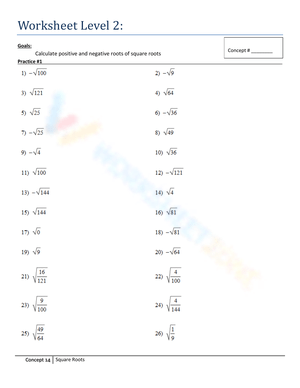
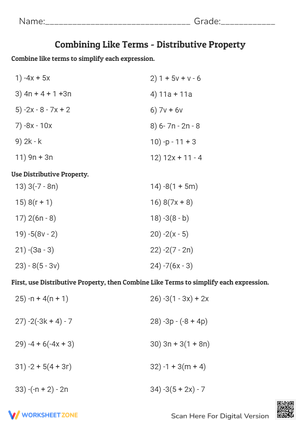
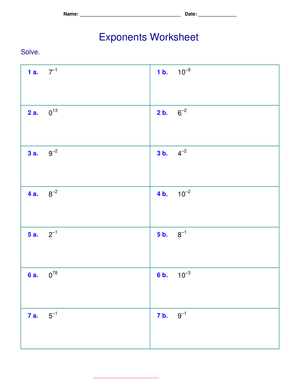
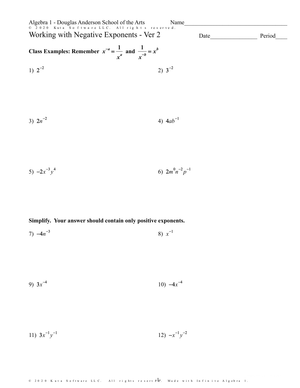
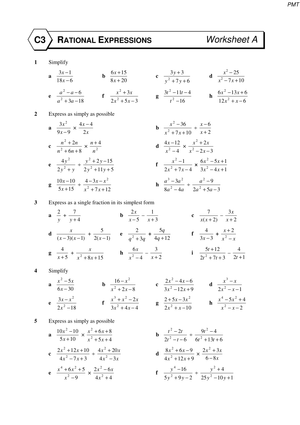
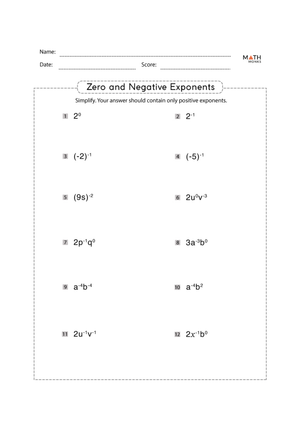
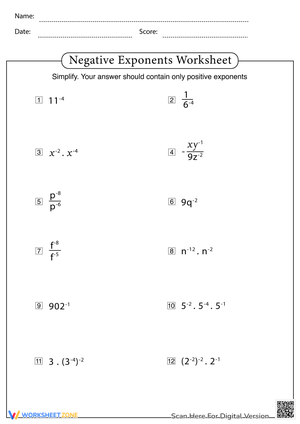
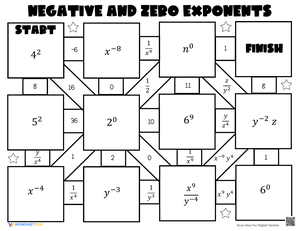
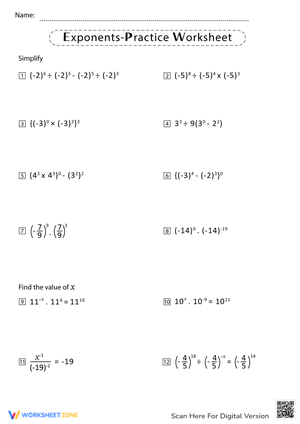
These 9th grade numbers printable worksheets give teachers a direct route to number fluency practice before Algebra 1 demands take over. The set covers real numbers, integer operations, order of operations, exponents, radicals, and scientific notation — the cluster of skills most 9th graders carry from middle school in a partially consolidated state. Each worksheet prints cleanly in black and white, carries directions students can follow independently, and leaves room for showing work.
The Number Skills Each Worksheet Addresses
Grade 9 number work occupies an awkward position in the curriculum. Students are expected to handle signed numbers fluently, but integer rules were formally taught in 6th and 7th grade — far enough back that gaps are common and easy to overlook until they surface inside an equation. The worksheets in this set address both the skills students need to consolidate and the ones they need to extend heading into algebra.
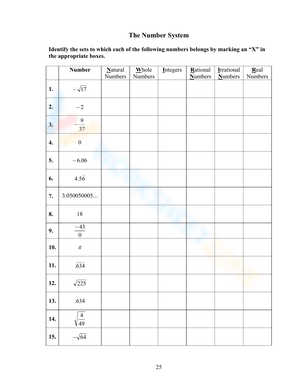
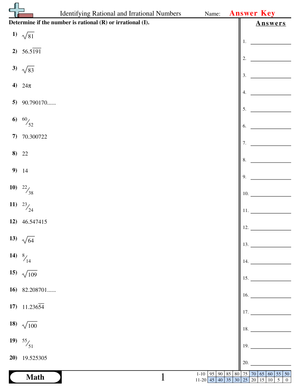
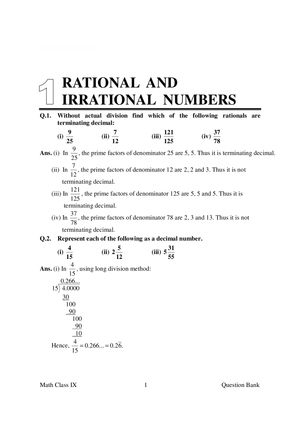
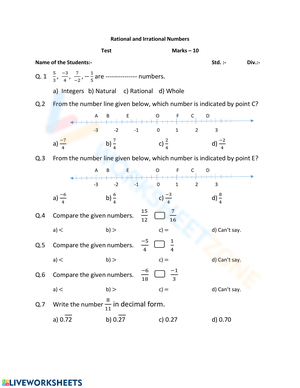
- Real number classification: sorting rational and irrational numbers, including radical expressions that simplify to integers
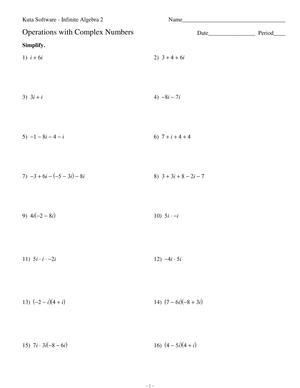
- Integer operations: adding, subtracting, multiplying, and dividing signed numbers across multi-step problems that require applying more than one rule
- Order of operations: evaluating expressions that combine parentheses, exponents, and negative values in the same problem
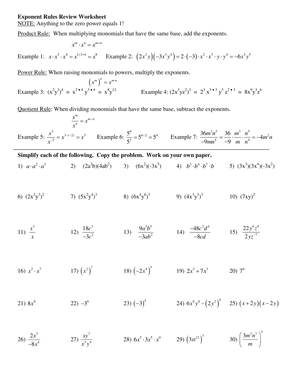
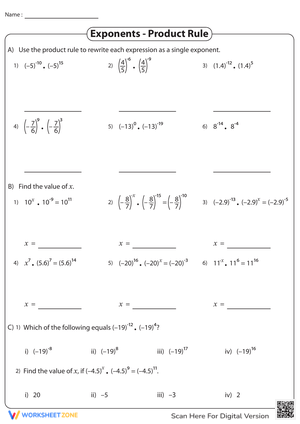
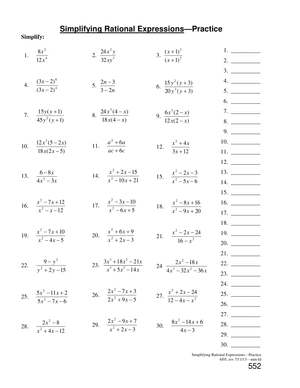
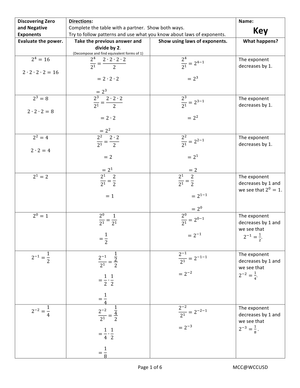
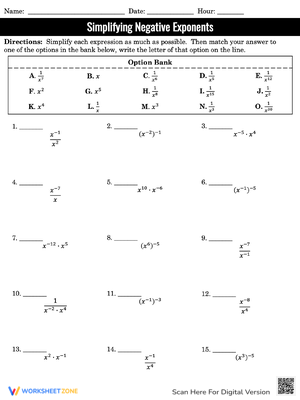
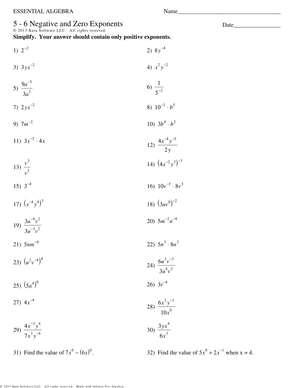
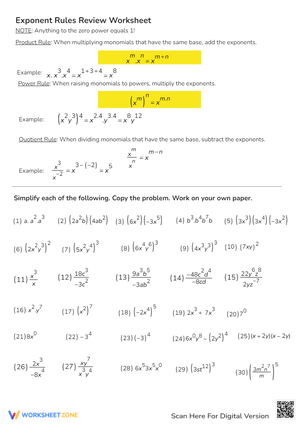
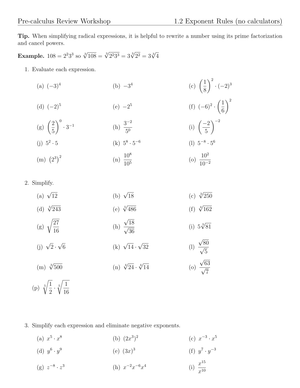
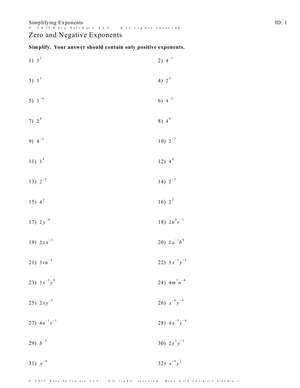
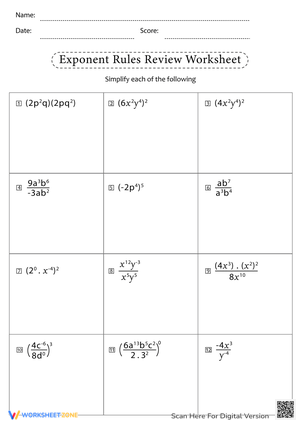
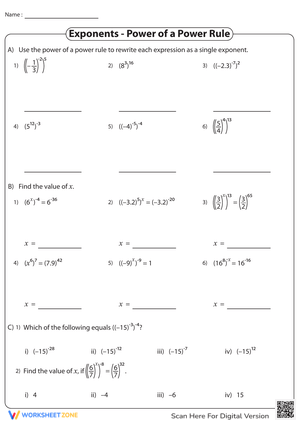
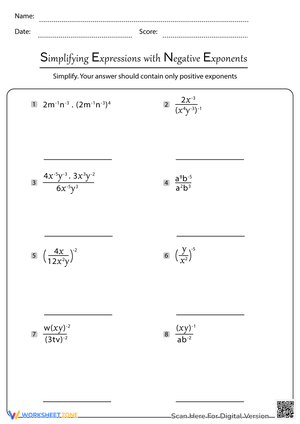
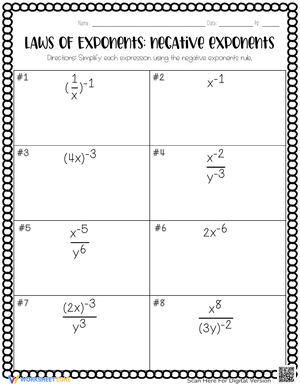
- Exponent rules: applying product, quotient, and power rules; simplifying expressions with positive and negative integer exponents
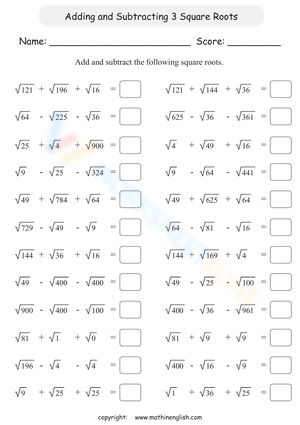
- Radicals: identifying square roots, simplifying radical expressions, and distinguishing perfect-square radicands from non-perfect-square ones
- Scientific notation: converting between standard and scientific form, comparing values, and computing with numbers written in scientific notation
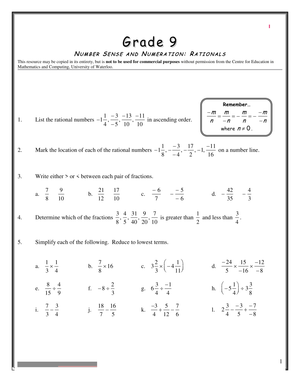
- Fractions and decimals: converting between forms and comparing magnitudes in multi-step contexts
Mistakes Students Make That These Worksheets Help You Catch
Real number classification trips students up in a specific, predictable way: they sort √9 as irrational because the radical symbol is present, without checking whether the expression simplifies to a whole number. The error is entirely symbol-driven. Students who catch it after a brief reminder will still repeat it on the next assignment if practice doesn't ask them to simplify before classifying.
Scientific notation produces a signature error with small numbers. A student who has the right idea will write 3.4 × 10⁴ for 0.00034 — the coefficient is correct, the base is correct, and even the exponent magnitude is right. Only the sign is wrong. Without targeted practice on converting numbers less than one, that error follows students into chemistry and physics work years later. The integer operation mistake that appears most often is subtraction of a negative: students evaluate 5 − (−3) as 2 because they see two minus signs and subtract. Order of operations produces a related trap — −3² becomes 9 in student work when the negative is applied before the exponent rather than after. These are diagnostic errors. Each one tells a teacher exactly where to spend the next five minutes of instruction.
Building These Worksheets Into Your Weekly Lesson Plan
Each worksheet is short enough to serve as a bell ringer. Four to six mixed-number problems take most 9th graders between six and nine minutes at the start of class — right-sized for the window between the bell and the beginning of direct instruction. For small-group reteaching, a focused worksheet on integer operations or scientific notation runs cleanly in a pull-aside block, and the answer key makes it possible to review errors while the work is still in front of the student rather than the next day.
These 9th grade numbers printable worksheets also hold up as homework at the start of Algebra 1 units. Assigning a worksheet on exponent rules the night before introducing variable expressions means students arrive the next day with a shared reference point instead of a cold review. Sub plans are another solid use: because each worksheet carries its own directions and works without teacher narration, a substitute can run number review without understanding the surrounding unit. A practical routine worth building: hand back two worksheets on the same topic across consecutive days — a single-skill version first, a mixed-practice version second. The topic stays consistent; the problem context shifts enough that students must apply the skill rather than repeat the same procedure.
Differentiating the Set for a Range of Student Readiness
The start of 9th grade is one of the harder moments to differentiate because the spread in number fluency is wide and the source is invisible — a student who can solve for x may still be subtracting negatives incorrectly, and that won't surface until a signed-number problem appears inside an equation. These 9th grade numbers printable worksheets support quiet differentiation without requiring separate lesson plans for each readiness level. Students who need focused review work through the single-skill items; students who are ready move into the mixed-practice problems at the bottom of the same worksheet. The topic is consistent across the room; the depth of practice adjusts by where a student stops.
For students who need more structure, adding a worked example at the top of the worksheet — handwritten on the master before copying — makes independent work possible without pulling a separate group. For students ready for extension, asking them to write and solve one original problem after finishing is a short challenge that doesn't require a separate resource. The white space each worksheet leaves for student work makes that kind of annotation easy to add directly to a printed copy before distributing.
Standard Alignment
The core standards for this content fall under the CCSS high school Number and Quantity domain. HSN-RN.A.2 — rewriting expressions involving radicals and rational exponents — connects directly to the exponent and radical practice in the set. HSN-RN.B.3, which addresses why sums and products involving irrational numbers behave as they do, underpins the classification tasks. The scientific notation worksheets reinforce 8.EE.A.3 and 8.EE.A.4, which are formally 8th-grade CCSS standards but appear consistently on Algebra 1 readiness checks because many students enter 9th grade without having fully consolidated place value and powers of ten together. In classroom terms, these standards mark the transition from treating operations as arithmetic procedures to understanding them as properties that hold across the real number system — which is the shift Algebra 1 requires from the first week.
Frequently Asked Questions
Where in an Algebra 1 sequence do these worksheets fit best?
Most teachers find them most useful in the first three to four weeks of school, before or alongside the opening unit on expressions and equations. Number fluency gaps don't always show up in algebra-specific problems — they surface in places like sign errors when combining like terms, or wrong answers on exponent problems that look like algebra but are really number rule breakdowns.
Do the worksheets come with answer keys?
Yes. Each worksheet includes a separate answer key. For intervention work, having the key in hand during the session allows a teacher to catch an error pattern after two problems rather than reviewing a completed set the following day.
Can these be used for standardized test preparation?
Number fluency questions — integer operations, exponent rules, and scientific notation in particular — appear on most state Algebra 1 assessments and on the SAT Math section. The 9th grade numbers printable worksheets in this set give teachers a no-prep way to keep those skills active throughout the year rather than returning to them only during test-prep weeks.
What should students do if they finish a worksheet early?
Each worksheet leaves blank space after the final problem. A quick written extension — "write your own example of a number that could be mistaken for irrational and explain how you know it isn't" or "create a scientific notation problem and solve it" — keeps early finishers working without requiring a separate resource. A handwritten note in the margin is enough.














 Interactive Worksheet Maker
 Quiz Maker
 Word Search Maker
 Crossword Puzzle Maker
 Word Scramble Generator
 Sentence Scramble Generator
 Handwriting Worksheet Generator
 Name Tracing Generator
 Fill In The Blank Generator




 BACK TOSCHOOL