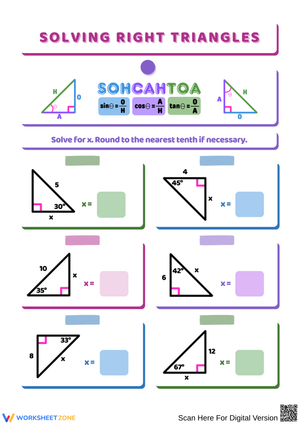
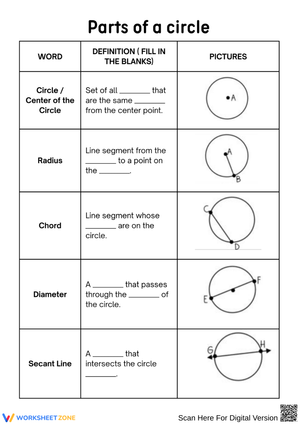
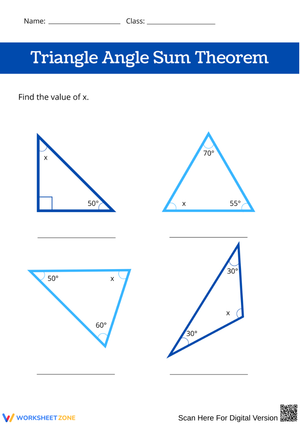
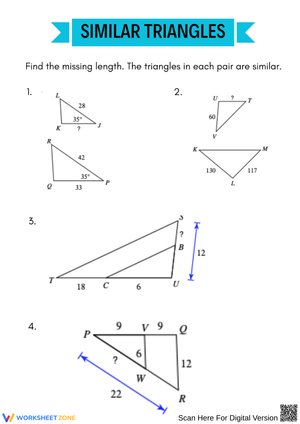
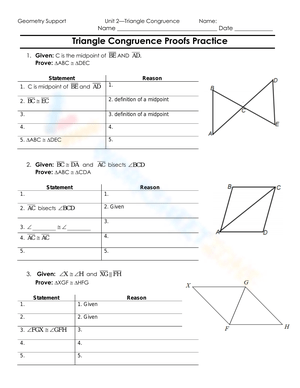
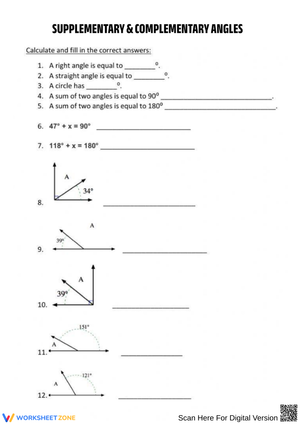
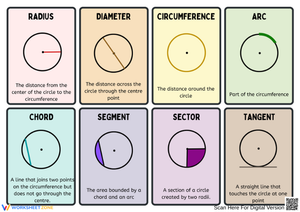
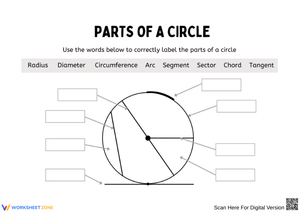
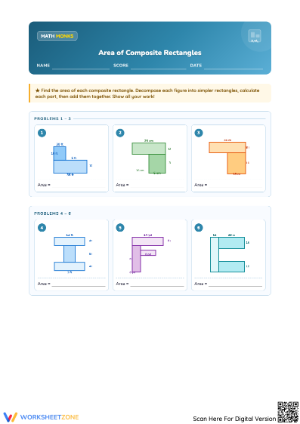
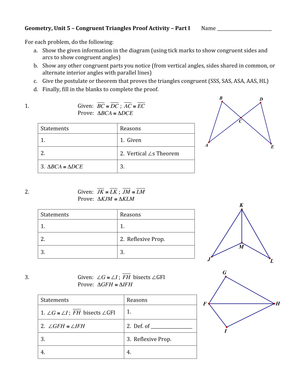
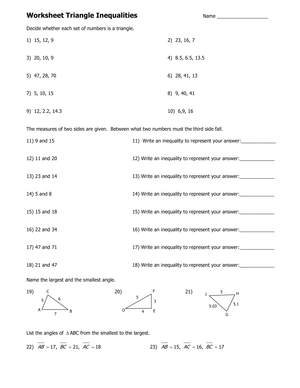
These shapes printable worksheets for 8th grade push geometry practice past basic identification — students classify figures using angle and side properties, analyze transformations on the coordinate plane, and apply volume formulas to 3D solids. Each worksheet addresses a specific geometry strand while staying clean enough to copy and hand out the same morning.
The Geometry Skills Each Worksheet Targets
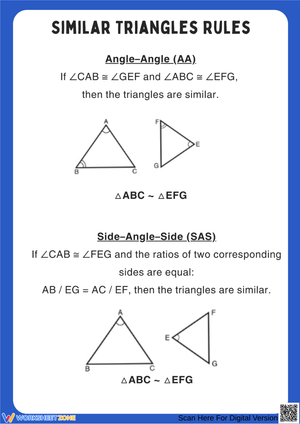
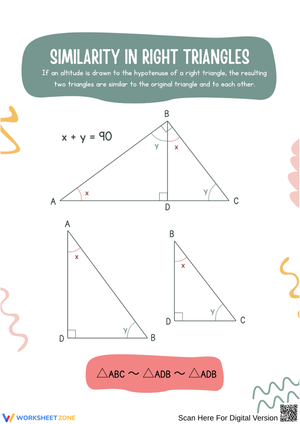
Eighth grade shape work is where geometry starts to feel algebraic. Students write equations to find missing angles inside polygons, compare ratios of corresponding sides to decide whether two figures are similar, and distinguish rigid transformations from those that change size. The worksheets address that more demanding version of geometry directly.
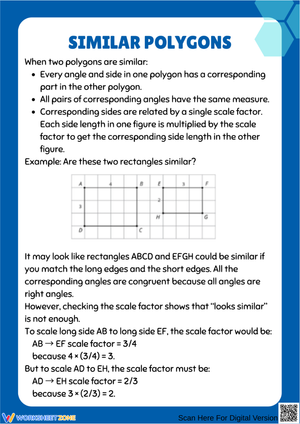
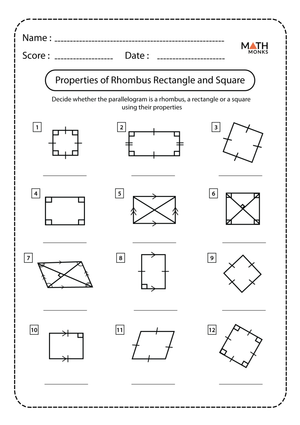
- Classifying 2D figures by properties: Students sort triangles and quadrilaterals by side lengths and angle measures, then justify why a figure can belong to more than one category — why a square is also a rectangle, or why an equilateral triangle is also equiangular.
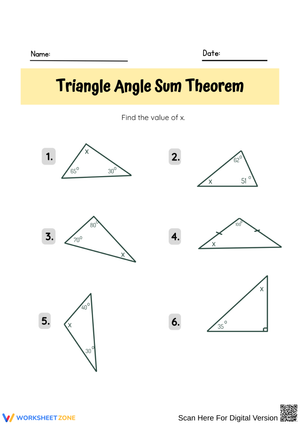
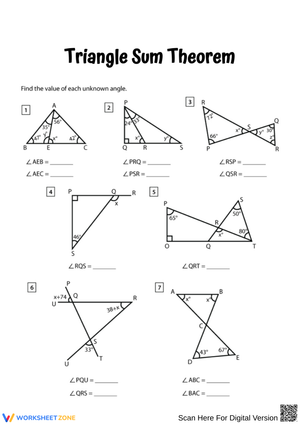
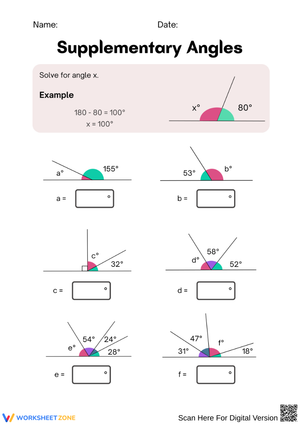
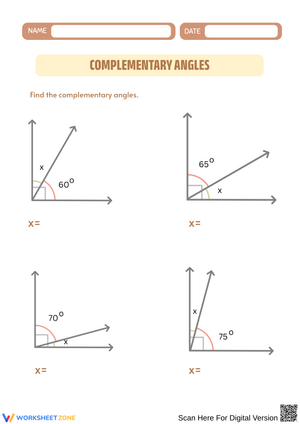
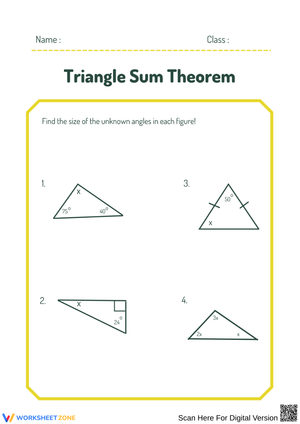
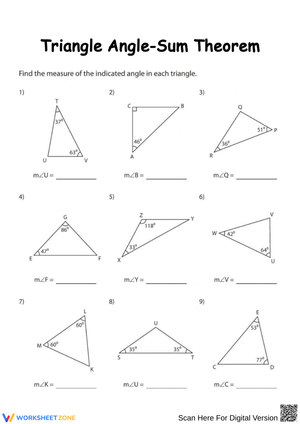
- Interior and exterior angle relationships: Each worksheet on angle sums requires students to set up and solve equations, not just state formulas. Missing angle problems range from single-step to multi-step across the set.
- Rigid transformations and dilations: Students graph translations, reflections, rotations, and dilations on the coordinate plane, describe what changed, and explain whether the transformation preserved congruence or produced a similar figure.
- Coordinate geometry with shapes: Several worksheets place figures on a grid so students can calculate side lengths, confirm parallel sides from slope values, or verify that a claimed square actually meets the definition using distance reasoning.
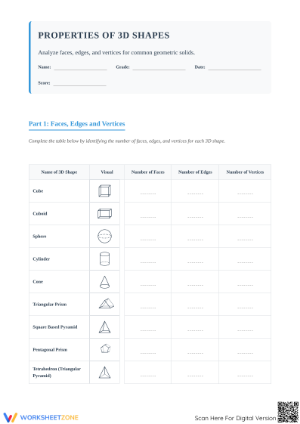
- 3D solids, nets, and volume: Worksheets on three-dimensional figures ask students to match solids to nets, identify cross sections, and apply volume formulas for prisms, cylinders, cones, and spheres — often inside real-world measurement contexts.
Mistakes Students Make That These Worksheets Help Teachers Catch
Transformation worksheets expose a specific confusion that affects most 8th graders at least once: treating a reflection over the y-axis and a 180-degree rotation as interchangeable. Both move a figure to what looks like the opposite region of the plane, so students working visually — rather than applying coordinate rules — often name the wrong transformation type. A worksheet that asks students to write the coordinate rule alongside the transformation name catches this pattern before it hardens into a habit.
Angle problems produce a different kind of error. Students who know that interior angles of a triangle sum to 180 degrees will misapply that fact when an exterior angle appears in the diagram. The most common mistake: a student adds the exterior angle to the two non-adjacent interior angles and sets the total equal to 180, rather than recognizing that the exterior angle alone equals the sum of those two remote interior angles. Worksheets that require students to label each angle as interior or exterior before writing any equation make the conceptual distinction visible on paper — which is where you need to see it during instruction, not on the test.
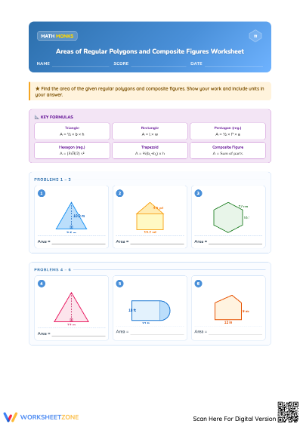
On volume worksheets, the substitution error is nearly universal. Students who can recite V = πr²h for a cylinder will plug in the diameter without halving it. The answer looks reasonable — it carries the right units, it is a real number — and students rarely catch the mistake without a deliberate checking step. Each worksheet in the volume strand includes a clearly labeled diagram that marks r separately from d, which forces the substitution decision to happen explicitly rather than by reflex.
Building These Worksheets Into a Lesson Sequence
The strongest placement for most of these worksheets is the structured practice window immediately after the teacher-led example — before students move to fully independent work. That 10 to 15 minutes is when you see who absorbed the explanation and who needs a second model. Circulating while students work through the worksheet gives you that diagnostic picture without a formal exit ticket.
Transformation worksheets work particularly well as Monday warm-ups when students have been away from coordinate reasoning for a few days. A two-problem opener — graph this reflection, name this transformation — takes about six minutes and tells you immediately whether the class needs a quick recap before anything new goes on the board. The shapes printable worksheets for 8th grade that cover transformations are compact enough to fit that warm-up slot without running past the start of the lesson.
For end-of-unit review, run three or four worksheets from different geometry strands as a short station rotation. One station targets angle relationships, one covers transformations, one addresses coordinate geometry, and one works through 3D volume. Students move every 10 to 12 minutes, check against the answer key at the end of the rotation, and arrive at the following day's review with a clear sense of which strand still needs attention. That structure turns the worksheets into evidence of student thinking rather than passive seatwork.
Standard Alignment
These worksheets address standards from the Common Core State Standards Geometry domain at Grade 8 (CCSS 8.G), organized across three clusters:
- 8.G.A (Understand congruence and similarity): Standards 8.G.A.1 through 8.G.A.5 cover transformation properties, angle relationships from parallel lines cut by a transversal, and criteria for triangle similarity and congruence. Worksheets on rigid transformations and angle sums address this cluster directly.
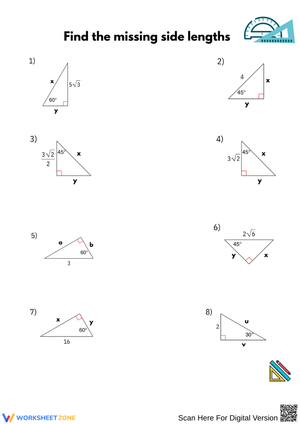
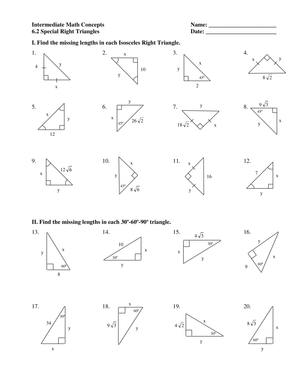
- 8.G.B (Understand and apply the Pythagorean Theorem): Standards 8.G.B.6 through 8.G.B.8 connect geometry to coordinate reasoning. Worksheets that ask students to calculate side lengths from coordinates draw on 8.G.B.8 specifically.
- 8.G.C (Solve real-world and mathematical problems involving volume): Standard 8.G.C.9 covers cones, cylinders, and spheres. Volume worksheets in the set address this standard through both abstract calculation and contextual problem types.
In most pacing guides, the shapes printable worksheets for 8th grade that target 8.G.A transformation standards appear in the second or third unit of the year, after the initial algebra-heavy focus on linear relationships. Volume worksheets from the 8.G.C cluster typically land near the end of the year or in a bridge unit. Keeping that sequence in mind helps teachers place each worksheet where it fits the current instruction rather than pulling geometry practice at random.
Adjusting the Set for Students at Different Points in the Unit
The range in geometry readiness inside a typical 8th grade class is wider than most curricula acknowledge. Students who are still uncertain which quadrant a negative x-coordinate places a point in cannot access a dilation worksheet without additional support. At the same time, students who apply coordinate rules fluently may be ready to reason about sequences of transformations or write informal justifications for similarity arguments. Using an identical approach for both groups slows one and frustrates the other.
One adjustment that does not require rewriting the entire worksheet: alter the starting conditions rather than the task itself. For students who need more support, pre-label the coordinate axes, mark one key point on the diagram, or include a completed first problem as a worked reference. For students who are further along, remove the reference example and replace it with an extension prompt — ask them to find a different transformation sequence that produces the same image, or to determine whether a given pair of figures could be similar at all and explain their reasoning in writing.
On angle worksheets, providing the equation already set up — leaving students to solve rather than construct — allows students who are not yet fluent in multi-step algebra to focus on the geometric relationship without losing the thread in equation-writing. That adjustment takes about 30 seconds per worksheet to make on a printed copy and keeps the class working on the same geometry concept at the same time.
Frequently Asked Questions
What geometry topics do these worksheets address?
The set covers the full range of 8th grade shape work: classifying 2D figures by angle and side properties, setting up and solving missing angle equations in polygons, graphing and describing transformations, connecting shape reasoning to coordinate geometry, and applying volume formulas to 3D solids including cones, cylinders, and spheres. The worksheets span both the 8.G.A transformation cluster and the 8.G.C volume standard.
Do the worksheets come with answer keys?
Each worksheet includes a complete answer key. For multi-step problems — particularly those involving angle equations or coordinate transformations — the keys show the solution process, not just the final answer. That matters during review: seeing where the calculation went off track is more useful than simply confirming the final number is wrong.
Are these appropriate for 7th graders working ahead or 9th graders who need a review?
The content is calibrated specifically to 8.G domain standards. Students finishing 7th grade geometry will find the classification and angle worksheets accessible, but transformation and dilation work assumes coordinate-plane fluency that most 7th graders are still developing. For 9th graders bridging into a formal high school geometry course, the shapes printable worksheets for 8th grade on transformations and 3D solids offer solid review of middle school geometry before more proof-based work begins.
Do these worksheets need to be used in a specific order?
Every worksheet in the set is fully standalone. You can pull a transformation worksheet for a warm-up block, assign a volume worksheet during a 3D solids unit, and return to an angle relationship worksheet during spiral review without following any particular sequence. Nothing in each worksheet assumes the student has completed the others first.













 Interactive Worksheet Maker
 Quiz Maker
 Word Search Maker
 Crossword Puzzle Maker
 Word Scramble Generator
 Sentence Scramble Generator
 Handwriting Worksheet Generator
 Name Tracing Generator
 Fill In The Blank Generator