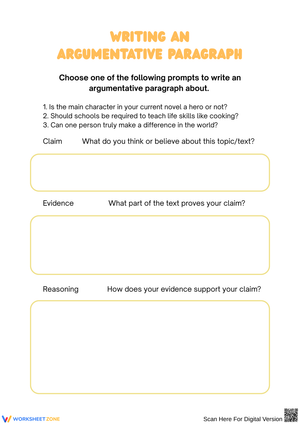
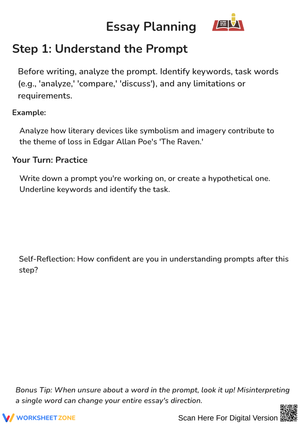
These 7th grade nonfiction writing worksheets resources give middle school ELA teachers printable, targeted practice for every stage of informative writing — from prompt analysis through revision. Each worksheet addresses one writing move, so students aren't managing planning, drafting, and editing simultaneously.
What Students Practice
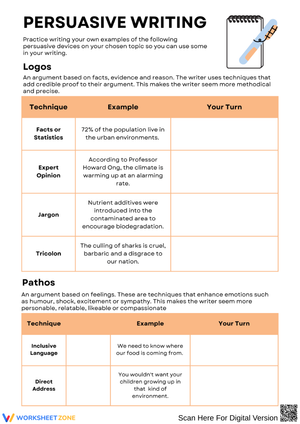
At seventh grade, informative writing requires more than recalling facts. Students need to select relevant evidence, explain how it supports a point, maintain a formal register, and organize ideas so a reader can follow the logic without assistance. These worksheets address each of those behaviors separately before asking students to combine them.
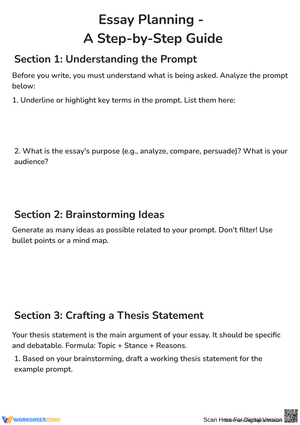
- Prompt analysis: Students mark the topic, task, and audience before writing anything.
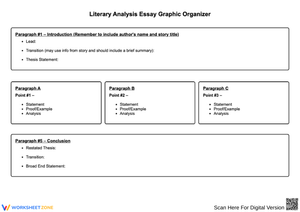
- Prewriting and organization: Students sort ideas into a labeled structure — introduction, body paragraphs, conclusion — sized to the prompt.
- Evidence selection: Students read a short nonfiction passage and identify which details genuinely support the topic, not merely which ones appear nearby in the text.
- Evidence explanation: Students write the sentence that tells a reader why a detail matters, not just what it says. This move gets its own worksheet because it is the one most seventh graders skip.
- Transitions: Students rewrite choppy paragraphs using connective language that signals addition, contrast, cause, or conclusion.
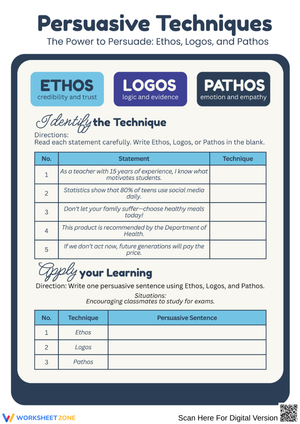
- Formal language: Students swap casual phrases for precise academic alternatives using a specific target sentence.
- Revision: Students work through focused checklists to improve one element at a time — organization, elaboration, or conventions.
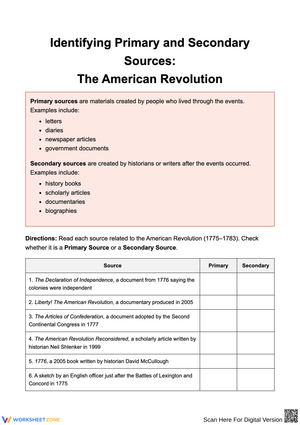
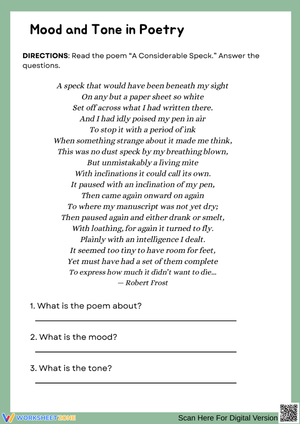
Several worksheets pair a short readable source with a structured writing task, keeping reading and writing connected the way both standardized assessments and unit-based instruction require. Teachers looking for a 7th grade nonfiction writing worksheets collection that doesn't separate close reading from writing practice will find the source-based worksheets among the most useful in the set.
Mistakes Students Make That These Worksheets Help You Catch
The most persistent error at this level is quote-dropping: a student copies a sentence from the source, then moves on without explaining what the evidence actually shows. A response might read, "According to the article, global temperatures have risen 1.1 degrees Celsius since the 1800s. This shows that climate change is real." The second sentence restates the claim instead of explaining the evidence. Every evidence-gathering task in the set includes a dedicated explanation step, making elaboration a required move rather than an optional one.
Formal language creates a separate problem. Students who have been told to stop writing "I think" or "basically" often overcorrect into stiff constructions — "It is a well-known fact that" or "One must consider." Worksheets that ask students to revise specific phrases, rather than just "make it more formal," give them a far more actionable target and better results.
Transition errors follow equally predictable patterns. Many seventh graders use "however" to mean "and also," or "therefore" to introduce a new topic rather than signal a logical conclusion. When a worksheet asks students to label the relationship between two ideas — addition, contrast, cause-effect — before choosing the transition word, the right choice follows naturally. That confusion gets addressed before it spreads across a full draft.
Building These Worksheets Into Your Weekly Lesson Plans
These resources work best when each worksheet has one named job in the lesson. A repeatable 45-minute structure: open with a five-minute bell ringer on transitions or formal language while taking attendance, model the skill briefly, give students an evidence or planning worksheet for independent practice, and close with two or three students reading a revised sentence aloud. That rhythm fits a standard block without cutting reading time.
Multi-day units benefit from spreading one response across five sessions — reading and prompt analysis on day one, the evidence organizer on day two, body paragraph drafting on day three, introduction and conclusion revision on day four, and grammar editing on day five. Each worksheet marks the transition between phases, so students always know where they are in the process and teachers can check understanding before moving forward.
PDF format helps the logistics. Substitute teachers run the same lesson without any tech setup. Teachers can annotate a copy on the document camera while students complete a blank version alongside — a gradual release move that works in any room. Intervention groups use the same worksheet with additional oral support, keeping content consistent across the class.
Standard Alignment
These worksheets align primarily with CCSS.ELA-LITERACY.W.7.2, which asks seventh graders to write informative and explanatory texts that introduce a topic clearly, develop it with relevant facts and examples, use precise language, establish a formal style, and provide a concluding section. Substandards W.7.2a through W.7.2f break those expectations into specific moves — organization, evidence, elaboration, transitions, word choice, and conclusions — that individual worksheets address directly. Related standards W.7.4 and W.7.5 cover clear writing appropriate to task and purpose and developing writing through planning, revising, and editing — both addressed across the full process the set supports. Teachers in states that have revised or replaced Common Core will still recognize the skills; strong informative writing expectations at grade 7 are consistent across most state frameworks even when the standard codes differ.
Adjusting Each Worksheet for Different Levels of Writers
For students who struggle to start, narrowing the scope before writing begins helps most. An organizer that asks for three bullet points of evidence — not yet shaped into sentences — removes the sentence-formation pressure and lets students focus entirely on content selection. Sentence starters work best when they model the specific academic phrasing students haven't yet internalized, not just supply a verb.
For multilingual learners, a vocabulary bank placed inside the worksheet itself reduces paper management while still providing the language support formal writing requires. Oral rehearsal before drafting helps too — students who can say the explanation sentence aloud find writing it a much smaller step.
Advanced writers benefit from having the guided support removed and the demand raised: two sources instead of one, revision for both precision and tone, or evaluating a peer's explanation sentence against a rubric before improving their own. For teachers running intervention blocks, 7th grade nonfiction writing worksheets resources that isolate a single skill — explanation sentences, evidence selection — make focused 15-minute reteaches possible without rebuilding the entire lesson.
Frequently Asked Questions
What writing skills do these worksheets address?
The set covers every phase of informative writing: prompt analysis, planning paragraph structure, evidence selection and explanation, transitions, formal language, and revision for organization and elaboration. Each worksheet targets one phase rather than asking students to manage all of them at once.
How do these fit into an existing writing unit?
Most teachers use them as daily targeted practice tied to wherever students are in the unit. Planning worksheets belong early; evidence and elaboration worksheets fit the drafting phase; revision checklists come last. The worksheets don't dictate pacing — teachers drop them in where the skill matches the lesson goal.
Are these appropriate for students who find writing difficult?
Yes. One skill per worksheet with clear directions reduces the overwhelm that stops struggling writers before they start. Teachers can add oral support while the whole class works from the same worksheet, and the resources work well for small-group intervention pulls where one skill gets focused attention in a single session.
Do these prepare students for on-demand writing assessments?
Directly. Many state assessments ask seventh graders to read a source and produce an informative response under timed conditions. A 7th grade nonfiction writing worksheets set built around prompt analysis, evidence selection, and explanation drafting mirrors that task structure exactly. Students who practice those moves on shorter, focused worksheets perform more confidently when no planning support is available.












 Interactive Worksheet Maker
 Quiz Maker
 Word Search Maker
 Crossword Puzzle Maker
 Word Scramble Generator
 Sentence Scramble Generator
 Handwriting Worksheet Generator
 Name Tracing Generator
 Fill In The Blank Generator