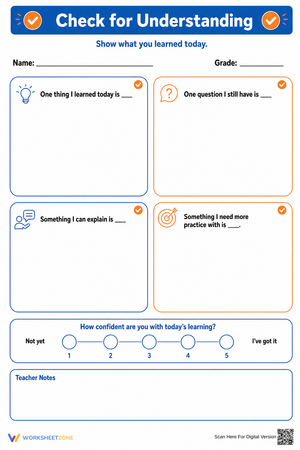
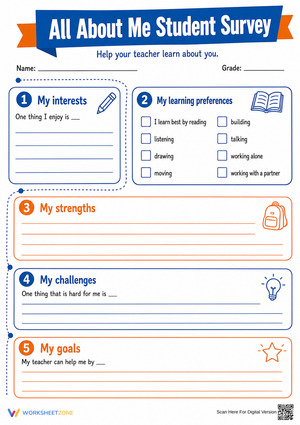
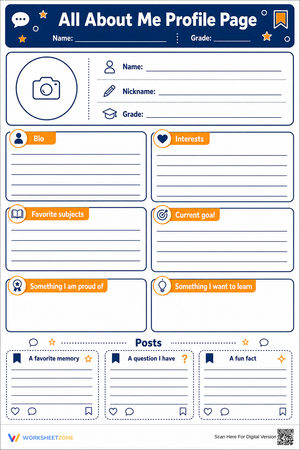
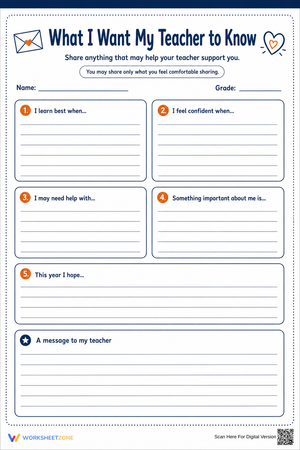
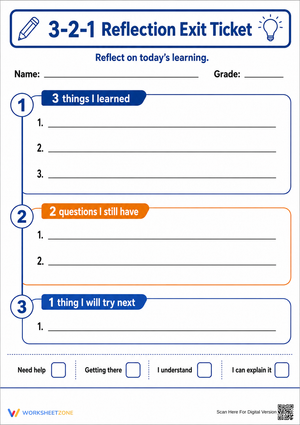
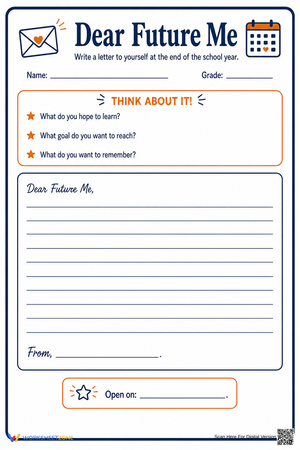
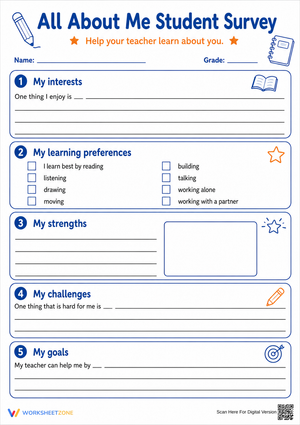
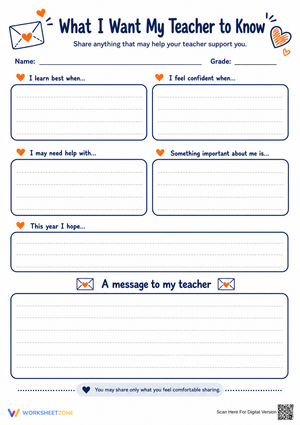
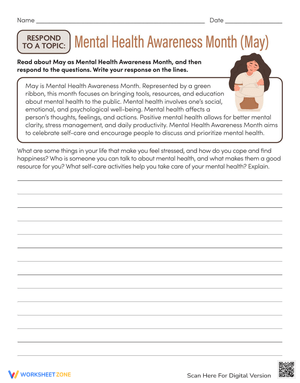
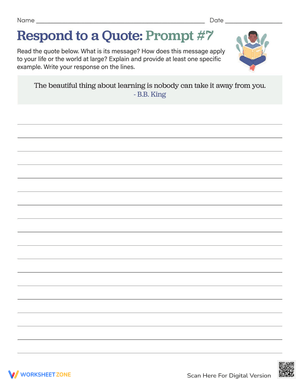
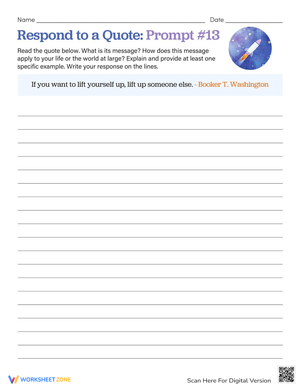
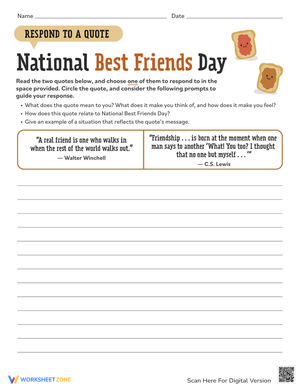
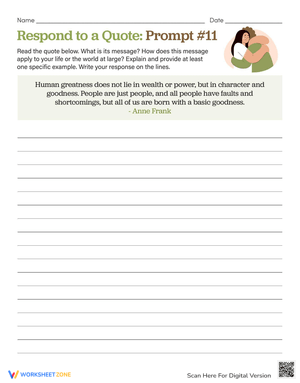
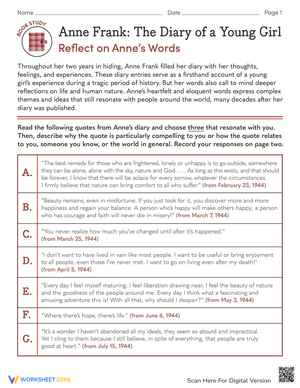
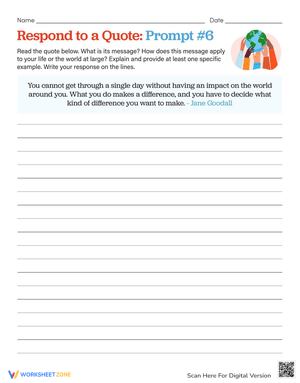
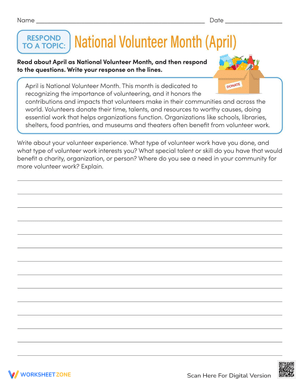
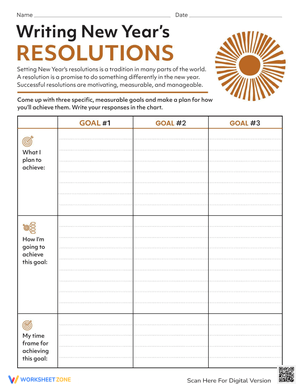
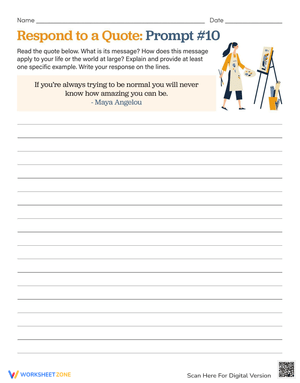
Reflective writing printable worksheets for 7th grade address one of the more stubborn problems in middle school ELA: students who retell instead of reflect. These resources give teachers a repeatable structure for turning any reading, project, discussion, or classroom experience into genuine analytical writing — not a summary dressed up in feeling words.
When Retelling Masquerades as Reflection
Seventh graders have usually mastered summarizing by the time they reach your classroom. Ask them what a novel chapter was about and they will give you a confident answer. Ask them what the chapter made them think about and many will offer a better summary. The gap between "what happened" and "how my thinking shifted" is real, and it is not a reading problem. It is a genre problem — students do not yet carry a clear mental model of what reflection looks like as a written form.
The most direct fix is putting two examples side by side: a two-sentence summary and a two-sentence reflection, both written about the same moment. Ask students to name the difference before they write anything. That comparison does more work than five minutes of abstract explanation. The worksheet structure then reinforces the distinction every time students sit down with it — separate planning boxes for the event, the evidence, the significance, and the next step make it difficult to stay in retelling mode without noticing.
What Students Practice in Each Worksheet
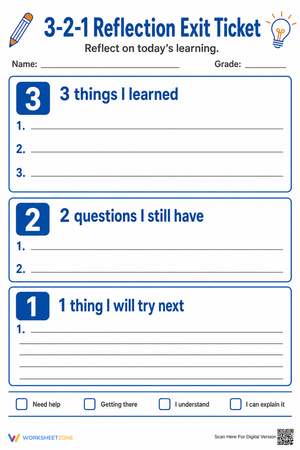
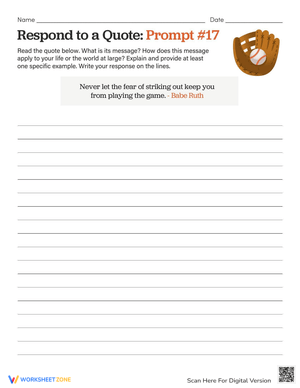
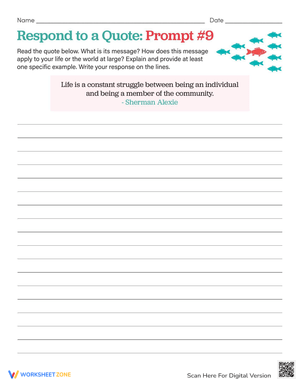
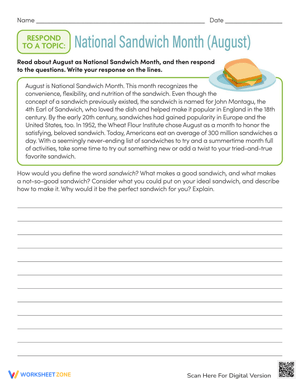
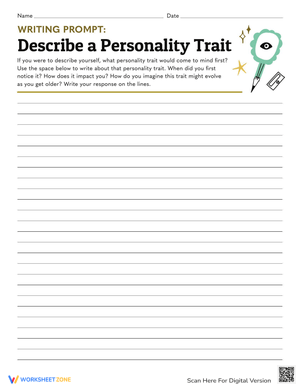
Each worksheet moves students through the same fundamental moves: identifying a specific experience or text moment, selecting details that carry meaning rather than just trace the sequence, explaining why those details matter, and articulating what has changed in their thinking. Within that structure, reflective writing printable worksheets for 7th grade vary the prompt so students practice across different contexts — after independent reading, at the close of a class debate, following a writing workshop, or as a post-project evaluation.
- Planning boxes that separate event from interpretation before drafting begins, so students do not lose the analytical layer while trying to describe what happened
- Evidence cues that ask for a specific line, moment, or detail — not "the whole story"
- Sentence frames such as I used to think... but now I understand... and What surprised me was... that show where reflective language lives without writing the sentence for the student
- A short revision checklist focused on two questions: Did you explain significance rather than just events? Did you ground your reflection in at least one specific detail?
- Writing space sized for a focused paragraph or short multi-paragraph response, depending on the worksheet
Building These Worksheets Into Your Lesson Plans in a Way That Sticks
These worksheets hold up best when they are predictable — not boring, but familiar enough that students know what the structure is asking before they pick up a pencil. That familiarity is what makes reflective writing printable worksheets for 7th grade useful for bell ringers on Monday after a Friday reading, exit slips in the last twelve minutes of a period, or full writing blocks following a unit project. The prompt changes; the structure holds. That consistency reduces the startup cost of every single reflection assignment.
For whole-class instruction, model a sample response aloud. Narrate your thinking as you fill in the planning boxes so students can hear what choosing a meaningful detail actually sounds like — not the choosing itself, but the reasoning behind it. For small-group intervention, sit with students during the planning phase and ask one question per box rather than letting them draft cold. For independent practice, the revision checklist at the end does the most useful work: it gives students a concrete lens for a second pass at their own writing without requiring a conference.
Standard Alignment
These worksheets align with CCSS.ELA-LITERACY.W.7.3, which asks students to write narratives that develop experience through technique and reflection, and with W.7.10, the standard for writing routinely across genres and purposes. In classroom terms, W.7.3 is most relevant when students are reflecting on personal experience or a literary text; W.7.10 supports the use of these worksheets as low-stakes regular writing practice rather than only high-stakes assessment events. Together, the two standards make the case for treating reflection as a weekly routine rather than an end-of-unit add-on.
Mistakes Students Make That These Worksheets Help You Catch
The most common error is the one already named: summary instead of reflection. But a close second is what might be called vague significance — the student who writes I learned that it is important to work hard without tying that claim to a single moment in the text or experience. The sentence sounds reflective. It carries no evidence. The revision checklist prompt "Did you use at least one specific detail?" exists to catch this pattern because students who write vague significance rarely notice the problem on their own.
A third error surfaces in the planning stage. Some students fill the event box with three long sentences and arrive at the significance box with nothing left to say. The event has crowded out the analysis. When you see this in student work, the student is still organizing by sequence — what came first, second, third — rather than by meaning. Asking one redirecting question — "What is the one moment you would not cut?" — gets most of them back on track faster than restating the directions does.
Adjusting the Worksheets for a Range of Learners
These worksheets work across ability levels without requiring a separate version for every student, as long as teachers know which features to adjust and which to keep consistent.
Students who struggle to begin benefit most from sentence frames and labeled boxes that name each thinking move. Multilingual learners often need reflection verbs pre-taught — realized, noticed, reconsidered, recognized — because those verbs appear less in conversation than in academic writing and their precise meaning matters here. Students who need a contained task produce sharper writing when the assignment is one strong, evidence-grounded paragraph rather than a longer open-ended response. Advanced writers benefit from a version without frames, where they make a connection across two texts or experiences rather than reflecting on just one.
Offering a worked exemplar alongside the worksheet helps every level. One paragraph that shows the difference between a weak and a strong reflection does more to raise the quality of a class set than any amount of pre-writing instruction, because students can hold the model next to their own work while they write.
Frequently Asked Questions
How long should a 7th grade reflection be?
It depends on the purpose. An exit slip reflection can run three to five sentences. A post-project or end-of-unit reflection is usually one to three focused paragraphs. What matters more than length is whether the student explained significance using at least one specific detail — a well-grounded two-sentence reflection is more valuable than a longer response full of vague commentary.
What is the difference between reflective writing and personal narrative?
Personal narrative centers on storytelling — sequence, scene, and detail that bring an experience to life. Reflection centers on meaning-making. A reflective piece may include a brief description of what happened, but its main work is explaining what the writer learned, how their thinking shifted, or what they would do differently. Students often default to narrative when asked to reflect, which is exactly why the planning boxes on each worksheet separate the event from the analysis before drafting begins.
How do I assess reflective writing without penalizing students for honest thinking?
Focus assessment on the quality and presence of evidence, not on which conclusions students reach. A rubric that rewards "used a specific detail to support the reflection" and "explained significance beyond summary" gives students credit for the analytical moves without judging the insight they arrived at. Grading one criterion at a time during early assignments removes some of the anxiety that pushes students toward safe, vague responses.
Can these worksheets be used after reading as well as after projects?
Yes, and that flexibility is one reason reflective writing printable worksheets for 7th grade hold up across a full school year. The same structure — event, evidence, significance, next step — applies whether the "event" is finishing a novel, participating in a Socratic seminar, or completing a group research project. Teachers who use a consistent worksheet format across contexts find that students internalize the reflection routine more quickly, because they are not learning new directions every time the task appears.












 Interactive Worksheet Maker
 Quiz Maker
 Word Search Maker
 Crossword Puzzle Maker
 Word Scramble Generator
 Sentence Scramble Generator
 Handwriting Worksheet Generator
 Name Tracing Generator
 Fill In The Blank Generator