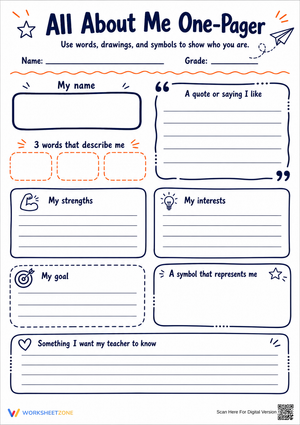
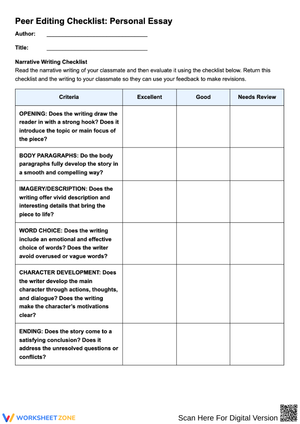
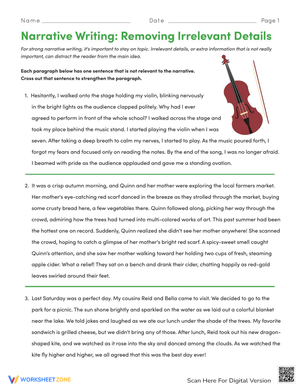
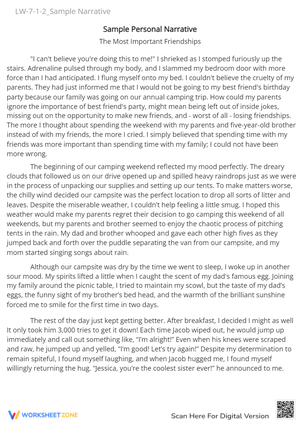
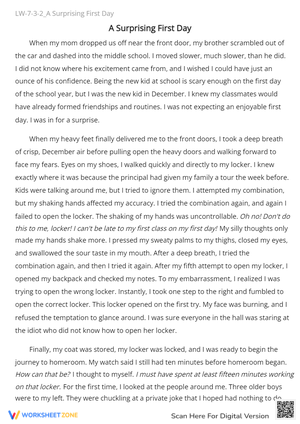
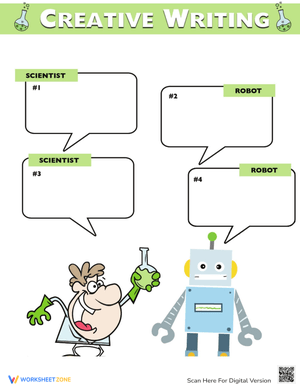
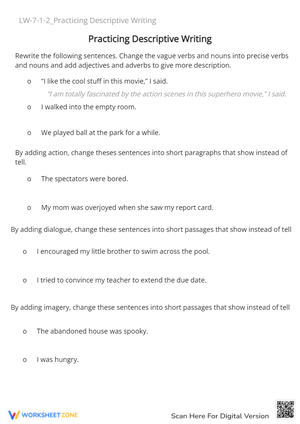
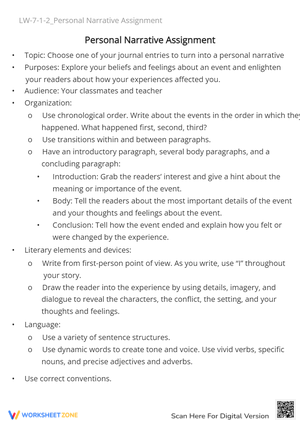
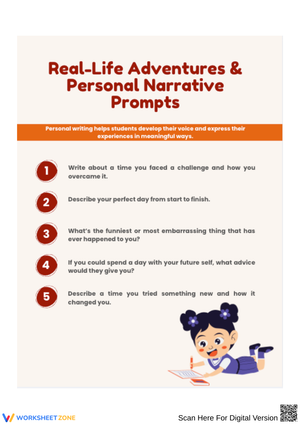
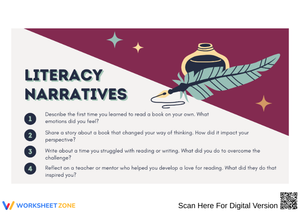
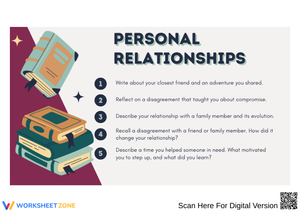
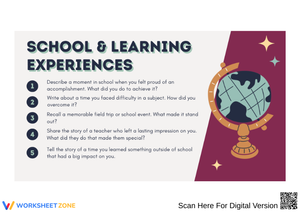
These narrative writing worksheets for 7th grade give teachers a print-ready set of standalone resources that move students through the full writing process — brainstorming, planning, drafting, revision, and editing — in focused, manageable pieces. Each worksheet targets one specific stage or skill so students build narrative craft in steps rather than trying to manage every element of a story at once. The set works across whole-class instruction, small-group reteaching, writing workshop rotations, and sub plans without significant advance prep.
Skills These Worksheets Build
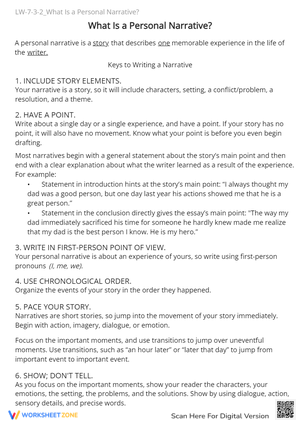
Seventh graders generally arrive knowing how to tell what happened. Fewer know how to shape it — how to decide what the story is actually about, where to slow down, which details matter, and how to write an ending that carries meaning rather than just closing the action. A strong set of narrative writing worksheets for 7th grade addresses that gap between basic storytelling and deliberate narrative craft.
The skills covered across the set include:
- Generating and narrowing ideas using targeted brainstorming prompts and topic-selection frames
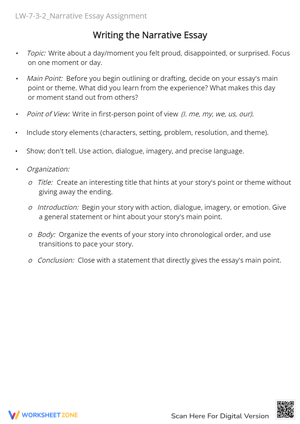
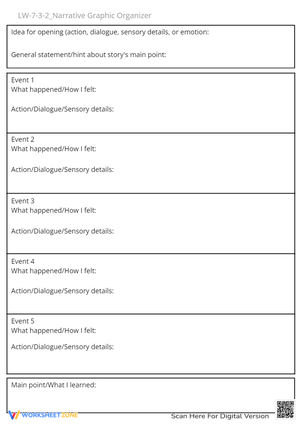
- Mapping story structure — conflict, turning point, and resolution — before drafting begins
- Writing strong leads: anecdote openings, in-media-res starts, and dialogue hooks
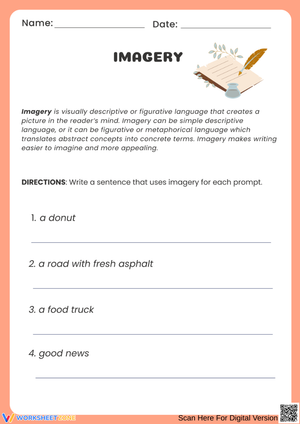
- Building scenes with concrete sensory detail rather than summary
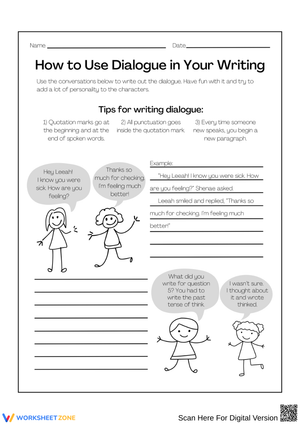
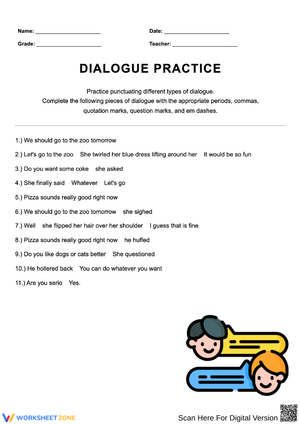
- Punctuating and formatting dialogue correctly within paragraphs
- Managing pacing through sentence variety and scene selection
- Writing endings that reflect on the experience rather than restate the final event
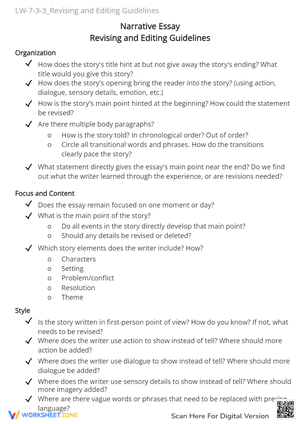
- Separating revision — changes to content and structure — from editing — sentence-level corrections
Each worksheet focuses on one of these moves, which makes it straightforward to assign them in sequence across a unit or to pull individual ones for mini-lesson follow-up.
Frequent Writing Errors to Anticipate and Address
The most persistent narrative error at this grade level isn't mechanical — it's structural. Students default to what might be called the everything approach: they begin on the morning of the event, account for every minute of travel, and arrive at the climactic moment just as the period ends. The planning worksheets interrupt that pattern by asking students to identify the turning point first, before mapping surrounding events. That sequence forces them to decide what the story is actually about before writing a single sentence of draft.
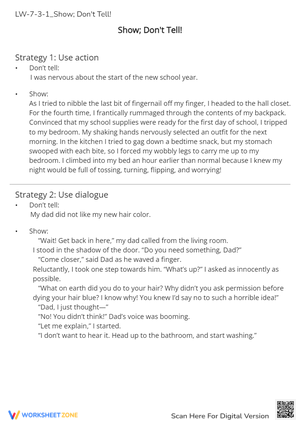
The second major error is flat dialogue. Seventh graders understand that dialogue belongs in stories, but they write exchanges that do only one job — move the plot forward. "Let's go," she said. "OK," he said. Dialogue worksheets give students sentence-level examples showing how a single line of speech can reveal character, establish tone, advance conflict, and create a pause in the narration simultaneously. Without that direct instruction, students leave dialogue exactly as it appeared in the first draft.
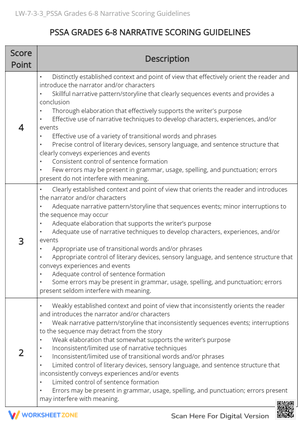
A third pattern appears almost universally: students treat revision as optional cleanup. When asked to revise, most seventh graders add a sentence or fix a comma and consider the task done. A revision worksheet that asks students to locate where they skipped over something important, mark where the narrator's voice disappears, and explain in writing what the experience meant changes what students actually do during revision time. Those specific questions create accountability that a general "revise your draft" instruction doesn't.
Working These Worksheets Into a Narrative Writing Unit
The most straightforward approach: one prewriting worksheet early in the unit to generate and narrow ideas, a second to map story structure, drafting support in the middle, and revision and editing worksheets in the final stretch. That sequence fits comfortably into six to eight class periods and gives students a visible path through the assignment rather than a single large task sitting in front of them.
Bell ringers are a natural entry point. A five-to-eight-minute lead-writing worksheet at the start of class gives students immediate practice and something concrete to discuss during the mini-lesson that follows. Using the same worksheet format across multiple days reduces transition time — students know what to take out and where to begin without instructions repeated from the front of the room.
One approach that consistently improves student work: keep the same planning organizer and revision checklist across multiple narrative assignments during a semester. Students stop spending mental energy on the format and redirect attention to the writing choices that matter. Teachers benefit too — placing three organizers from different assignments side by side makes it possible to see whether a student's planning is becoming more specific and purposeful over time, which a final draft alone won't show.
For intervention groups, the sequencing and elaboration worksheets work well in small-group sessions with students who produce technically correct but underdeveloped narratives — complete sentences, accurate chronology, no detail, no dialogue, no reflection. Those students benefit from focused practice on one move at a time rather than another full-draft assignment.
Standard Alignment
These worksheets align with CCSS.ELA-LITERACY.W.7.3, which requires seventh graders to write narratives developing real or imagined experiences using effective technique, relevant descriptive details, and a structured event sequence. The sub-standards matter for unit planning: W.7.3a addresses engaging openings and establishing a narrator and point of view; W.7.3b covers narrative techniques including dialogue, pacing, and description; W.7.3d requires precise and sensory language; and W.7.3e asks for a conclusion that reflects on the experience. Each of those sub-standards maps to at least one worksheet in the set, making coverage documentation manageable across a unit.
W.7.5 — which addresses planning, revising, editing, and rewriting — is covered by the process-oriented worksheets: the prewriting organizers, revision checklist, and editing guide. Teachers using narrative writing worksheets for 7th grade to address W.7.5 will find that the sequence here matches the standard's expectation that students develop writing across multiple stages rather than in a single sitting.
Adjusting These Worksheets for a Range of Writers
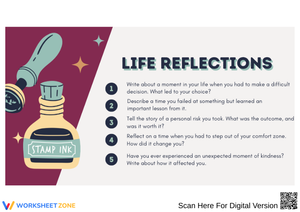
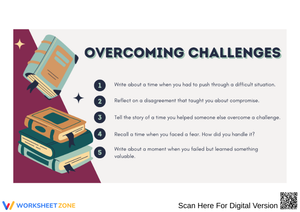
For students who struggle to generate ideas, the brainstorming worksheets offer category prompts — a time something went wrong, a decision that changed something, a moment that surprised you — that lower the cognitive load of starting. Students who freeze in front of a blank page move more readily when given a specific menu of moments to sift through rather than an open invitation to "think of a story."
For strong writers who finish quickly, the revision worksheets extend naturally into deeper craft work. Ask those students to annotate their own draft in response to the revision questions rather than moving through the checklist item by item. A student who can explain in writing why she chose to open on a specific moment, or identify where her pacing slows intentionally, is working well beyond what the standard checklist requires.
For students who write primarily in a language other than English at home, the editing worksheets need pairing with a brief teacher conference before independent work. Idiomatic English in narration — particularly in dialogue — is a specific challenge that a checklist alone won't address. Short one-on-one check-ins during workshop time produce better results for those students than any additional printed resource does.
In co-taught classrooms, narrative writing worksheets for 7th grade work especially well when one teacher circulates during drafting while the other pulls a small group for planning support. Because each worksheet stands alone, students at different stages of the process work simultaneously without needing separate material sets.
Frequently Asked Questions
Do these worksheets need to be assigned as a sequence, or can individual ones stand alone?
Both approaches work. The set follows the writing process in order, so teachers can assign the worksheets across a full unit. Individual worksheets also function independently — the dialogue worksheet fits a mini-lesson even outside a formal narrative unit, and the revision worksheet works as a structured self-review tool regardless of how the draft was produced.
How much class time does a narrative writing unit using this set typically require?
Most seventh-grade teachers run narrative units over ten to fifteen class periods. The worksheets in this set directly support six to eight of those periods — prewriting through revision — leaving time for teacher conferencing, peer response, and final-draft writing.
What separates the revision worksheets from a basic editing checklist?
A revision worksheet asks students to make decisions about content and structure — where the story loses energy, whether the narrator's reflection is present, whether any events could be cut without losing meaning. An editing checklist handles sentence-level correctness. These worksheets treat those as separate tasks at different points in the process, which produces stronger final drafts than a combined checklist and changes how students approach revision in subsequent writing assignments.
Are these worksheets appropriate for students significantly below grade level in writing?
The planning and brainstorming worksheets are accessible to below-grade-level writers because they move in small steps — one question at a time, one element of the story at a time. The revision and editing worksheets are more demanding. Teachers working with significantly below-grade-level writers should use those in a guided small-group setting rather than as independent work.












 Interactive Worksheet Maker
 Quiz Maker
 Word Search Maker
 Crossword Puzzle Maker
 Word Scramble Generator
 Sentence Scramble Generator
 Handwriting Worksheet Generator
 Name Tracing Generator
 Fill In The Blank Generator