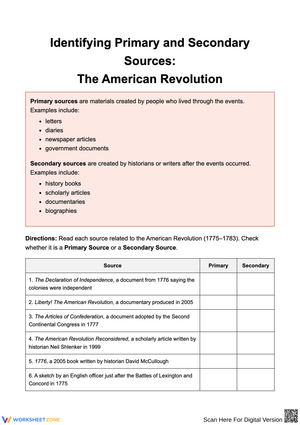
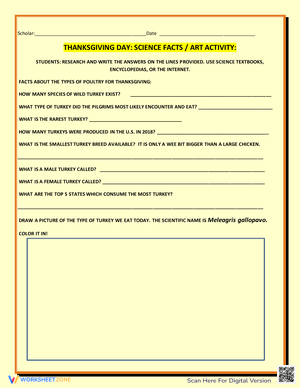
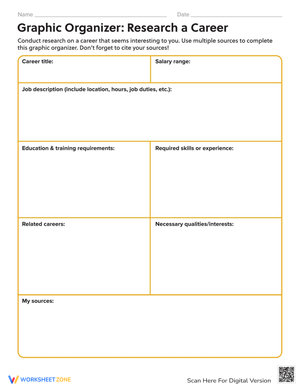
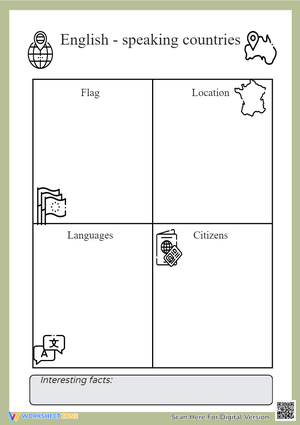
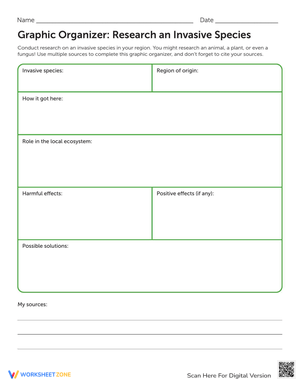
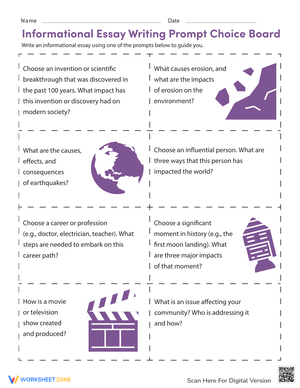
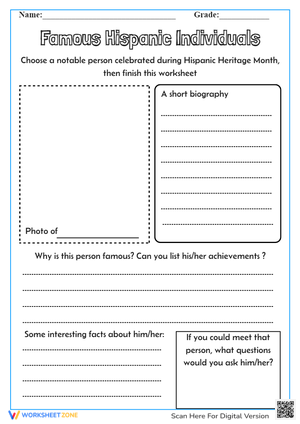
Research writing pdf worksheets for 7th grade give teachers a way to break one of the most process-intensive assignments in middle school ELA into a sequence of discrete, teachable steps — from topic selection through source citation. These resources work particularly well at this grade level because 7th grade is where writing expectations shift in a meaningful way: students can no longer just summarize what they found; they are expected to evaluate sources, extract relevant evidence, and build that evidence into structured nonfiction. A worksheet set that maps onto this full process gives teachers something concrete to point to at every stage of the unit.
The Specific Skills These Worksheets Target
Each worksheet in a strong set does one job. What that looks like across the full set:
- Topic narrowing prompts that move students from a general interest — say, "space exploration" — to a focused, researchable question.
- Research question frames that help students distinguish between questions too broad to answer, too narrow to sustain a paper, or already answerable from memory alone.
- Source credibility checklists asking who wrote it, when, for what purpose, and whether it actually answers the student's question — not just whether it mentions the topic.
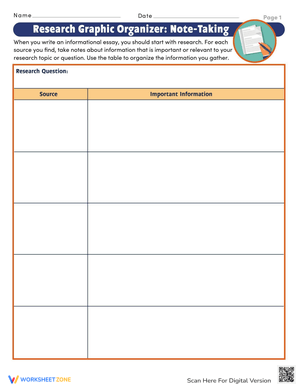
- Note-taking organizers with separate columns for direct quotes or key facts and for the student's own restatement of that information.
- Paraphrasing practice — short exercises where students read one paragraph, set it aside, and write what it said without looking back.
- Evidence sorting charts that ask students to group their notes under subtopics before they open a draft document.
- Outline templates built around introduction, body paragraphs, and conclusion, with room for topic sentences and supporting details.
- Source recording boxes embedded in every note-taking worksheet so students track where each piece of information came from while they are still gathering it.
That last detail matters more than it sounds. By the time students sit down to write citations, they have usually closed every tab and cannot remember which statistic came from which article. Keeping that information on the note-taking worksheet itself prevents the scramble that derails the final stage of nearly every research project.
Building These Worksheets Into Your Lesson Plans
The most reliable approach is to run the set as a one-week mini-unit, with each class period anchored to one worksheet with a single clear objective. Day one: topic selection and research question development. Day two: source credibility practice, with the teacher modeling one full evaluation before students work independently. Day three: note-taking and paraphrasing using two or three short texts. Day four: evidence sorting and outlining. Day five: students draft one or two evidence-based informational paragraphs using only what is on their organizer — no returning to search engines.
That same sequence stretches naturally across three weeks when teachers use each worksheet as a five-minute bell ringer rather than a full lesson. A quick source-credibility check on Monday, a one-sentence paraphrase task on Wednesday — this keeps research skills active across the grading period without requiring a dedicated unit every time. It also builds retrieval practice that helps students transfer the process to later independent assignments.
For stations work, three groups can rotate through source evaluation, note-taking, and evidence sorting simultaneously while the teacher pulls one group for a guided paraphrasing session. That format fits cleanly into a 45-minute block: roughly 12 minutes per station with a few minutes for transitions. Teachers who use this structure report that the rotation format also reduces the "I'm done, now what?" problem that comes up when students work through research tasks at different speeds.
Errors and Misconceptions Teachers Should Anticipate
The most predictable problem is copying. Students told to "take notes" almost universally interpret that as transcription — they copy sentences word for word and then struggle during drafting because they cannot figure out how to change something they already wrote down "correctly." The note-taking worksheets address this by requiring a forced two-step: students first record a key fact or direct quote in one box, then must write what that information means in their own words in a second box before moving on. That second box is the one to check first when reviewing student work. Empty restatement boxes are a reliable indicator of who is going to have a plagiarism problem on the final draft.
Broad topics are the second recurring issue. A student who chooses "climate change" as a research topic will produce an unfocused paper full of disconnected facts regardless of how well the rest of the process goes. Topic-narrowing worksheets that walk students through narrowing from a general subject to a specific question — "What has been the effect of sea-level rise on low-lying Pacific island nations since 2000?" — prevent this. The question itself acts as a filter for all subsequent note-taking decisions.
A less obvious error is evidence without commentary. Students drop a statistic into a paragraph and stop, as if the number explains itself. Paragraph-framing worksheets that require a claim sentence, then a piece of evidence, then a sentence explaining what that evidence shows — what some teachers call a "claim / evidence / because this means" structure — address this directly. Students who practice that pattern across several worksheets carry it into their independent writing more reliably than students who only see it modeled once on the board.
Standard Alignment
These worksheets align most directly with CCSS.ELA-LITERACY.W.7.7, which requires students to "conduct short research projects to answer a question, drawing on several sources and generating additional related, focused questions for further research and investigation." The topic selection and research question worksheets address the front end of that standard; the evidence sorting and outlining worksheets address the back end. Together, the set makes the full W.7.7 expectation teachable in a standard class period rather than something students are expected to figure out on their own during a long independent project.
W.7.8 — which covers gathering information from multiple sources, assessing credibility and accuracy, quoting or paraphrasing responsibly, and following a citation format — maps directly onto the source credibility checklists, note-taking organizers, and paraphrasing practice. Teaching W.7.8 without structured practice tools is one of the faster ways to end up with a class full of copied paragraphs by draft day. The set also touches W.7.9, which asks students to draw evidence from texts to support their analysis, through the evidence sorting and paragraph-framing work.
Differentiating These Worksheets Across Ability Levels
Students who need additional support work better when worksheets include sentence starters built into the response boxes — "This source seems credible because..." or "The author's main point is..." rather than a blank box with just a label. That pre-loaded language does not do the thinking for the student; it removes the paralysis that blank space causes for writers who are still developing confidence with academic register. The same worksheet, same format, same expectations — just with a launch phrase to get them started.
For students ready for more challenge, research writing pdf worksheets for 7th grade that include a source-comparison row in the note-taking organizer create a genuine analytical task: students must note where two sources agree, where they contradict, and where one leaves a gap the other fills. That moves the work from information gathering into actual analysis — which is where the standard ultimately points.
English learners benefit from the same structured organizers the whole class uses, with one addition: a vocabulary column where students can record unfamiliar terms alongside a brief definition or a quick sketch. This keeps the research process moving rather than stopping at every unknown word. The visual structure of a well-designed organizer also helps students who are still building reading fluency in English, because the worksheet tells them what kind of information they are looking for before they read the source — purpose-driven reading rather than passive reading.
Frequently Asked Questions
What should a complete set of 7th grade research writing worksheets cover?
A full set addresses every stage of the process: topic selection, research question development, source credibility evaluation, note-taking, paraphrasing, evidence organization, outlining, and basic citation practice. Most worksheet sets students encounter only cover note-taking and outlining, which skips the earlier stages where the most consequential problems — bad sources, unfocused questions, and copying — actually develop. If a set does not include topic-narrowing and source-evaluation work, teachers end up spending the back half of the unit correcting problems that formed in the first two days.
Can teachers use these worksheets without running a full research unit?
Yes. Research writing pdf worksheets for 7th grade do not require a dedicated unit to be effective; individual worksheets function well as standalone practice. A source-credibility task pairs naturally with a news article read in class. A paraphrasing worksheet works as a follow-up to any informational reading. The set functions as a unit when used in sequence, but each worksheet also stands on its own when a teacher needs a focused skill task for a particular day.
How do these worksheets reduce copying and plagiarism?
The most effective tool in the set is the two-column note-taking worksheet: one column for the source's exact language, one column for the student's own restatement. When students must paraphrase before moving to the next source, they are forced to process the information rather than transcribe it. That habit, practiced consistently across several worksheets, reduces copying at the drafting stage because students are working from notes they already own. It also makes plagiarism easier to identify when it does occur, since teachers can compare the student's notes to the final paragraph and see where the process broke down.
Are these worksheets a good fit for students who tend to get overwhelmed by long assignments?
These worksheets are especially useful for students who lose track of where they are in a multi-stage assignment. The step-by-step format makes the process visible: each worksheet produces a concrete output — a focused question, a source evaluation, an organized set of notes, a filled outline — that feeds directly into the next one. Students who shut down when given open-ended assignments respond much better when the task is this concrete. Teachers can also collect each worksheet as a checkpoint before moving the class forward, which makes feedback far more targeted than reviewing only a final draft. Research writing pdf worksheets for 7th grade used this way create a paper trail of student thinking — and that trail tells a teacher exactly where a student's process fell apart, not just that the final product missed the mark.












 Interactive Worksheet Maker
 Quiz Maker
 Word Search Maker
 Crossword Puzzle Maker
 Word Scramble Generator
 Sentence Scramble Generator
 Handwriting Worksheet Generator
 Name Tracing Generator
 Fill In The Blank Generator